What’s Observed on August 15
Born on August 15: Leo ♌
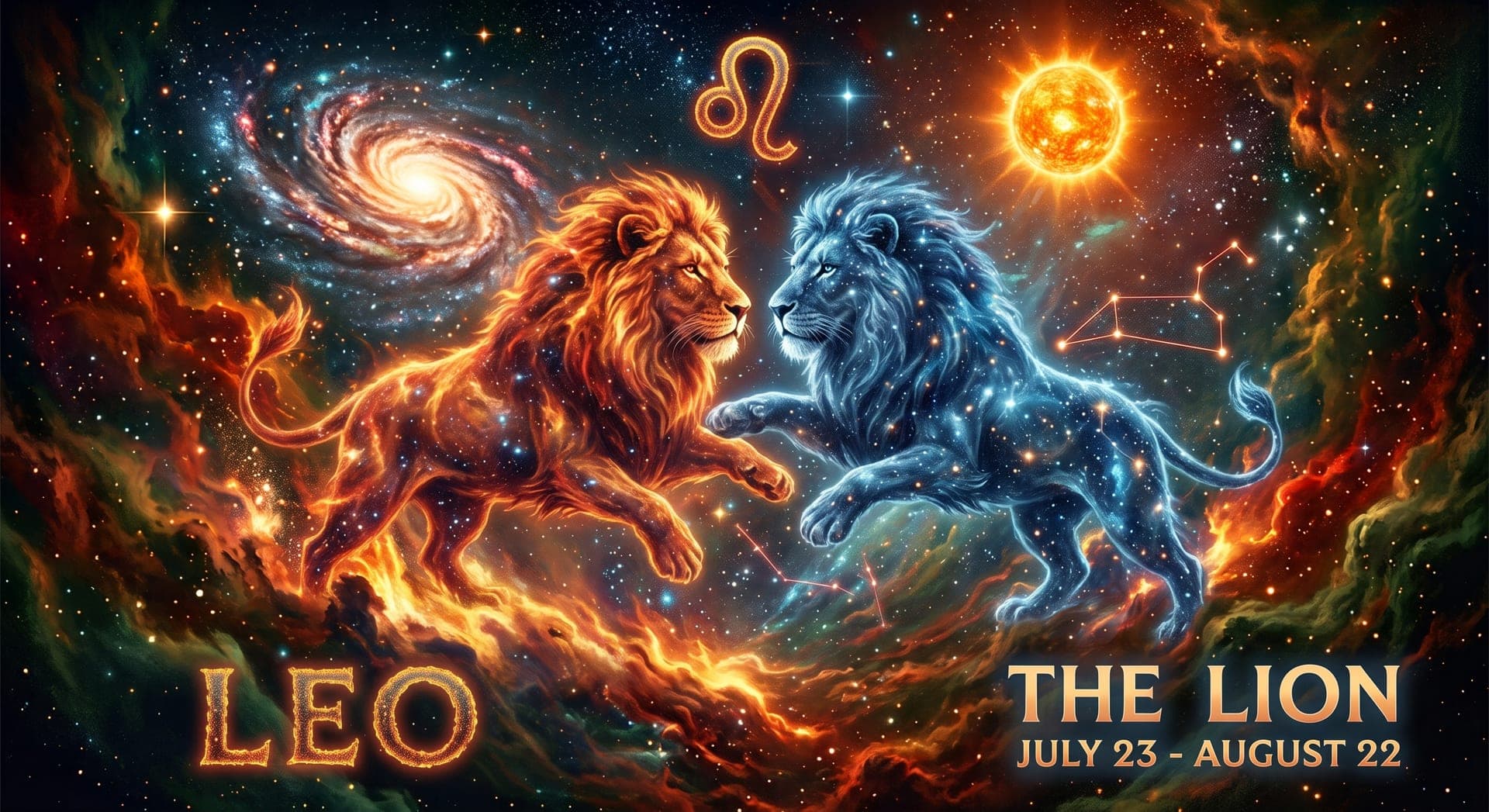
Leo, the fifth sign of the zodiac, spans July 23 to August 22 and is symbolized by the lion, an animal long associated with courage, pride, and natural leadership. Ruled by the Sun, the center of the solar system and the source of light and life, Leo is widely regarded as one of the most confident, warm, and charismatic signs of the zodiac, naturally drawn to the spotlight. As a Fire sign, Leo approaches life with passion, enthusiasm, and a flair for the dramatic, rarely content to blend quietly into the background. Its Fixed modality gives Leo a strong sense of loyalty and consistency, along with a stubborn streak once its mind is made up. People born under this sign are often natural performers, leaders, or creatives who thrive when appreciated and celebrated by those around them. Leo's generosity and warmth make it a beloved friend and steadfast ally, though its genuine need for recognition and admiration can tip into vanity or a demand for center stage if left unchecked.
Personality Traits
Strengths
- Naturally charismatic leader
- Generous and warm-hearted
- Confident and self-assured
- Creative and expressive
- Loyal to friends and family
Weaknesses
- Prone to arrogance
- Craves attention and validation
- Stubborn once decided
- Can be domineering
- Sensitive to criticism of their ego
Compatible Signs
Fun Facts
- Leo's lion symbol connects to the Greek myth of the Nemean Lion, slain by Hercules as the first of his twelve labors.
- Leo is ruled by the Sun, the only zodiac sign ruled directly by a star rather than a planet or moon.
- As a Fixed Fire sign, Leo season falls at the height of summer, when the sun's warmth and intensity are strongest in the Northern Hemisphere.
- Notable Leos include Barack Obama, Madonna, Jennifer Lawrence, and Napoleon Bonaparte.
- Leo rules the heart in traditional medical astrology, reflecting the sign's association with vitality, courage, and life force.
Born on August 15
- 1769
Napoleon Bonaparte
French military leader and emperor
- 1771
Walter Scott
Scottish novelist, poet, and playwright regarded as the father of the historical novel, author of Ivanhoe and Rob Roy.
- 1785
Thomas De Quincey
English essayist and journalist best known for his autobiographical Confessions of an English Opium-Eater.
- 1856
Keir Hardie
Scottish trade unionist and politician who became the first leader of the Labour Party and one of its founding figures.
- 1858
E. Nesbit
English author and poet celebrated for children's classics including Five Children and It and The Railway Children.
- 1875
Samuel Coleridge-Taylor
English composer of mixed English and Sierra Leonean heritage, best known for his cantata Hiawatha's Wedding Feast.
- 1892
Louis de Broglie
French physicist and Nobel laureate
- 1912
Julia Child
American chef and author
- 1924
Robert Bolt
English playwright and screenwriter who won two Academy Awards for his screenplays for Doctor Zhivago and A Man for All Seasons.
- 1925
Oscar Peterson
Canadian jazz pianist
- 1928
Nicolas Roeg
English film director and cinematographer known for visually innovative works including Don't Look Now and The Man Who Fell to Earth.
- 1933
Stanley Milgram
American social psychologist known for obedience experiments
- 1938
Stephen Breyer
American jurist and U.S. Supreme Court justice
- 1950
Anne, Princess Royal
Member of the British royal family, the only daughter of Queen Elizabeth II, known for her extensive charitable work and equestrian career, including competing at the 1976 Olympics.
On This Day in History
- 636
The Battle of Yarmouk begins between Byzantine and Rashidun Caliphate forces, a decisive engagement in the Arab conquest of the Levant.
One of the largest battles of late antiquity began as Rashidun Caliphate forces engaged the Byzantine army along the Yarmouk River in present-day Syria and Jordan. The multi-day battle's eventual Arab victory opened the way for the rapid Muslim conquest of Syria and Palestine, permanently ending centuries of Byzantine control over the region.
- 1057
King Macbeth of Scotland is killed in battle at Lumphanan by the forces of Malcolm, son of Duncan I.
Macbeth, who had ruled Scotland since killing King Duncan I in 1040, was defeated and slain by Duncan's son, who would later become King Malcolm III. The battle ended Macbeth's seventeen-year reign, though his stepson Lulach briefly succeeded him before Malcolm secured the throne outright the following year, founding a royal line that would rule Scotland for generations.
- 1070
Lanfranc is appointed Archbishop of Canterbury, becoming the senior churchman of England under William the Conqueror.
An Italian-born monk and scholar who had risen to prominence at the Norman abbey of Bec, Lanfranc was installed by William I to help consolidate Norman control over the English church following the Conquest. He reformed monastic discipline, rebuilt Canterbury Cathedral after a fire, and asserted the primacy of Canterbury over the Archbishopric of York, shaping the English church for centuries.
- 1096
Pope Urban II's designated departure date arrives for Crusader armies beginning the First Crusade.
Pope Urban II's earlier call to arms at the Council of Clermont had designated this date as the intended departure point for the main Crusader armies marching toward Jerusalem, though various contingents actually set out at different times over the following months as they organized their respective forces.
- 1461
The Empire of Trebizond surrenders to Ottoman Sultan Mehmed II, an event some historians consider the true end of the Byzantine Empire.
The Empire of Trebizond, the last surviving fragment of the once-mighty Byzantine Empire following Constantinople's fall in 1453, finally surrendered to Ottoman forces under Sultan Mehmed II. Some historians consider this the true final end of Byzantine imperial continuity, nearly a decade after the capital itself had fallen.
- 1511
Portuguese forces under Afonso de Albuquerque capture Malacca, a major trading hub in Southeast Asia.
Portuguese admiral Afonso de Albuquerque captured the strategically vital port city of Malacca, a major hub controlling trade routes between India, China, and the Spice Islands. The conquest gave Portugal significant control over lucrative Southeast Asian spice trade for the following century.
- 1645
A Royalist army under the Marquess of Montrose crushes a Covenanter force at the Battle of Kilsyth.
Fighting for Charles I during the Wars of the Three Kingdoms, Montrose's small but highly mobile army of Highlanders and Irish troops won a string of victories against the Presbyterian Covenanter government, culminating at Kilsyth, where the Covenanter army was routed with heavy losses. The victory briefly gave the Royalists control of Scotland, though Montrose's fortunes collapsed within weeks.
- 1863
The United Kingdom and the Satsuma Domain of Japan go to war after British warships bombard the port of Kagoshima.
Britain demanded compensation and an apology from Satsuma after its samurai killed a British merchant who failed to dismount before a feudal procession the previous year. When negotiations failed, a Royal Navy squadron shelled Kagoshima, destroying much of the city but suffering damage in return. The clash led Satsuma to pursue Western-style military modernisation, ironically strengthening ties with Britain in later years.
- 1893
Ibadan becomes a British protectorate after its ruler signs a treaty with Britain's acting Governor of Lagos.
The agreement, signed by the Baale of Ibadan Fijabi and colonial administrator George C. Denton, extended British authority over one of the largest and most powerful Yoruba city-states in what is now southwestern Nigeria. It formed part of Britain's steady expansion of control over the Niger coast region, a process that culminated in the formal creation of the Nigerian colony in the following decades.
- 1914
The Panama Canal officially opens to traffic as the cargo ship SS Ancon completes the first transit.
After a decade of construction, the Panama Canal officially opened to commercial shipping traffic, dramatically shortening the sea voyage between the Atlantic and Pacific oceans and eliminating the need for ships to navigate around the southern tip of South America.
- 1939
"The Wizard of Oz" premieres at Grauman's Chinese Theatre in Los Angeles.
MGM's lavish Technicolor musical fantasy film premiered in Hollywood, introducing audiences to Dorothy's journey through Oz alongside performances that would become deeply embedded in American popular culture, despite only modest initial box office returns compared to its substantial production costs.
- 1941
German spy Josef Jakobs is shot at the Tower of London, becoming the last person executed there.
Jakobs had parachuted into Cambridgeshire on a Nazi espionage mission but broke his ankle on landing and was quickly captured by British forces. Tried by court martial and convicted of spying, he was executed by firing squad within the Tower's grounds, ending a centuries-old tradition of executions at the fortress that had claimed the lives of figures including Anne Boleyn.
- 1945
Emperor Hirohito broadcasts Japan's surrender, ending World War II, while Korea gains independence from Japanese rule.
Following the atomic bombings and Soviet invasion of Manchuria, Emperor Hirohito made an unprecedented radio broadcast to the Japanese public announcing the country's surrender, ending World War II. On the same date, Korea celebrated liberation from 35 years of Japanese colonial rule.
- 1947
India achieves independence from British colonial rule after nearly two centuries of governance.
Following the end of British colonial rule, India achieved full independence, with Jawaharlal Nehru becoming the nation's first prime minister. The transition was accompanied by the traumatic partition of the subcontinent into India and Pakistan, triggering one of history's largest and most violent mass migrations.
- 1947
India becomes independent from British rule after nearly two centuries of Company and Crown government.
The transfer of power, overseen by the last British viceroy Lord Mountbatten, came alongside the partition of British India into the separate states of India and Pakistan, a division that triggered mass migration and communal violence killing hundreds of thousands. Jawaharlal Nehru became India's first prime minister, and the country joined the Commonwealth of Nations as Britain's largest and most significant former colony.
- 1952
A catastrophic flash flood devastates the English village of Lynmouth, killing 34 people.
After nine inches of rain fell on Exmoor in twenty-four hours, the swollen West Lyn and East Lyn rivers surged through the Devon village, sweeping away houses, bridges, and boulders the size of cars. It remains one of the worst natural disasters in modern British history, and long-standing rumours linking the flood to a secret wartime rain-making experiment have never been substantiated.
- 1963
Henry John Burnett is hanged in Aberdeen, becoming the last person executed in Scotland.
Burnett was convicted of murdering a merchant seaman in a crime of passion after a love affair went awry. His execution, carried out at Craiginches Prison, came just two years before Parliament suspended capital punishment for murder across Great Britain, making Burnett's hanging one of the final acts of judicial execution in Scottish legal history.
- 1969
The Woodstock Music and Art Fair opens in Bethel, New York, featuring major rock and folk musicians.
An estimated 400,000 people gathered at a dairy farm in rural New York for a three-day music festival that came to symbolize the counterculture movement of the era, featuring performances from major rock and folk artists despite significant logistical challenges including inadequate facilities and heavy rain.
- 1998
A car bomb planted by dissident republicans kills 29 people in Omagh, Northern Ireland, the deadliest single attack of the Troubles.
The Real IRA, opposed to the Good Friday Agreement signed months earlier, detonated the bomb on a busy Saturday afternoon in the market town, killing shoppers including several children and a woman pregnant with twins. The atrocity horrified people across Northern Ireland and beyond, and though it briefly threatened the fragile peace process, it ultimately hardened public rejection of continued paramilitary violence.
- 2021
The Taliban seizes control of Kabul as Afghan President Ashraf Ghani flees the country.
As Taliban fighters swept into the Afghan capital with minimal resistance following the collapse of government forces, President Ashraf Ghani fled the country, and chaotic scenes unfolded at Kabul's airport as thousands of Afghans attempted to flee amid the final stages of the U.S. military withdrawal.