
What’s Observed on August 14
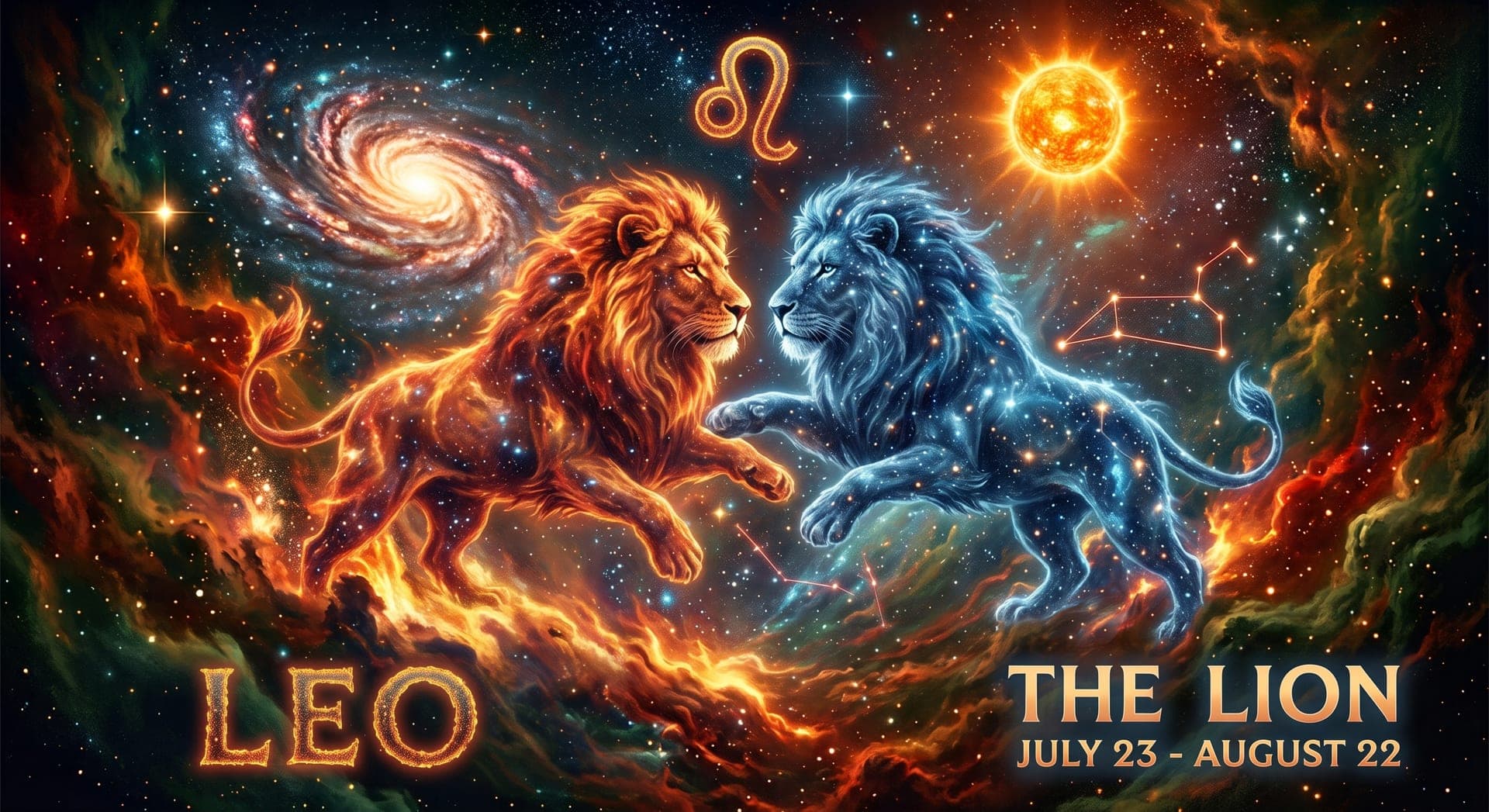
Born on August 14: Leo ♌
Leo, the fifth sign of the zodiac, spans July 23 to August 22 and is symbolized by the lion, an animal long associated with courage, pride, and natural leadership. Ruled by the Sun, the center of the solar system and the source of light and life, Leo is widely regarded as one of the most confident, warm, and charismatic signs of the zodiac, naturally drawn to the spotlight. As a Fire sign, Leo approaches life with passion, enthusiasm, and a flair for the dramatic, rarely content to blend quietly into the background. Its Fixed modality gives Leo a strong sense of loyalty and consistency, along with a stubborn streak once its mind is made up. People born under this sign are often natural performers, leaders, or creatives who thrive when appreciated and celebrated by those around them. Leo's generosity and warmth make it a beloved friend and steadfast ally, though its genuine need for recognition and admiration can tip into vanity or a demand for center stage if left unchecked.
Personality Traits
Strengths
- Naturally charismatic leader
- Generous and warm-hearted
- Confident and self-assured
- Creative and expressive
- Loyal to friends and family
Weaknesses
- Prone to arrogance
- Craves attention and validation
- Stubborn once decided
- Can be domineering
- Sensitive to criticism of their ego
Compatible Signs
Fun Facts
- Leo's lion symbol connects to the Greek myth of the Nemean Lion, slain by Hercules as the first of his twelve labors.
- Leo is ruled by the Sun, the only zodiac sign ruled directly by a star rather than a planet or moon.
- As a Fixed Fire sign, Leo season falls at the height of summer, when the sun's warmth and intensity are strongest in the Northern Hemisphere.
- Notable Leos include Barack Obama, Madonna, Jennifer Lawrence, and Napoleon Bonaparte.
- Leo rules the heart in traditional medical astrology, reflecting the sign's association with vitality, courage, and life force.
Born on August 14
- 1499
John de Vere, 14th Earl of Oxford
English nobleman and courtier who served as Lord Great Chamberlain under Henry VIII and carried the crown at his coronation.
- 1737
Charles Hutton
English mathematician and surveyor whose work on the density of the Earth and widely used mathematical tables made him a leading scientific figure of his era.
- 1851
Doc Holliday
American dentist and gunfighter of the Old West
- 1860
Ernest Thompson Seton
British-American naturalist and author
- 1867
John Galsworthy
English novelist and playwright awarded the Nobel Prize in Literature for The Forsyte Saga, his sweeping chronicle of an upper-middle-class family.
- 1896
Albert Ball
English fighter pilot and First World War flying ace credited with 44 victories before his death in combat at age 20.
- 1941
David Crosby
American singer-songwriter of Crosby, Stills, Nash and Young
- 1945
Steve Martin
American actor and comedian
- 1946
Tom Walkinshaw
Scottish racing driver and businessman who founded the motorsport engineering firm TWR and ran Formula One and touring car teams.
- 1947
Danielle Steel
American bestselling novelist
- 1959
Magic Johnson
American professional basketball player
- 1960
Sarah Brightman
English soprano and actress best known for originating the role of Christine in The Phantom of the Opera.
- 1966
Halle Berry
American actress
- 1968
Jason Leonard
English rugby union prop who won 114 caps for England, a world record for a front-row forward at the time of his retirement.
- 1968
Darren Clarke
Northern Irish golfer who won the 2011 Open Championship at Royal St George's.
- 1983
Elena Baltacha
Ukrainian-born British tennis player who was British No. 1 for much of 2002-2012 and reached a career-high world ranking of No. 49
On This Day in History
- 70 BCE
Roman governor Gaius Verres is convicted of corruption after his defense attorney abandons the case.
Roman prosecutor Cicero's overwhelming case against the corrupt former Sicilian governor Gaius Verres proved so damning that Verres's own defense counsel, the renowned orator Hortensius, effectively abandoned his defense partway through the trial, leading to Verres's conviction and self-imposed exile from Rome.
- 1040
King Duncan I of Scotland is killed in battle, and Macbeth succeeds him as king.
King Duncan I of Scotland was killed in battle against his own military commander, Macbeth, who subsequently claimed the Scottish throne and ruled for roughly seventeen years. The historical episode, considerably embellished, dramatized, and altered for theatrical effect, later formed the loose basis for William Shakespeare's famous tragedy "Macbeth," though the real Duncan bore little resemblance to Shakespeare's elderly, saintly king.
- 1040
King Duncan I of Scotland is killed in battle by his cousin Macbeth, who succeeds him as king.
The two clashed near Elgin in northern Scotland, where Duncan died from wounds suffered in the fighting, allowing Macbeth to claim the Scottish throne. The episode later formed the loose historical basis for Shakespeare's Macbeth, though the play's portrayal of Duncan as an elderly, saintly king murdered in his sleep bears little resemblance to the real Duncan, a young and by most accounts unsuccessful ruler.
- 1385
Portuguese forces defeat a much larger Castilian army at the Battle of Aljubarrota, securing Portuguese independence.
Vastly outnumbered Portuguese forces, aided by English longbowmen allies, decisively defeated an invading Castilian army at Aljubarrota, securing Portuguese independence from Castilian domination for the following two centuries. The victory remains celebrated in Portugal as a foundational moment of national identity.
- 1592
English explorer John Davis becomes the first European to sight the Falkland Islands.
English explorer John Davis, searching for the elusive Northwest Passage to Asia, became the first recorded European to sight the remote South Atlantic island group later known as the Falkland Islands, though he did not attempt to land or claim the territory at the time.
- 1598
Irish forces under Hugh O'Neill inflict a heavy defeat on an English army at the Battle of the Yellow Ford.
During the Nine Years' War, O'Neill's forces ambushed an English relief column marching to resupply a besieged garrison near the River Blackwater in County Armagh, killing hundreds of English soldiers including their commander. It remains one of the worst defeats English forces suffered in Ireland, briefly threatening to end the Tudor conquest of the island.
- 1816
The United Kingdom formally annexes the remote Tristan da Cunha archipelago in the South Atlantic.
Britain established a garrison on the islands partly to prevent them being used as a base to help free the exiled Napoleon from nearby St Helena. Administered from the Cape Colony in South Africa, Tristan da Cunha remained a British possession, and a small permanent settlement grew around the garrison, eventually becoming one of the most isolated inhabited places on Earth.
- 1880
Construction of Cologne Cathedral is completed after more than six centuries of work.
After more than six centuries of intermittent construction, work on Cologne Cathedral, one of the tallest and most elaborate Gothic cathedrals in the world, was finally completed according to its original medieval design, using techniques and plans rediscovered centuries after construction had originally stalled.
- 1900
The Eight-Nation Alliance occupies Beijing, ending the bloody Boxer Rebellion.
An international coalition of forces from eight nations, including Japan, Russia, Britain, France, and the United States, marched into Beijing to relieve besieged foreign diplomatic legations and suppress the anti-foreign, anti-Christian Boxer Rebellion, imposing harsh reparations on the Qing government afterward.
- 1900
The Eight-Nation Alliance occupies Beijing, ending the siege of the international legations during the Boxer Rebellion.
An international relief force fought its way into the Chinese capital to lift a two-month siege of foreign diplomatic compounds by Boxer rebels and Qing imperial troops. The alliance's victory led to a punitive settlement imposing heavy indemnities and further foreign concessions on China, deepening the decline of the Qing dynasty in its final years.
- 1920
The Summer Olympics officially open in Antwerp, the first Games to feature the Olympic flag and athlete's oath.
The first Olympic Games held since the outbreak of World War I opened in Antwerp, Belgium, notably introducing the now-iconic five-ring Olympic flag and the athletes' oath for the first time, symbolic gestures toward international unity following the devastating global conflict.
- 1935
President Franklin D. Roosevelt signs the Social Security Act, establishing a national pension system in the United States.
Passed as a centrepiece of the New Deal in response to the hardships of the Great Depression, the act created a system of old-age insurance funded through payroll taxes, along with unemployment insurance and aid for dependent children. It became one of the most enduring achievements of Roosevelt's presidency and the foundation of the modern American social safety net.
- 1941
Winston Churchill and Franklin D. Roosevelt sign the Atlantic Charter, setting out joint British and American war aims.
Meeting aboard warships off the coast of Newfoundland, the British prime minister and the still-neutral American president outlined shared principles for the postwar world, including self-determination for nations and freedom from want and fear. Though not a formal treaty, the charter helped cement the Anglo-American alliance and later influenced the founding principles of the United Nations.
- 1947
Pakistan gains independence from Britain as a separate dominion from India.
Following the partition of British India, Pakistan formally gained independence as a separate Muslim-majority dominion, with Muhammad Ali Jinnah becoming its first governor-general. The partition triggered massive population displacement and violence as millions of Hindus, Muslims, and Sikhs crossed the new border in both directions.
- 1947
Pakistan becomes independent from British rule as the Dominion of Pakistan, a day ahead of India.
Carved out of British India as a homeland for the subcontinent's Muslim population under the partition plan overseen by the departing colonial government, Pakistan's creation was accompanied by mass migration and communal violence that killed hundreds of thousands of people. Muhammad Ali Jinnah, who had led the campaign for a separate Muslim state, was sworn in as the country's first Governor-General.
- 1967
The Marine Broadcasting Offences Act comes into force, outlawing Britain's unlicensed offshore pirate radio stations.
Stations such as Radio Caroline had broadcast pop music from ships and platforms anchored beyond British territorial waters since 1964, sidestepping the BBC's broadcasting monopoly and winning huge youth audiences. The new law made it illegal for anyone in Britain to supply, advertise on, or work for such stations, forcing most off the air and prompting the BBC to launch Radio 1 the following month.
- 1969
British troops are deployed onto the streets of Northern Ireland as sectarian violence escalates.
Following days of intense rioting in Derry and Belfast between Catholic and Protestant communities, the Northern Ireland government requested military support, and soldiers were sent in to restore order. Initially welcomed by many nationalists as protection from loyalist violence, the deployment marked the beginning of a British military presence that would last nearly four decades through the conflict known as the Troubles.
- 1971
Bahrain declares independence from Britain, ending a protectorate relationship that had lasted over a century.
Britain had maintained a special treaty relationship with Bahrain since the 19th century, controlling its foreign affairs and defence in exchange for protection from regional rivals. As Britain withdrew from its remaining commitments east of Suez, Sheikh Isa bin Salman Al Khalifa proclaimed Bahrain's full independence, and the country joined the United Nations and the Arab League later that year.
- 1974
Turkey launches the second phase of its invasion of Cyprus.
Turkish military forces launched the second phase of their invasion of Cyprus, expanding their control over the northern portion of the island following the first phase weeks earlier. The offensive solidified the island's lasting partition between Turkish-Cypriot and Greek-Cypriot administered regions.
- 2003
A widespread power blackout affects the northeastern United States and parts of Canada.
A cascading failure originating in Ohio triggered the largest blackout in North American history at the time, cutting power to roughly 50 million people across the northeastern United States and Ontario, Canada, and exposing significant vulnerabilities in the region's aging power grid infrastructure.