What’s Observed on August 13
Born on August 13: Leo ♌
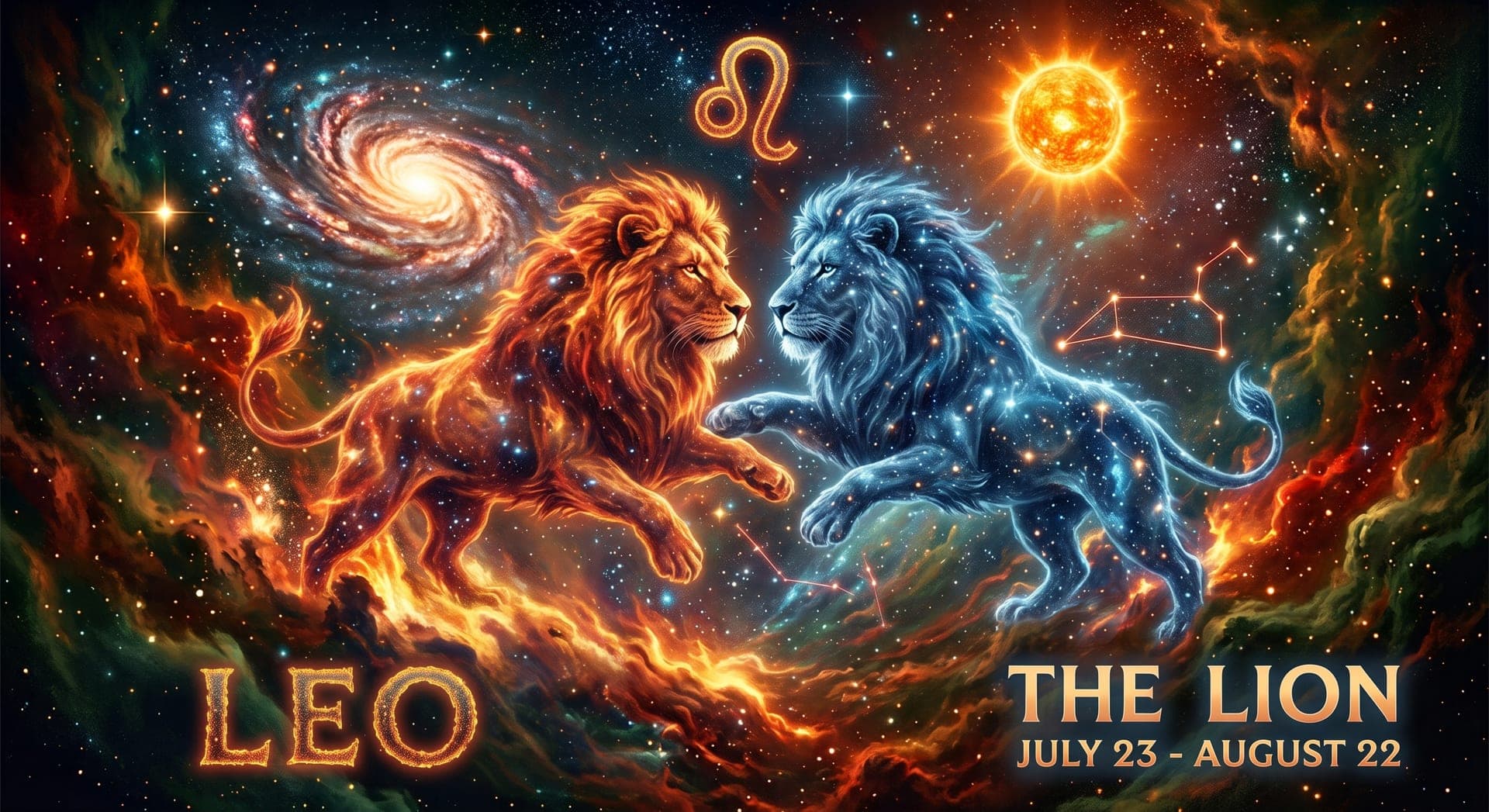
Leo, the fifth sign of the zodiac, spans July 23 to August 22 and is symbolized by the lion, an animal long associated with courage, pride, and natural leadership. Ruled by the Sun, the center of the solar system and the source of light and life, Leo is widely regarded as one of the most confident, warm, and charismatic signs of the zodiac, naturally drawn to the spotlight. As a Fire sign, Leo approaches life with passion, enthusiasm, and a flair for the dramatic, rarely content to blend quietly into the background. Its Fixed modality gives Leo a strong sense of loyalty and consistency, along with a stubborn streak once its mind is made up. People born under this sign are often natural performers, leaders, or creatives who thrive when appreciated and celebrated by those around them. Leo's generosity and warmth make it a beloved friend and steadfast ally, though its genuine need for recognition and admiration can tip into vanity or a demand for center stage if left unchecked.
Personality Traits
Strengths
- Naturally charismatic leader
- Generous and warm-hearted
- Confident and self-assured
- Creative and expressive
- Loyal to friends and family
Weaknesses
- Prone to arrogance
- Craves attention and validation
- Stubborn once decided
- Can be domineering
- Sensitive to criticism of their ego
Compatible Signs
Fun Facts
- Leo's lion symbol connects to the Greek myth of the Nemean Lion, slain by Hercules as the first of his twelve labors.
- Leo is ruled by the Sun, the only zodiac sign ruled directly by a star rather than a planet or moon.
- As a Fixed Fire sign, Leo season falls at the height of summer, when the sun's warmth and intensity are strongest in the Northern Hemisphere.
- Notable Leos include Barack Obama, Madonna, Jennifer Lawrence, and Napoleon Bonaparte.
- Leo rules the heart in traditional medical astrology, reflecting the sign's association with vitality, courage, and life force.
Born on August 13
- 1756
James Gillray
English caricaturist whose biting satirical prints of politicians and royalty helped establish political cartooning as an art form.
- 1819
Sir George Stokes
Irish-born British mathematician and physicist who served as Lucasian Professor of Mathematics at Cambridge and formulated the Navier-Stokes equations
- 1860
Annie Oakley
American sharpshooter and Wild West show performer
- 1888
John Logie Baird
Scottish engineer who demonstrated the world's first working television system in 1926.
- 1899
Alfred Hitchcock
English film director dubbed the 'Master of Suspense,' known for classics including Psycho, Rear Window, and Vertigo.
- 1907
Basil Spence
Scottish architect best known for designing the reconstructed Coventry Cathedral
- 1912
Ben Hogan
American professional golfer
- 1918
Frederick Sanger
English biochemist who won two Nobel Prizes in Chemistry, for determining the structure of insulin and for developing DNA sequencing methods.
- 1919
George Shearing
English jazz pianist, blind from birth, who led a celebrated quintet and composed the jazz standard 'Lullaby of Birdland.'
- 1926
Fidel Castro
Cuban revolutionary leader and president
- 1945
Howard Marks
Welsh cannabis smuggler turned author and legalisation campaigner, whose memoir Mr Nice became a bestseller.
- 1945
Robin Jackman
English cricketer and fast-medium bowler who played Test cricket for England and later became a leading cricket broadcaster
- 1946
Janet Yellen
American economist and U.S. Treasury Secretary
- 1949
Philippe Petit
French high-wire artist
- 1958
Feargal Sharkey
Northern Irish singer known as the distinctive voice of the punk band The Undertones and later a solo pop star.
- 1970
Alan Shearer
English footballer and record Premier League goalscorer who captained Newcastle United and the England national team.
- 1982
Sebastian Stan
Romanian-American actor
On This Day in History
- 29 BCE
Octavian celebrates the first of three consecutive triumphs in Rome, honoring his victory over Dalmatian tribes.
As part of a series of celebrations honoring his consolidation of power following years of civil war, Octavian held the first of three consecutive days of triumphal processions through Rome, this one specifically commemorating his military campaigns against rebellious Dalmatian tribes in the Balkans.
- 1415
King Henry V of England lands in France, beginning the campaign that leads to Agincourt.
Renewing English claims to the French throne amid the ongoing Hundred Years' War, King Henry V landed with an invasion force in Normandy. His subsequent campaign culminated two months later in the decisive English victory at the Battle of Agincourt, one of the most celebrated military triumphs in English history.
- 1415
King Henry V of England lands in Normandy, launching the invasion of France that will lead to the Battle of Agincourt.
Landing near Harfleur with a force of several thousand men, Henry aimed to press his claim to the French throne and avenge earlier English losses in the Hundred Years' War. After a costly month-long siege captured Harfleur, disease thinned his army before a smaller, exhausted English force won a stunning victory over the French at Agincourt that October.
- 1521
Hernan Cortes's forces capture Aztec ruler Cuauhtemoc, completing the conquest of Tenochtitlan.
Following a prolonged siege and fierce urban combat, Spanish conquistador Hernan Cortes and his indigenous allies captured the last Aztec emperor, Cuauhtemoc, marking the definitive fall of the Aztec capital Tenochtitlan. The conquest opened the way for Spanish colonization of central Mexico and the eventual establishment of New Spain.
- 1521
Spanish conquistador Hernan Cortes captures the Aztec ruler Cuauhtemoc, completing the conquest of Tenochtitlan.
After a prolonged siege that devastated the Aztec capital through famine and disease, Spanish forces and their Indigenous allies overran the city's last defenders. The fall of Tenochtitlan, later rebuilt as Mexico City, marked the effective end of the Aztec Empire and opened the way for Spanish colonisation of Mesoamerica over the following decades.
- 1532
The Duchy of Brittany is formally absorbed into the Kingdom of France.
Through a combination of dynastic marriage and eventual royal decree, the previously semi-autonomous Duchy of Brittany was formally and permanently incorporated into the Kingdom of France, ending Brittany's long history as a distinct political entity while allowing it to retain certain regional privileges.
- 1650
Colonel George Monck forms a regiment of foot that will later become the Coldstream Guards, one of the oldest regiments in the British Army.
Raised initially to fight for Parliament during the English Civil War, Monck's regiment later played a key role in the Restoration of Charles II in 1660, escorting the king back to London. Renamed the Coldstream Guards after the Scottish town where it was stationed, it remains in continuous active service today as part of the Household Division.
- 1704
English and Imperial forces defeat French and Bavarian troops at the Battle of Blenheim.
A coalition army led by the Duke of Marlborough and Prince Eugene of Savoy decisively defeated French and Bavarian forces near the Bavarian village of Blenheim during the War of the Spanish Succession, halting a planned French advance on Vienna and marking one of the most significant military victories in British history to that point.
- 1704
An Anglo-Imperial army under the Duke of Marlborough crushes French and Bavarian forces at the Battle of Blenheim.
Fought during the War of the Spanish Succession, the battle saw Marlborough march his English and allied troops deep into Bavaria to link up with Imperial forces under Prince Eugene of Savoy, catching the French off guard. The decisive victory ended the threat to Vienna, shattered France's reputation for invincibility, and established Marlborough as one of history's great military commanders.
- 1779
The Royal Navy inflicts a crushing defeat on the American Penobscot Expedition off the coast of Massachusetts.
American forces had sailed to Maine to dislodge a small British garrison building a fort at Penobscot Bay, but the arrival of a Royal Navy relief squadron trapped the American fleet, forcing its ships to be burned or scuttled to avoid capture. The disaster remained the United States' costliest naval defeat until Pearl Harbor more than 160 years later.
- 1792
King Louis XVI is formally arrested and declared an enemy of the French people.
As the French Revolution radicalized further, the royal family, having earlier attempted to flee the country, was formally arrested and imprisoned in the Temple fortress, with the National Assembly declaring the monarchy effectively suspended. Louis XVI was later tried and executed the following January.
- 1814
The United Kingdom and the Netherlands sign the Convention of London, settling colonial territories after the Napoleonic Wars.
The agreement returned various Dutch colonial possessions, including the East Indies and Suriname, that Britain had seized during the wars, while Britain retained the Cape Colony and parts of Guyana in exchange for compensation. The convention helped stabilise Anglo-Dutch relations and reshaped the colonial map of the Caribbean and Southeast Asia for the following century.
- 1876
Wagner's opera "Das Rheingold" premieres at the inaugural Bayreuth Festival, opening the first complete Ring cycle.
Richard Wagner's monumental four-opera cycle "Der Ring des Nibelungen" began its first complete public performance with the premiere of its opening installment, "Das Rheingold," at the purpose-built Bayreuth Festspielhaus. Wagner had designed the theater specifically to showcase his ambitious operatic works, incorporating an unusually deep, hidden orchestra pit that became a hallmark of the venue and influenced opera house design for generations afterward.
- 1913
English metallurgist Harry Brearley achieves the first commercial production of stainless steel in Sheffield.
While researching corrosion-resistant alloys for gun barrels, Brearley discovered that adding a sufficient proportion of chromium to steel gave it remarkable resistance to rust and staining. His discovery, developed at a Sheffield steelworks, launched an industry that transformed cutlery, surgical instruments, and countless other products, and cemented Sheffield's reputation as a centre of steel innovation.
- 1940
The German Luftwaffe launches Adlertag, or 'Eagle Day,' opening a major new phase of the Battle of Britain.
Intended as the opening blow of a sustained campaign to destroy the Royal Air Force ahead of a planned invasion of Britain, the operation saw waves of German bombers and fighters attack RAF airfields and radar stations. Despite heavy raids, the RAF inflicted significant losses on the attacking force, and the failure to achieve air superiority ultimately forced Hitler to abandon the invasion plan.
- 1961
East Germany closes the border between East and West Berlin, beginning construction of the Berlin Wall.
Amid a growing exodus of East Germans fleeing to the West through Berlin, East German authorities abruptly sealed the border between the city's eastern and western sectors with barbed wire, which was soon replaced by a more permanent concrete barrier. The Berlin Wall stood as a stark symbol of Cold War division for the next 28 years.
- 1964
Peter Allen and Gwynne Evans are hanged for murder, becoming the last people executed in the United Kingdom.
The two men were convicted of killing John Alan West during a robbery in Cumbria and were hanged simultaneously at separate prisons in Liverpool and Manchester. Public and parliamentary opposition to capital punishment was already building, and Parliament suspended the death penalty for murder the following year, formally abolishing it in Great Britain in 1969 and Northern Ireland in 1973.
- 1969
Apollo 11 astronauts are honored with a ticker-tape parade in New York and later receive the Presidential Medal of Freedom.
Following their historic Moon landing days earlier, Apollo 11 astronauts Neil Armstrong, Buzz Aldrin, and Michael Collins were celebrated with massive ticker-tape parades in New York and Chicago before being honored at a state dinner where President Nixon awarded them the Presidential Medal of Freedom.
- 1977
Clashes erupt between National Front marchers and anti-fascist demonstrators in Lewisham, south London.
Hundreds of National Front members attempted to march through an area with a large Black population, prompting a huge counter-demonstration organised by local residents and anti-racist groups. The ensuing violence, involving thrown missiles and police baton charges, led to over 200 arrests and prompted the Metropolitan Police to use riot shields on the British mainland for the first time.
- 2020
Israel and the United Arab Emirates formally establish diplomatic relations.
Brokered in part through the Abraham Accords negotiated by the Trump administration, Israel and the United Arab Emirates announced the normalization of formal diplomatic relations, making the UAE only the third Arab nation to establish such ties with Israel, following Egypt and Jordan decades earlier.