What’s Observed on August 12
Born on August 12: Leo ♌
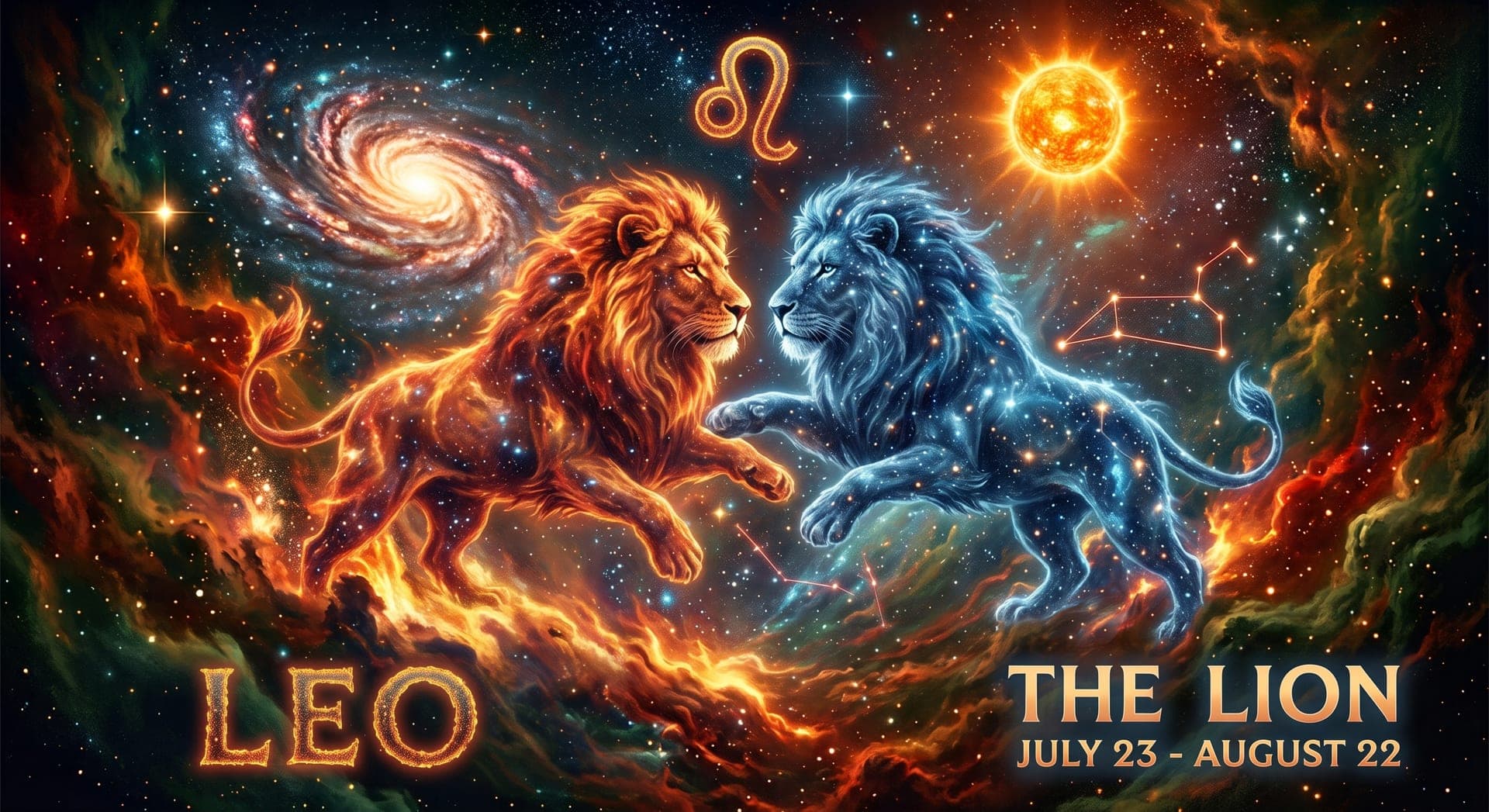
Leo, the fifth sign of the zodiac, spans July 23 to August 22 and is symbolized by the lion, an animal long associated with courage, pride, and natural leadership. Ruled by the Sun, the center of the solar system and the source of light and life, Leo is widely regarded as one of the most confident, warm, and charismatic signs of the zodiac, naturally drawn to the spotlight. As a Fire sign, Leo approaches life with passion, enthusiasm, and a flair for the dramatic, rarely content to blend quietly into the background. Its Fixed modality gives Leo a strong sense of loyalty and consistency, along with a stubborn streak once its mind is made up. People born under this sign are often natural performers, leaders, or creatives who thrive when appreciated and celebrated by those around them. Leo's generosity and warmth make it a beloved friend and steadfast ally, though its genuine need for recognition and admiration can tip into vanity or a demand for center stage if left unchecked.
Personality Traits
Strengths
- Naturally charismatic leader
- Generous and warm-hearted
- Confident and self-assured
- Creative and expressive
- Loyal to friends and family
Weaknesses
- Prone to arrogance
- Craves attention and validation
- Stubborn once decided
- Can be domineering
- Sensitive to criticism of their ego
Compatible Signs
Fun Facts
- Leo's lion symbol connects to the Greek myth of the Nemean Lion, slain by Hercules as the first of his twelve labors.
- Leo is ruled by the Sun, the only zodiac sign ruled directly by a star rather than a planet or moon.
- As a Fixed Fire sign, Leo season falls at the height of summer, when the sun's warmth and intensity are strongest in the Northern Hemisphere.
- Notable Leos include Barack Obama, Madonna, Jennifer Lawrence, and Napoleon Bonaparte.
- Leo rules the heart in traditional medical astrology, reflecting the sign's association with vitality, courage, and life force.
Born on August 12
- 1762
George IV
King of the United Kingdom from 1820, having earlier ruled as Prince Regent during his father George III's illness, remembered for his extravagant tastes and patronage of Regency architecture.
- 1801
John Cadbury
British Quaker businessman who founded the Cadbury chocolate company in Birmingham, building it into one of the world's best-known confectionery brands.
- 1831
Helena Blavatsky
Russian founder of the Theosophical Society
- 1880
Christy Mathewson
American Major League Baseball pitcher
- 1880
Radclyffe Hall
English poet and novelist whose 1928 novel The Well of Loneliness, a landmark lesbian love story, was banned for obscenity in Britain.
- 1881
Cecil B. DeMille
American film director and producer
- 1887
Erwin Schrodinger
Austrian physicist and Nobel laureate
- 1918
Guy Gibson
British RAF officer who led the Dambusters raid on German dams and was awarded the Victoria Cross
- 1919
Margaret Burbidge
English-American astrophysicist whose pioneering work on stellar nucleosynthesis explained how stars forge the chemical elements.
- 1922
Fulton Mackay
Scottish actor best remembered for playing the strict prison officer Mr Mackay in the sitcom Porridge.
- 1925
Norris McWhirter
British journalist and publisher who, with his twin brother Ross, co-founded the Guinness Book of Records and later presented the television show Record Breakers.
- 1930
George Soros
Hungarian-American investor and philanthropist
- 1949
Mark Knopfler
Scottish-born musician and songwriter who founded Dire Straits and wrote hits including 'Sultans of Swing' and 'Money for Nothing.'
- 1971
Pete Sampras
American tennis champion
On This Day in History
- 1099
Crusader forces under Godfrey of Bouillon defeat a Fatimid army at the Battle of Ascalon, concluding the First Crusade.
Concluding the First Crusade's military campaign, Crusader forces under Godfrey of Bouillon decisively defeated a large Fatimid Egyptian army that had marched to recapture recently fallen Jerusalem. The victory secured the newly established Crusader states in the Levant for the time being, though sporadic conflict with regional Muslim powers continued for decades afterward.
- 1099
Crusader forces under Godfrey of Bouillon defeat a Fatimid army at the Battle of Ascalon, securing the First Crusade's gains.
Fought weeks after the crusaders' brutal capture of Jerusalem, the battle saw a smaller Christian force rout a much larger Egyptian relief army sent to retake the holy city. The victory effectively concluded the First Crusade, leaving the newly established Crusader states of Outremer to consolidate their hold on the Levant for the following two centuries.
- 1121
Georgian King David IV defeats Seljuk commander Ilghazi at the Battle of Didgori.
Georgian King David IV, known as "the Builder," led a numerically inferior Georgian army to a stunning victory over a much larger Seljuk force at Didgori, effectively expelling Seljuk power from Georgian territory. The triumph ushered in what historians consider the Georgian Golden Age, a period of significant cultural, political, and territorial expansion.
- 1164
Nur ad-Din Zangi defeats Crusader armies from Tripoli and Antioch at the Battle of Harim.
Muslim military leader Nur ad-Din Zangi decisively defeated a combined Crusader force from the northern Crusader states of Tripoli and Antioch near Harim, capturing several prominent Crusader nobles. The victory significantly weakened Crusader military strength in the region and set the stage for further Muslim territorial gains in subsequent decades.
- 1492
Christopher Columbus reaches the Canary Islands during the early stage of his first westward voyage.
During the early stage of his first westward voyage seeking a route to Asia, Columbus's expedition made a stop at Spain's Canary Islands to restock provisions and undertake repairs before continuing across the Atlantic. The islands subsequently served as a crucial waypoint for numerous later Spanish transatlantic voyages.
- 1676
English colonial forces track down and kill the Wampanoag leader Metacomet, effectively ending King Philip's War in New England.
Known to the English as King Philip, Metacomet had led a broad alliance of Native peoples in a devastating uprising against the expanding New England colonies. A Native scout serving with the colonial militia shot him in a swamp near Mount Hope, Rhode Island. His death broke organised Native resistance in the region and secured English colonial control over southern New England.
- 1765
The Treaty of Allahabad grants the British East India Company the right to collect tax revenue in Bengal, Bihar, and Orissa.
Signed after the Mughal Emperor Shah Alam II's defeat at the Battle of Buxar, the treaty handed the East India Company the diwani, or right to administer revenue collection, across three of India's richest provinces. It marked a decisive shift from Company trading post to territorial ruler, laying the institutional foundation for nearly two centuries of British rule on the Indian subcontinent.
- 1806
Santiago de Liniers recaptures Buenos Aires from British forces, ending the First British Invasion of the Rio de la Plata.
British troops under William Carr Beresford had seized the city weeks earlier in an unauthorised expedition aimed at expanding trade access to Spanish South America. Local militias led by the French-born Spanish officer Liniers forced the small British garrison to surrender. The humiliating defeat encouraged Britain to launch a larger, equally unsuccessful invasion the following year.
- 1851
Isaac Singer receives a patent for his improved sewing machine design.
American inventor Isaac Singer received a patent for significant improvements to the sewing machine, including a practical foot-pedal treadle mechanism that freed both of the operator's hands for guiding fabric. Singer's commercially successful machines and aggressive marketing helped make sewing machines a common household and industrial tool worldwide.
- 1865
British surgeon Joseph Lister performs the first antiseptic surgical procedure, transforming surgical practice.
British surgeon Joseph Lister applied his theories about germ-based infection, inspired by Louis Pasteur's research, to perform what is considered the first genuinely antiseptic surgical operation using carbolic acid to sterilize instruments and wounds. His methods dramatically reduced postoperative infection rates and transformed surgical practice worldwide.
- 1865
British surgeon Joseph Lister performs the first antiseptic surgery, applying carbolic acid to treat a compound fracture.
Inspired by Louis Pasteur's germ theory, Lister treated an open leg wound at Glasgow Royal Infirmary with carbolic acid dressings to prevent infection, a practice previously untried in surgery. His antiseptic methods dramatically cut post-operative mortality and were gradually adopted across hospitals worldwide, transforming surgery from a frequently fatal last resort into a far safer medical procedure.
- 1914
France and Britain declare war on Austria-Hungary during the opening weeks of World War I.
As the alliance system triggered by the assassination of Archduke Franz Ferdinand continued to draw more nations into conflict, France and Britain formally declared war on Austria-Hungary, widening the young conflict that would soon become known as World War I across multiple additional fronts.
- 1914
The United Kingdom and the British Empire declare war on Austria-Hungary, widening the First World War.
Coming days after Britain's declaration of war on Germany, the move formalised hostilities against Austria-Hungary following its invasion of Serbia and alliance with Germany. The declaration drew the entire British Empire, including Canada, Australia, India, and other dominions and colonies, into a conflict that would ultimately claim the lives of hundreds of thousands of British and Commonwealth soldiers.
- 1969
Violence erupts in Derry, Northern Ireland, after a march by the Apprentice Boys, triggering the Battle of the Bogside.
The annual Protestant parade past the city's Catholic Bogside district sparked three days of intense rioting between residents and the police, prompting the British government to deploy troops onto the streets of Northern Ireland for the first time. The unrest is widely regarded as one of the flashpoints marking the start of three decades of violence known as the Troubles.
- 1981
IBM introduces its Personal Computer, helping establish the modern home and office computing market.
IBM entered the rapidly growing personal computer market with its own machine, built using off-the-shelf components and an open architecture that, somewhat unexpectedly, allowed other manufacturers to produce compatible clones. This openness helped establish the IBM-compatible PC as the dominant computing standard for decades to follow.
- 1981
IBM releases the IBM Personal Computer, helping standardise the architecture of home and office computing.
Built from off-the-shelf components and running Microsoft's newly written MS-DOS operating system, the IBM PC was intended as a modest entry into the microcomputer market. Its open architecture instead spawned an entire industry of compatible clones, cementing the IBM-compatible PC as the dominant computing platform for decades and setting the stage for Microsoft's rise to dominance.
- 1985
Japan Air Lines Flight 123 crashes, killing 520 people in history's deadliest single-aircraft disaster.
A Japan Air Lines Boeing 747 suffered a catastrophic structural failure caused by an improperly repaired rear pressure bulkhead, leading to a loss of control that resulted in a crash into a mountainside. The disaster killed 520 of the 524 people aboard, remaining the deadliest single-aircraft accident in aviation history.
- 2000
The Russian Navy submarine Kursk explodes and sinks in the Barents Sea during a military exercise, killing all 118 crew members.
An unstable practice torpedo detonated aboard the vessel, triggering a second, much larger explosion that tore through the hull and sent the submarine to the seabed. Some crew members survived the initial blasts but died before rescuers could reach them, and Russia's slow, secretive response to the disaster drew sharp domestic and international criticism of President Vladimir Putin's government.
- 2017
The Unite the Right rally in Charlottesville, Virginia, turns violent, resulting in three deaths and dozens of injuries.
A rally organized by white nationalist and far-right groups protesting the planned removal of Confederate monuments turned violent when a participant deliberately drove a car into a crowd of counter-protesters, killing one woman and injuring dozens of others. The event prompted widespread national condemnation and renewed debate over Confederate memorials.
- 2021
A gunman kills five people before turning the weapon on himself in Keyham, Plymouth, the worst mass shooting in the UK in over a decade.
Jake Davison shot and killed five people, including a three-year-old girl and his own mother, on residential streets in the Keyham area of Plymouth before killing himself. The attack, Britain's deadliest since the 2010 Cumbria shootings, renewed public debate over the country's firearms licensing system after it emerged Davison had recently had his shotgun certificate returned to him by police.