
What’s Observed on June 28
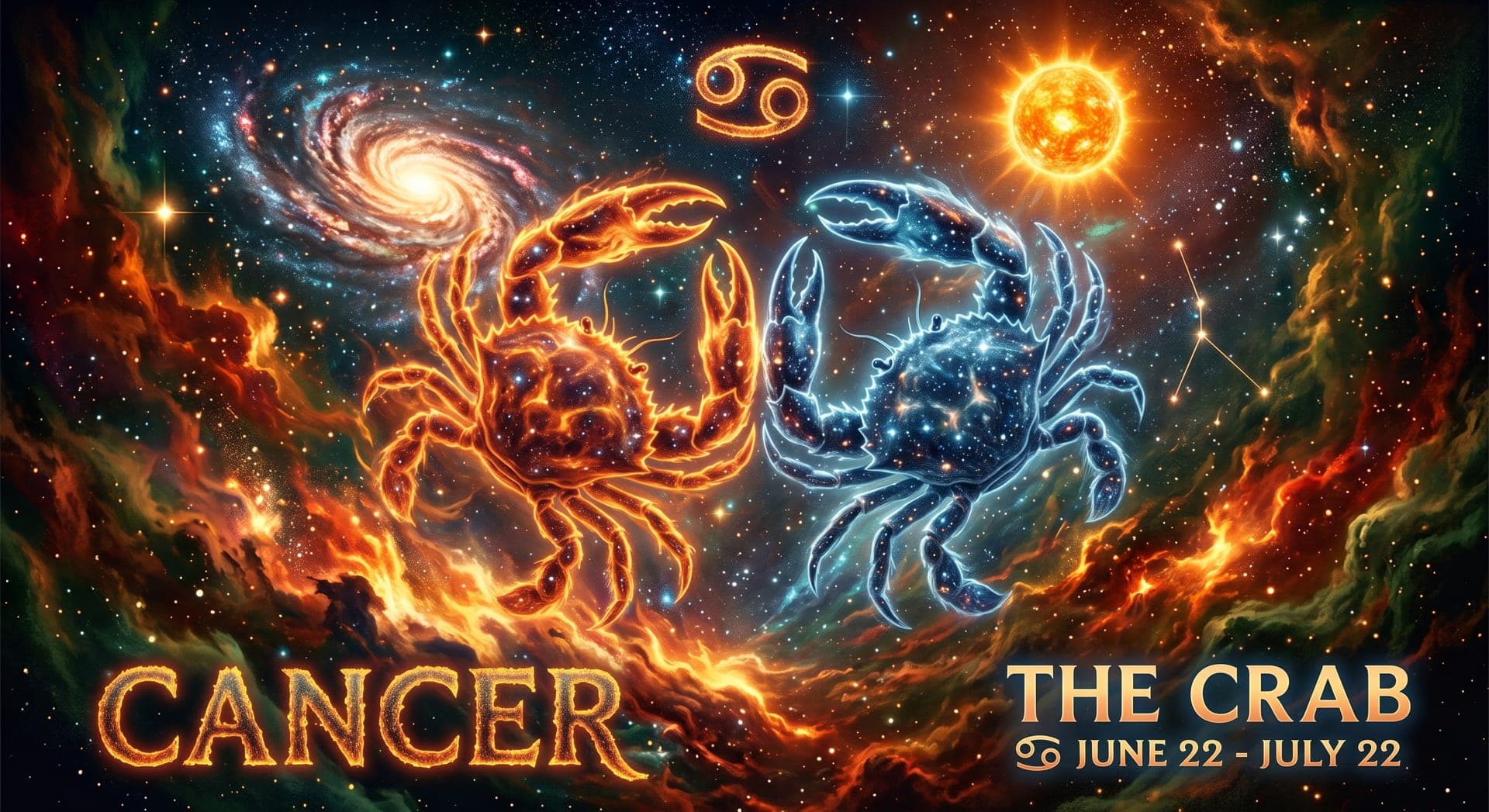
Born on June 28: Cancer ♋
Cancer, the fourth sign of the zodiac, spans June 21 to July 22 and is symbolized by the crab, an animal known for carrying a protective shell while remaining soft and vulnerable underneath. Ruled by the Moon, the celestial body long associated with emotion, intuition, and the subconscious, Cancer is widely regarded as one of the most nurturing and emotionally attuned signs of the zodiac. As a Water sign, Cancer navigates the world through deep feeling, often forming strong emotional bonds and an acute sensitivity to the moods of others. Its Cardinal modality places it at the start of summer, beginning right at the June solstice, reflecting an instinct to initiate and create, especially around home and family. People born under this sign tend to be deeply loyal, protective of loved ones, and drawn to creating a comfortable, secure home environment. Cancer's emotional depth is a genuine strength, but it can also make the sign prone to moodiness or withdrawal when hurt, retreating like a crab into its shell until it feels safe enough to re-emerge.
Personality Traits
Strengths
- Deeply caring and nurturing
- Highly intuitive
- Fiercely loyal and protective
- Strong sense of family and tradition
- Emotionally perceptive
Weaknesses
- Prone to moodiness
- Overly sensitive to criticism
- Can be clingy
- Tends to hold grudges
- Retreats when hurt
Compatible Signs
Fun Facts
- Cancer's crab symbol comes from Greek mythology, where the goddess Hera placed a crab that had fought Hercules among the stars.
- Cancer is ruled by the Moon, the only zodiac sign ruled by a celestial body other than a planet.
- As a Cardinal sign, Cancer initiates summer, beginning at the June solstice, the longest day of the year in the Northern Hemisphere.
- Notable Cancers include Princess Diana, Tom Hanks, Ariana Grande, and Nelson Mandela.
- The crab's hard shell and soft interior are often used as a metaphor for Cancer's protective exterior guarding a deeply sensitive emotional core.
Born on June 28
- 1491
Henry VIII
English king whose six marriages and break from the Catholic Church to found the Church of England reshaped English religion and government.
- 1577
Peter Paul Rubens
Flemish Baroque painter
- 1703
John Wesley
English cleric and theologian whose evangelical preaching launched the Methodist movement within the Church of England, which grew into a worldwide denomination.
- 1712
Jean-Jacques Rousseau
Swiss philosopher and Enlightenment thinker
- 1852
Charles Cruft
English showman who organised the first Cruft's dog show, which grew into Crufts, now the world's largest dog show.
- 1867
Luigi Pirandello
Italian playwright and Nobel Prize laureate in Literature
- 1902
Richard Rodgers
American Broadway composer
- 1909
Eric Ambler
English author widely credited with modernising the spy novel, blending realistic political intrigue with suspense in works such as The Mask of Dimitrios.
- 1926
Mel Brooks
American filmmaker and comedian
- 1935
John Inman
English actor best remembered for playing the flamboyant Mr Humphries in the sitcom Are You Being Served?
- 1951
Lalla Ward
English actress known for playing Romana in Doctor Who and for her work as a wildlife illustrator.
- 1954
A. A. Gill
Scottish-born writer and critic celebrated for his sharply observed restaurant reviews and television criticism for The Sunday Times.
- 1971
Elon Musk
Entrepreneur and CEO of Tesla and SpaceX

On This Day in History
- 1098
Crusader forces defeat a relieving Muslim army at the Battle of Antioch during the First Crusade.
Crusader forces decisively defeated a large relieving Muslim army led by Kerbogha of Mosul outside the walls of Antioch, a desperate and unlikely victory achieved by the starving, disease-weakened Crusaders that secured their hold on the recently captured city during the First Crusade.
- 1461
Edward IV is crowned King of England, consolidating Yorkist power during the Wars of the Roses.
Edward IV was crowned King of England, consolidating Yorkist control over the throne following a decisive military campaign against Lancastrian forces during the ongoing Wars of the Roses, though his hold on power would later be briefly interrupted before being permanently secured.
- 1461
Edward IV was crowned King of England at Westminster Abbey.
Edward's coronation followed his decisive victory over Lancastrian forces at the Battle of Towton earlier that year, one of the bloodiest battles ever fought on English soil. His accession marked a major Yorkist triumph in the Wars of the Roses, though his reign would later be briefly interrupted when Lancastrian forces temporarily restored Henry VI to the throne.
- 1519
Charles V is elected Holy Roman Emperor, consolidating vast Habsburg territorial holdings across Europe.
Charles V was elected Holy Roman Emperor by the empire's electoral princes, adding this prestigious title to his already vast inherited territories spanning Spain, the Low Countries, and parts of Italy and the Americas, making him arguably the most powerful ruler in Europe at the time.
- 1745
New England colonial forces, fighting for Britain, captured the French fortress of Louisbourg.
After a seven-week siege, the British colonial expedition took the heavily fortified stronghold on Cape Breton Island, a major blow to French power in North America during the War of the Austrian Succession. To the fury of the New Englanders who had captured it at great cost, Britain controversially returned Louisbourg to France in a later peace treaty, only for British forces to capture it again in 1758.
- 1776
Thomas Jefferson presents his draft of the Declaration of Independence to the Continental Congress.
Thomas Jefferson presented his committee's draft of the Declaration of Independence to the Continental Congress for review and debate, a document that, after several days of revision including the removal of a passage condemning the slave trade, was formally adopted days later.
- 1778
British and American forces fought an inconclusive but bloody engagement at the Battle of Monmouth Courthouse.
British troops withdrawing from Philadelphia clashed with George Washington's Continental Army in sweltering heat in New Jersey, in one of the largest battles of the American Revolutionary War. Although neither side won a clear victory, the battle demonstrated the improved discipline of Washington's army following its training that winter at Valley Forge.
- 1807
A British attempt to invade the Río de la Plata region collapsed with the failure of an assault on Buenos Aires.
Following the earlier capture and loss of Buenos Aires, a larger British force attempted to retake the city but met fierce resistance from local militias in brutal street fighting. The defeat forced Britain to abandon its campaign in the region entirely and helped inspire the growing movement toward Argentine independence from Spain.
- 1838
Queen Victoria is crowned at Westminster Abbey.
Queen Victoria was crowned at Westminster Abbey roughly a year after ascending to the throne following the death of her uncle William IV, a lavish ceremony marking the formal beginning of what would become one of the longest and most transformative reigns in British history.
- 1838
Queen Victoria was crowned in a lavish coronation ceremony at Westminster Abbey.
More than a year after acceding to the throne at eighteen, Victoria was crowned before huge crowds who lined the streets of London to watch the procession. Her coronation opened a reign that would last more than six decades, becoming synonymous with British imperial expansion, industrial growth and the social conventions that came to define the Victorian era.
- 1859
The first organised dog show was held in Newcastle upon Tyne, England.
The event, staged as part of a poultry show, judged pointers and setters and drew considerable public interest, launching a new competitive pastime that quickly spread across Britain. The Newcastle show is widely credited as the starting point of the modern dog show tradition that eventually led to the founding of major events such as Crufts.
- 1882
Britain and France signed a convention establishing the colonial boundary between Sierra Leone and French Guinea.
The agreement was part of the broader diplomatic carving up of West Africa among European colonial powers during the period, fixing the frontier between British-controlled Sierra Leone and neighbouring French territory. Boundaries drawn in agreements such as this one, often with little regard for existing communities, went on to shape the borders of independent African states in the twentieth century.
- 1914
Archduke Franz Ferdinand of Austria and his wife Sophie are assassinated in Sarajevo, triggering the chain of events that led to World War I.
Archduke Franz Ferdinand of Austria-Hungary and his wife Sophie were assassinated by a Bosnian Serb nationalist in Sarajevo, an act that triggered a rapid cascade of diplomatic and military mobilizations among Europe's alliance blocs, ultimately igniting the catastrophic conflict of World War I.
- 1919
The Treaty of Versailles is signed, formally ending World War I and imposing harsh terms on Germany.
The Treaty of Versailles was signed at the Palace of Versailles, formally ending World War I and imposing harsh territorial losses, military restrictions, and reparations payments on Germany, terms that many historians argue contributed to the political instability that later enabled the rise of Nazism.
- 1922
The Irish Civil War began when the Irish Free State's army shelled anti-Treaty forces occupying Dublin's Four Courts.
The bombardment, using artillery lent by the British government, targeted republican fighters opposed to the Anglo-Irish Treaty who had occupied the Four Courts building. The attack opened months of fighting between former comrades in the Irish independence movement, a bitter conflict whose divisions shaped Irish politics for generations afterward.
- 1948
Boxer Dick Turpin became the first Black British boxer to win a national title.
Turpin defeated Vince Hawkins to claim the British middleweight championship, breaking a long-standing informal colour bar that had prevented Black boxers from competing for British titles. His victory paved the way for his younger brother Randolph Turpin, who would go on to become world middleweight champion in 1951.
- 1969
Police raid the Stonewall Inn in New York City, sparking riots that launched the modern LGBTQ rights movement.
New York City police raided the Stonewall Inn, a gay bar in Greenwich Village, triggering days of spontaneous rioting and resistance from patrons and neighborhood residents against ongoing police harassment, an uprising widely regarded as launching the modern LGBTQ rights movement in the United States.
- 1973
Elections were held for the new Northern Ireland Assembly under a power-sharing framework.
The vote was intended to create a devolved government shared between unionist and nationalist representatives, part of an attempt to resolve the escalating sectarian conflict known as the Troubles. The resulting Sunningdale Agreement power-sharing executive took office but collapsed within months amid unionist opposition and a general strike, and direct rule from London was later restored.
- 1978
The U.S. Supreme Court rules in the Bakke case against rigid racial quota systems in university admissions.
The U.S. Supreme Court ruled in the closely divided "Regents of the University of California v. Bakke" case that rigid racial quota systems in university admissions were unconstitutional, while still permitting race to be considered as one factor among many, a precedent that shaped affirmative action policy for decades.
- 2012
The U.S. Supreme Court upholds the constitutionality of the Affordable Care Act's individual mandate.
The U.S. Supreme Court upheld the constitutionality of the Affordable Care Act's individual mandate requiring most Americans to obtain health insurance, ruling that the provision fell within Congress's taxing power, a decision that preserved the landmark health care reform law from a significant legal challenge.