
What’s Observed on June 27
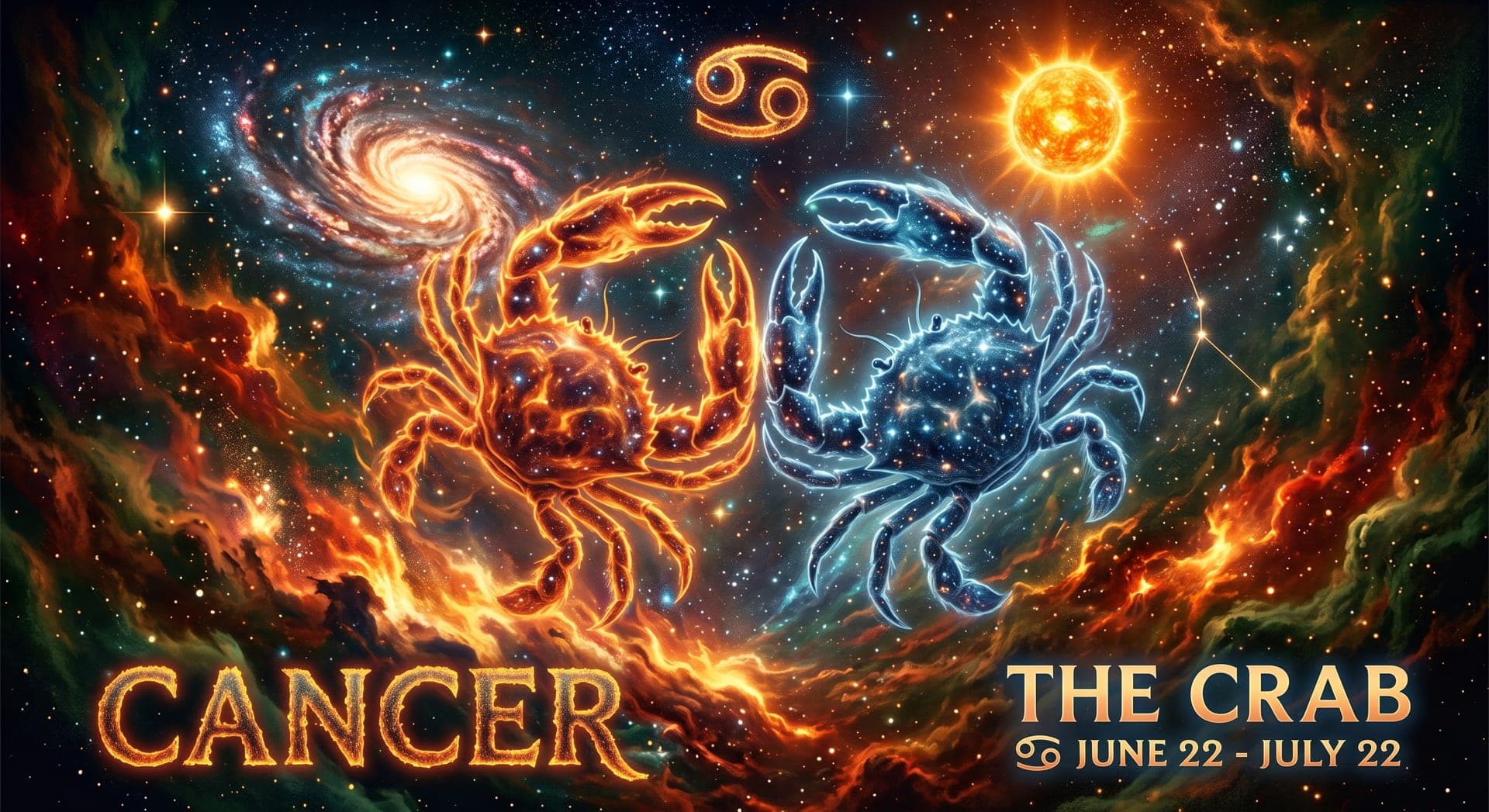
Born on June 27: Cancer ♋
Cancer, the fourth sign of the zodiac, spans June 21 to July 22 and is symbolized by the crab, an animal known for carrying a protective shell while remaining soft and vulnerable underneath. Ruled by the Moon, the celestial body long associated with emotion, intuition, and the subconscious, Cancer is widely regarded as one of the most nurturing and emotionally attuned signs of the zodiac. As a Water sign, Cancer navigates the world through deep feeling, often forming strong emotional bonds and an acute sensitivity to the moods of others. Its Cardinal modality places it at the start of summer, beginning right at the June solstice, reflecting an instinct to initiate and create, especially around home and family. People born under this sign tend to be deeply loyal, protective of loved ones, and drawn to creating a comfortable, secure home environment. Cancer's emotional depth is a genuine strength, but it can also make the sign prone to moodiness or withdrawal when hurt, retreating like a crab into its shell until it feels safe enough to re-emerge.
Personality Traits
Strengths
- Deeply caring and nurturing
- Highly intuitive
- Fiercely loyal and protective
- Strong sense of family and tradition
- Emotionally perceptive
Weaknesses
- Prone to moodiness
- Overly sensitive to criticism
- Can be clingy
- Tends to hold grudges
- Retreats when hurt
Compatible Signs
Fun Facts
- Cancer's crab symbol comes from Greek mythology, where the goddess Hera placed a crab that had fought Hercules among the stars.
- Cancer is ruled by the Moon, the only zodiac sign ruled by a celestial body other than a planet.
- As a Cardinal sign, Cancer initiates summer, beginning at the June solstice, the longest day of the year in the Northern Hemisphere.
- Notable Cancers include Princess Diana, Tom Hanks, Ariana Grande, and Nelson Mandela.
- The crab's hard shell and soft interior are often used as a metaphor for Cancer's protective exterior guarding a deeply sensitive emotional core.
Born on June 27
- 1462
Louis XII
King of France
- 1806
Augustus De Morgan
India-born British mathematician and logician best known for formulating De Morgan's laws
- 1869
Emma Goldman
Lithuanian-American anarchist philosopher and activist
- 1872
Paul Laurence Dunbar
American poet and novelist
- 1880
Helen Keller
American author and disability rights advocate
- 1888
Lewis Namier
Polish-born British historian known for pioneering the prosopographical study of 18th-century British parliamentary politics
- 1899
Juan Trippe
American businessman who founded Pan American World Airways
- 1906
Vernon Watkins
Welsh poet and painter closely associated with fellow Swansea writer Dylan Thomas, known for lyrical, visionary verse.
- 1914
Robert Aickman
English author regarded as a master of the 'strange story,' a subtle form of supernatural fiction, and co-founder of the Inland Waterways Association.
- 1921
Muriel Pavlow
English actress known for a string of popular British films in the 1950s, including Reach for the Sky and Doctor in the House.
- 1924
Bob Appleyard
English cricketer whose brief but devastating fast-bowling career for Yorkshire and England was cut short by injury and illness.
- 1930
Ross Perot
American businessman and presidential candidate
- 1962
Michael Ball
English actor and singer celebrated for his work in West End musical theatre, including Les Misérables and Aspects of Love.
- 1980
Kevin Pietersen
South African-born British cricketer regarded as one of England's greatest ever batsmen
- 1985
James Hook
Welsh rugby union player capped many times for Wales and the British and Irish Lions, known for his versatility across the backline.
- 1986
Sam Claflin
English actor known for playing Finnick Odair in The Hunger Games film series and for the historical drama Their Finest.
- 1989
Matthew Lewis
English actor best known for playing Neville Longbottom throughout the Harry Potter film series.
On This Day in History
- 678
Pope Agatho is consecrated as head of the Catholic Church.
Pope Agatho was consecrated as head of the Catholic Church, later convening an important church council that condemned the monothelite heresy regarding the nature of Christ, a theological dispute that had significantly strained relations between the Western and Eastern branches of Christianity.
- 1499
Explorer Amerigo Vespucci sights the coast of present-day Brazil during his voyage along the South American coastline.
Italian explorer Amerigo Vespucci, sailing on a Portuguese-sponsored expedition along the South American coastline, sighted the coast of present-day Brazil during a voyage that helped convince European geographers the newly encountered lands were an entirely separate continent rather than part of Asia. His published accounts of these explorations later led to the New World continents being named in his honor.
- 1556
Thirteen Protestants, later known as the Stratford Martyrs, were burned at the stake near London.
The executions took place during the reign of Mary I, whose attempt to restore Catholicism in England led to the persecution of Protestants who refused to recant their faith. The Stratford Martyrs were among roughly 300 people burned during Mary's reign, a period that earned her the posthumous nickname 'Bloody Mary' in English Protestant memory.
- 1743
King George II leads British forces into battle at Dettingen, the last time a reigning British monarch personally commanded troops in combat.
King George II of Britain personally led his troops into battle against French forces at the Battle of Dettingen during the War of the Austrian Succession, becoming the last reigning British monarch to command troops in person on a battlefield, a practice increasingly seen as impractical for subsequent constitutional monarchs.
- 1743
King George II personally led British and allied forces to victory over the French at the Battle of Dettingen.
Fighting in Bavaria during the War of the Austrian Succession, George II commanded his troops in person, becoming the last reigning British monarch to lead an army in battle. Despite some initial confusion in the ranks, the Pragmatic Army broke through French lines and forced a retreat, a rare instance of direct royal command on a European battlefield.
- 1760
Cherokee warriors ambushed and defeated a British force at the Battle of Etchoee during the Anglo-Cherokee War.
A column of British regulars and provincial militia under Archibald Montgomerie, sent to punish Cherokee towns for earlier raids, was ambushed in a narrow mountain pass in present-day North Carolina and forced to retreat with heavy casualties. The defeat was a rare check on British colonial military power and delayed the campaign against the Cherokee by several months.
- 1806
British forces captured Buenos Aires during the opening invasion of the Río de la Plata.
A force under General William Beresford seized the city from its Spanish colonial authorities in a surprise assault, hoping to open South America to British trade. The occupation proved short-lived: local militias reorganised and drove the British out within weeks, an early sign of the resistance that would later fuel Argentine independence.
- 1844
A mob murders Mormon leader Joseph Smith and his brother Hyrum at a jail in Carthage, Illinois.
A mob stormed the jail in Carthage, Illinois, where Mormon founder Joseph Smith and his brother Hyrum were being held, and shot both men to death, a killing that plunged the young religious movement into a succession crisis eventually resolved when Brigham Young assumed leadership and led followers west to Utah.
- 1844
Mormon leader Joseph Smith and his brother Hyrum were killed by a mob at a jail in Carthage, Illinois.
Smith, founder of the Latter Day Saint movement, had been jailed on charges related to the destruction of a newspaper press critical of him when an armed mob stormed the jail. His death threw the young religious movement into a succession crisis, ultimately leading Brigham Young to lead most of his followers west to found Salt Lake City.
- 1864
Union and Confederate forces clash at the Battle of Kennesaw Mountain during the Atlanta Campaign of the Civil War.
Union and Confederate forces clashed in a costly and unsuccessful Union frontal assault against heavily fortified Confederate positions at the Battle of Kennesaw Mountain during General William Tecumseh Sherman's Atlanta Campaign. The rare tactical setback resulted in significant Union casualties, though it did little to slow Sherman's steadily advancing broader offensive through Georgia toward Atlanta.
- 1898
Joshua Slocum completes the first solo circumnavigation of the globe by sea.
American sailor Joshua Slocum completed the first successful solo circumnavigation of the globe by sea, returning to Newport, Rhode Island, after a roughly three-year voyage aboard his small sloop Spray, an achievement that established him as a pioneering figure in solo ocean sailing.
- 1898
Joshua Slocum completed the first solo circumnavigation of the globe by sailboat.
Sailing his small sloop Spray from Nova Scotia, Slocum spent more than three years navigating alone across the Atlantic, Pacific and Indian Oceans without modern instruments. His journey and subsequent bestselling memoir, Sailing Alone Around the World, inspired generations of solo sailors and adventurers who followed in his wake.
- 1905
Sailors mutiny aboard the Russian battleship Potemkin, an uprising later dramatized in Sergei Eisenstein's famous film.
Sailors aboard the Russian battleship Potemkin mutinied against their officers over grievances including spoiled, maggot-infested meat and harsh military discipline, part of the broader wave of unrest sweeping the Russian Empire during the 1905 Revolution. The dramatic uprising was later immortalized in Sergei Eisenstein's influential 1925 silent film "Battleship Potemkin," celebrated for its groundbreaking editing techniques.
- 1905
Sailors aboard the Russian battleship Potemkin mutinied against their officers.
Angered by poor conditions and rotten food, the crew rose up, killed several officers, and took control of the ship in the midst of the 1905 Russian Revolution. The mutiny became a powerful symbol of revolutionary unrest within the Russian military and was later immortalised in Sergei Eisenstein's celebrated 1925 film Battleship Potemkin.
- 1976
Palestinian and German militants hijack Air France Flight 139, diverting it to Entebbe, Uganda, leading to a dramatic Israeli rescue raid days later.
Palestinian and German militants hijacked Air France Flight 139 and diverted it to Entebbe, Uganda, where Israeli commandos later conducted a daring long-distance rescue raid freeing most of the hostages, an operation widely regarded as one of the most successful counterterrorism missions in history.
- 1976
Air France Flight 139 was hijacked and diverted to Entebbe, Uganda.
Pro-Palestinian and German hijackers seized the Tel Aviv-bound flight and forced it to land in Uganda, where dictator Idi Amin allowed the hijackers to hold more than 100 hostages, mostly Israeli and Jewish passengers, at the airport terminal. The crisis ended a week later when Israeli commandos staged a dramatic long-range rescue raid that freed almost all of the hostages.
- 1991
Yugoslav federal forces invade Slovenia, beginning the brief Ten-Day War.
Forces of the Yugoslav People's Army invaded the recently seceded republic of Slovenia, beginning the brief Ten-Day War, a relatively low-casualty conflict that nonetheless marked the violent start of Yugoslavia's disintegration. Slovenian territorial defense forces successfully resisted the invasion, and an internationally brokered ceasefire led to the withdrawal of federal troops within weeks.
- 1991
Yugoslav federal forces invaded Slovenia, beginning the brief Ten-Day War.
The intervention came in response to Slovenia's declaration of independence two days earlier, as the Yugoslav People's Army attempted to prevent the republic from seceding. Slovenian territorial defence forces fought the invading army to a standstill, and the conflict ended within ten days with a ceasefire, allowing Slovenia to become the first former Yugoslav republic to secure its independence.
- 2007
Tony Blair resigns as British prime minister after a decade in office, succeeded by Gordon Brown.
Tony Blair resigned as British prime minister after a decade in office marked by significant domestic reforms and the deeply controversial decision to join the U.S.-led invasion of Iraq, handing power to his longtime chancellor and political ally Gordon Brown.
- 2007
Tony Blair resigned as British Prime Minister after ten years in office, succeeded by Gordon Brown.
Blair's departure ended the longest continuous premiership of a Labour prime minister, a decade defined by economic growth, constitutional reform, and the controversial decision to join the US-led invasion of Iraq. Brown, who had served as Chancellor throughout Blair's tenure, took over without a general election under the terms of an earlier internal party agreement.