
What’s Observed on June 29
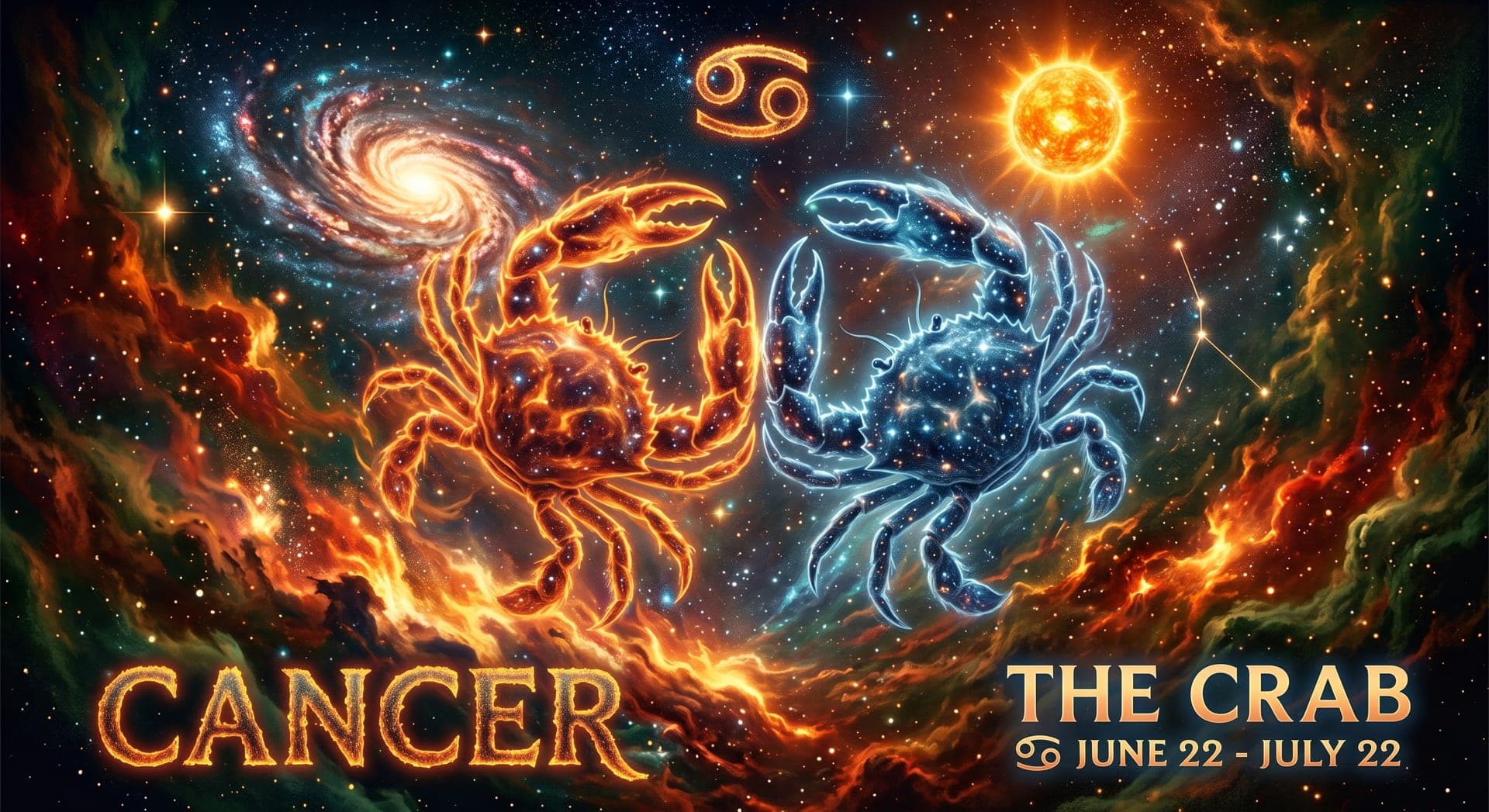
Born on June 29: Cancer ♋
Cancer, the fourth sign of the zodiac, spans June 21 to July 22 and is symbolized by the crab, an animal known for carrying a protective shell while remaining soft and vulnerable underneath. Ruled by the Moon, the celestial body long associated with emotion, intuition, and the subconscious, Cancer is widely regarded as one of the most nurturing and emotionally attuned signs of the zodiac. As a Water sign, Cancer navigates the world through deep feeling, often forming strong emotional bonds and an acute sensitivity to the moods of others. Its Cardinal modality places it at the start of summer, beginning right at the June solstice, reflecting an instinct to initiate and create, especially around home and family. People born under this sign tend to be deeply loyal, protective of loved ones, and drawn to creating a comfortable, secure home environment. Cancer's emotional depth is a genuine strength, but it can also make the sign prone to moodiness or withdrawal when hurt, retreating like a crab into its shell until it feels safe enough to re-emerge.
Personality Traits
Strengths
- Deeply caring and nurturing
- Highly intuitive
- Fiercely loyal and protective
- Strong sense of family and tradition
- Emotionally perceptive
Weaknesses
- Prone to moodiness
- Overly sensitive to criticism
- Can be clingy
- Tends to hold grudges
- Retreats when hurt
Compatible Signs
Fun Facts
- Cancer's crab symbol comes from Greek mythology, where the goddess Hera placed a crab that had fought Hercules among the stars.
- Cancer is ruled by the Moon, the only zodiac sign ruled by a celestial body other than a planet.
- As a Cardinal sign, Cancer initiates summer, beginning at the June solstice, the longest day of the year in the Northern Hemisphere.
- Notable Cancers include Princess Diana, Tom Hanks, Ariana Grande, and Nelson Mandela.
- The crab's hard shell and soft interior are often used as a metaphor for Cancer's protective exterior guarding a deeply sensitive emotional core.
Born on June 29
- 1900
Antoine de Saint-Exupéry
French writer and aviator known for "The Little Prince"
- 1901
Nelson Eddy
American singer and actor
- 1903
Alan Blumlein
English electronics engineer whose inventions included stereophonic sound recording and key radar technologies that contributed to Britain's wartime air defences.
- 1911
Bernard Herrmann
American film composer known for scoring Hitchcock films
- 1928
Ian Bannen
Scottish actor known for his stage work with the Royal Shakespeare Company and for films including The Flight of the Phoenix, for which he received an Academy Award nomination.
- 1936
Harmon Killebrew
American baseball Hall of Famer
- 1940
John Dawes
Welsh rugby union player and coach who captained Wales to a Grand Slam and led the British and Irish Lions to a historic series win in New Zealand.
- 1944
Gary Busey
American actor
- 1945
Chandrika Kumaratunga
President of Sri Lanka
- 1948
Ian Paice
English drummer and founding member of the rock band Deep Purple, known for his powerful and technically accomplished playing.
- 1980
Katherine Jenkins
Welsh mezzo-soprano and one of Britain's best-selling classical crossover artists.
- 1990
Kim Little
Scottish footballer regarded as one of the finest midfielders of her generation, long a mainstay of Arsenal and the Scotland national team.
- 1991
Kawhi Leonard
American professional basketball player
- 2003
Jude Bellingham
English footballer who rose to prominence as a teenager at Birmingham City before becoming a key midfielder for Borussia Dortmund, Real Madrid and the England national team.

On This Day in History
- 626
Avar and Sasanian forces lay siege to Constantinople, which successfully withstands the assault.
A combined Avar and Sasanian Persian force laid siege to Constantinople from both land and sea, but the Byzantine capital's formidable walls and naval defenses successfully repelled the assault, a failed siege that preserved Byzantine control of the city and significantly weakened the attacking Avar Khaganate's power.
- 1149
Nur ad-Din Zangi defeats and kills Raymond of Poitiers at the Battle of Inab, a major Crusader defeat in the Levant.
Muslim commander Nur ad-Din Zangi decisively defeated and killed Raymond of Poitiers, the Crusader Prince of Antioch, at the Battle of Inab, a significant setback for the Crusader states that exposed the principality of Antioch to further territorial losses in the following years.
- 1170
A major earthquake strikes Syria, causing widespread destruction across several cities.
A major earthquake struck the region of Syria, causing widespread destruction to numerous cities and fortifications, including significant damage to the massive Crusader fortress of Krak des Chevaliers, one of several devastating seismic events to strike the eastern Mediterranean during this era.
- 1534
French explorer Jacques Cartier becomes the first European to reach Prince Edward Island.
French explorer Jacques Cartier's expedition became the first documented Europeans to reach Prince Edward Island during his voyage exploring the Gulf of St. Lawrence, part of his broader efforts to chart the region and search for a route through North America to Asia.
- 1613
London's Globe Theatre, home to Shakespeare's acting company, burns to the ground during a performance.
London's Globe Theatre, the primary performance venue for William Shakespeare's acting company, burned to the ground after a theatrical cannon effect during a performance ignited the thatched roof, a disaster that led to the theater's rebuilding with a fireproof tiled roof the following year.
- 1613
Shakespeare's Globe Theatre in London burned to the ground during a performance.
A cannon fired for a special effect during a performance of Henry VIII ignited the theatre's thatched roof, and the fire spread so quickly that the entire building was destroyed within an hour, though remarkably no one was seriously hurt. The Globe was rebuilt the following year with a tiled roof to prevent a repeat disaster, and a modern reconstruction now stands near the original site.
- 1620
The English crown issued a proclamation prohibiting the cultivation of tobacco in England to protect the Virginia Company's monopoly.
King James I, a noted opponent of tobacco despite its growing popularity, banned domestic cultivation partly on health grounds but largely to secure the profits of the struggling Virginia colony, which depended heavily on tobacco exports. The policy helped establish tobacco as one of colonial Virginia's most important cash crops for generations to come.
- 1644
Royalist forces under King Charles I defeated the Parliamentarian army at the Battle of Cropredy Bridge.
Charles personally led his troops to victory over Sir William Waller's Parliamentarian force near Banbury in Oxfordshire during the English Civil War, capturing several enemy guns in the process. The win boosted royalist morale during a difficult campaigning season, though it proved only a temporary reprieve as Parliament's forces gained the upper hand later in the war.
- 1786
Scottish Catholic Highlanders led by Alexander Macdonell began emigrating to Glengarry County in Ontario.
Facing economic hardship and the effects of the Highland Clearances, groups of Catholic Highlanders from Scotland's Glengarry region relocated to Upper Canada, forming settlements that preserved Gaelic language and culture in North America. The community became a significant centre of Scottish-Canadian heritage that endures in the region's identity today.
- 1864
A train plunged into the Richelieu River near Quebec in Canada's deadliest rail disaster.
The overnight train failed to stop at an open swing bridge and plummeted into the river, killing approximately 99 passengers, many of them European immigrants travelling to new lives in Canada and the United States. The disaster prompted major reforms to railway signalling and bridge safety procedures across the growing Canadian rail network.
- 1880
France formally annexes Tahiti, ending the independent Kingdom of Tahiti.
France formally annexed the Kingdom of Tahiti, ending the South Pacific island's independent monarchy under Queen Pomare IV and incorporating it as a French colonial territory. The annexation was part of France's broader 19th-century expansion of colonial holdings across French Polynesia, driven by strategic naval interests and competition with other European powers in the Pacific.
- 1889
Voters in Hyde Park and other Illinois townships approved annexation by Chicago, vastly expanding the city.
The referendum brought a huge swath of surrounding townships into Chicago's boundaries, instantly making it the largest city in the United States by land area and adding hundreds of thousands of residents. The annexation reflected the rapid urban growth of the late nineteenth century and reshaped Chicago's development for the following century.
- 1916
Irish nationalist Roger Casement was sentenced to death for treason over his role in the Easter Rising.
Casement, a former British consul who had been knighted for humanitarian work, was convicted of treason after travelling to Germany to seek arms and support for the Irish rebellion and being captured on the Irish coast just before the uprising began. He was hanged that August, and his case remains one of the most controversial trials in modern Irish and British history.
- 1927
The aircraft Bird of Paradise completes the first transpacific flight from California to Hawaii.
The aircraft Bird of Paradise completed the first successful nonstop transpacific flight, traveling from Oakland, California, to Hawaii, a dangerous, pioneering long-distance flight over open ocean that demonstrated the growing feasibility of transoceanic aviation just over a year after Lindbergh's famous transatlantic crossing.
- 1956
President Dwight Eisenhower signs the Federal Aid Highway Act, creating the U.S. Interstate Highway System.
President Dwight Eisenhower signed the Federal Aid Highway Act, authorizing the construction of the Interstate Highway System, a massive infrastructure project partly justified on Cold War national defense grounds for rapid military and civilian evacuation capability. The resulting nationwide highway network ultimately transformed American transportation, commerce, and suburban development over the following decades.
- 1971
The crew of the Soviet Soyuz 11 spacecraft died when their capsule depressurised during reentry.
Cosmonauts Georgy Dobrovolsky, Vladislav Volkov and Viktor Patsayev had just completed a record-breaking three-week stay aboard the Salyut 1 space station when a faulty valve caused their capsule to lose air during descent. They remain the only humans known to have died in space itself, and the tragedy led to significant redesigns of Soviet spacecraft safety systems.
- 1976
Seychelles gained independence from Britain.
The Indian Ocean archipelago became a fully sovereign nation within the Commonwealth after more than a century and a half of British colonial rule, having earlier been administered as part of Mauritius. James Mancham became the country's first president, though he was overthrown in a coup just over a year later.
- 1986
Argentina defeats West Germany to win the FIFA World Cup in Mexico.
Argentina defeated West Germany 3-2 in the final to win the 1986 FIFA World Cup in Mexico, a tournament remembered largely for Diego Maradona's extraordinary individual performances, cementing his legacy as one of the greatest footballers in the sport's history.
- 2007
Apple releases the first iPhone, transforming the smartphone industry.
Apple released the first iPhone, a touchscreen smartphone combining a phone, internet browser, and media player into a single device, an innovation that fundamentally transformed the mobile phone industry and reshaped how billions of people worldwide communicate, work, and access information.
- 2007
Apple released the first iPhone, transforming the smartphone industry.
Unveiled by Steve Jobs months earlier, the device combined a phone, an internet browser and a media player into a single touchscreen handset, discarding the physical keyboards common on earlier smartphones. Its success reshaped the technology industry and set the template that most subsequent smartphones would follow.