
What’s Observed on May 8
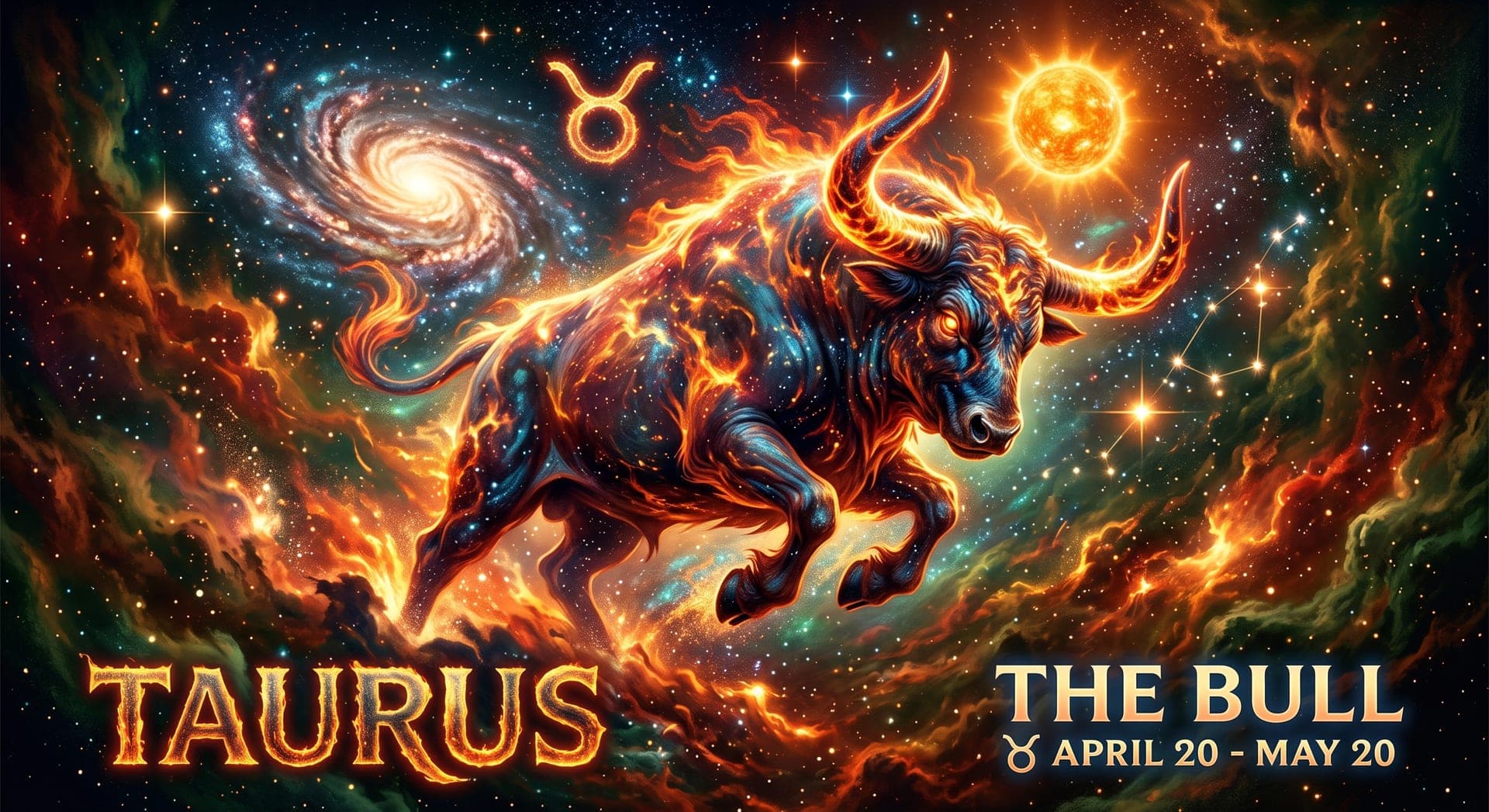
Born on May 8: Taurus ♉
Taurus, the second sign of the zodiac, spans April 20 to May 20 and is symbolized by the bull, an animal prized for its strength, steadiness, and quiet determination. Ruled by Venus, the planet of love, beauty, and material comfort, Taurus is often described as one of the most sensual and pleasure-loving signs, drawn to good food, fine art, and physical comfort. As an Earth sign, Taurus is grounded, practical, and deeply connected to the physical world, valuing stability and tangible security over abstract ideas or sudden change. Its Fixed modality gives Taurus a well-earned reputation for stubbornness, since once a Taurus has settled on a plan or opinion, shifting it can be remarkably difficult. People born under this sign tend to be dependable, loyal, and patient, often the steady presence others rely on during difficult times. While their resistance to change can occasionally frustrate those around them, Taurus's persistence and work ethic make them exceptionally good at seeing long-term goals through to completion.
Personality Traits
Strengths
- Dependable and steady
- Patient and persistent
- Devoted to loved ones
- Appreciates beauty and comfort
- Financially sensible
Weaknesses
- Extremely stubborn
- Resistant to change
- Can be possessive
- Overindulgent
- Slow to forgive
Compatible Signs
Fun Facts
- Taurus's bull symbol connects to the Greek myth of Zeus transforming into a white bull to abduct Europa.
- Venus, Taurus' ruling planet, is the Roman goddess of love and beauty, reflecting the sign's love of comfort, art, and sensory pleasure.
- Taurus is considered by many astrologers to be the most stubborn sign of the zodiac, a trait often attributed to its Fixed modality and bull symbolism.
- Notable Taureans include Queen Elizabeth II, William Shakespeare, Adele, and David Beckham.
- The star cluster known as the Pleiades sits within the constellation Taurus and has been referenced in mythology and literature across many cultures.
Born on May 8
- 1720
William Cavendish, 4th Duke of Devonshire
English politician, born in London, who served as Prime Minister of Great Britain in 1756-1757
- 1737
Edward Gibbon
English historian best known for "The History of the Decline and Fall of the Roman Empire"
- 1828
Henry Dunant
Swiss founder of the Red Cross and first Nobel Peace Prize laureate
- 1884
Harry S. Truman
33rd President of the United States
- 1913
Sid James
South African-born British comic actor best known for his roles in the "Carry On" film series and as Tony Hancock's co-star in "Hancock's Half Hour"
- 1926
Don Rickles
American insult comedian
- 1926
David Attenborough
English broadcaster and natural historian, born in Isleworth, renowned worldwide for his nature documentaries
- 1930
Heather Harper
Northern Irish operatic soprano, born in Belfast, celebrated for her performances of Britten's works
- 1935
Jack Charlton
English footballer, born in Ashington, Northumberland, who won the 1966 World Cup with England and later managed the Republic of Ireland
- 1937
Thomas Pynchon
American novelist known for "Gravity's Rainbow"
- 1940
Ricky Nelson
American musician and actor
- 1942
Norman Lamont
Scottish-born politician, born in Lerwick, Shetland, who served as Chancellor of the Exchequer
- 1943
Pat Barker
English novelist known for the Regeneration trilogy of novels about the First World War
- 1947
John Reid, Baron Reid of Cardowan
Scottish politician, born in Bellshill, who served as Secretary of State for Defence and Home Secretary
- 1975
Enrique Iglesias
Spanish singer-songwriter

On This Day in History
- 1360
England's King Edward III and France's King John II draft the Treaty of Brétigny, a major peace settlement in the Hundred Years' War.
Under the treaty's terms, Edward renounced his claim to the French throne in exchange for full sovereignty over an enlarged Aquitaine and other French territories, along with a huge ransom for the captured King John, who had been held in England since his defeat at Poitiers. The settlement brought roughly a decade of relative peace between the two kingdoms. Renewed fighting broke out within a decade, however, as territorial disputes and John's death reopened the underlying conflict.
- 1429
Joan of Arc leads French forces to lift the Siege of Orléans, a pivotal turning point in the Hundred Years' War.
French heroine Joan of Arc, then just seventeen years old and claiming to act on divine guidance, led a relief force that broke the nine-month English siege of Orléans, a pivotal turning point in the long Hundred Years' War. The victory revitalized French morale and military momentum, paving the way for the eventual coronation of the previously uncrowned Dauphin as King Charles VII.
- 1541
Spanish explorer Hernando de Soto's expedition becomes the first documented Europeans to reach the Mississippi River.
Spanish explorer Hernando de Soto's expedition, then in its second year of a grueling, brutal journey through the American Southeast searching for gold and treasure, became the first documented Europeans to encounter the Mississippi River near present-day Walls, Mississippi. De Soto himself would die along the river's banks roughly a year later, and his body was secretly buried in its waters to conceal his death from hostile local tribes.
- 1608
English mining entrepreneur Bevis Bulmer reopens a silver mine at Hilderston in Scotland.
The mine, near Linlithgow, had briefly produced remarkably rich veins of native silver, sparking a short-lived boom that drew prospectors and investors hoping to profit from Scotland's mineral wealth. Bulmer, an experienced English mining engineer, had previously worked on gold and silver prospecting projects elsewhere in Britain. The Hilderston mine's silver proved short-lived, but it remains a notable episode in the history of mining in Scotland.
- 1794
French chemist Antoine Lavoisier, often called the father of modern chemistry, is guillotined during the Reign of Terror.
French chemist Antoine Lavoisier, widely regarded as the father of modern chemistry for his groundbreaking work identifying oxygen's role in combustion and establishing the law of conservation of mass, was guillotined during the Reign of Terror due to his prior role collecting taxes for the monarchy. A judge presiding over his trial reportedly remarked that "the Republic has no need of scientists."
- 1846
American forces under Zachary Taylor win the Battle of Palo Alto, the first major engagement of the Mexican-American War.
American forces under General Zachary Taylor defeated a larger Mexican army at the Battle of Palo Alto in disputed territory near the Rio Grande in Texas, the first major engagement of the Mexican-American War. American artillery innovations proved decisive in the fighting, and the conflict that followed ultimately resulted in the United States acquiring vast new southwestern territories stretching to the Pacific.
- 1877
The first Westminster Kennel Club Dog Show opens in New York City, launching what became a major American dog show tradition.
The first Westminster Kennel Club Dog Show opened at Gilmore's Gardens in New York City, launching what became the second-oldest continuously held sporting event in the United States after only the Kentucky Derby. The prestigious annual show, now held at Madison Square Garden, grew into a major showcase celebrating purebred dog breeding, conformation, and canine excellence.
- 1886
Pharmacist John Pemberton sells the first serving of Coca-Cola as a patent medicine in Atlanta, Georgia.
Atlanta pharmacist John Pemberton sold the first serving of a new caramel-colored drink called Coca-Cola at Jacob's Pharmacy, marketed initially as a patent medicine promising to cure headaches and fatigue, priced at five cents a glass. The beverage would evolve over subsequent decades, under new ownership after Pemberton's death, into one of the most recognized brands and widely consumed soft drinks in the world.
- 1902
Mount Pelée erupts on the Caribbean island of Martinique, destroying the city of Saint-Pierre and killing more than 30,000 people.
Mount Pelée erupted catastrophically on the Caribbean island of Martinique, sending a superheated cloud of gas, ash, and rock racing down the mountainside at hurricane speed that destroyed the city of Saint-Pierre within minutes and killed more than 30,000 people. Only a handful of survivors were found, including, according to popular legend, a prisoner protected by his thick-walled jail cell.
- 1919
Australian-born journalist Edward George Honey, writing from London, proposes a period of silence to commemorate those killed in the First World War.
Honey's letter to the London Evening News argued for a respectful pause rather than noisy celebration to mark the anniversary of the Armistice. His idea reached King George V, whose government adopted the concept, and the first official two-minute silence was observed across the British Empire on Armistice Day in November 1919. The tradition of silent remembrance has continued in Britain and Commonwealth countries ever since.
- 1941
German Luftwaffe bombers raid the English cities of Nottingham and Derby during the Blitz.
The raids targeted industrial centers producing munitions and vehicles for the British war effort, part of Germany's sustained bombing campaign against British cities that had begun the previous autumn. Nottingham and Derby, along with many other English towns, suffered civilian casualties and significant damage to homes and factories. The Blitz ultimately failed to break British morale or halt wartime production, though it caused tens of thousands of deaths nationwide.
- 1945
Germany's unconditional surrender takes effect, marking Victory in Europe Day and the end of World War II on the continent.
Germany's unconditional surrender to the Allied powers, signed the previous day in Reims and ratified in Berlin, formally took effect, ending World War II in Europe after nearly six years of devastating conflict. Massive, spontaneous celebrations erupted across Allied nations on what became commemorated annually as Victory in Europe Day, even as fighting continued against Japan in the Pacific.
- 1945
The German Instrument of Surrender takes effect, marking Victory in Europe Day and the end of the Second World War in Europe.
Celebrations erupted across Britain and Allied nations as news spread that Nazi Germany's armed forces had formally surrendered, following Hitler's suicide the previous week. Prime Minister Winston Churchill addressed jubilant crowds in London, declaring the end of nearly six years of war that had cost millions of lives and devastated much of Europe. Fighting continued against Japan in the Pacific for several more months until its surrender that August.
- 1970
The Beatles release "Let It Be," their twelfth and final studio album.
The Beatles released "Let It Be," their twelfth and final studio album, though it had actually been recorded largely before "Abbey Road" and was delayed for release amid extensive production disputes, most notably producer Phil Spector's controversial orchestral overdubs. By the time the album reached stores, the band had already effectively broken up, making it a bittersweet farewell for fans.
- 1970
The Beatles release their twelfth and final studio album, Let It Be.
Although released last, much of the album had actually been recorded before Abbey Road, during sessions in early 1969 intended to capture the band performing live in the studio. By the time of its release, the Beatles had already publicly split, making Let It Be a bittersweet farewell that included hits such as the title track and 'Get Back.' The album, along with its accompanying documentary film, captured the tensions that led to the breakup of one of the most influential bands in popular music history.
- 1980
The World Health Organization formally certifies the global eradication of smallpox, the first disease eliminated through human effort.
The World Health Organization formally certified that smallpox, a disease that had killed hundreds of millions of people throughout human history and disfigured countless survivors, had been completely eradicated worldwide following an intensive, coordinated decades-long global vaccination campaign. It remains the first and, to date, only human infectious disease ever eliminated entirely through deliberate human effort.
- 1980
The World Health Organization formally confirms the global eradication of smallpox.
The declaration followed an intensive worldwide vaccination and surveillance campaign that tracked down and contained the last remaining outbreaks, with the final naturally occurring case recorded in Somalia in 1977. Smallpox remains the only human infectious disease ever to have been completely eradicated, a landmark achievement in the history of public health. The campaign's success is often cited as a model for later efforts to eliminate other diseases such as polio.
- 1984
The Thames Barrier, a movable flood defense system protecting London from tidal surges, is officially opened.
Built after a catastrophic 1953 North Sea flood exposed London's vulnerability to storm surges, the barrier consists of ten enormous steel gates spanning the river at Woolwich Reach that can be raised to hold back exceptionally high tides. It stands as one of the largest movable flood barriers in the world and has been closed hundreds of times since opening to protect the capital from flooding. The barrier remains a critical piece of infrastructure as rising sea levels increase flood risk for London.
- 1987
The British Special Air Service ambushes an Irish Republican Army unit attacking a police station in Loughgall, Northern Ireland, killing eight IRA volunteers.
The IRA team had planned to destroy the Loughgall Royal Ulster Constabulary station using a bomb-laden digger, but the SAS had been tipped off in advance and lay in wait, resulting in the single deadliest loss suffered by the IRA during the Troubles. A civilian bystander was also killed in the crossfire. The ambush was a major operational success for British security forces but remains a controversial and contested episode in the history of the conflict.
- 2019
British teenager Isabelle Holdaway becomes the first person to receive a genetically engineered bacteriophage therapy, successfully treating a drug-resistant infection.
Holdaway, a cystic fibrosis patient who had undergone a double lung transplant, developed a severe infection resistant to conventional antibiotics. Doctors in the United States, working with British researchers, engineered a cocktail of bacteriophages, viruses that target specific bacteria, genetically modified to more effectively kill the resistant strain. The treatment's success was hailed as a promising proof of concept for phage therapy as a potential tool against the growing threat of antibiotic resistance.