
What’s Observed on May 9
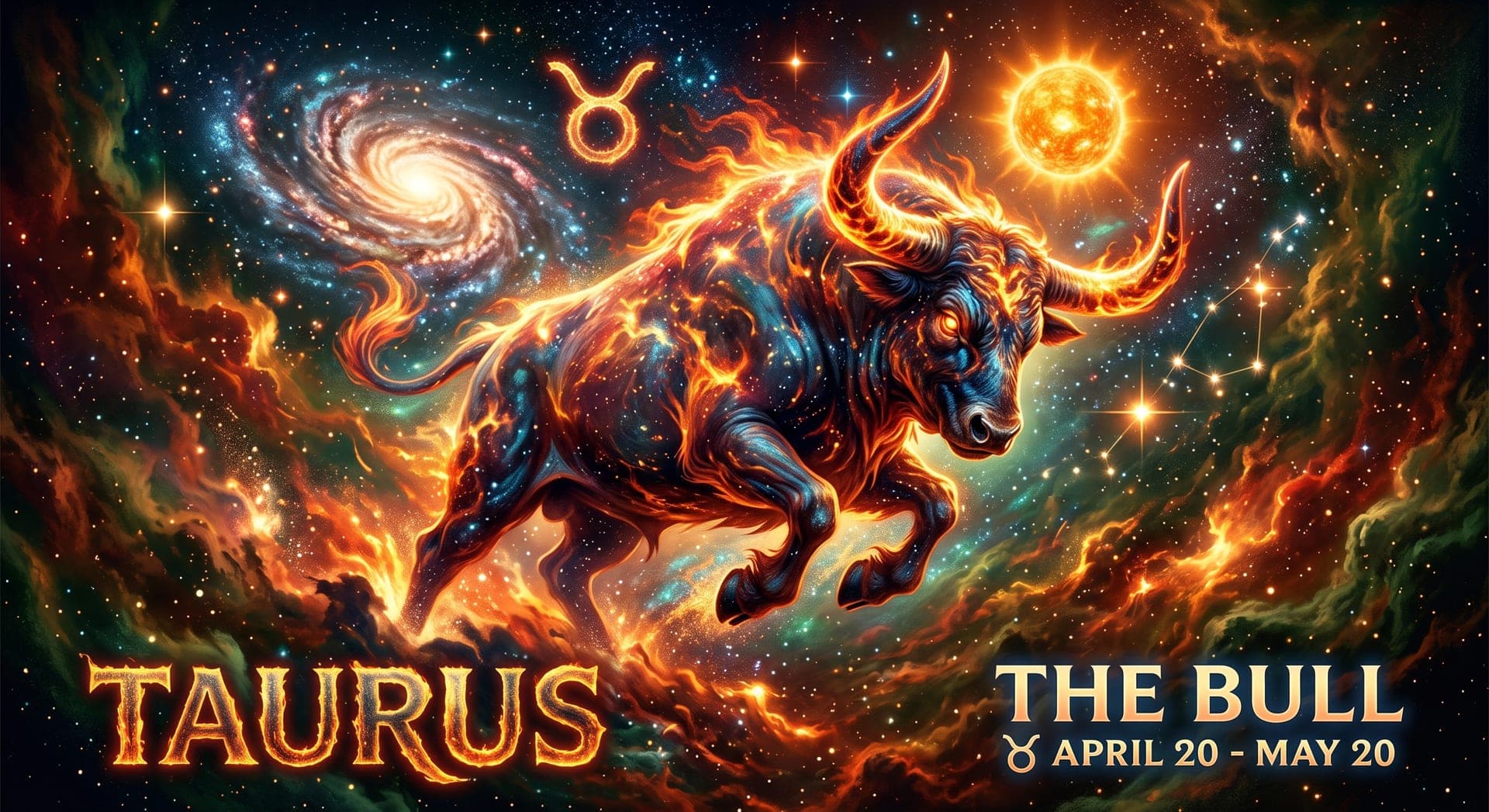
Born on May 9: Taurus ♉
Taurus, the second sign of the zodiac, spans April 20 to May 20 and is symbolized by the bull, an animal prized for its strength, steadiness, and quiet determination. Ruled by Venus, the planet of love, beauty, and material comfort, Taurus is often described as one of the most sensual and pleasure-loving signs, drawn to good food, fine art, and physical comfort. As an Earth sign, Taurus is grounded, practical, and deeply connected to the physical world, valuing stability and tangible security over abstract ideas or sudden change. Its Fixed modality gives Taurus a well-earned reputation for stubbornness, since once a Taurus has settled on a plan or opinion, shifting it can be remarkably difficult. People born under this sign tend to be dependable, loyal, and patient, often the steady presence others rely on during difficult times. While their resistance to change can occasionally frustrate those around them, Taurus's persistence and work ethic make them exceptionally good at seeing long-term goals through to completion.
Personality Traits
Strengths
- Dependable and steady
- Patient and persistent
- Devoted to loved ones
- Appreciates beauty and comfort
- Financially sensible
Weaknesses
- Extremely stubborn
- Resistant to change
- Can be possessive
- Overindulgent
- Slow to forgive
Compatible Signs
Fun Facts
- Taurus's bull symbol connects to the Greek myth of Zeus transforming into a white bull to abduct Europa.
- Venus, Taurus' ruling planet, is the Roman goddess of love and beauty, reflecting the sign's love of comfort, art, and sensory pleasure.
- Taurus is considered by many astrologers to be the most stubborn sign of the zodiac, a trait often attributed to its Fixed modality and bull symbolism.
- Notable Taureans include Queen Elizabeth II, William Shakespeare, Adele, and David Beckham.
- The star cluster known as the Pleiades sits within the constellation Taurus and has been referenced in mythology and literature across many cultures.
Born on May 9
- 1860
J. M. Barrie
Scottish novelist and playwright, born in Kirriemuir, best known as the creator of Peter Pan
- 1870
Harry Vardon
Jersey-born golfer who won The Open Championship a record six times and pioneered the overlapping grip used by modern golfers
- 1874
Howard Carter
English archaeologist, born in Kensington, celebrated for discovering the tomb of Tutankhamun
- 1883
José Ortega y Gasset
Spanish philosopher and essayist
- 1894
Benjamin Graham
London-born economist and investor known as the father of value investing
- 1934
Alan Bennett
English playwright and author, born in Leeds, known for works such as "The History Boys"
- 1936
Albert Finney
English actor, born in Salford, known for his roles in "Tom Jones" and "Murder on the Orient Express"
- 1936
Glenda Jackson
English actress and politician, born in Birkenhead, a two-time Academy Award winner who later served as a Member of Parliament
- 1943
Vince Cable
English economist and politician, born in York, who served as Secretary of State for Business
- 1943
Colin Pillinger
English planetary scientist, born near Bristol, known for leading the Beagle 2 Mars lander project
- 1949
Billy Joel
American singer-songwriter and pianist
- 1965
Steve Yzerman
Canadian ice hockey Hall of Famer
- 1979
Rosario Dawson
American actress
- 1996
Noah Centineo
American actor

On This Day in History
- 328
Athanasius is appointed Patriarch of Alexandria, becoming a defining theological figure in early Christianity.
Athanasius was appointed Patriarch of Alexandria at a relatively young age, going on to become one of the most influential and combative theological figures of early Christianity through his lifelong, uncompromising defense of Trinitarian doctrine against the rival Arian theology. His outspoken advocacy led to multiple periods of exile ordered by successive Roman emperors sympathetic to his opponents.
- 1386
England and Portugal formalize the Treaty of Windsor, establishing what remains the oldest continuously active diplomatic alliance in the world.
England and Portugal formalized the Treaty of Windsor at the port city of Windsor, establishing a mutual defense and friendship alliance between the two crowns following English military support for Portugal against Castile. The pact remains, remarkably, the oldest continuously active bilateral diplomatic alliance in the world, having endured through centuries of European wars, shifting royal dynasties, and changing global alliances.
- 1386
England and Portugal sign the Treaty of Windsor, formalizing an alliance that remains in force today as the world's oldest diplomatic alliance still in effect.
The treaty followed decades of cooperation between the two kingdoms and pledged mutual military support and friendship between their peoples. It was reinforced the following year by the marriage of King John I of Portugal to Philippa of Lancaster, daughter of John of Gaunt. The alliance has endured through centuries of European conflict, including both World Wars, and continues to underpin close ties between the United Kingdom and Portugal.
- 1502
Christopher Columbus departs Cádiz, Spain, on his fourth and final voyage of exploration.
Christopher Columbus departed Cádiz, Spain, on his fourth and final voyage to the Americas, an expedition marked by shipwrecks, hostile encounters with indigenous groups, and prolonged hardship as he searched unsuccessfully for a westward sea passage through Central America to reach Asia. Columbus, by then in declining health and stripped of his earlier governing titles, would never again see Spain after being marooned for a year in Jamaica.
- 1645
Scottish Royalist forces under the Marquess of Montrose defeat a larger Covenanter army at the Battle of Auldearn.
Montrose, fighting on behalf of King Charles I during the Wars of the Three Kingdoms, used a clever deployment of his outnumbered Highland and Irish troops to lure the Covenanter army into a trap near the village of Auldearn in northern Scotland. The victory was one of several remarkable successes in Montrose's brief but brilliant campaign in Scotland. Despite his battlefield successes, the Royalist cause ultimately collapsed later that year after Montrose's defeat at Philiphaugh.
- 1671
Colonel Thomas Blood attempts to steal the Crown Jewels from the Tower of London.
Blood, an Irish adventurer, gained the trust of the elderly Keeper of the Jewel House through months of friendly visits before overpowering him and attempting to smuggle out the crown, orb, and other regalia hidden under his cloak. He was caught fleeing the Tower and, remarkably, was later pardoned by King Charles II, who reportedly found the audacious plot amusing and granted Blood an estate and pension instead of punishment. The episode remains one of the most famous attempted thefts in British history.
- 1726
Five men are hanged at Tyburn in London after being convicted following a raid on Mother Clap's molly house, a meeting place for gay men.
The raid, carried out by constables investigating what were then criminalized homosexual gatherings, led to dozens of arrests and a series of high-profile trials under England's sodomy laws. The executions reflected the severe legal persecution faced by gay men in 18th-century Britain, where the offense carried the death penalty. The case is one of the best-documented episodes of early modern London's underground gay subculture, thanks to surviving court records.
- 1761
The Society of Artists of Great Britain holds its inaugural public exhibition of contemporary art at Spring Gardens in London.
The show was among the first public art exhibitions in Britain, allowing living artists to display and sell work directly to a paying public rather than relying solely on private patronage. Its success demonstrated strong public appetite for contemporary art and helped pave the way for the founding of the Royal Academy of Arts a few years later. The exhibition marked an important step in the professionalization and public visibility of British artists.
- 1873
The Vienna Stock Exchange crashes, triggering the international financial crisis known as the Panic of 1873.
Fueled by speculative overinvestment in railways and industry following the Austro-Prussian and Franco-Prussian wars, the crash quickly spread financial turmoil across Europe and North America. The resulting prolonged economic downturn, sometimes called the Long Depression, brought bank failures, business closures, and high unemployment to many industrialized countries for years afterward. The panic is considered one of the first truly global financial crises of the industrial era.
- 1877
Romania formally declares its independence in the Chamber of Deputies.
Romania's Chamber of Deputies formally declared the country's full independence from the Ottoman Empire during the Russo-Turkish War, in which Romanian troops fought alongside Russia against Ottoman forces. This declaration of sovereignty was later confirmed and formalized internationally at the Congress of Berlin the following year, granting Romania recognized status among European nations.
- 1901
Australia's first national parliament convenes in Melbourne, formally launching the Commonwealth of Australia's federal government.
Australia's first federal parliament convened in Melbourne's Royal Exhibition Building before a crowd including the visiting Duke of Cornwall, marking the formal beginning of the Commonwealth of Australia's national government following the federation of six previously separate British colonies earlier that year into a unified nation.
- 1918
A British naval attempt to block the Belgian port of Ostend, used by German U-boats, is repelled by German coastal defenses.
The raid followed a partially successful blockship operation at nearby Zeebrugge weeks earlier, part of a broader British effort to disrupt German submarine operations along the Belgian coast during the First World War. Royal Navy crews attempted to scuttle blockships in the harbor entrance under heavy fire, but the operation failed to fully seal the port. A further attempt later that month succeeded in blocking the channel, though German forces eventually cleared it.
- 1936
Italy formally annexes Ethiopia after its invading forces capture Addis Ababa, and Benito Mussolini proclaims the founding of an Italian empire.
The conquest followed a brutal invasion that had begun the previous October, involving the use of chemical weapons against Ethiopian forces and civilians in violation of international agreements. The League of Nations condemned the aggression but failed to take effective action to stop it, exposing the organization's weakness and foreshadowing the collapse of collective security in the years before the Second World War. Ethiopian resistance continued throughout the occupation until British-led forces helped liberate the country in 1941.
- 1941
The Royal Navy captures the German submarine U-110, seizing an intact Enigma cipher machine and its codebooks.
The submarine was forced to the surface after depth-charge attacks during a convoy battle in the North Atlantic, and a boarding party from the escort ships recovered the Enigma machine before the U-boat sank. The captured material provided a crucial breakthrough for codebreakers at Bletchley Park working to decrypt German naval communications. The operation, kept secret for decades, significantly aided Allied efforts against German U-boats in the Battle of the Atlantic.
- 1945
The Channel Islands are liberated from Nazi occupation, the only part of the British Isles that had been occupied during World War II.
The Channel Islands, the only part of the British Isles occupied by Nazi Germany during World War II, were liberated by British forces the day after Germany's formal surrender, ending nearly five years of harsh German military occupation. Residents had endured food shortages, forced labor demands, and deportations, and the anniversary is still celebrated locally as Liberation Day.
- 1945
British forces liberate the Channel Islands, ending nearly five years of German occupation, the only part of the British Isles occupied during the Second World War.
German forces had occupied Jersey, Guernsey, and the other islands in 1940 and held on even after mainland France was liberated, leaving island residents to endure severe shortages and hardship in the war's final months. The liberation came the day after V-E Day, as German garrison commanders formally surrendered to British troops. The date is still celebrated annually as Liberation Day across the Channel Islands.
- 1950
French foreign minister Robert Schuman unveils the Schuman Declaration, a foundational proposal for European economic cooperation that led to the European Union.
French Foreign Minister Robert Schuman, working closely with economist and civil servant Jean Monnet, proposed pooling French and German coal and steel production under a shared international authority, a plan known as the Schuman Declaration intended to make renewed war between the two historic rivals materially impossible. The proposal laid the direct institutional groundwork for the European Coal and Steel Community and eventually the European Union.
- 1955
West Germany joins NATO, deepening Cold War divisions in Europe.
West Germany formally joined NATO, integrating its newly rearmed military into the Western defensive alliance just a decade after the end of World War II, a controversial move given lingering wartime memories. It deepened Cold War divisions in Europe and prompted the Soviet Union to establish the rival Warsaw Pact alliance among its Eastern Bloc satellite states just days later.
- 1987
LOT Polish Airlines Flight 5055 crashes near Warsaw, killing all 183 people aboard.
LOT Polish Airlines Flight 5055 crashed into a forest near Warsaw's Okęcie Airport after an engine fire forced the crew to attempt an emergency landing, ultimately killing all 183 passengers and crew aboard in what remains Poland's deadliest single aviation disaster to date.
- 2018
Malaysia's long-governing coalition suffers a historic defeat in general elections, ending six decades of unbroken rule.
Malaysia's Barisan Nasional coalition, which had governed the country continuously and unbroken since independence from Britain in 1957, suffered a historic electoral defeat to an opposition alliance led by former Prime Minister Mahathir Mohamad. The result marked the first change in ruling party in the nation's six-decade democratic history and a major turning point widely celebrated as a victory for Malaysian democracy.