What’s Observed on May 10
Born on May 10: Taurus ♉
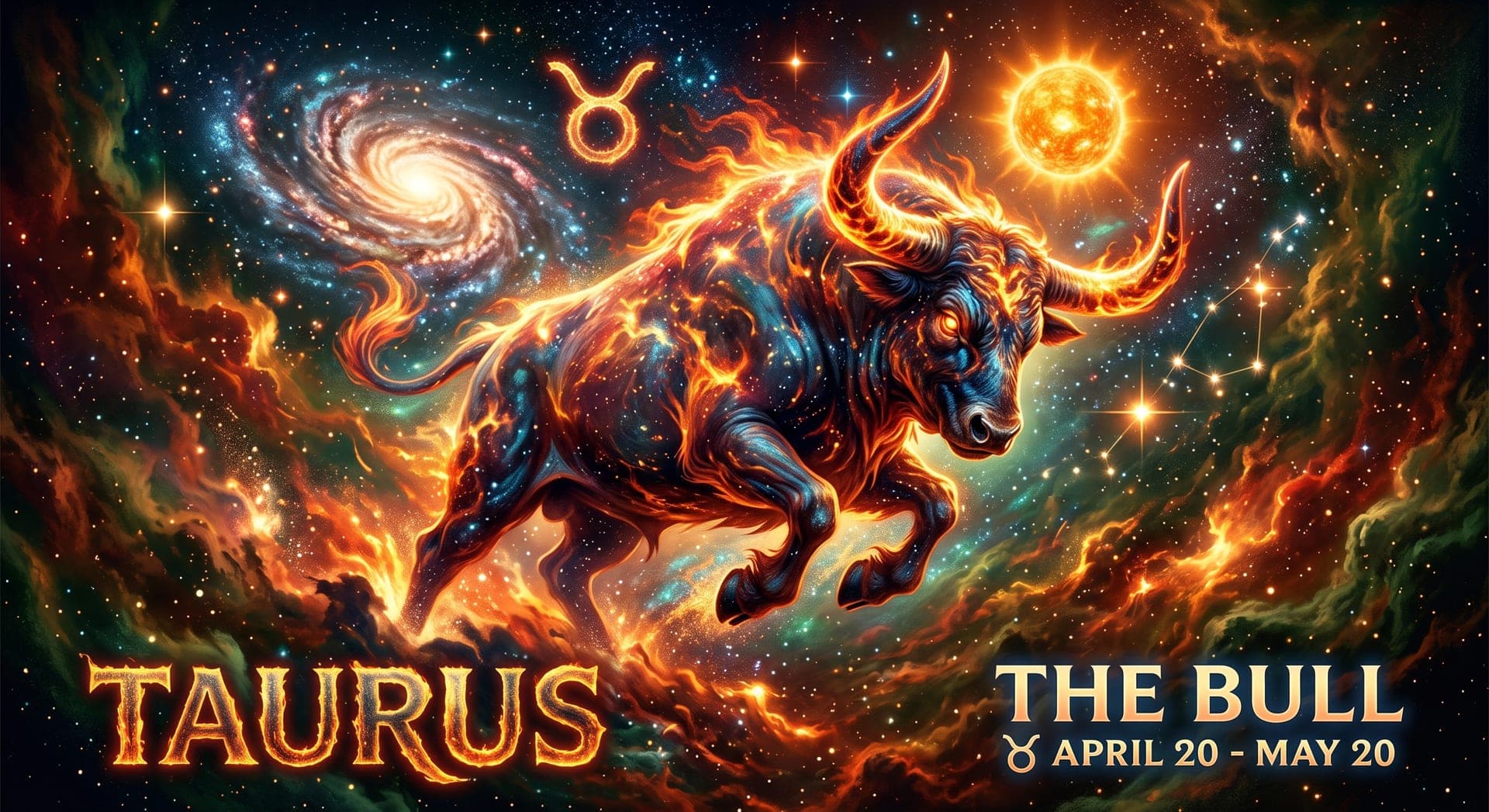
Taurus, the second sign of the zodiac, spans April 20 to May 20 and is symbolized by the bull, an animal prized for its strength, steadiness, and quiet determination. Ruled by Venus, the planet of love, beauty, and material comfort, Taurus is often described as one of the most sensual and pleasure-loving signs, drawn to good food, fine art, and physical comfort. As an Earth sign, Taurus is grounded, practical, and deeply connected to the physical world, valuing stability and tangible security over abstract ideas or sudden change. Its Fixed modality gives Taurus a well-earned reputation for stubbornness, since once a Taurus has settled on a plan or opinion, shifting it can be remarkably difficult. People born under this sign tend to be dependable, loyal, and patient, often the steady presence others rely on during difficult times. While their resistance to change can occasionally frustrate those around them, Taurus's persistence and work ethic make them exceptionally good at seeing long-term goals through to completion.
Personality Traits
Strengths
- Dependable and steady
- Patient and persistent
- Devoted to loved ones
- Appreciates beauty and comfort
- Financially sensible
Weaknesses
- Extremely stubborn
- Resistant to change
- Can be possessive
- Overindulgent
- Slow to forgive
Compatible Signs
Fun Facts
- Taurus's bull symbol connects to the Greek myth of Zeus transforming into a white bull to abduct Europa.
- Venus, Taurus' ruling planet, is the Roman goddess of love and beauty, reflecting the sign's love of comfort, art, and sensory pleasure.
- Taurus is considered by many astrologers to be the most stubborn sign of the zodiac, a trait often attributed to its Fixed modality and bull symbolism.
- Notable Taureans include Queen Elizabeth II, William Shakespeare, Adele, and David Beckham.
- The star cluster known as the Pleiades sits within the constellation Taurus and has been referenced in mythology and literature across many cultures.
Born on May 10
- 1812
William Henry Barlow
English civil engineer, born in Woolwich, known for designing the train shed roof of St Pancras railway station
- 1838
John Wilkes Booth
American actor known for assassinating President Abraham Lincoln
- 1886
Olaf Stapledon
English philosopher and science-fiction author, born in Wallasey, known for novels such as "Star Maker"
- 1899
Fred Astaire
American dancer and actor known for classic Hollywood musicals
- 1901
John Desmond Bernal
Irish-British scientist who pioneered the use of X-ray crystallography in molecular biology
- 1915
Denis Thatcher
English businessman, born in Lewisham, London, remembered as the husband of Prime Minister Margaret Thatcher
- 1933
Barbara Taylor Bradford
English novelist, born in Leeds, best known for "A Woman of Substance"
- 1946
Donovan
Scottish singer-songwriter, born in Glasgow, known for hits such as "Sunshine Superman" and "Mellow Yellow"
- 1946
Graham Gouldman
English guitarist and songwriter, born in Salford, a founding member of the band 10cc
- 1957
Sid Vicious
English bassist for the punk band the Sex Pistols
- 1960
Bono
Irish singer, lead vocalist of U2
- 1965
Linda Evangelista
Canadian supermodel
- 1966
Jonathan Edwards
English triple jumper, born in Westminster, London, and Olympic gold medalist
- 1969
Dennis Bergkamp
Dutch footballer and manager
- 1988
Adam Lallana
English footballer, born in St Albans, known for his midfield play with Liverpool and the England national team
On This Day in History
- 1291
Scottish nobles competing for the vacant throne acknowledge King Edward I of England as overlord of Scotland, before he begins arbitrating their succession dispute.
Following the death of the child queen Margaret, Maid of Norway, Scotland faced a succession crisis with more than a dozen claimants to the throne. The Scottish nobles invited Edward to arbitrate the dispute in a process known as the Great Cause, but his insistence on being recognized as feudal overlord first set a troubling precedent. Edward's later interference in Scottish affairs, after choosing John Balliol as king, helped trigger the Wars of Scottish Independence.
- 1503
Christopher Columbus sights the Cayman Islands, naming them "Las Tortugas" for the abundance of sea turtles.
Christopher Columbus sighted the Cayman Islands during his fourth and final voyage, naming them "Las Tortugas," Spanish for "the turtles," after the abundant sea turtles he observed nesting along the shores. The name Cayman, derived from a Carib word for crocodile referring to the islands' resident iguanas, later prevailed once permanent settlement began.
- 1591
Queen Elizabeth I attends an elaborate entertainment staged in her honor at Theobalds, the country estate of her chief minister William Cecil.
Theobalds was renowned as one of the grandest houses in England, and Cecil, Lord Burghley, regularly hosted the queen there during her progresses around the country. Such visits, involving pageants, masques, and lavish hospitality, were an important part of Elizabethan court culture, allowing nobles to display loyalty and wealth while the queen strengthened political relationships outside London. The estate later passed to Cecil's son Robert and eventually to King James I, who acquired it as a royal residence.
- 1768
Rioting breaks out in London after supporters of the radical politician and journalist John Wilkes clash with troops outside the King's Bench Prison.
Wilkes, a fierce critic of King George III's government, had been imprisoned for seditious libel after publishing attacks on royal policy, turning him into a popular champion of press freedom and parliamentary reform. When troops fired on a crowd gathered to support him, several people were killed in what became known as the St George's Fields Massacre. The unrest highlighted growing tensions between the government and a public increasingly assertive about civil liberties.
- 1773
The British Parliament passes the Tea Act, legislation intended to aid the East India Company that ultimately sparked the Boston Tea Party.
The British Parliament passed the Tea Act, granting the financially struggling East India Company a lucrative monopoly on tea sales directly to the American colonies while retaining a small existing tax. Colonists viewed the arrangement as an unacceptable assertion of British taxation authority and a threat to local merchants, a grievance that directly sparked the Boston Tea Party protest later that year.
- 1773
The British Parliament passes the Tea Act, granting the East India Company favorable terms to sell tea directly in the American colonies.
The act was intended to rescue the financially struggling East India Company by allowing it to bypass colonial merchants and sell surplus tea at a lower price, even after import duties. Colonists saw the act as another example of taxation without representation and a threat to local merchants, leading Boston activists to destroy a shipment of the company's tea in December 1773. The resulting Boston Tea Party provoked harsh British retaliation and became a major flashpoint on the road to the American Revolution.
- 1774
Louis XVI and Marie Antoinette ascend to the French throne following the death of Louis XV.
Louis XVI and Marie Antoinette ascended to the French throne following the sudden death of Louis XV from smallpox, inheriting a kingdom already burdened by deep financial troubles, an outdated tax system, and growing social unrest that would culminate in revolution and their own executions less than two decades later.
- 1775
Colonial militia under Ethan Allen and Benedict Arnold capture Fort Ticonderoga from British forces early in the American Revolutionary War.
Colonial militia forces led jointly, and contentiously, by Ethan Allen's Green Mountain Boys and Benedict Arnold captured the lightly defended British Fort Ticonderoga in a surprise dawn raid early in the American Revolutionary War. The fort's substantial captured artillery was later hauled overland by Henry Knox to Boston, helping force the eventual British evacuation of that city.
- 1824
The National Gallery opens to the public in London, initially housing a small collection in a townhouse on Pall Mall.
The gallery was founded after the British government purchased 38 paintings from the estate of banker John Julius Angerstein, aiming to create a national collection accessible to ordinary citizens rather than restricted to private aristocratic collections. Unlike many European galleries of the era, admission was free, reflecting a deliberate policy of public access to art and culture. The collection grew rapidly through donations and acquisitions, and the gallery moved to its current purpose-built home in Trafalgar Square in 1838.
- 1857
Sepoy soldiers of the British East India Company's army mutiny at Meerut, sparking the Indian Rebellion of 1857.
The uprising began after Indian soldiers refused to use new rifle cartridges rumored to be greased with cow and pig fat, offensive to Hindu and Muslim religious practices, and escalated into a broader revolt against Company rule across northern and central India. The rebellion involved months of intense fighting before British forces suppressed it, and its aftermath led the British government to abolish the East India Company and take direct control of India as a crown colony. The event remains a pivotal and contested moment in the history of British colonialism in South Asia.
- 1869
The First Transcontinental Railroad is completed at Promontory Summit, Utah, with the ceremonial driving of the golden spike.
Railroad officials drove a ceremonial golden spike at Promontory Summit, Utah, marking the triumphant completion of the First Transcontinental Railroad and physically linking the eastern and western United States by rail for the first time. The achievement, built largely by Chinese and Irish immigrant laborers, dramatically transformed American trade, travel, and westward settlement patterns.
- 1908
The first official Mother's Day observance in the United States is held in Grafton, West Virginia.
The first official Mother's Day observance in the United States was held at Andrews Methodist Episcopal Church in Grafton, West Virginia, organized by activist Anna Jarvis in memory of her recently deceased mother's earlier community service work. The modest local event launched a national campaign that led to the holiday's formal congressional recognition just six years later, in 1914.
- 1940
Winston Churchill becomes British prime minister on the same day Germany launches invasions of France, the Netherlands, Belgium, and Luxembourg.
Winston Churchill became British prime minister on the very same day Nazi Germany launched simultaneous invasions of France, Belgium, the Netherlands, and Luxembourg, thrusting him immediately into leading Britain through the darkest and most perilous early phase of World War II following the resignation of the discredited Neville Chamberlain.
- 1940
Winston Churchill becomes Prime Minister of the United Kingdom on the same day Germany launches its invasion of France, the Netherlands, Belgium, and Luxembourg.
Churchill formed a coalition government after Neville Chamberlain resigned amid criticism of his handling of the war's early setbacks, including the failed Norway campaign. Taking office at one of the most perilous moments in British history, Churchill quickly rallied the nation with defiant speeches promising to fight on despite the rapidly worsening military situation on the continent. His wartime leadership over the following years became central to Britain's resistance against Nazi Germany.
- 1941
German bombers severely damage the Palace of Westminster, destroying the House of Commons chamber during one of the heaviest raids of the London Blitz.
The raid was part of a sustained bombing campaign against London that had continued intermittently since September 1940, targeting government, infrastructure, and residential areas across the capital. The Commons chamber was left a burnt-out shell, and Members of Parliament were forced to meet elsewhere for years afterward, including in the House of Lords chamber. The bombed-out chamber was later rebuilt and reopened in 1950, a project famously oveseen with input from Winston Churchill himself.
- 1941
Rudolf Hess, deputy leader of the Nazi Party, parachutes into Scotland in a bizarre solo attempt to negotiate peace between Germany and Britain.
Hess flew a Messerschmitt fighter plane alone from Germany, apparently hoping to reach the Duke of Hamilton, whom he believed might help broker a settlement, before bailing out near Eaglesham when he ran low on fuel. British authorities quickly arrested him, and his unauthorized mission baffled and embarrassed the Nazi leadership, which publicly disowned him as delusional. Hess was held as a prisoner for the rest of the war and later convicted at the Nuremberg trials, spending the remainder of his life in Spandau Prison.
- 1994
Nelson Mandela is inaugurated as South Africa's first Black president, following the country's first fully democratic elections.
Nelson Mandela was inaugurated as South Africa's first Black president before a jubilant crowd of dignitaries in Pretoria, following the country's first fully democratic, multiracial elections held weeks earlier. The moment marked the formal end of the decades-long apartheid era of institutionalized racial segregation and a historic milestone in the nation's difficult transition to democracy.
- 1996
A sudden blizzard strikes climbers near the summit of Mount Everest, killing eight people in one of the deadliest single-day disasters on the mountain.
A sudden, violent blizzard struck climbers descending from the summit of Mount Everest during an unusually crowded climbing season, killing eight people in a single catastrophic day, one of the deadliest disasters in the mountain's history at the time. The tragedy was later chronicled in journalist Jon Krakauer's bestselling book "Into Thin Air."
- 2013
One World Trade Center becomes the tallest building in the Western Hemisphere upon completion of its spire.
One World Trade Center in Lower Manhattan became the tallest building in the Western Hemisphere upon the topping-out of its dramatic 408-foot spire, rising symbolically on the site of the original Twin Towers destroyed in the September 11, 2001, terrorist attacks nearly twelve years earlier.
- 2022
Queen Elizabeth II misses the State Opening of Parliament for the first time in 59 years due to ongoing mobility problems.
The ceremony, one of the most significant events in the British constitutional calendar, was instead led by Prince Charles on the Queen's behalf, reading the government's legislative agenda from the throne in her place. The absence reflected the 96-year-old monarch's declining health in the final months of her record-breaking 70-year reign. She died later that year, in September 2022, and was succeeded by her son as King Charles III.