
What’s Observed on May 11
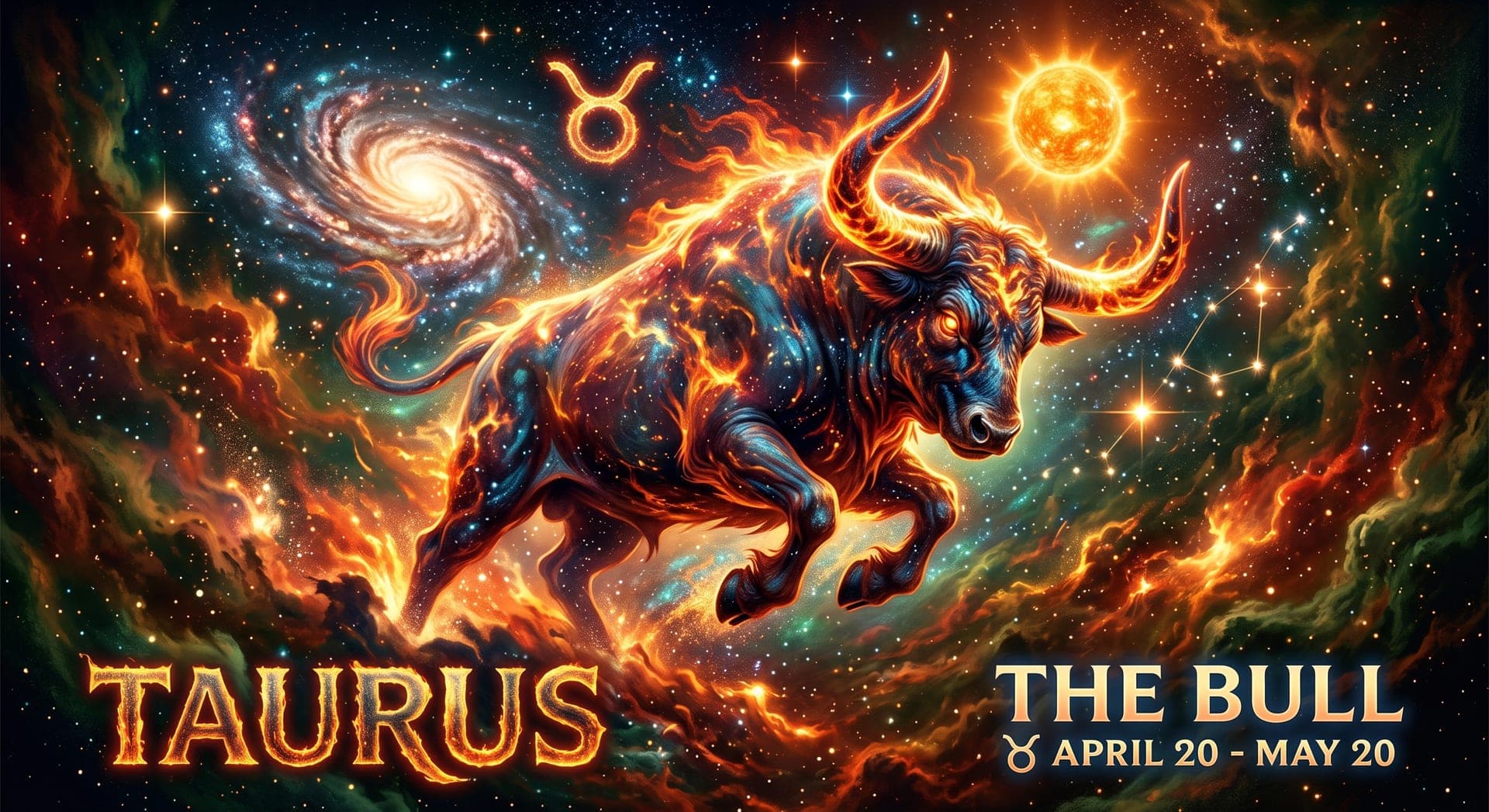
Born on May 11: Taurus ♉
Taurus, the second sign of the zodiac, spans April 20 to May 20 and is symbolized by the bull, an animal prized for its strength, steadiness, and quiet determination. Ruled by Venus, the planet of love, beauty, and material comfort, Taurus is often described as one of the most sensual and pleasure-loving signs, drawn to good food, fine art, and physical comfort. As an Earth sign, Taurus is grounded, practical, and deeply connected to the physical world, valuing stability and tangible security over abstract ideas or sudden change. Its Fixed modality gives Taurus a well-earned reputation for stubbornness, since once a Taurus has settled on a plan or opinion, shifting it can be remarkably difficult. People born under this sign tend to be dependable, loyal, and patient, often the steady presence others rely on during difficult times. While their resistance to change can occasionally frustrate those around them, Taurus's persistence and work ethic make them exceptionally good at seeing long-term goals through to completion.
Personality Traits
Strengths
- Dependable and steady
- Patient and persistent
- Devoted to loved ones
- Appreciates beauty and comfort
- Financially sensible
Weaknesses
- Extremely stubborn
- Resistant to change
- Can be possessive
- Overindulgent
- Slow to forgive
Compatible Signs
Fun Facts
- Taurus's bull symbol connects to the Greek myth of Zeus transforming into a white bull to abduct Europa.
- Venus, Taurus' ruling planet, is the Roman goddess of love and beauty, reflecting the sign's love of comfort, art, and sensory pleasure.
- Taurus is considered by many astrologers to be the most stubborn sign of the zodiac, a trait often attributed to its Fixed modality and bull symbolism.
- Notable Taureans include Queen Elizabeth II, William Shakespeare, Adele, and David Beckham.
- The star cluster known as the Pleiades sits within the constellation Taurus and has been referenced in mythology and literature across many cultures.
Born on May 11
- 1888
Irving Berlin
American composer known for "White Christmas" and "God Bless America"
- 1889
Paul Nash
English painter renowned for his haunting depictions of the World War I battlefields and later for his Surrealist-influenced landscapes.
- 1890
Willie Applegarth
English sprinter who won gold in the 4 x 100 metres relay and bronze in the 200 metres at the 1912 Stockholm Olympics, later setting a world record in the 200 metres.
- 1894
Martha Graham
American dancer and choreographer, pioneer of modern dance
- 1895
Jiddu Krishnamurti
Indian philosopher and spiritual teacher
- 1904
Salvador Dalí
Spanish surrealist artist
- 1911
Phil Silvers
American actor and comedian
- 1918
Richard Feynman
American physicist and Nobel Prize laureate
- 1924
Antony Hewish
English radio astronomer who shared the 1974 Nobel Prize in Physics for the discovery of pulsars.
- 1927
Bernard Fox
Welsh-born actor best known for playing Dr. Bombay in Bewitched and Colonel Crittendon in Hogan's Heroes.
- 1948
Pam Ferris
Welsh actress best known for playing Ma Larkin in "The Darling Buds of May" and Miss Trunchbull in "Matilda"
- 1948
Nirj Deva
Sri Lankan-born British politician who served as a Conservative MP and later as a longtime Member of the European Parliament for South East England
- 1950
Jeremy Paxman
English journalist and broadcaster known for his incisive interviewing style on Newsnight and for hosting University Challenge.
- 1957
Mike Nesbitt
Northern Irish journalist and politician who became leader of the Ulster Unionist Party.
- 1963
Natasha Richardson
English actress from the Redgrave acting dynasty, known for stage and film roles including Cabaret's Sally Bowles and Suddenly, Last Summer.
On This Day in History
- 330
Roman Emperor Constantine the Great dedicates the rebuilt city of Byzantium as "New Rome," establishing it as capital of the Eastern Roman Empire.
Roman Emperor Constantine the Great formally dedicated the rebuilt and expanded city of Byzantium as his new imperial capital, renaming it New Rome in an elaborate ceremony, though it would soon become popularly known as Constantinople in his honor. The city served as the seat of what developed into the Byzantine Empire for over a thousand years.
- 330
Roman emperor Constantine the Great dedicates the city of Constantinople as his new capital.
Constantine chose the ancient Greek city of Byzantium, on the strategic Bosphorus strait, as the site for a new eastern capital befitting his empire. Renamed Constantinople in his honor, the city grew into one of history's great metropolises and would remain the capital of the Byzantine Empire for over a thousand years, until its fall in 1453.
- 868
A printed copy of the Diamond Sutra is produced in China, regarded as the earliest dated printed book known to survive.
A copy of the Buddhist scripture known as the Diamond Sutra was printed in Dunhuang, China, using carved woodblock printing techniques, and it survives today, now held in the British Library, as the earliest dated printed book known to exist, predating Johannes Gutenberg's famous Bible by nearly six centuries.
- 973
Edgar the Peaceful is crowned King of England at Bath Abbey in the first English coronation ceremony.
Edgar had reigned since 959, but at Bath Abbey he underwent an elaborate coronation designed largely by Archbishop Dunstan of Canterbury. The ceremony, held on Whit Sunday, established rites and symbolism—anointing, crowning, oath-taking—that shaped every English coronation afterward, including those still used today. Historians consider it the moment the English monarchy's ceremonial tradition truly began.
- 1068
Matilda of Flanders is crowned Queen of England at Westminster Abbey.
Matilda, wife of William the Conqueror, had remained in Normandy managing affairs while William secured his new kingdom after 1066. Her coronation, presided over by Archbishop Ealdred of York, made her the first queen crowned in England following the Norman Conquest, formally cementing the new Anglo-Norman royal line and her own considerable political influence in the kingdom.
- 1258
Louis IX of France and James I of Aragon sign the Treaty of Corbeil, settling longstanding feudal territorial disputes.
King Louis IX of France and King James I of Aragon signed the Treaty of Corbeil, resolving longstanding feudal territorial and overlordship disputes between their respective kingdoms in the border regions of southern France and Catalonia, with each monarch renouncing competing claims to the other's core territories.
- 1560
Ottoman naval forces defeat a Spanish fleet at the Battle of Djerba, marking the height of Ottoman Mediterranean naval power.
The Ottoman navy under the command of the formidable corsair Turgut Reis decisively defeated a combined Spanish, Genoese, and Papal fleet at the Battle of Djerba off the coast of Tunisia, capturing thousands of prisoners and marking the high point of Ottoman naval dominance across the Mediterranean Sea.
- 1812
British Prime Minister Spencer Perceval is assassinated in the House of Commons, the only British prime minister ever killed in office.
British Prime Minister Spencer Perceval was shot dead in the lobby of the House of Commons by John Bellingham, a merchant nursing a personal financial grievance against the government over unresolved compensation claims. Perceval remains, to this day, the only British prime minister ever assassinated while in office.
- 1812
British Prime Minister Spencer Perceval is shot dead in the House of Commons.
Perceval was assassinated by John Bellingham, a merchant with a grievance over unpaid compensation from the government, who shot him in the lobby of the Commons. Perceval remains the only British prime minister ever assassinated. Bellingham was tried, convicted, and hanged within a week, while the killing briefly plunged Westminster into panic about political violence.
- 1857
Indian rebel soldiers seize Delhi from British control during the Indian Rebellion of 1857.
Rebelling Indian sepoy soldiers seized control of Delhi from British colonial authorities after marching from Meerut, a major early flashpoint that rapidly expanded into the widespread Indian Rebellion of 1857 against East India Company rule, an uprising that ultimately led Britain to dissolve the company and assume direct crown control over India.
- 1857
Rebel sepoys seize Delhi from British forces, escalating the Indian Rebellion.
Sepoys who had mutinied at Meerut marched on Delhi and proclaimed the aged Mughal emperor Bahadur Shah II as their leader, seizing the city from its small British garrison. The fall of Delhi transformed a mutiny into a wider rebellion against East India Company rule across northern India, one the British would spend over a year suppressing.
- 1858
Minnesota is admitted to the Union as the 32nd U.S. state.
Minnesota was admitted to the Union as the 32nd U.S. state, having developed rapidly through fur trading, timber harvesting, and agricultural settlement in the decades following its organization as a formal U.S. territory, drawing waves of Scandinavian and German immigrants to its fertile farmland.
- 1985
Fifty-six spectators die when fire sweeps through a stand at Bradford City's football ground.
A discarded cigarette is believed to have ignited rubbish beneath the wooden stand at Valley Parade during a match against Lincoln City. The fire spread with terrifying speed through the aging timber structure, killing 56 people and injuring hundreds more. The disaster led to sweeping new safety regulations for British football grounds, including bans on wooden stands.
- 1997
IBM's Deep Blue defeats world chess champion Garry Kasparov, becoming the first computer to beat a reigning champion in a classic match format.
IBM's chess-playing supercomputer Deep Blue defeated reigning world champion Garry Kasparov in the deciding game of a six-game rematch, becoming the first computer system to beat a sitting world champion under standard tournament time controls, a landmark moment widely seen as a turning point in public perception of artificial intelligence.
- 1997
Chess computer Deep Blue defeats world champion Garry Kasparov in their rematch.
IBM's Deep Blue won the deciding sixth game of the six-game match, making it the first computer to defeat a reigning world chess champion in a full match under standard time controls. Kasparov, who had won an earlier match against an older version of the machine, alleged foul play, but the result is widely remembered as a landmark moment for artificial intelligence.
- 1998
India conducts three underground nuclear tests at Pokhran, becoming a declared nuclear power.
The tests, code-named Operation Shakti, included a fusion device and were followed two days later by two more explosions. They confirmed India's nuclear weapons capability, ending decades of ambiguity, and provoked international sanctions along with a rapid nuclear test response from neighboring Pakistan later that month.
- 2009
Space Shuttle Atlantis launches on its final servicing mission to the Hubble Space Telescope.
Space Shuttle Atlantis launched on the fifth and final Hubble Space Telescope servicing mission, during which astronauts conducted a grueling series of challenging, high-risk spacewalks to repair failing components and install new scientific instruments, significantly extending the aging telescope's operational life well beyond its original planned lifespan.
- 2009
Space Shuttle Atlantis launches on the final Hubble Space Telescope servicing mission.
STS-125 sent seven astronauts to repair and upgrade the aging telescope, installing new instruments, batteries, and gyroscopes during five spacewalks. It was the last of five servicing missions to Hubble and one of the riskiest shuttle flights ever flown, since Atlantis could not reach the International Space Station if damaged, requiring a rescue shuttle on standby.
- 2010
David Cameron becomes British prime minister, forming the country's first coalition government since World War II.
David Cameron became British prime minister after leading the Conservative Party into a formal coalition government with the smaller Liberal Democrats party, following an inconclusive general election result. It was the first coalition government to govern the United Kingdom since the wartime national unity government of the Second World War.
- 2010
David Cameron becomes Prime Minister of the United Kingdom, forming a coalition government.
After an inconclusive general election left no party with a majority, Cameron's Conservatives struck a coalition deal with Nick Clegg's Liberal Democrats. It was Britain's first coalition government since the Second World War, with Cameron becoming the youngest prime minister since 1812 and Clegg taking the post of deputy prime minister.