
What’s Observed on May 12
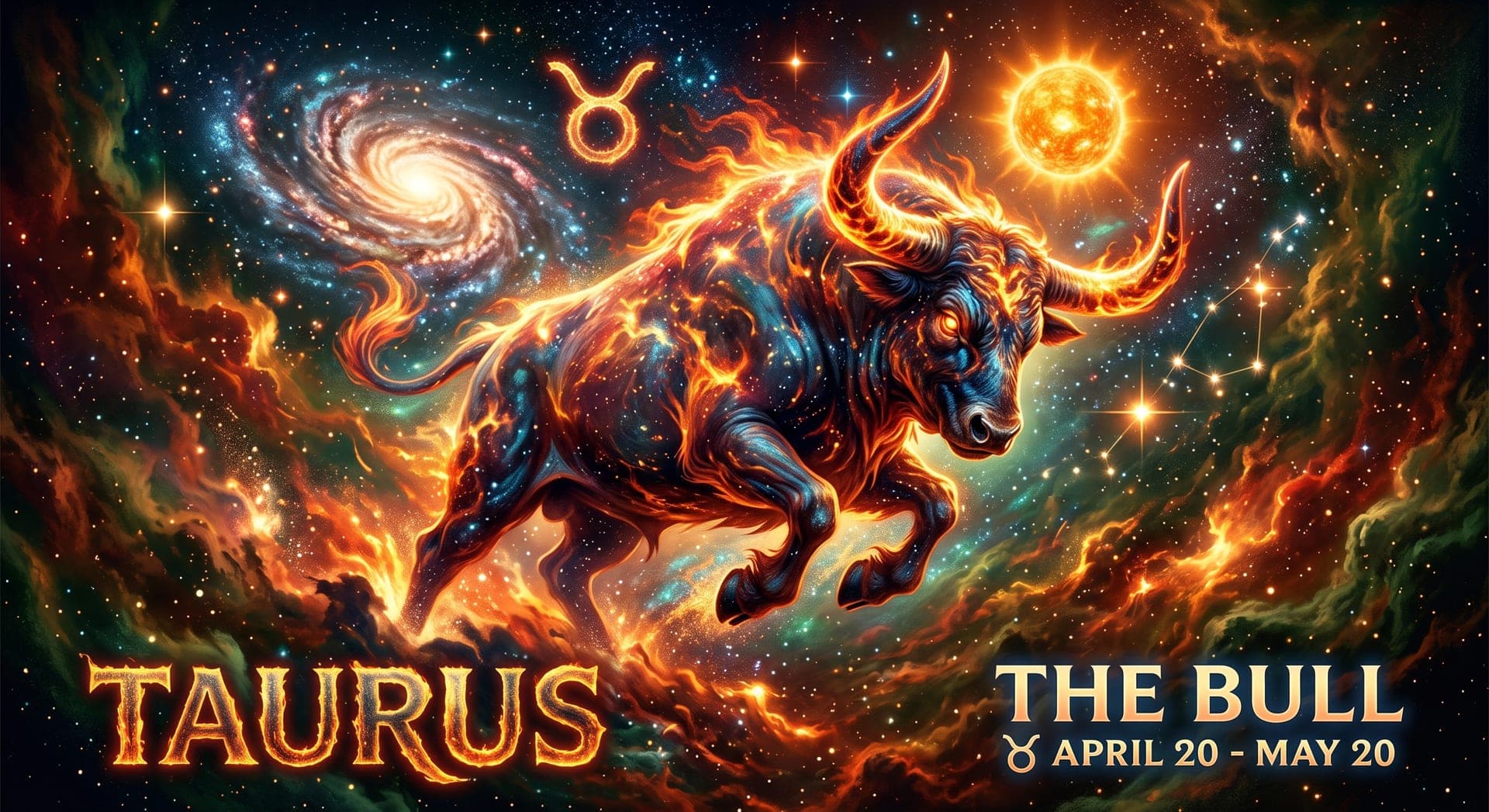
Born on May 12: Taurus ♉
Taurus, the second sign of the zodiac, spans April 20 to May 20 and is symbolized by the bull, an animal prized for its strength, steadiness, and quiet determination. Ruled by Venus, the planet of love, beauty, and material comfort, Taurus is often described as one of the most sensual and pleasure-loving signs, drawn to good food, fine art, and physical comfort. As an Earth sign, Taurus is grounded, practical, and deeply connected to the physical world, valuing stability and tangible security over abstract ideas or sudden change. Its Fixed modality gives Taurus a well-earned reputation for stubbornness, since once a Taurus has settled on a plan or opinion, shifting it can be remarkably difficult. People born under this sign tend to be dependable, loyal, and patient, often the steady presence others rely on during difficult times. While their resistance to change can occasionally frustrate those around them, Taurus's persistence and work ethic make them exceptionally good at seeing long-term goals through to completion.
Personality Traits
Strengths
- Dependable and steady
- Patient and persistent
- Devoted to loved ones
- Appreciates beauty and comfort
- Financially sensible
Weaknesses
- Extremely stubborn
- Resistant to change
- Can be possessive
- Overindulgent
- Slow to forgive
Compatible Signs
Fun Facts
- Taurus's bull symbol connects to the Greek myth of Zeus transforming into a white bull to abduct Europa.
- Venus, Taurus' ruling planet, is the Roman goddess of love and beauty, reflecting the sign's love of comfort, art, and sensory pleasure.
- Taurus is considered by many astrologers to be the most stubborn sign of the zodiac, a trait often attributed to its Fixed modality and bull symbolism.
- Notable Taureans include Queen Elizabeth II, William Shakespeare, Adele, and David Beckham.
- The star cluster known as the Pleiades sits within the constellation Taurus and has been referenced in mythology and literature across many cultures.
Born on May 12
- 1812
Edward Lear
English poet and illustrator celebrated for his nonsense verse, including 'The Owl and the Pussycat,' and his skilled natural-history drawings.
- 1820
Florence Nightingale
English social reformer and founder of modern nursing
- 1828
Dante Gabriel Rossetti
English poet and painter who co-founded the Pre-Raphaelite Brotherhood, known for richly symbolic works such as Proserpine and Beata Beatrix.
- 1845
Gabriel Fauré
French composer of the Romantic era
- 1875
Charles Holden
English architect best known for his modernist London Underground stations and the University of London's Senate House.
- 1907
Katharine Hepburn
American actress and four-time Academy Award winner
- 1907
Leslie Charteris
British-Chinese author, later a naturalised American citizen, best known for creating Simon Templar, the debonair hero of "The Saint" novels and stories
- 1910
Dorothy Hodgkin
British chemist who advanced X-ray crystallography to determine the structures of penicillin, vitamin B12 and insulin, winning the 1964 Nobel Prize in Chemistry
- 1924
Tony Hancock
English comedian and actor whose radio and television series Hancock's Half Hour made him one of Britain's most influential comic performers.
- 1925
Yogi Berra
American baseball Hall of Famer known for his memorable quotes
- 1937
George Carlin
American stand-up comedian known for social commentary
- 1937
Beryl Burton
English cyclist who dominated women's time trialling for over two decades, setting a 12-hour record in 1967 that beat the men's record of the time.
- 1945
Alan Ball Jr.
English footballer who was the youngest member of England's 1966 World Cup-winning team and went on to a long career at Everton and Arsenal.
- 1948
Steve Winwood
English singer-songwriter and multi-instrumentalist who found fame with the Spencer Davis Group, Traffic, and Blind Faith before a successful solo career.
- 1980
Rishi Sunak
English politician who became Chancellor of the Exchequer during the COVID-19 pandemic before serving as Prime Minister of the United Kingdom from 2022 to 2024.

On This Day in History
- 113
Roman Emperor Trajan dedicates Trajan's Column in Rome, commemorating his military victory over Dacia.
Roman Emperor Trajan dedicated the massive marble column bearing his name in Rome, its spiraling relief carvings depicting his military campaigns against Dacia in extraordinarily vivid, continuous narrative detail across 190 scenes. The column, standing nearly 100 feet tall, remains today one of the best-preserved and most studied monuments of the ancient Roman world.
- 907
Warlord Zhu Wen forces the last Tang emperor to abdicate, ending the nearly three-century-old Tang dynasty in China.
Military strongman Zhu Wen forced the last Tang emperor, a young puppet ruler, to formally abdicate the throne, ending the nearly three-century-old Tang dynasty and plunging China into the fractured, chaotic period known as the Five Dynasties and Ten Kingdoms that lasted for the following half-century.
- 1191
Richard I of England marries Berengaria of Navarre in Limassol, Cyprus.
Richard 'the Lionheart' wed Berengaria during a stop on the Third Crusade, with the ceremony conducted by the Bishop of Évreux since Richard's own chaplain was unavailable. Berengaria became queen of England despite reportedly never setting foot in the country. The marriage produced no children, and Richard spent little time with his wife during his reign.
- 1364
Jagiellonian University is founded in Kraków, becoming Poland's oldest institution of higher learning.
Jagiellonian University was founded in Kraków by King Casimir III the Great, becoming Poland's oldest institution of higher learning and one of the oldest universities in Central Europe, later counting astronomer Nicolaus Copernicus and Pope John Paul II among its most famous students and alumni.
- 1593
London playwright Thomas Kyd is arrested and tortured on suspicion of libel and heresy.
Authorities searching Kyd's lodgings found heretical papers, which he claimed belonged to his former roommate, the playwright Christopher Marlowe. Under interrogation and torture by the Privy Council, Kyd implicated Marlowe, who was summoned before the Council days later and killed shortly after in a tavern brawl. Kyd, broken by the ordeal, died within about a year.
- 1780
British forces capture Charleston, South Carolina, in the largest Continental Army defeat of the American Revolutionary War.
British forces under General Henry Clinton captured Charleston, South Carolina, after a lengthy siege, forcing the surrender of the entire Continental Army garrison of roughly 5,000 troops, which remains the largest single American military defeat of the entire Revolutionary War in terms of prisoners lost.
- 1780
British forces capture Charleston, South Carolina, the war's largest American surrender.
After a six-week siege, General Benjamin Lincoln surrendered the city and his entire garrison of roughly 5,000 Continental Army troops to British commander Sir Henry Clinton. It was the worst American defeat of the Revolutionary War in terms of prisoners lost, and it left the British in control of the South's most important port for the next two and a half years.
- 1809
British forces under Arthur Wellesley defeat the French at the Battle of Oporto.
In a daring daylight crossing of the Douro River, Wellesley's troops caught Marshal Soult's French army by surprise and drove it out of the Portuguese city of Porto. The victory, achieved with minimal British casualties, restored Portuguese confidence in the alliance and launched Wellesley's string of successes in the Peninsular War that would later earn him the title Duke of Wellington.
- 1846
The Donner Party sets out for California on what became a disastrous, tragic year-long journey west.
The Donner Party, a group of roughly 90 American pioneers led by brothers George and Jacob Donner, departed for California on a journey that would become infamous after the group took an ill-advised shortcut and became trapped by early, severe winter snowfall in the Sierra Nevada mountains, resorting to cannibalism as nearly half the party died before rescue arrived.
- 1864
Union troops assault entrenched Confederate positions at the Battle of Spotsylvania Court House during the American Civil War.
Union troops under Ulysses S. Grant launched a costly, ultimately unsuccessful assault on heavily entrenched Confederate positions at the Battle of Spotsylvania Court House in Virginia, part of a grueling, attritional overland campaign marked by brutal close-quarters fighting at a salient nicknamed the "Bloody Angle."
- 1926
The 1926 United Kingdom general strike ends after nine days.
Called by the Trades Union Congress in support of striking coal miners facing pay cuts and longer hours, the strike brought roughly 1.7 million workers off the job across transport, printing, and heavy industry. The government used troops, volunteers, and emergency broadcasting to keep essential services running, and the TUC called off the strike without securing concessions, leaving the miners to fight on alone for months.
- 1937
King George VI and Queen Elizabeth are crowned at Westminster Abbey in London.
King George VI and Queen Elizabeth were crowned at Westminster Abbey in a lavish ceremony broadcast by radio to millions, following the abdication crisis the previous year that had unexpectedly placed the reluctant George on the throne after his brother Edward VIII chose to marry the divorced American Wallis Simpson.
- 1937
King George VI and Queen Elizabeth are crowned at Westminster Abbey.
The coronation took place on the date originally set for Edward VIII, who abdicated in December 1936 so he could marry Wallis Simpson, thrusting his reluctant younger brother onto the throne. The ceremony was the first coronation to be broadcast on radio to a mass audience, and portions were filmed for newsreels shown around the world.
- 1941
German engineer Konrad Zuse unveils the Z3, the world's first working programmable computer.
Built largely from telephone relays in Zuse's Berlin apartment, the Z3 could perform floating-point arithmetic and was controlled by punched film tape, making it the first fully automatic, program-controlled digital computer. Though destroyed in an Allied bombing raid in 1943, the Z3 is now recognized by many historians as marking the true beginning of the modern computer age.
- 1949
The Soviet Union lifts its blockade of West Berlin, ending an eleven-month Cold War standoff resolved by the Berlin Airlift.
The Soviet Union lifted its eleven-month blockade of West Berlin, ending a major early Cold War confrontation that had been overcome by the massive Western Berlin Airlift, which supplied the isolated city with food, coal, and other essential goods entirely by continuous round-the-clock cargo flights.
- 1949
The Soviet Union lifts its eleven-month blockade of West Berlin.
Moscow had cut off road, rail, and canal access to the western sectors of Berlin in an attempt to force the withdrawal of American, British, and French forces, but the Allies kept the city supplied through the massive Berlin Airlift. Facing the operation's failure, the Soviets reopened land routes, marking an early and decisive Western victory in the emerging Cold War.
- 2008
A magnitude 8.0 earthquake strikes Sichuan, China, killing over 69,000 people.
A massive magnitude 8.0 earthquake struck Sichuan province in southwestern China, killing more than 69,000 people and injuring hundreds of thousands more while destroying vast amounts of housing, schools, and infrastructure across the densely populated mountainous region, prompting a massive national relief and rebuilding effort.
- 2008
A magnitude-8.0 earthquake strikes Sichuan, China, killing over 69,000 people.
The quake, centered in Wenchuan County, flattened schools, hospitals, and homes across a wide swath of mountainous Sichuan province, leaving millions homeless and triggering landslides that hampered rescue efforts for days. It ranks among the deadliest earthquakes in modern Chinese history and prompted major reforms to the country's building codes and disaster-response systems.
- 2017
The WannaCry ransomware attack strikes more than 400,000 computers worldwide, disrupting hospitals, businesses, and government systems.
The WannaCry ransomware attack rapidly spread across the globe within hours, exploiting a leaked Windows vulnerability to infect more than 400,000 computers in over 150 countries, crippling Britain's National Health Service, businesses, and government agencies before a security researcher accidentally discovered a hidden kill switch that halted its spread.
- 2017
The WannaCry ransomware attack cripples computer systems worldwide, including much of Britain's NHS.
Exploiting a leaked NSA hacking tool, the ransomware spread rapidly through unpatched Windows systems, encrypting files and demanding Bitcoin payments. It hit more than 400,000 computers in over 150 countries, but its impact on the UK's National Health Service was especially severe, forcing hospitals to cancel operations and divert ambulances after imaging and administrative systems were locked out.