
What’s Observed on May 13
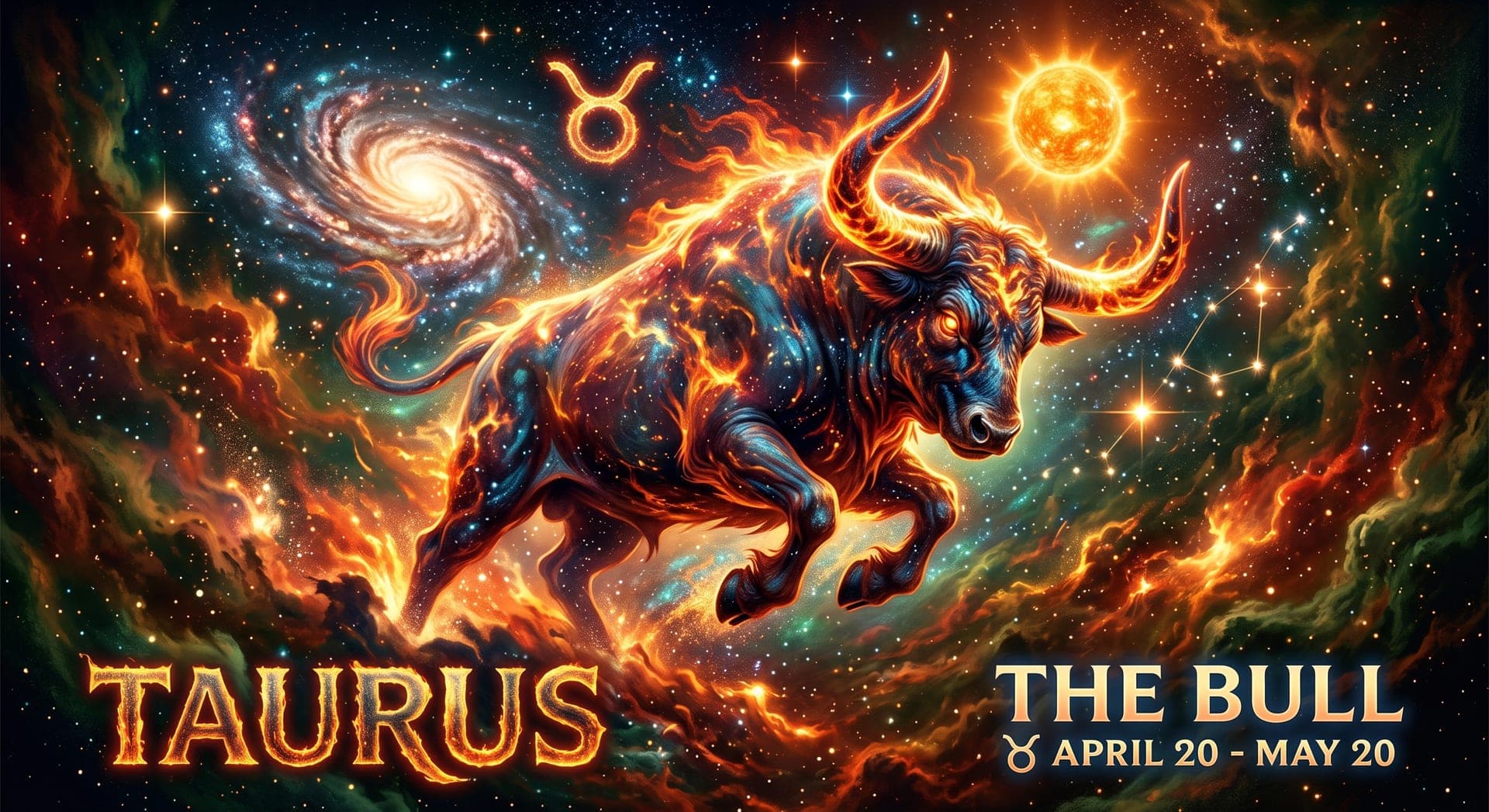
Born on May 13: Taurus ♉
Taurus, the second sign of the zodiac, spans April 20 to May 20 and is symbolized by the bull, an animal prized for its strength, steadiness, and quiet determination. Ruled by Venus, the planet of love, beauty, and material comfort, Taurus is often described as one of the most sensual and pleasure-loving signs, drawn to good food, fine art, and physical comfort. As an Earth sign, Taurus is grounded, practical, and deeply connected to the physical world, valuing stability and tangible security over abstract ideas or sudden change. Its Fixed modality gives Taurus a well-earned reputation for stubbornness, since once a Taurus has settled on a plan or opinion, shifting it can be remarkably difficult. People born under this sign tend to be dependable, loyal, and patient, often the steady presence others rely on during difficult times. While their resistance to change can occasionally frustrate those around them, Taurus's persistence and work ethic make them exceptionally good at seeing long-term goals through to completion.
Personality Traits
Strengths
- Dependable and steady
- Patient and persistent
- Devoted to loved ones
- Appreciates beauty and comfort
- Financially sensible
Weaknesses
- Extremely stubborn
- Resistant to change
- Can be possessive
- Overindulgent
- Slow to forgive
Compatible Signs
Fun Facts
- Taurus's bull symbol connects to the Greek myth of Zeus transforming into a white bull to abduct Europa.
- Venus, Taurus' ruling planet, is the Roman goddess of love and beauty, reflecting the sign's love of comfort, art, and sensory pleasure.
- Taurus is considered by many astrologers to be the most stubborn sign of the zodiac, a trait often attributed to its Fixed modality and bull symbolism.
- Notable Taureans include Queen Elizabeth II, William Shakespeare, Adele, and David Beckham.
- The star cluster known as the Pleiades sits within the constellation Taurus and has been referenced in mythology and literature across many cultures.
Born on May 13
- 1730
Charles Watson-Wentworth, 2nd Marquess of Rockingham
English Whig statesman who served two brief terms as Prime Minister, the first of which oversaw repeal of the unpopular Stamp Act in the American colonies.
- 1842
Arthur Sullivan
English composer best known for the comic operas he created with librettist W. S. Gilbert, including H.M.S. Pinafore and The Pirates of Penzance.
- 1857
Ronald Ross
British physician who discovered that mosquitoes transmit the malaria parasite, work for which he won the 1902 Nobel Prize in Physiology or Medicine
- 1882
Georges Braque
French painter who co-founded Cubism
- 1907
Daphne du Maurier
English novelist celebrated for atmospheric works such as Rebecca and Jamaica Inn, many of which were adapted into acclaimed films.
- 1914
Joe Louis
American boxer and heavyweight champion
- 1922
Bea Arthur
American actress known for "The Golden Girls"
- 1940
Bruce Chatwin
English author and travel writer known for genre-blurring works like In Patagonia and The Songlines.
- 1946
Tim Pigott-Smith
English actor recognized for his roles in The Jewel in the Crown and later King Charles III on stage and screen.
- 1949
Zoë Wanamaker
American-born British actress known for her stage work with the Royal Shakespeare Company and National Theatre, and for roles including Madam Hooch in the "Harry Potter" films and Susan Harper in the sitcom "My Family"
- 1950
Stevie Wonder
American singer-songwriter and musician
- 1964
Stephen Colbert
American comedian and late-night talk show host
- 1985
Iwan Rheon
Welsh actor and singer best known for playing the sadistic Ramsay Bolton in Game of Thrones.
- 1986
Robert Pattinson
English actor who rose to fame in the Twilight film series before building a critically acclaimed career in films such as The Batman and The Lighthouse.
On This Day in History
- 1110
Baldwin I of Jerusalem captures Beirut from Fatimid forces with the assistance of a Genoese fleet.
Crusader King Baldwin I of Jerusalem, with crucial naval assistance from a Genoese fleet promised commercial trading privileges in return, captured the coastal city of Beirut from Fatimid Egyptian forces, expanding Crusader control along a strategically vital stretch of the eastern Mediterranean coastline.
- 1373
English mystic Julian of Norwich receives visions of Christ while gravely ill.
Believing she was on her deathbed, Julian experienced a series of intense visions, or 'shewings,' focused on Christ's Passion and divine love. She recorded and later expanded on them in Revelations of Divine Love, widely regarded as the earliest surviving book written in English by a woman, and a foundational text of English mysticism still read today.
- 1568
Forces loyal to Mary, Queen of Scots, are defeated at the Battle of Langside, effectively ending her attempt to reclaim the Scottish throne.
Forces loyal to the deposed Mary, Queen of Scots, were decisively defeated at the Battle of Langside near Glasgow by troops supporting her infant son's regency, ending her attempt to reclaim the Scottish throne after her earlier forced abdication and forcing her to flee across the border into what became decades of lifelong imprisonment in England.
- 1568
Mary, Queen of Scots, is defeated at the Battle of Langside.
Having escaped imprisonment at Loch Leven Castle, Mary raised an army to reclaim her throne from supporters of her infant son, James VI. Her forces were routed near Glasgow by troops loyal to the regent, the Earl of Moray. The defeat forced Mary to flee south into England, where she would spend the rest of her life as a prisoner of Elizabeth I.
- 1791
British forces under Charles Cornwallis defeat Tipu Sultan's Mysorean army.
Cornwallis, seeking to redeem his reputation after surrendering at Yorktown a decade earlier, led East India Company and British troops against Tipu Sultan's forces during the Third Anglo-Mysore War. The victory pushed Tipu back toward his capital at Seringapatam and marked a turning point that would eventually force Mysore to cede significant territory to British control.
- 1846
The United States declares war on Mexico amid disputes over the Texas border, beginning the Mexican-American War.
The United States formally declared war on Mexico following a deadly skirmish along the disputed Rio Grande boundary in Texas, beginning the Mexican-American War, a conflict driven partly by the doctrine of Manifest Destiny that ultimately resulted in the U.S. acquiring vast southwestern territories stretching to California.
- 1861
Queen Victoria issues a proclamation of neutrality, recognizing the Confederacy's belligerent rights.
As the American Civil War erupted, Britain formally declared itself neutral while granting the Confederacy belligerent status, allowing it to purchase supplies and raise loans abroad, though not full diplomatic recognition as a nation. The move angered the Union, which saw it as tacit encouragement of secession, and strained Anglo-American relations for years afterward.
- 1888
Brazil abolishes slavery through the Lei Áurea, or Golden Law, becoming the last country in the Americas to do so.
Brazil's parliament passed the Lei Áurea, or Golden Law, signed by Princess Isabel while serving as regent, immediately and unconditionally abolishing slavery throughout the country without compensation to former slaveholders. Brazil thereby became the last country in the Western Hemisphere to end the institution after centuries of dependence on enslaved labor.
- 1912
The Royal Flying Corps is established, becoming the forerunner of the Royal Air Force.
Created by royal warrant to give Britain's army an air arm, the Royal Flying Corps began with just a few dozen aircraft and pilots trained at Farnborough. It expanded enormously during the First World War, flying reconnaissance and combat missions over the Western Front, before merging with the Royal Naval Air Service in 1918 to form the world's first independent air force, the RAF.
- 1917
Three shepherd children report the first of several apparitions of the Virgin Mary near Fátima, Portugal, later becoming a major Catholic pilgrimage site.
Three young shepherd children tending sheep near Fátima, Portugal, reported the first of what they described as six monthly apparitions of the Virgin Mary appearing over an oak tree, a series of reported visions that became a globally significant site of Catholic pilgrimage and devotion, drawing millions of visitors annually.
- 1940
Winston Churchill delivers his "blood, toil, tears and sweat" speech to the House of Commons as Germany invades France.
Newly appointed Prime Minister Winston Churchill delivered his first, defiant speech to the House of Commons, famously offering the British people "nothing but blood, toil, tears and sweat" just as Nazi Germany's rapid invasion of Western Europe began, setting an unflinching tone for Britain's wartime leadership.
- 1943
Axis forces in Tunisia surrender, ending the North African campaign.
British-led Operations Vulcan and Strike broke the last Axis defensive lines in Tunisia, trapping and forcing the surrender of roughly 250,000 German and Italian troops. The collapse ended the North African campaign entirely and opened the way for the Allied invasion of Sicily two months later, marking a major turning point in the Mediterranean theatre of the Second World War.
- 1950
The inaugural Formula One World Championship race is held at Silverstone in England.
The inaugural race of the Formula One World Championship was held at the Silverstone circuit in England, a former Royal Air Force airfield, with Italian driver Nino Farina winning in an Alfa Romeo before King George VI, marking the beginning of what became the world's premier international auto racing series.
- 1950
The inaugural Formula One World Championship race is held at Silverstone.
The British Grand Prix at the former RAF airfield in Northamptonshire opened the first season of the FIA Formula One World Championship, with King George VI among the spectators. Giuseppe Farina won for Alfa Romeo, and Silverstone's role in hosting the sport's founding race cemented its lasting status as a home of British and world motor racing.
- 1972
A car bombing outside a Belfast pub sparks a two-day gun battle.
The bombing and ensuing violence came amid the escalating sectarian conflict of the Troubles, as republican and loyalist paramilitaries fought each other and British security forces across Northern Ireland. Such attacks were a grim regular feature of the period, which claimed thousands of lives between the late 1960s and the 1998 Good Friday Agreement.
- 1981
Pope John Paul II is shot and seriously wounded in an assassination attempt in St. Peter's Square.
Pope John Paul II was shot and critically wounded by Turkish gunman Mehmet Ali Ağca in a crowded St. Peter's Square in Rome, an assassination attempt he narrowly survived after emergency surgery and later famously visited his attacker in prison to personally forgive him.
- 1989
Students occupying Beijing's Tiananmen Square begin a hunger strike, escalating pro-democracy protests.
Student demonstrators occupying Beijing's Tiananmen Square began a widespread hunger strike involving thousands of participants to intensify public pressure for political reform and dialogue with the government, dramatically escalating the weeks-long pro-democracy protests that would end tragically in a violent military crackdown weeks later.
- 1989
Students occupy Tiananmen Square in Beijing and begin a hunger strike.
Thousands of student demonstrators, who had been camped in the square for weeks calling for political reform and an end to corruption, launched a hunger strike to pressure the government ahead of a state visit by Soviet leader Mikhail Gorbachev. The protests swelled to over a million participants before being violently suppressed by the military three weeks later.
- 1995
British climber Alison Hargreaves becomes the first woman to summit Everest without supplemental oxygen.
Hargreaves reached the summit solo and unsupported, without bottled oxygen or Sherpa assistance, an extraordinary feat of endurance and mountaineering skill. Her achievement made global headlines, though tragedy followed just months later when she died descending K2 in a storm, leaving behind two young children and a legacy as one of Britain's most accomplished mountaineers.
- 2014
An explosion at a coal mine in Soma, Turkey, kills 301 miners in one of the deadliest mining disasters in history.
An explosion and subsequent fire tore through an underground coal mine in Soma, western Turkey, trapping and killing 301 miners in the country's deadliest industrial disaster on record, prompting nationwide protests, government resignations calls, and intense scrutiny of lax mine safety standards and regulatory enforcement.