What’s Observed on May 14
Born on May 14: Taurus ♉
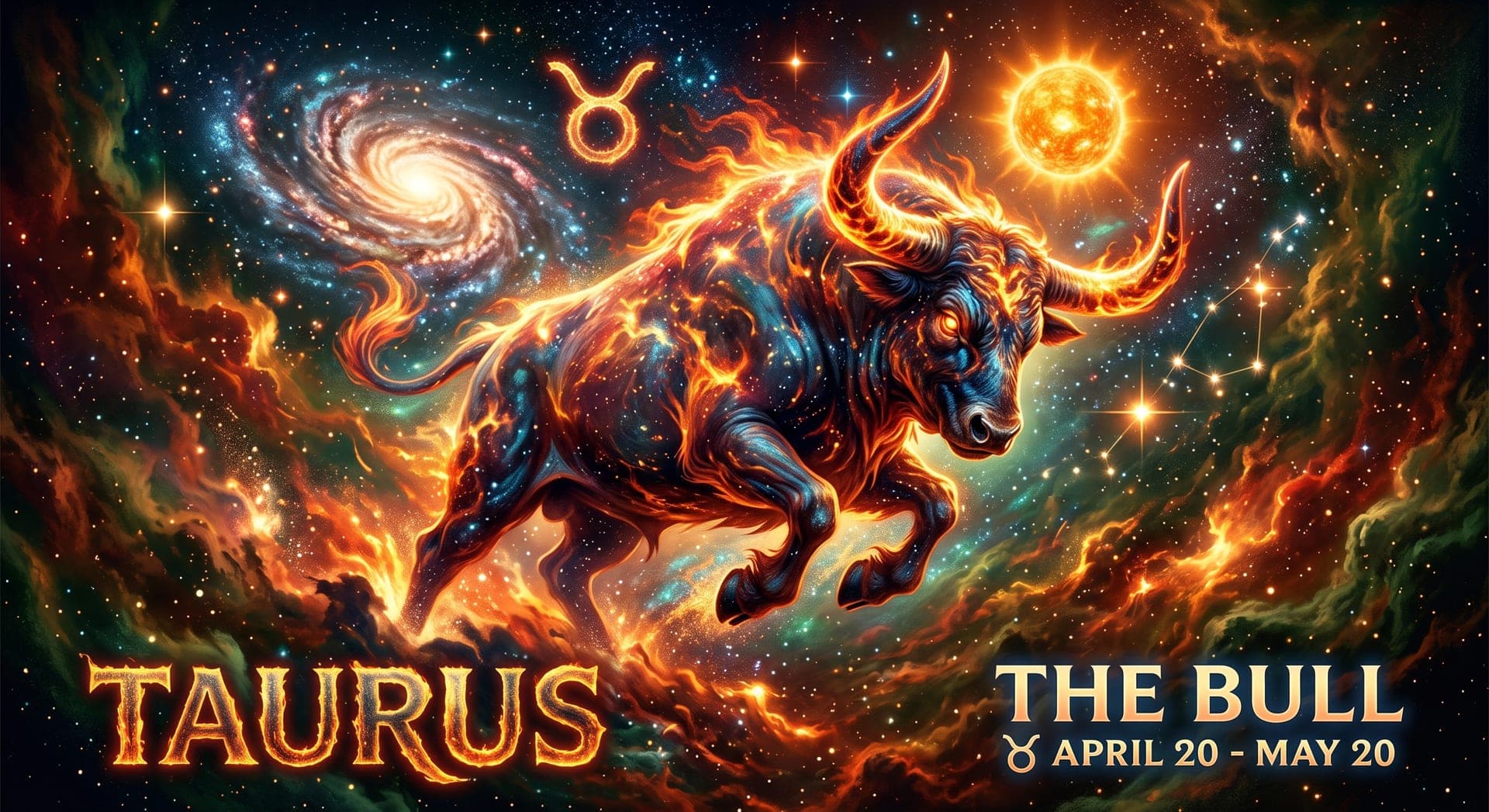
Taurus, the second sign of the zodiac, spans April 20 to May 20 and is symbolized by the bull, an animal prized for its strength, steadiness, and quiet determination. Ruled by Venus, the planet of love, beauty, and material comfort, Taurus is often described as one of the most sensual and pleasure-loving signs, drawn to good food, fine art, and physical comfort. As an Earth sign, Taurus is grounded, practical, and deeply connected to the physical world, valuing stability and tangible security over abstract ideas or sudden change. Its Fixed modality gives Taurus a well-earned reputation for stubbornness, since once a Taurus has settled on a plan or opinion, shifting it can be remarkably difficult. People born under this sign tend to be dependable, loyal, and patient, often the steady presence others rely on during difficult times. While their resistance to change can occasionally frustrate those around them, Taurus's persistence and work ethic make them exceptionally good at seeing long-term goals through to completion.
Personality Traits
Strengths
- Dependable and steady
- Patient and persistent
- Devoted to loved ones
- Appreciates beauty and comfort
- Financially sensible
Weaknesses
- Extremely stubborn
- Resistant to change
- Can be possessive
- Overindulgent
- Slow to forgive
Compatible Signs
Fun Facts
- Taurus's bull symbol connects to the Greek myth of Zeus transforming into a white bull to abduct Europa.
- Venus, Taurus' ruling planet, is the Roman goddess of love and beauty, reflecting the sign's love of comfort, art, and sensory pleasure.
- Taurus is considered by many astrologers to be the most stubborn sign of the zodiac, a trait often attributed to its Fixed modality and bull symbolism.
- Notable Taureans include Queen Elizabeth II, William Shakespeare, Adele, and David Beckham.
- The star cluster known as the Pleiades sits within the constellation Taurus and has been referenced in mythology and literature across many cultures.
Born on May 14
- 1727
Thomas Gainsborough
English painter celebrated as one of the era's finest portraitists and landscape artists, known for works such as Mr and Mrs Andrews and The Blue Boy.
- 1771
Robert Owen
Welsh social reformer and utopian socialist who transformed the New Lanark mills into a model industrial community with education and welfare for workers.
- 1899
Charlotte Auerbach
German-born British geneticist who fled Nazi Germany and went on to discover that mustard gas causes mutations, helping found the field of mutagenesis
- 1914
William Tutte
English mathematician and codebreaker who devised the method for cracking the German Lorenz cipher at Bletchley Park during the Second World War.
- 1926
Eric Morecambe
English comedian who, alongside partner Ernie Wise as Morecambe and Wise, became one of Britain's most beloved comedy double acts.
- 1943
Jack Bruce
Scottish singer-songwriter and bass player best known as a member of the pioneering rock trio Cream.
- 1944
George Lucas
American filmmaker who created "Star Wars" and founded Lucasfilm
- 1948
Bob Woolmer
English cricketer and coach who played 19 Tests for England before guiding South Africa to the 1998 ICC KnockOut Trophy and later coaching Pakistan
- 1952
Robert Zemeckis
American film director known for "Back to the Future"
- 1952
David Byrne
Scottish-born singer-songwriter and founding member of Talking Heads, celebrated for his art-rock innovation and later Broadway work.
- 1961
Tim Roth
English actor known for roles in Reservoir Dogs, Pulp Fiction, and Rob Roy, later moving into directing.
- 1969
Cate Blanchett
Australian actress and Academy Award winner
- 1971
Sofia Coppola
American film director and screenwriter
- 1984
Mark Zuckerberg
American co-founder of Facebook
- 1984
Olly Murs
English singer-songwriter who rose to fame as runner-up on The X Factor before a successful pop music career.
- 1993
Miranda Cosgrove
American actress and singer
On This Day in History
- 1264
Simon de Montfort's forces defeat and capture King Henry III at the Battle of Lewes, a landmark moment in England's development of parliamentary governance.
Rebel baron Simon de Montfort's forces defeated and captured King Henry III along with his son, the future Edward I, at the Battle of Lewes, temporarily seizing control of English royal government and later convening a groundbreaking parliament considered an important early precursor to modern representative government.
- 1264
Henry III of England is captured at the Battle of Lewes, making Simon de Montfort effective ruler.
Simon de Montfort's baronial army defeated the king's forces at Lewes in Sussex, capturing both Henry III and his son, the future Edward I. The victory forced Henry to accept the Mise of Lewes, temporarily transferring power to a council led by de Montfort, whose subsequent parliament of 1265 is often cited as an early landmark in the development of representative government in England.
- 1509
French forces defeat the Republic of Venice at the Battle of Agnadello in northern Italy.
French forces under King Louis XII decisively defeated the Republic of Venice at the Battle of Agnadello in northern Italy, a crushing blow inflicted as part of the League of Cambrai that stripped Venice of much of its mainland Italian territorial possessions, at least temporarily, before the republic gradually recovered.
- 1607
English colonists establish James Fort, which grows into Jamestown, Virginia, the first permanent English settlement in the Americas.
English colonists aboard three ships sailed roughly forty miles up the James River and established James Fort, which grew into Jamestown, Virginia, the first permanent English settlement in the Americas, despite enduring severe early hardship, disease, and starvation that killed the majority of original settlers within the first years.
- 1607
English colonists establish James Fort, the earliest permanent English settlement in the Americas.
About 100 settlers sent by the Virginia Company landed on a marshy peninsula along the James River and built a wooden palisade fort, naming both river and settlement after King James I. Despite disease, starvation, and conflict with the local Powhatan people that nearly wiped it out in the first years, Jamestown survived to become the foundation of England's colonial presence in North America.
- 1610
King Henry IV of France is assassinated by a fanatic, and his young son ascends the throne as Louis XIII.
King Henry IV of France, who had ended decades of religious civil war through the tolerant Edict of Nantes, was stabbed to death in his carriage by a Catholic fanatic opposed to his policies, and his nine-year-old son ascended the throne as Louis XIII under a regency led by his mother, Marie de' Medici.
- 1747
A British fleet under Admiral George Anson defeats the French at the First Battle of Cape Finisterre.
Anson intercepted a French convoy bound for North America and the East Indies off the Spanish coast, capturing several warships and merchant vessels along with a large quantity of treasure. The victory, fought during the War of the Austrian Succession, reinforced British naval dominance in the Atlantic and brought Anson a peerage as Baron Anson.
- 1796
English physician Edward Jenner administers the first smallpox vaccination, a foundational moment in the history of immunology.
English physician Edward Jenner administered material from a cowpox lesion to an eight-year-old boy named James Phipps, then later deliberately exposed him to smallpox to test his immunity, demonstrating that the milder cowpox exposure provided protection. The foundational experiment launched the field of vaccination, a term derived from the Latin word for cow, and eventually led to smallpox's global eradication.
- 1796
English physician Edward Jenner administers the world's first smallpox vaccination.
Jenner inoculated eight-year-old James Phipps with material taken from a cowpox sore on a milkmaid's hand, then later exposed the boy to smallpox to test his immunity. The experiment confirmed Jenner's theory that cowpox infection protected against the far deadlier smallpox, laying the foundation for modern vaccination and eventually leading to smallpox's global eradication in the 20th century.
- 1804
The Lewis and Clark Expedition departs from near St. Louis, beginning its journey to explore the American West.
The Lewis and Clark Expedition formally departed on its journey to explore and map the vast, largely unknown Louisiana Territory and seek a practical water route to the Pacific Ocean, a mission commissioned by President Thomas Jefferson that dramatically expanded American geographic, scientific, and diplomatic knowledge of the western continent.
- 1842
The Illustrated London News, the world's first illustrated weekly news magazine, is published.
Founded by Herbert Ingram, the paper combined news reporting with wood-engraved illustrations at a time when photographs could not yet be printed in newspapers, giving readers vivid visual coverage of events from royal occasions to wars and disasters. It proved immensely popular and ran continuously for well over a century, shaping how the British public visualized the news.
- 1925
Virginia Woolf's novel Mrs Dalloway is published.
Set over a single June day in London, the novel follows society hostess Clarissa Dalloway as she prepares for a party while the shell-shocked war veteran Septimus Warren Smith struggles nearby. Told through Woolf's pioneering stream-of-consciousness technique, it became one of the defining works of English literary modernism and remains among her most widely read novels.
- 1948
David Ben-Gurion declares the establishment of the State of Israel, immediately triggering war with neighboring Arab states.
David Ben-Gurion proclaimed the establishment of the State of Israel in Tel Aviv just hours before the British Mandate for Palestine formally expired at midnight, a declaration immediately followed by the invasion of neighboring Arab states and the outbreak of the first Arab-Israeli War the following day.
- 1948
Israel declares independence, triggering an invasion by neighboring Arab states.
David Ben-Gurion read the Declaration of the Establishment of the State of Israel in Tel Aviv as the British Mandate for Palestine expired at midnight. Within hours, Egypt, Jordan, Syria, Iraq, and Lebanon invaded, beginning the 1948 Arab–Israeli War, whose outcome shaped the borders and politics of the Middle East for generations.
- 1951
The Talyllyn Railway in Wales becomes the first railway in the world run by volunteers.
Facing closure, the narrow-gauge line running through the Welsh countryside near Tywyn was taken over by a newly formed preservation society after its original owner died. Volunteers restored the track and rolling stock and kept trains running, pioneering the heritage railway movement that has since preserved hundreds of historic lines across Britain and the world.
- 1955
The Soviet Union and seven Eastern European allies sign the Warsaw Pact, establishing a Cold War military alliance to counter NATO.
The Soviet Union and seven Eastern European communist satellite states signed the Warsaw Pact mutual defense treaty in Poland's capital, formed in direct response to West Germany's admission into NATO days earlier, formalizing the Cold War's rigid military and ideological division of the European continent for decades to come.
- 1955
Eight Soviet-bloc nations sign the Warsaw Pact mutual defense treaty.
Formed partly in response to West Germany's admission into NATO, the treaty bound the Soviet Union and its Eastern European allies into a unified military command under Moscow's control. The Warsaw Pact became the Eastern counterpart to NATO for the remainder of the Cold War, providing the framework the USSR later used to justify interventions in Hungary in 1956 and Czechoslovakia in 1968.
- 1973
The United States launches Skylab, its first space station.
The United States launched Skylab, its first space station, into orbit atop a modified Saturn V rocket, though the mission encountered severe technical problems during ascent, including a lost heat shield and jammed solar panel, that required an unprecedented, improvised in-orbit repair carried out by the first crew of astronauts sent to occupy it weeks later.
- 2008
Rival football fans clash with police in the Battle of Piccadilly Gardens in Manchester.
Tens of thousands of Rangers supporters gathered in Manchester for the UEFA Cup final against Zenit Saint Petersburg, and violence broke out in Piccadilly Gardens after a large screen showing the match failed. Bottles and missiles were thrown at riot police, injuring dozens of officers and leading to numerous arrests amid one of the worst incidents of football-related disorder in the city's history.
- 2021
China's Zhurong rover successfully lands on Mars, making China only the second country to operate a rover on the planet.
China's Zhurong rover successfully touched down on the surface of Mars as part of the ambitious Tianwen-1 mission, making China only the second nation after the United States to successfully land and operate a functioning rover on the Martian surface, a significant milestone for the country's rapidly advancing space program.