What’s Observed on May 15
Born on May 15: Taurus ♉
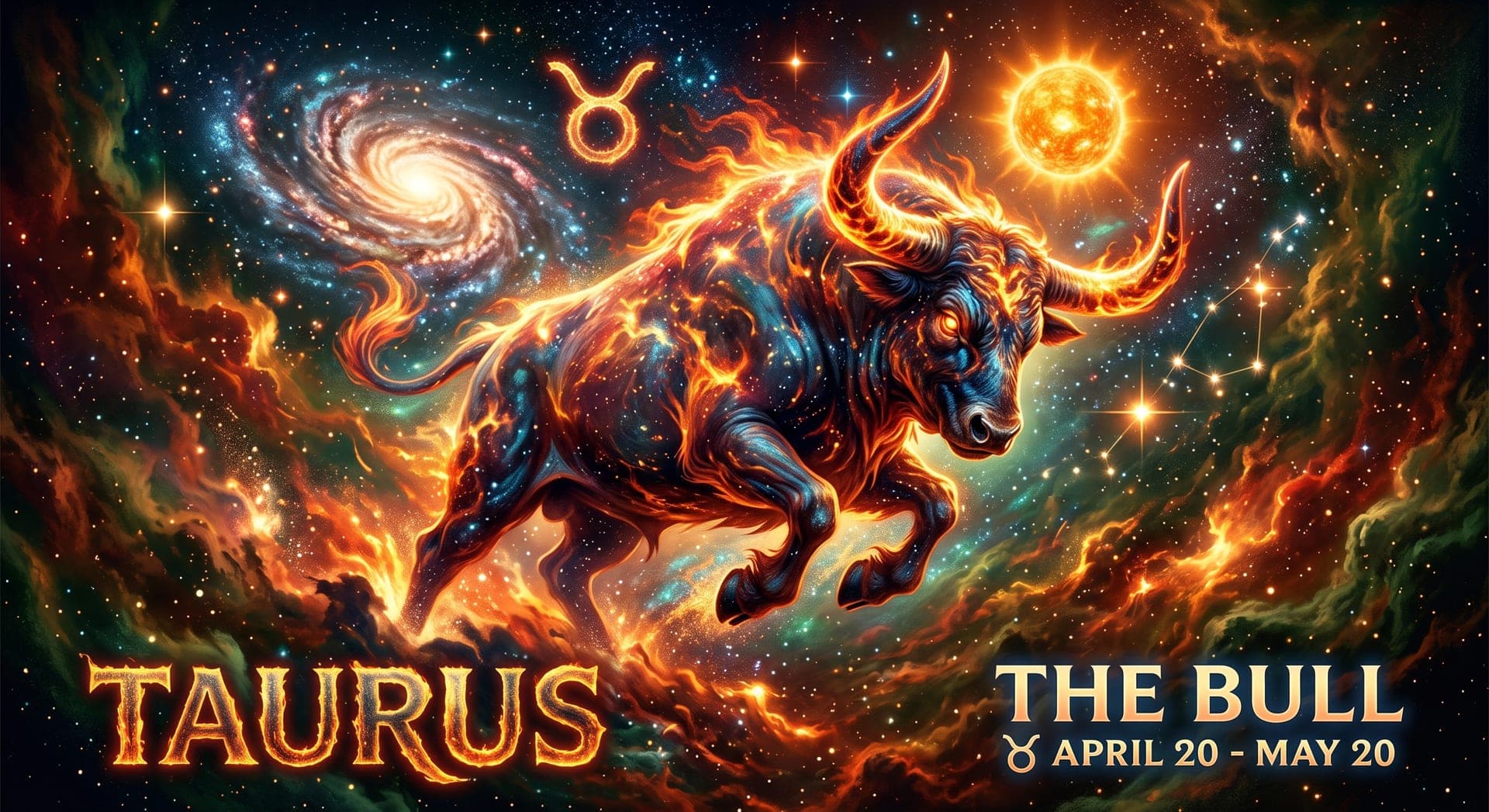
Taurus, the second sign of the zodiac, spans April 20 to May 20 and is symbolized by the bull, an animal prized for its strength, steadiness, and quiet determination. Ruled by Venus, the planet of love, beauty, and material comfort, Taurus is often described as one of the most sensual and pleasure-loving signs, drawn to good food, fine art, and physical comfort. As an Earth sign, Taurus is grounded, practical, and deeply connected to the physical world, valuing stability and tangible security over abstract ideas or sudden change. Its Fixed modality gives Taurus a well-earned reputation for stubbornness, since once a Taurus has settled on a plan or opinion, shifting it can be remarkably difficult. People born under this sign tend to be dependable, loyal, and patient, often the steady presence others rely on during difficult times. While their resistance to change can occasionally frustrate those around them, Taurus's persistence and work ethic make them exceptionally good at seeing long-term goals through to completion.
Personality Traits
Strengths
- Dependable and steady
- Patient and persistent
- Devoted to loved ones
- Appreciates beauty and comfort
- Financially sensible
Weaknesses
- Extremely stubborn
- Resistant to change
- Can be possessive
- Overindulgent
- Slow to forgive
Compatible Signs
Fun Facts
- Taurus's bull symbol connects to the Greek myth of Zeus transforming into a white bull to abduct Europa.
- Venus, Taurus' ruling planet, is the Roman goddess of love and beauty, reflecting the sign's love of comfort, art, and sensory pleasure.
- Taurus is considered by many astrologers to be the most stubborn sign of the zodiac, a trait often attributed to its Fixed modality and bull symbolism.
- Notable Taureans include Queen Elizabeth II, William Shakespeare, Adele, and David Beckham.
- The star cluster known as the Pleiades sits within the constellation Taurus and has been referenced in mythology and literature across many cultures.
Born on May 15
- 1689
Lady Mary Wortley Montagu
English writer and aristocrat who championed smallpox inoculation in Britain after observing the practice in the Ottoman Empire, and whose witty letters remain celebrated.
- 1856
L. Frank Baum
American author of "The Wonderful Wizard of Oz"
- 1859
Pierre Curie
French physicist and Nobel Prize laureate
- 1891
Mikhail Bulgakov
Russian novelist known for "The Master and Margarita"
- 1892
Jimmy Wilde
Welsh boxer regarded as one of the greatest flyweights in history, nicknamed 'the Mighty Atom' for his extraordinary punching power despite his small frame.
- 1905
Joseph Cotten
American actor known for "Citizen Kane"
- 1909
James Mason
English actor who became a major Hollywood and British film star, known for roles in A Star Is Born, North by Northwest, and Lolita.
- 1923
Richard Avedon
American fashion and portrait photographer
- 1925
Mary F. Lyon
English geneticist who discovered X-chromosome inactivation, a fundamental process in mammalian genetics now known as 'lyonization.'
- 1926
Peter Shaffer
English playwright celebrated for works including Equus and Amadeus, the latter of which won multiple Tony Awards and was adapted into an Oscar-winning film.
- 1935
Ted Dexter
English cricketer who captained the national team in the early 1960s and later helped devise the ICC's player rankings system as chairman of the England selectors
- 1937
Madeleine Albright
First female U.S. Secretary of State
- 1948
Brian Eno
English musician and producer known for pioneering ambient music and for producing landmark albums for artists including David Bowie, U2, and Talking Heads.
- 1953
Mike Oldfield
English musician and composer best known for his multi-instrumental album Tubular Bells, which launched Virgin Records and later featured in The Exorcist.
- 1987
Andy Murray
Scottish tennis player who won three Grand Slam singles titles and two Olympic gold medals, ending Britain's 77-year wait for a men's Wimbledon champion in 2013.
On This Day in History
- 1532
The English clergy formally submits to the authority of King Henry VIII.
Under pressure from Henry VIII, Convocation, the assembly representing the English clergy, agreed to the Submission of the Clergy, surrendering its independent law-making powers to the crown. The same day, Thomas More resigned as Lord Chancellor rather than support the king's break with Rome, and the submission became a key legal step toward the establishment of the Church of England.
- 1536
Queen Anne Boleyn stands trial in London on charges of treason and adultery and is condemned to death.
Queen Anne Boleyn stood trial before a specially convened court of peers in London, presided over by her own uncle, on fabricated charges of treason and adultery, including an incest charge involving her own brother, and was swiftly and unanimously condemned to death despite the flimsy, largely uncorroborated evidence presented against her.
- 1536
Anne Boleyn stands trial in London on charges of treason and adultery.
Tried before a court of peers at the Tower of London that included her own uncle, the Duke of Norfolk, Queen Anne was accused of adultery, incest, and plotting the king's death. The evidence was flimsy and the proceedings widely seen as orchestrated by Henry VIII, who wished to be rid of her. She was found guilty and beheaded four days later.
- 1567
Mary, Queen of Scots, marries the Earl of Bothwell, sparking rebellion.
Mary's marriage to James Hepburn, Earl of Bothwell, came just months after the murder of her previous husband, Lord Darnley, in which Bothwell was widely suspected of involvement. The hasty, scandal-tainted union outraged the Scottish nobility, triggering an uprising that forced Mary's abdication weeks later and set her on the path to imprisonment and eventual exile in England.
- 1602
English navigator Bartholomew Gosnold sights and names Cape Cod.
Sailing the ship Concord on a voyage to explore the New England coastline, Gosnold and his crew landed on the sandy peninsula and named it for the abundant cod they caught in its waters. The expedition also charted Martha's Vineyard and the Elizabeth Islands, and Gosnold later helped found the Jamestown colony, making him a key figure in early English exploration of America.
- 1648
The Peace of Münster is ratified, with Spain formally recognizing the independence of the Dutch Republic.
Spain and the Dutch Republic ratified the Peace of Münster, a bilateral treaty forming part of the broader Peace of Westphalia, formally ending the grueling Eighty Years' War and granting the Netherlands full, unconditional international recognition as an independent sovereign nation after decades of rebellion against Spanish Habsburg rule.
- 1836
English astronomer Francis Baily observes and describes 'Baily's beads' during an annular eclipse.
Watching an annular solar eclipse from Scotland, Baily noted the brilliant points of sunlight that appear around the moon's silhouette just before and after totality, caused by sunlight streaming through valleys on the lunar surface. His detailed description popularized the phenomenon, which astronomers still call Baily's beads, and helped advance the precise observational study of eclipses.
- 1851
Australia's first officially recognized gold rush is proclaimed, sparking a mass migration that transformed the colony's economy and population.
Colonial authorities in the Australian colony of Victoria officially proclaimed the region's first major gold rush after significant deposits were confirmed near Ballarat, sparking a massive wave of immigration and prospecting from around the world that rapidly and dramatically transformed the colony's population, wealth, and infrastructure over the following decade.
- 1911
The U.S. Supreme Court rules that Standard Oil constitutes an illegal monopoly and orders its breakup into separate companies.
The U.S. Supreme Court ruled unanimously that Standard Oil, controlled by John D. Rockefeller, constituted an illegal monopoly under the Sherman Antitrust Act and ordered the sprawling conglomerate broken up into more than thirty separate, independently operating corporations, several of which later evolved into today's major oil companies including ExxonMobil and Chevron.
- 1940
The first McDonald's restaurant opens in San Bernardino, California, while Dutch forces surrender to invading German troops.
The first McDonald's restaurant, founded by brothers Richard and Maurice McDonald, opened in San Bernardino, California, pioneering a streamlined, assembly-line "Speedee Service System" approach to fast food preparation that later, under franchisee Ray Kroc's expansion, grew into the world's largest and most recognizable restaurant chain.
- 1941
The Gloster E.28/39 makes the first flight of a British jet aircraft.
Test pilot Gerry Sayer flew the experimental aircraft, powered by a turbojet engine designed by Frank Whittle, from RAF Cranwell in Lincolnshire. The successful flight proved the viability of British jet propulsion technology during the Second World War and paved the way for operational jet fighters like the Gloster Meteor, which entered RAF service just a few years later.
- 1948
Armies from several Arab nations invade the newly declared state of Israel, formally beginning the 1948 Arab-Israeli War.
Armies from Egypt, Jordan, Syria, Lebanon, and Iraq invaded the newly proclaimed state of Israel the day after its declaration of independence, formally beginning the first Arab-Israeli War, a conflict that ultimately resulted in Israeli victory and reshaped the political map and refugee crisis of the modern Middle East.
- 1948
Arab nations invade Israel a day after its declaration of independence.
Egypt, Jordan, Syria, Iraq, and Lebanon sent forces into the newly declared state of Israel, beginning the first Arab-Israeli War. The conflict, which lasted into 1949, resulted in Israeli victory, the displacement of hundreds of thousands of Palestinians, and armistice lines that defined the region's borders for the following two decades.
- 1957
Britain detonates its first hydrogen bomb during a test over Malden Island.
Codenamed Operation Grapple, the test was carried out in the Pacific as part of Britain's effort to develop thermonuclear weapons and secure its status as a major nuclear power alongside the United States and Soviet Union. Though the device underperformed its expected yield, subsequent tests that year succeeded, and Britain's growing nuclear arsenal later underpinned renewed defense cooperation with Washington.
- 1963
The final Mercury program mission, Mercury-Atlas 9, launches with astronaut Gordon Cooper completing 22 orbits of Earth.
Astronaut Gordon Cooper launched aboard Mercury-Atlas 9, the final and longest mission of NASA's Mercury program, completing 22 orbits of Earth over roughly 34 hours despite a serious electrical systems failure late in the flight that forced him to manually pilot the capsule's reentry using his own careful calculations.
- 1972
The Ryukyu Islands, including Okinawa, revert to Japanese sovereignty after 27 years of U.S. military administration.
The Ryukyu Islands, including the main island of Okinawa, formally reverted to full Japanese sovereignty after 27 years under direct United States military administration following World War II, though a significant and controversial American military base presence on Okinawa has continued to generate local political tension ever since.
- 1988
The Soviet Army begins withdrawing its 115,000 troops from Afghanistan.
The withdrawal, agreed under the Geneva Accords, marked the beginning of the end of the nearly decade-long Soviet-Afghan War, which had cost tens of thousands of Soviet lives and left Afghanistan devastated. The pullout, completed by February 1989, was widely seen as a major foreign policy failure for Moscow and a contributing factor to the later collapse of the Soviet Union.
- 2004
Arsenal complete an entire English Premier League season unbeaten.
Managed by Arsène Wenger, Arsenal finished the 2003-04 season with 26 wins and 12 draws in 38 matches without a single defeat, a feat unmatched in the modern era of English top-flight football. The team became known as 'The Invincibles,' and their achievement is still regarded as one of the greatest in Premier League history.
- 2008
California's Supreme Court strikes down the state's ban on same-sex marriage as unconstitutional.
California's Supreme Court ruled in a narrow decision that the state's existing ban on same-sex marriage violated the state constitution's equal protection guarantees, briefly making California the second U.S. state to permit same-sex couples to legally marry before a subsequent statewide ballot measure, Proposition 8, temporarily reversed the ruling months later.
- 2024
Slovak Prime Minister Robert Fico is shot and critically wounded in an assassination attempt at a public event.
Slovak Prime Minister Robert Fico was shot multiple times at close range by a lone gunman while greeting supporters at a public event in the town of Handlová, leaving him critically injured in an assassination attempt that shocked the country and raised significant concerns about escalating political polarization and violence in the region.