
What’s Observed on May 16
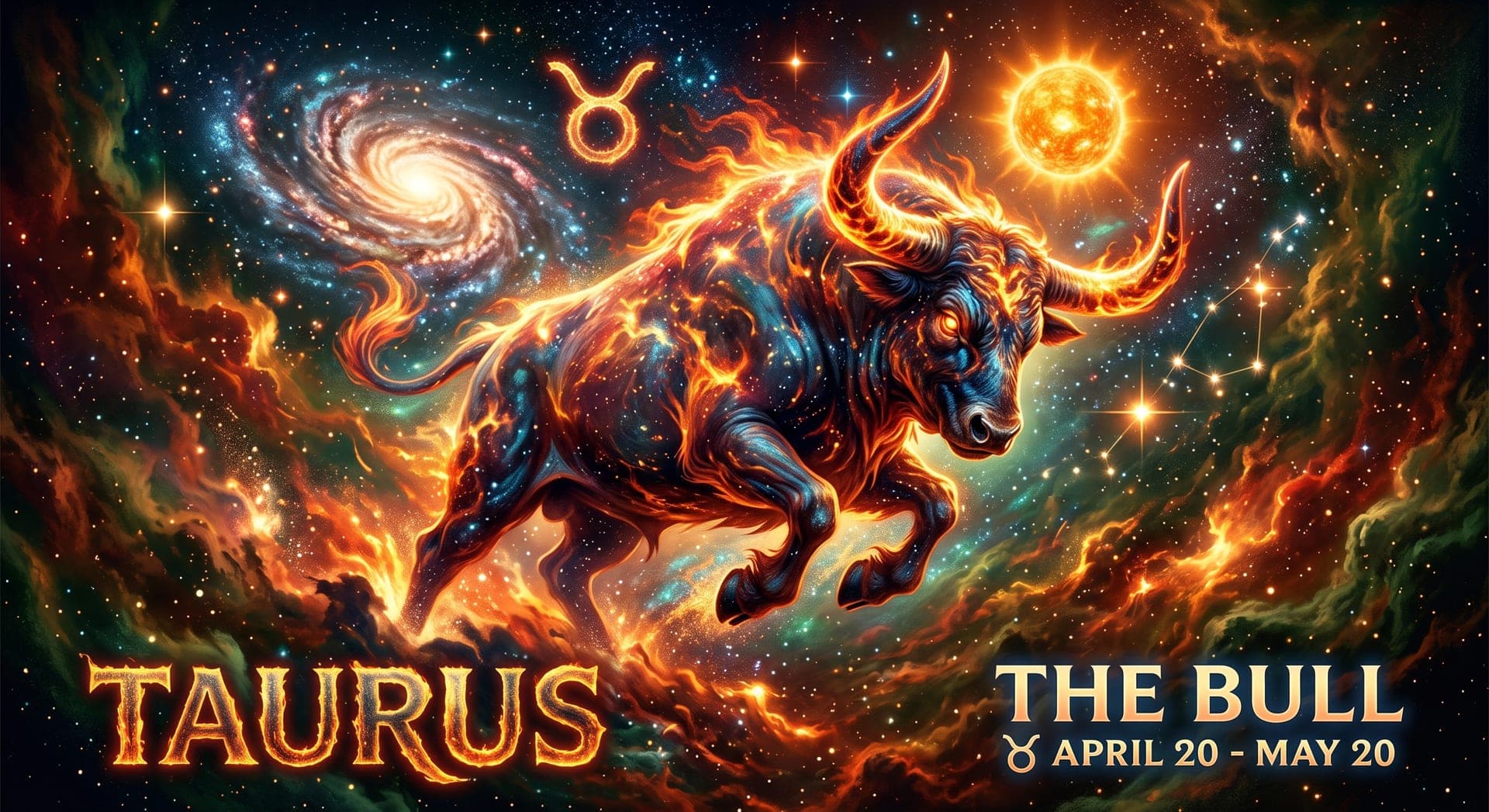
Born on May 16: Taurus ♉
Taurus, the second sign of the zodiac, spans April 20 to May 20 and is symbolized by the bull, an animal prized for its strength, steadiness, and quiet determination. Ruled by Venus, the planet of love, beauty, and material comfort, Taurus is often described as one of the most sensual and pleasure-loving signs, drawn to good food, fine art, and physical comfort. As an Earth sign, Taurus is grounded, practical, and deeply connected to the physical world, valuing stability and tangible security over abstract ideas or sudden change. Its Fixed modality gives Taurus a well-earned reputation for stubbornness, since once a Taurus has settled on a plan or opinion, shifting it can be remarkably difficult. People born under this sign tend to be dependable, loyal, and patient, often the steady presence others rely on during difficult times. While their resistance to change can occasionally frustrate those around them, Taurus's persistence and work ethic make them exceptionally good at seeing long-term goals through to completion.
Personality Traits
Strengths
- Dependable and steady
- Patient and persistent
- Devoted to loved ones
- Appreciates beauty and comfort
- Financially sensible
Weaknesses
- Extremely stubborn
- Resistant to change
- Can be possessive
- Overindulgent
- Slow to forgive
Compatible Signs
Fun Facts
- Taurus's bull symbol connects to the Greek myth of Zeus transforming into a white bull to abduct Europa.
- Venus, Taurus' ruling planet, is the Roman goddess of love and beauty, reflecting the sign's love of comfort, art, and sensory pleasure.
- Taurus is considered by many astrologers to be the most stubborn sign of the zodiac, a trait often attributed to its Fixed modality and bull symbolism.
- Notable Taureans include Queen Elizabeth II, William Shakespeare, Adele, and David Beckham.
- The star cluster known as the Pleiades sits within the constellation Taurus and has been referenced in mythology and literature across many cultures.
Born on May 16
- 1801
William H. Seward
American statesman and U.S. Secretary of State who negotiated the Alaska Purchase
- 1831
David Edward Hughes
British physicist and inventor who developed an early carbon microphone and a printing telegraph used across much of Europe.
- 1862
Margaret Fountaine
English lepidopterist and diarist who spent decades traveling the world collecting butterflies, later famous for the candid diaries she left to be opened after her death.
- 1905
H.E. Bates
English writer best known for the pastoral comic novel The Darling Buds of May, which later inspired a popular television adaptation.
- 1913
Woody Herman
American jazz bandleader and clarinetist
- 1918
Wilf Mannion
English footballer nicknamed 'the Golden Boy,' celebrated as one of Middlesbrough's greatest players and an England international forward.
- 1919
Liberace
American pianist and flamboyant entertainer
- 1929
Adrienne Rich
American poet and essayist
- 1946
Robert Fripp
English guitarist and composer who founded the progressive rock band King Crimson and became known for his innovative, disciplined approach to guitar playing.
- 1948
Judy Finnigan
English broadcaster who, alongside husband Richard Madeley, hosted the long-running television programme Richard & Judy.
- 1953
Pierce Brosnan
Irish actor known for portraying James Bond
- 1964
Milton Jones
English comedian known for his rapid-fire one-liner style of stand-up comedy and appearances on Mock the Week.
- 1966
Janet Jackson
American singer-songwriter
- 1986
Megan Fox
American actress
- 1990
Thomas Brodie-Sangster
English actor known for roles in Love Actually, Game of Thrones, and The Queen's Gambit.

On This Day in History
- 1204
Baldwin IX of Flanders is crowned as the first emperor of the Latin Empire, established after the Fourth Crusade's sack of Constantinople.
Baldwin IX, Count of Flanders, was crowned as the first emperor of the newly established Latin Empire, the crusader state created in the aftermath of the Fourth Crusade's controversial sack of Constantinople, ruling over fractured former Byzantine territory that proved difficult to govern and defend against surrounding rivals.
- 1364
A French army defeats an Anglo-Navarrese force allied with England at the Battle of Cocherel.
Fought in Normandy during the Hundred Years' War, the battle pitted French forces under Bertrand du Guesclin against an army serving Charles the Bad of Navarre, which included English and Gascon troops loyal to England's cause against France. Du Guesclin's victory secured Normandy for the French crown and boosted his reputation as one of the era's most capable commanders.
- 1527
Florence expels the ruling Medici family and re-establishes itself as a republic.
Florentine citizens rose up and expelled the ruling Medici family from the city, re-establishing Florence as an independent republic amid the broader turmoil of the ongoing Italian Wars and the sack of Rome weeks earlier, though Medici rule would eventually be forcibly restored years later with foreign military support.
- 1532
Sir Thomas More resigns as Lord Chancellor of England amid tensions over King Henry VIII's break with the Catholic Church.
Sir Thomas More resigned as Lord Chancellor of England, citing failing health but privately unwilling to publicly support King Henry VIII's break with the Roman Catholic Church over his divorce from Catherine of Aragon, a principled stand of conscience that led to More's eventual trial and execution for treason five years later.
- 1532
Sir Thomas More resigns as Lord Chancellor of England.
More stepped down rather than support Henry VIII's break with Rome and the Submission of the Clergy, which had been agreed the previous day. His resignation, driven by conscience over the king's divorce from Catherine of Aragon and claims of supremacy over the church, set him on a collision course with Henry that would end in his execution for treason three years later.
- 1568
Mary, Queen of Scots flees to England after her defeat at Langside.
Having lost her bid to reclaim the Scottish throne, Mary crossed the Solway Firth into England seeking the protection of her cousin, Elizabeth I. Instead of aid, she found herself effectively a prisoner, held in a series of English castles for the next nineteen years until her execution in 1587 on charges of plotting against Elizabeth.
- 1770
The future Marie Antoinette marries the Dauphin of France, later King Louis XVI, in a proxy ceremony sealing a Franco-Austrian alliance.
The fourteen-year-old Archduchess Marie Antoinette of Austria married the fifteen-year-old Dauphin of France, the future King Louis XVI, in a lavish proxy ceremony held at Versailles intended to cement a diplomatic alliance between the rival Habsburg and Bourbon royal houses following centuries of conflict.
- 1811
Allied British, Spanish, and Portuguese forces fight the French to a costly standstill at Albuera.
One of the bloodiest battles of the Peninsular War, Albuera saw British and allied troops under Lord Beresford hold off a French assault led by Marshal Soult after brutal, close-quarters fighting. Both sides suffered devastating casualties, and while the French ultimately withdrew, the battle became infamous for its ferocity rather than for any decisive tactical gain.
- 1868
The U.S. Senate falls one vote short of convicting President Andrew Johnson in his impeachment trial.
The U.S. Senate fell one single vote short of the two-thirds majority required to convict President Andrew Johnson on impeachment charges stemming from his defiant removal of a cabinet secretary, narrowly allowing him to remain in office and avoid becoming the first American president ever removed from power.
- 1916
Britain and France sign the secret Sykes-Picot Agreement, outlining plans to partition Ottoman territories in the Middle East.
British and French diplomats Mark Sykes and François Georges-Picot secretly negotiated and signed the Sykes-Picot Agreement, outlining how the two powers would divide and administer former Ottoman territories across the Middle East after World War I, decisions whose lasting consequences continue to shape regional borders and politics today.
- 1916
Britain and France sign the secret Sykes-Picot Agreement carving up Ottoman territory.
Negotiated by British diplomat Mark Sykes and French diplomat François Georges-Picot, the agreement outlined how Britain and France would divide the Middle Eastern provinces of the collapsing Ottoman Empire into zones of control and influence after the First World War. Its terms, which contradicted wartime promises made to Arab allies, became notorious after Bolshevik revolutionaries exposed the deal in 1917, and it still shapes debates over the region's borders today.
- 1920
Pope Benedict XV canonizes Joan of Arc, nearly 500 years after her execution.
Pope Benedict XV formally canonized Joan of Arc as a saint of the Catholic Church, nearly five centuries after English authorities burned her at the stake as a convicted heretic in 1431, reflecting a dramatic historical rehabilitation of her legacy that had begun with a formal retrial and exoneration decades after her death.
- 1929
The first Academy Awards ceremony is held in Hollywood, honoring films from the previous two years.
The first Academy Awards ceremony was held in a brief, private banquet at the Hollywood Roosevelt Hotel, honoring films released over the previous two years with a ceremony lasting only about fifteen minutes, a modest beginning for what became the film industry's most prestigious and closely watched annual televised awards event.
- 1943
British bombers carry out Operation Chastise, the famous "Dambusters" raid targeting German dams in the Ruhr Valley.
Royal Air Force bombers of the specially formed No. 617 Squadron carried out the daring "Dambusters" raid, using specially designed spinning bouncing bombs developed by engineer Barnes Wallis to breach hydroelectric dams in Germany's industrial Ruhr Valley, causing significant flooding and disruption at a heavy cost to the attacking aircrews.
- 1943
RAF Bomber Command's No. 617 Squadron carries out the 'Dambusters' raid on Germany's Ruhr dams.
Flying specially modified Lancaster bombers, the squadron used Barnes Wallis's revolutionary bouncing bombs, designed to skip across water and detonate against dam walls. The raid breached the Möhne and Eder dams, causing severe flooding and disrupting German industrial production, though at the cost of eight aircraft and 53 aircrew lives. The mission became one of the most celebrated feats of British wartime engineering and daring.
- 1945
The Levant Crisis erupts between Britain and France over control of Syria.
As French forces moved to reassert colonial control and suppress Syrian nationalist unrest, British troops intervened to halt the fighting, backing Syrian and Lebanese independence movements. The confrontation strained the wartime Anglo-French alliance and ultimately hastened France's withdrawal from the Levant, with both Syria and Lebanon achieving full independence within the following year.
- 1951
The first regularly scheduled transatlantic flights begin between New York and London.
British Overseas Airways Corporation and Pan American Airways began offering scheduled passenger service across the Atlantic on the route, dramatically cutting travel time compared to ocean liners. The new service, using propeller aircraft that still required refueling stops, marked a major step toward the routine, mass air travel between Europe and North America that would flourish with the jet age.
- 1960
Physicist Theodore Maiman successfully operates the first working laser at Hughes Research Laboratories.
Physicist Theodore Maiman successfully operated the world's first working laser, using a ruby crystal as the lasing medium, at Hughes Research Laboratories in California, a breakthrough that launched an entirely new field of technology with wide-ranging applications later spanning medicine, telecommunications, manufacturing, and consumer electronics.
- 1960
Physicist Theodore Maiman operates the world's first working laser.
Working at Hughes Research Laboratories in California, Maiman built a device using a synthetic ruby crystal to produce the first coherent beam of light, achieving what other, better-funded research teams had been racing to accomplish. The laser rapidly found uses in medicine, telecommunications, manufacturing, and countless other fields, becoming one of the most consequential inventions of the 20th century.
- 1991
Queen Elizabeth II becomes the first British monarch to address the United States Congress.
Speaking to a joint session in Washington, the Queen opened with a wry joke about finally being tall enough to be seen over the podium, having been hidden behind it during earlier remarks outside. Her speech touched on the close alliance between Britain and the United States, and the appearance remains a notable moment in the two countries' 'special relationship.'