What’s Observed on May 17
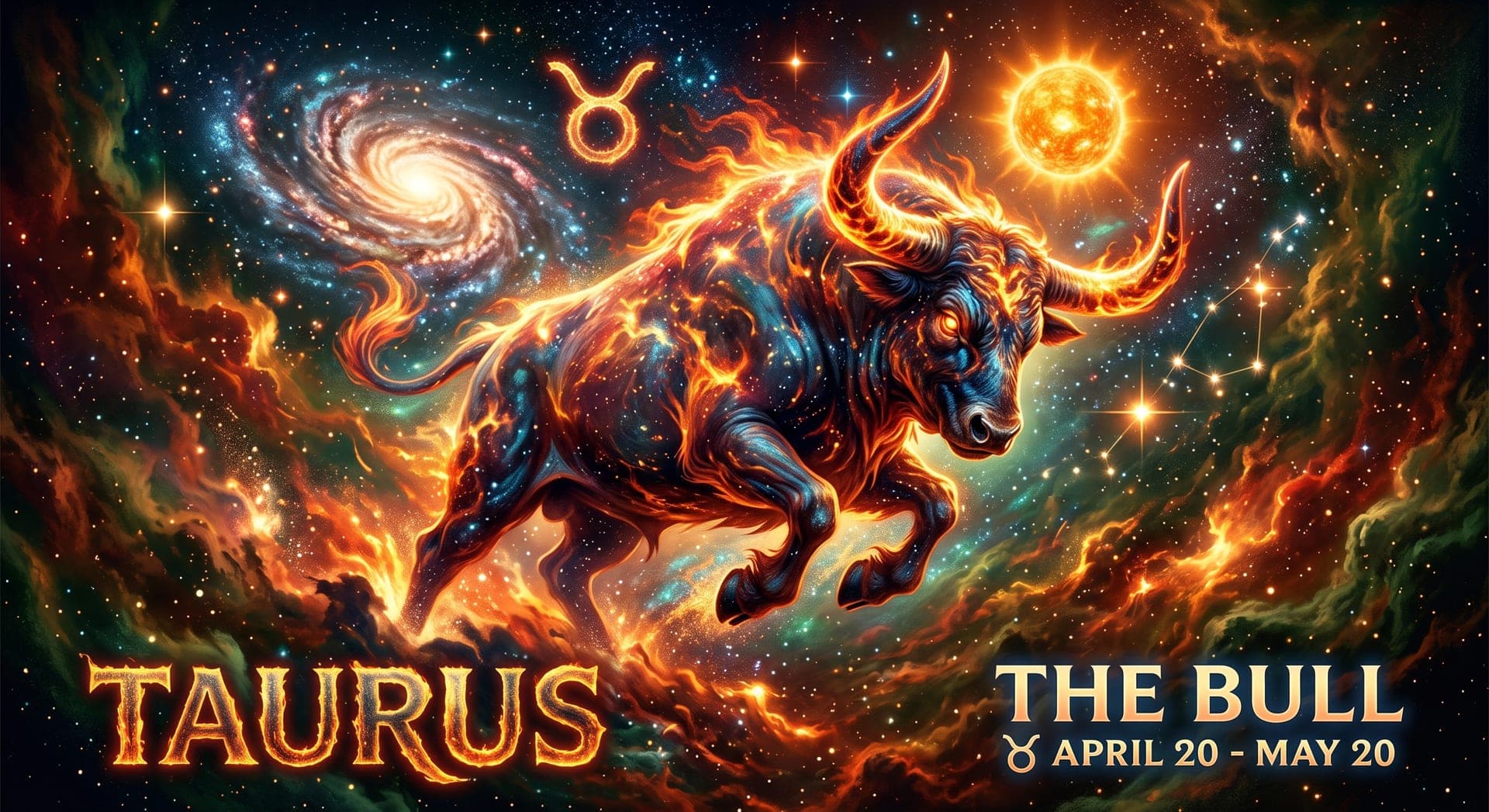
Born on May 17: Taurus ♉
Taurus, the second sign of the zodiac, spans April 20 to May 20 and is symbolized by the bull, an animal prized for its strength, steadiness, and quiet determination. Ruled by Venus, the planet of love, beauty, and material comfort, Taurus is often described as one of the most sensual and pleasure-loving signs, drawn to good food, fine art, and physical comfort. As an Earth sign, Taurus is grounded, practical, and deeply connected to the physical world, valuing stability and tangible security over abstract ideas or sudden change. Its Fixed modality gives Taurus a well-earned reputation for stubbornness, since once a Taurus has settled on a plan or opinion, shifting it can be remarkably difficult. People born under this sign tend to be dependable, loyal, and patient, often the steady presence others rely on during difficult times. While their resistance to change can occasionally frustrate those around them, Taurus's persistence and work ethic make them exceptionally good at seeing long-term goals through to completion.
Personality Traits
Strengths
- Dependable and steady
- Patient and persistent
- Devoted to loved ones
- Appreciates beauty and comfort
- Financially sensible
Weaknesses
- Extremely stubborn
- Resistant to change
- Can be possessive
- Overindulgent
- Slow to forgive
Compatible Signs
Fun Facts
- Taurus's bull symbol connects to the Greek myth of Zeus transforming into a white bull to abduct Europa.
- Venus, Taurus' ruling planet, is the Roman goddess of love and beauty, reflecting the sign's love of comfort, art, and sensory pleasure.
- Taurus is considered by many astrologers to be the most stubborn sign of the zodiac, a trait often attributed to its Fixed modality and bull symbolism.
- Notable Taureans include Queen Elizabeth II, William Shakespeare, Adele, and David Beckham.
- The star cluster known as the Pleiades sits within the constellation Taurus and has been referenced in mythology and literature across many cultures.
Born on May 17
- 1682
Bartholomew Roberts
Welsh pirate, known as 'Black Bart,' who captured more ships than any other pirate of the Golden Age of Piracy before his death in battle in 1722.
- 1749
Edward Jenner
English physician who pioneered the smallpox vaccine, a discovery that laid the foundation for the field of immunology and modern vaccination.
- 1768
Henry Paget, 1st Marquess of Anglesey
English cavalry general who commanded allied cavalry at the Battle of Waterloo, where he lost a leg to cannon fire, reportedly remarking to Wellington, 'By God, sir, I've lost my leg.'
- 1866
Erik Satie
French composer known for his minimalist piano pieces
- 1921
Dennis Brain
English horn player widely regarded as one of the finest virtuosos of the 20th century, celebrated for his recordings of the Mozart horn concertos.
- 1935
Dennis Potter
English screenwriter and playwright known for innovative television dramas such as Pennies from Heaven and The Singing Detective.
- 1936
Dennis Hopper
American actor and director known for "Easy Rider"
- 1949
Bill Bruford
English drummer known for his work with progressive rock bands Yes and King Crimson, celebrated for his intricate, jazz-influenced style.
- 1950
Alan Johnson
English Labour politician who rose from a working-class background to serve as Home Secretary and hold several other senior cabinet posts.
- 1956
Sugar Ray Leonard
American boxer and five-division world champion
- 1961
Enya
Irish singer known for atmospheric, new-age music
- 1965
Trent Reznor
American musician, founder of Nine Inch Nails
- 1971
Queen Máxima of the Netherlands
Queen consort of the Netherlands
- 1984
Christine Ohuruogu
English sprinter who won Olympic gold in the 400 metres at the 2008 Beijing Games and later added world and Commonwealth titles.
- 1991
Johanna Konta
Australian-born British tennis player who reached a career-high world No. 4 and the semi-finals of three Grand Slam tournaments

On This Day in History
- 1395
Wallachian forces defeat an invading Ottoman army at the Battle of Rovine.
Wallachian voivode Mircea the Elder led his forces to a defensive victory over an invading Ottoman army at the Battle of Rovine, one of several successful early Wallachian resistances against Ottoman expansion that delayed, though ultimately did not prevent, the region's eventual subjugation as an Ottoman tributary state in later centuries.
- 1521
Edward Stafford, 3rd Duke of Buckingham, is executed for treason.
One of the wealthiest and most powerful nobles in England, Buckingham was accused of plotting against Henry VIII, partly fueled by the king's suspicion of his royal blood claim through descent from Edward III. Convicted by a court of his peers, he was beheaded on Tower Hill, a stark demonstration of the risks facing even the highest-ranking nobility under the Tudor monarchy.
- 1536
George Boleyn and four other men are executed for treason alongside the fall of Anne Boleyn.
George Boleyn, Anne Boleyn's brother, was convicted of incest and treason in the same wave of accusations that doomed his sister, along with courtiers Henry Norris, Francis Weston, William Brereton, and musician Mark Smeaton. All five were beheaded on Tower Hill two days before Anne's own execution, part of Henry VIII's ruthless campaign to clear the way for marriage to Jane Seymour.
- 1536
The marriage of Henry VIII and Anne Boleyn is formally annulled.
Archbishop Thomas Cranmer declared the marriage void just two days before Anne's execution, on grounds that were never fully explained but likely centered on a prior relationship between Henry and Anne's sister, Mary Boleyn. The annulment retroactively made their daughter, the future Elizabeth I, illegitimate, and cleared the legal path for Henry to marry Jane Seymour within days.
- 1590
Anne of Denmark is crowned Queen of Scotland.
Anne, who had married James VI of Scotland by proxy the previous year and then in person in Norway, was crowned in a Protestant ceremony at Holyrood Abbey in Edinburgh, the first coronation held there since the Reformation. She would later become queen consort of England as well, following James's accession to the English throne as James I in 1603.
- 1642
French colonist Paul de Chomedey founds Ville-Marie, the settlement that grew into the city of Montreal.
French colonist Paul de Chomedey, Sieur de Maisonneuve, founded the settlement of Ville-Marie on the island of Montreal despite warnings that the site was too exposed to attack, establishing what began as a small Catholic mission outpost dedicated to converting Indigenous peoples and grew over subsequent centuries into one of Canada's largest and most culturally significant cities.
- 1756
Great Britain declares war on France, formally beginning the Seven Years' War, a conflict that spanned multiple continents.
Great Britain formally declared war on France, opening the sprawling global conflict known as the Seven Years' War, fought simultaneously across battlefields in Europe, North America, the Caribbean, West Africa, and India, and later described by Prime Minister Winston Churchill as arguably the first true world war in history.
- 1756
Great Britain formally declares war on France, beginning the Seven Years' War in Europe.
Fighting between British and French colonial forces had already broken out in North America two years earlier, but Britain's formal declaration extended the conflict into a full-scale European and global war. Often called the first true 'world war,' it drew in most of the major European powers and reshaped colonial territories on multiple continents before ending with British victory in 1763.
- 1760
French forces besieging Quebec retreat after the Royal Navy arrives.
French troops under the Chevalier de Lévis had laid siege to British-held Quebec City in hopes of retaking it after their defeat the previous year, but the arrival of British warships to relieve the garrison forced them to abandon the siege and withdraw. The retreat secured British control of Quebec and paved the way for the conquest of the rest of New France.
- 1792
Twenty-four New York merchants sign the Buttonwood Agreement, founding what became the New York Stock Exchange.
Twenty-four New York City stockbrokers and merchants signed the Buttonwood Agreement while gathered beneath a buttonwood tree on Wall Street, establishing foundational rules governing commission rates and trading practices among themselves that evolved over subsequent decades into the New York Stock Exchange, now one of the largest and most influential financial markets in the world.
- 1859
Members of the Melbourne Football Club codify the first rules of Australian rules football.
Members of the Melbourne Football Club, seeking to formalize a distinctly Australian winter sport suited to the colony's hard grounds, drafted the first written rules for what became Australian rules football, a fast-paced game blending elements of rugby and Gaelic football that remains one of Australia's most popular and passionately followed spectator sports.
- 1900
L. Frank Baum's "The Wonderful Wizard of Oz" is first published in the United States.
L. Frank Baum's "The Wonderful Wizard of Oz," illustrated by W. W. Denslow, was first published in the United States and quickly became a bestseller, introducing characters like Dorothy, the Scarecrow, and the Tin Man that became deeply embedded in American popular culture through numerous later stage and film adaptations, most famously the beloved 1939 MGM movie.
- 1915
The last Liberal Party government under H. H. Asquith falls, leading to a wartime coalition.
Mounting criticism over munitions shortages and the failing Gallipoli campaign forced Asquith to dissolve his single-party Liberal government and form a coalition with Conservative and Labour politicians. Asquith remained prime minister, but the crisis marked the end of purely Liberal government in Britain and set the stage for his eventual replacement by David Lloyd George the following year.
- 1954
The U.S. Supreme Court rules unanimously in "Brown v. Board of Education" that racial segregation in public schools is unconstitutional.
The U.S. Supreme Court issued its landmark unanimous ruling in "Brown v. Board of Education," declaring state-mandated racial segregation in public schools inherently unconstitutional and formally overturning the decades-old "separate but equal" doctrine established by "Plessy v. Ferguson," a pivotal legal victory that energized the broader American civil rights movement.
- 1974
The Ulster Volunteer Force detonates car bombs in Dublin and Monaghan, killing 33.
The coordinated bombings, carried out by the loyalist paramilitary group without warning during Friday rush hour, struck the Republic of Ireland's capital and a nearby border town, killing more civilians than any other single incident of the Troubles. No one has ever been convicted, and allegations of collusion with British security forces have fueled decades of controversy and calls for a full public inquiry.
- 1984
Prince Charles denounces a proposed National Gallery extension as a 'monstrous carbuncle.'
Speaking at a Royal Institute of British Architects gala, Charles criticized the modernist design proposed for an extension to London's National Gallery, memorably calling it 'a monstrous carbuncle on the face of a much-loved and elegant friend.' The remark caused a sensation, helped scupper the design, and became one of the most quoted royal interventions in British architectural debate.
- 1990
The World Health Organization removes homosexuality from its official classification of mental disorders.
The World Health Organization formally removed homosexuality from its International Classification of Diseases, a significant milestone in the global effort to depathologize sexual orientation after decades in which it had been officially classified alongside mental illnesses. The anniversary is now marked internationally each year as the International Day Against Homophobia, Biphobia, and Transphobia.
- 2000
Arsenal and Galatasaray fans clash in riots before the UEFA Cup final in Copenhagen.
Rival fans clashed violently in Copenhagen's streets and squares in the hours before the match, leading to numerous arrests and injuries and overshadowing Arsenal's first European final in five years. Galatasaray went on to win the match on penalties after a goalless draw, becoming the first Turkish club to lift a European trophy.
- 2004
Massachusetts becomes the first U.S. state to legally perform same-sex marriages.
Massachusetts became the first U.S. state to legally perform same-sex marriages following a landmark 2003 state supreme court ruling that found denying marriage rights to same-sex couples unconstitutional, a pioneering moment in the American legal and cultural battle over marriage equality that preceded the U.S. Supreme Court's nationwide legalization by more than a decade.
- 2007
Trains cross the border between North and South Korea for the first time since 1953, in a symbolic gesture of reconciliation.
Passenger and freight trains crossed the heavily fortified border between North and South Korea for the first time since the Korean War divided the peninsula in 1953, a symbolically significant, if largely ceremonial and short-lived, gesture toward reconciliation between the two long-estranged nations during a period of improved inter-Korean relations.