What’s Observed on May 18
Born on May 18: Taurus ♉
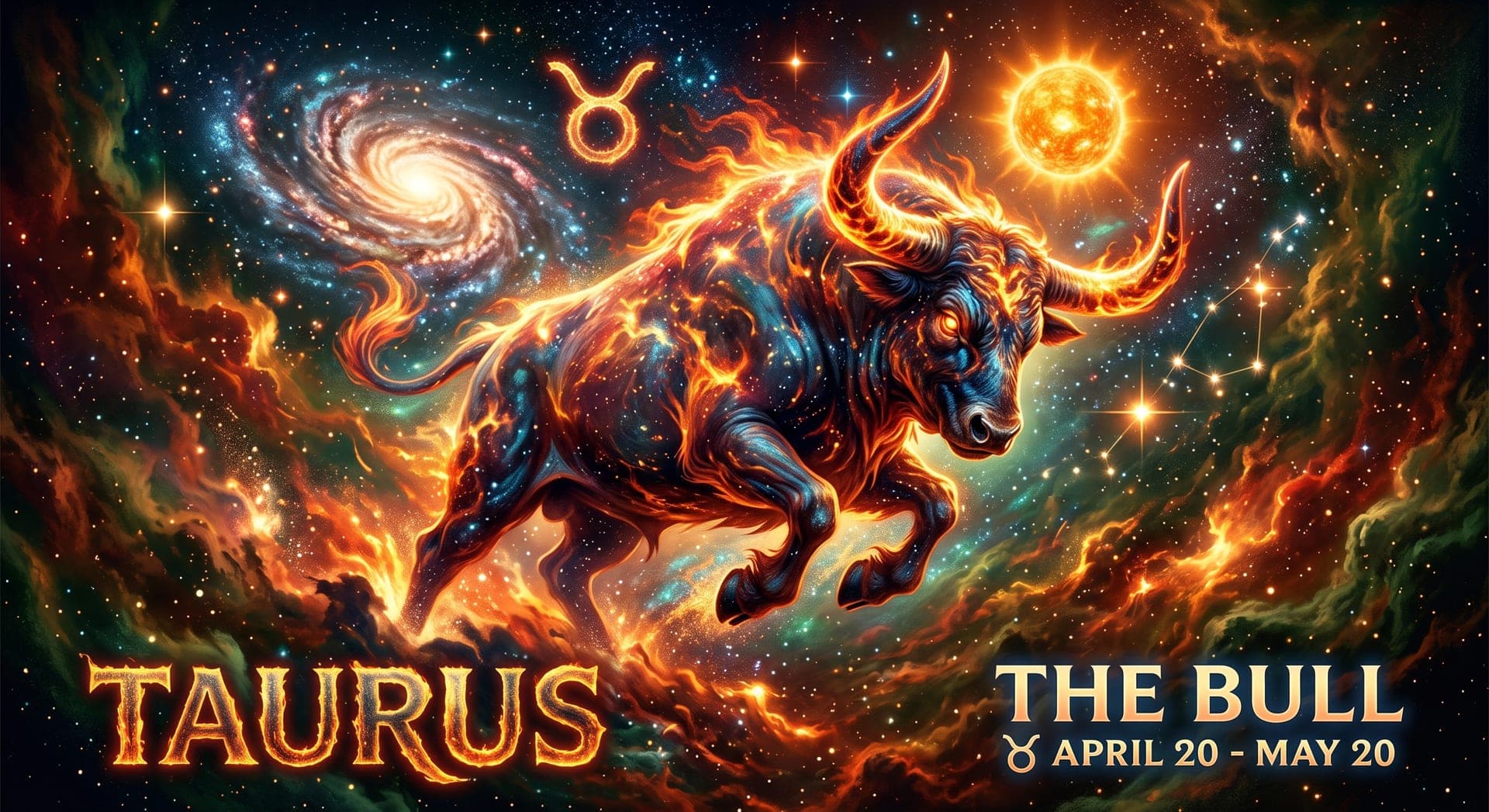
Taurus, the second sign of the zodiac, spans April 20 to May 20 and is symbolized by the bull, an animal prized for its strength, steadiness, and quiet determination. Ruled by Venus, the planet of love, beauty, and material comfort, Taurus is often described as one of the most sensual and pleasure-loving signs, drawn to good food, fine art, and physical comfort. As an Earth sign, Taurus is grounded, practical, and deeply connected to the physical world, valuing stability and tangible security over abstract ideas or sudden change. Its Fixed modality gives Taurus a well-earned reputation for stubbornness, since once a Taurus has settled on a plan or opinion, shifting it can be remarkably difficult. People born under this sign tend to be dependable, loyal, and patient, often the steady presence others rely on during difficult times. While their resistance to change can occasionally frustrate those around them, Taurus's persistence and work ethic make them exceptionally good at seeing long-term goals through to completion.
Personality Traits
Strengths
- Dependable and steady
- Patient and persistent
- Devoted to loved ones
- Appreciates beauty and comfort
- Financially sensible
Weaknesses
- Extremely stubborn
- Resistant to change
- Can be possessive
- Overindulgent
- Slow to forgive
Compatible Signs
Fun Facts
- Taurus's bull symbol connects to the Greek myth of Zeus transforming into a white bull to abduct Europa.
- Venus, Taurus' ruling planet, is the Roman goddess of love and beauty, reflecting the sign's love of comfort, art, and sensory pleasure.
- Taurus is considered by many astrologers to be the most stubborn sign of the zodiac, a trait often attributed to its Fixed modality and bull symbolism.
- Notable Taureans include Queen Elizabeth II, William Shakespeare, Adele, and David Beckham.
- The star cluster known as the Pleiades sits within the constellation Taurus and has been referenced in mythology and literature across many cultures.
Born on May 18
- 1048
Omar Khayyam
Persian mathematician, astronomer, and poet
- 1850
Oliver Heaviside
English self-taught physicist and electrical engineer who reformulated Maxwell's equations into modern vector calculus form and predicted the existence of the ionosphere.
- 1872
Bertrand Russell
Welsh-born British philosopher, logician, and mathematician who co-authored Principia Mathematica and won the Nobel Prize in Literature.
- 1883
Walter Gropius
German-American architect who founded the Bauhaus
- 1897
Frank Capra
Italian-American film director known for "It's a Wonderful Life"
- 1909
Fred Perry
English tennis player who won three consecutive Wimbledon singles titles during the 1930s.
- 1912
Perry Como
American singer and television host
- 1919
Margot Fonteyn
English prima ballerina celebrated for her decades-long career with the Royal Ballet and her celebrated stage partnership with Rudolf Nureyev.
- 1920
Pope John Paul II
Head of the Catholic Church for over 26 years
- 1942
Nobby Stiles
English footballer who won the 1966 World Cup with England, renowned for his tenacious midfield play.
- 1944
Albert Hammond
British Gibraltarian singer-songwriter known for the solo hit "It Never Rains in Southern California" and for co-writing songs including "The Air That I Breathe" and "One Moment in Time"
- 1946
Reggie Jackson
American baseball Hall of Famer nicknamed "Mr. October"
- 1949
Rick Wakeman
English keyboardist known for his work with the progressive rock band Yes and his elaborate concept solo albums.
- 1952
George Strait
American country music singer
- 1975
John Higgins
Scottish snooker player who has won the World Snooker Championship four times.

On This Day in History
- 1096
Crusader mobs massacre hundreds of Jewish residents of Worms, Germany, in one of the deadliest attacks of the early Crusades.
A mob of Crusaders and local townspeople massacred hundreds of Jewish residents of Worms, Germany, part of a broader wave of violent, unauthorized attacks against Jewish communities across the Rhineland that accompanied the popular, disorganized beginning of the First Crusade, despite official Church teaching prohibiting such violence.
- 1152
Henry II of England marries Eleanor of Aquitaine, a union that dramatically expanded Angevin territorial holdings in France.
Henry II of England married the recently divorced and enormously wealthy Eleanor of Aquitaine just weeks after her marriage to King Louis VII of France was annulled, and her vast inherited territories in southwestern France, combined with Henry's own holdings, created the sprawling Angevin Empire that dominated much of western Europe for the following decades.
- 1152
The future Henry II of England marries Eleanor of Aquitaine in Poitiers.
Eleanor, recently divorced from King Louis VII of France, married the 19-year-old Henry, Duke of Normandy, just eight weeks after her annulment. The union brought Aquitaine under Henry's control, and when he became King of England in 1154 it created the sprawling Angevin Empire stretching from Scotland to the Pyrenees, reshaping medieval European politics for generations.
- 1291
The city of Acre falls to Mamluk forces, ending nearly two centuries of Crusader presence in the Holy Land.
After a bitter six-week siege, Sultan al-Ashraf Khalil's Mamluk army overwhelmed the last major Crusader stronghold on the Levantine coast. The fall of Acre effectively ended the Crusader states established after the First Crusade, and surviving Christian forces evacuated to Cyprus, closing a defining chapter of medieval history.
- 1565
The Great Siege of Malta begins as Ottoman forces attempt to seize the strategically vital island from the Knights Hospitaller.
Ottoman forces under Sultan Suleiman the Magnificent launched a massive assault intended to seize the strategically vital island of Malta from the Knights Hospitaller in what became known as the Great Siege of Malta, a grueling four-month campaign that ultimately ended in a decisive and celebrated defensive victory for the vastly outnumbered knights.
- 1593
An arrest warrant is issued for playwright Christopher Marlowe after fellow writer Thomas Kyd accuses him of heresy.
Kyd, arrested and tortured, told authorities that heretical papers found in his possession belonged to Marlowe, his former roommate. The Privy Council ordered Marlowe's arrest, and he was required to report daily while the case proceeded. Ten days later he was stabbed to death in Deptford under murky circumstances, cutting short the career of one of Elizabethan England's leading dramatists.
- 1756
Great Britain formally declares war on France, opening the Seven Years' War in Europe.
Fighting between British and French colonial forces in North America had already been underway for two years, but the formal declaration extended the conflict across Europe, India, and the seas. Often called the first true 'world war,' the struggle pitted Britain and Prussia against France, Austria, and Russia, and ended with Britain emerging as the dominant global colonial power.
- 1803
The United Kingdom revokes the Treaty of Amiens and declares war on France, ending a brief peace with Napoleon.
The Treaty of Amiens, signed just fourteen months earlier, had brought a rare pause in nearly a decade of Anglo-French conflict. Disputes over Malta, Dutch territories, and Napoleon's continued expansion in Europe collapsed the fragile truce. The renewed war would continue almost without interruption for twelve years, ending only with Napoleon's final defeat at Waterloo in 1815.
- 1804
Napoleon Bonaparte is proclaimed Emperor of the French by the French Senate.
The French Senate formally proclaimed Napoleon Bonaparte Emperor of the French, ratified soon after by a national plebiscite, completing his transformation from ambitious revolutionary general to hereditary monarch, a title he held until his ultimate military defeat and second, final exile a decade later.
- 1804
Napoleon Bonaparte is proclaimed Emperor of the French by the French Senate.
The Senate's decree followed a national plebiscite and formally ended the First French Republic, transforming Napoleon's rule from First Consul into hereditary emperor. He was crowned in Notre-Dame Cathedral that December. The move alarmed Britain and the other European powers, feeding directly into the Napoleonic Wars that dominated the continent for the next decade.
- 1812
John Bellingham is found guilty of assassinating British Prime Minister Spencer Perceval.
Bellingham, a merchant with a grievance over debts he blamed the government for failing to resolve, shot Perceval in the lobby of the House of Commons on 11 May 1812. Convicted after a trial lasting only a few hours, he was hanged days later. Perceval remains the only British prime minister ever assassinated while in office.
- 1843
Hundreds of ministers walk out of the Church of Scotland's General Assembly to found the Free Church of Scotland.
Known as the Disruption of 1843, the split arose from disputes over whether local congregations or wealthy patrons had the right to appoint ministers. Around 450 clergy resigned their livings and incomes to form an independent church free of state and patron control, one of the most significant events in Scottish religious history, reshaping Presbyterianism across the country.
- 1863
Union forces under Ulysses S. Grant begin the Siege of Vicksburg, a pivotal Civil War campaign for control of the Mississippi River.
Union General Ulysses S. Grant began the extended Siege of Vicksburg after his army's assaults on the well-defended city failed, launching a lengthy Mississippi River campaign whose eventual Confederate surrender split the Confederacy in two along the river and gave Union forces complete control of the strategically vital waterway.
- 1896
The U.S. Supreme Court rules in "Plessy v. Ferguson" that racial segregation under a "separate but equal" doctrine is constitutional.
The U.S. Supreme Court ruled in "Plessy v. Ferguson" that racially segregated public facilities were constitutional under a "separate but equal" legal doctrine, a decision that entrenched Jim Crow segregation laws across the American South for nearly six decades until it was finally and unanimously overturned by "Brown v. Board of Education."
- 1900
The United Kingdom proclaims a protectorate over the Pacific kingdom of Tonga.
Under the Treaty of Friendship signed with King George Tupou II, Britain assumed control over Tonga's foreign affairs while allowing the monarchy to retain domestic authority, making it the only Pacific nation never fully colonized. The protectorate arrangement lasted until 1970, when Tonga regained full independence within the Commonwealth.
- 1922
The Irish Republican Army attacks the Royal Irish Constabulary headquarters in Belfast.
The raid came amid escalating sectarian violence in Belfast following the partition of Ireland, as the newly formed Northern Ireland state struggled to establish control. The RIC, Ireland's centuries-old police force, was in the process of being replaced by new forces on both sides of the border, and Belfast saw some of the deadliest unrest of the entire revolutionary period.
- 1953
Jacqueline Cochran becomes the first woman to break the sound barrier, piloting a jet over California.
Aviator Jacqueline Cochran became the first woman to break the sound barrier, piloting a borrowed Canadair Sabre jet over Rogers Dry Lake in California with test pilot Chuck Yeager flying alongside as a chase pilot, an achievement that further advanced her already pioneering, record-setting career in American aviation.
- 1974
India conducts its first successful nuclear weapons test, code-named Smiling Buddha.
India successfully detonated its first nuclear device in an underground test in the Rajasthan desert codenamed Smiling Buddha, deliberately timed to coincide with Buddha Purnima, making it the sixth country to demonstrate confirmed nuclear weapons capability and significantly altering the strategic military balance in South Asia.
- 1980
Mount St. Helens erupts catastrophically in Washington state, killing 57 people and causing widespread destruction.
Mount St. Helens in Washington state erupted catastrophically following weeks of escalating seismic activity and a bulging north flank, triggering the largest volcanic landslide in recorded history and a powerful lateral blast that killed 57 people while flattening and devastating hundreds of square miles of surrounding forest.
- 2018
A school shooting at Santa Fe High School in Texas kills ten people.
A gunman opened fire at Santa Fe High School in Texas, killing ten people, mostly students, in one of a distressingly long series of American school shootings during the decade that intensified national political debate over gun control legislation, school security measures, and mental health resources.