
What’s Observed on May 7
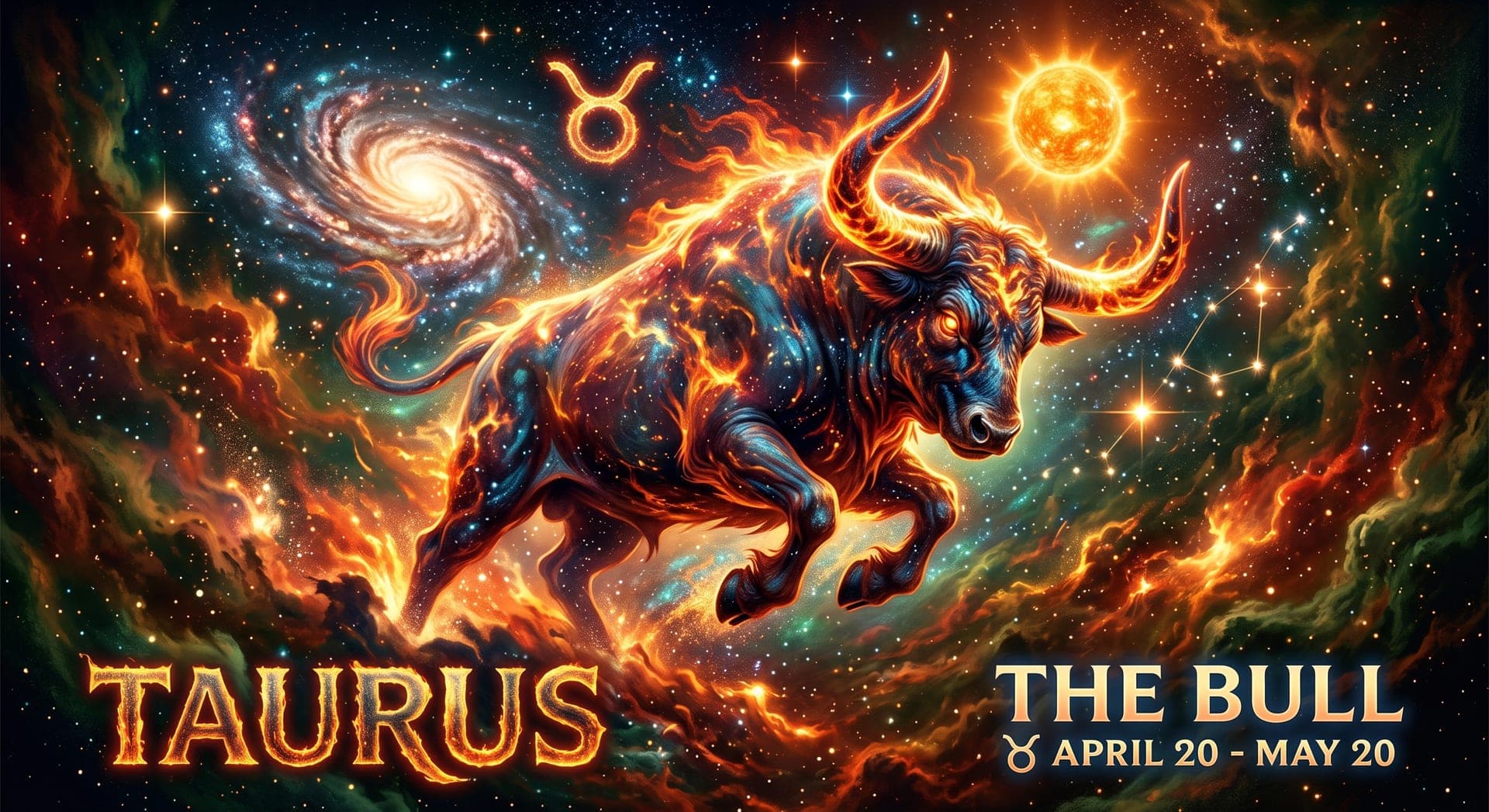
Born on May 7: Taurus ♉
Taurus, the second sign of the zodiac, spans April 20 to May 20 and is symbolized by the bull, an animal prized for its strength, steadiness, and quiet determination. Ruled by Venus, the planet of love, beauty, and material comfort, Taurus is often described as one of the most sensual and pleasure-loving signs, drawn to good food, fine art, and physical comfort. As an Earth sign, Taurus is grounded, practical, and deeply connected to the physical world, valuing stability and tangible security over abstract ideas or sudden change. Its Fixed modality gives Taurus a well-earned reputation for stubbornness, since once a Taurus has settled on a plan or opinion, shifting it can be remarkably difficult. People born under this sign tend to be dependable, loyal, and patient, often the steady presence others rely on during difficult times. While their resistance to change can occasionally frustrate those around them, Taurus's persistence and work ethic make them exceptionally good at seeing long-term goals through to completion.
Personality Traits
Strengths
- Dependable and steady
- Patient and persistent
- Devoted to loved ones
- Appreciates beauty and comfort
- Financially sensible
Weaknesses
- Extremely stubborn
- Resistant to change
- Can be possessive
- Overindulgent
- Slow to forgive
Compatible Signs
Fun Facts
- Taurus's bull symbol connects to the Greek myth of Zeus transforming into a white bull to abduct Europa.
- Venus, Taurus' ruling planet, is the Roman goddess of love and beauty, reflecting the sign's love of comfort, art, and sensory pleasure.
- Taurus is considered by many astrologers to be the most stubborn sign of the zodiac, a trait often attributed to its Fixed modality and bull symbolism.
- Notable Taureans include Queen Elizabeth II, William Shakespeare, Adele, and David Beckham.
- The star cluster known as the Pleiades sits within the constellation Taurus and has been referenced in mythology and literature across many cultures.
Born on May 7
- 1812
Robert Browning
English poet and playwright celebrated for dramatic monologues such as "My Last Duchess"
- 1833
Johannes Brahms
German composer and pianist of the Romantic era
- 1847
Archibald Primrose, 5th Earl of Rosebery
English politician, born in Mayfair, London, who served as Prime Minister of the United Kingdom from 1894 to 1895
- 1861
Rabindranath Tagore
Indian poet and Nobel Prize laureate in Literature
- 1901
Gary Cooper
American film actor known for classic Hollywood Westerns
- 1917
David Tomlinson
English actor known for playing Mr. Banks in Disney's "Mary Poppins"
- 1919
Eva Perón
Argentine First Lady and political icon
- 1933
Johnny Unitas
American football quarterback regarded as one of the game's greatest
- 1939
Sidney Altman
Canadian-American molecular biologist and Nobel Prize laureate
- 1940
Angela Carter
English novelist and short story writer known for magical-realist works such as "The Bloody Chamber"
- 1946
Michael Rosen
English author and poet known for children's books such as "We're Going on a Bear Hunt"
- 1960
Ara Darzi
Iraqi-born British surgeon of Armenian descent, a pioneer of minimally invasive and robot-assisted surgery who led major NHS reforms
- 1961
Sue Black
Scottish forensic anthropologist, born in Inverness, known for her expertise in human identification
- 1965
Norman Whiteside
Northern Irish footballer, born in Belfast, known for his youth stardom with Manchester United
- 1985
J Balvin
Colombian reggaeton singer
- 1986
Matt Helders
English drummer, born in Sheffield, a founding member of the rock band Arctic Monkeys
On This Day in History
- 558
The dome of the Hagia Sophia in Constantinople collapses, prompting Emperor Justinian I to order its immediate reconstruction.
The magnificent dome of the Hagia Sophia, the great cathedral of Constantinople and at the time the largest enclosed space in the world, collapsed following a series of powerful earthquakes that had weakened its structure over previous years. Byzantine Emperor Justinian I immediately ordered its reconstruction with an improved, more resilient ribbed dome design engineered to better withstand future seismic stress, and it continues to stand today.
- 1104
Seljuk forces defeat Crusader armies from Antioch and Edessa at the Battle of Harran.
Seljuk Turkish forces decisively defeated a combined Crusader army from the states of Antioch and Edessa at the Battle of Harran in northern Mesopotamia, capturing key Crusader leaders including Bohemond of Taranto's nephew Tancred's rival Baldwin of Bourcq. The defeat dealt a significant early setback to the fledgling Crusader states, exposing their vulnerability against unified Muslim opposition in the region.
- 1274
The Second Council of Lyon convenes in France, seeking reunification of the Eastern and Western churches.
The Second Council of Lyon convened in France under Pope Gregory X, drawing hundreds of bishops and dignitaries to seek reunification of the long-divided Eastern Orthodox and Western Catholic churches and to organize renewed support for a crusade to the Holy Land. Though delegates from Constantinople formally agreed to the reunification terms at the council, the arrangement proved deeply unpopular in the East and collapsed within a few years.
- 1544
English forces under the Earl of Hertford burn Edinburgh in the opening campaign of the war later known as the Rough Wooing.
The invasion was ordered by King Henry VIII to pressure Scotland into honoring a marriage treaty between his son, the future Edward VI, and the infant Mary, Queen of Scots. When the Scots repudiated the agreement, Henry launched a punishing campaign of raids intended to force compliance, and Hertford's forces burned much of the city and Holyrood Abbey before withdrawing. The conflict dragged on for years and ultimately failed to secure the marriage, as Mary was instead betrothed to the French dauphin.
- 1625
A state funeral for King James VI and I is held at Westminster Abbey following his death earlier that spring.
James had united the crowns of England, Scotland, and Ireland under a single monarch for the first time in 1603 as James I of England, while remaining James VI of Scotland. His funeral, one of the most elaborate ever staged for an English monarch, reflected his status as the founder of what became the Stuart dynasty's rule over the British Isles. He was succeeded by his son, Charles I, whose later conflicts with Parliament would eventually plunge the kingdom into civil war.
- 1718
French colonial officer Jean-Baptiste Le Moyne de Bienville founds the city of New Orleans.
French colonial naval officer Jean-Baptiste Le Moyne de Bienville founded the settlement of New Orleans along a bend in the Mississippi River, strategically positioning it to control river trade access to the Gulf of Mexico despite the site's vulnerability to flooding. The city later became a vital commercial hub blending French, Spanish, African, Caribbean, and American cultural influences into its distinctive Creole identity.
- 1765
HMS Victory, later Admiral Horatio Nelson's flagship at the Battle of Trafalgar, is launched at Chatham Dockyard in Kent.
Built as a first-rate ship of the line carrying over 100 guns, Victory took years to construct using thousands of oak trees. She served in several conflicts before becoming most famous as Nelson's flagship during the decisive British naval victory over the combined French and Spanish fleets at Trafalgar in 1805, where Nelson was fatally wounded aboard her. Victory survives today as the world's oldest naval ship still in commission, preserved in dry dock at Portsmouth.
- 1824
Ludwig van Beethoven's Ninth Symphony receives its premiere performance in Vienna.
Ludwig van Beethoven's Ninth Symphony, featuring the now-famous choral "Ode to Joy" finale setting Friedrich Schiller's poem to music, received its premiere performance in Vienna to enormous public acclaim. The composer, nearly completely deaf by that point in his life, reportedly had to be turned around by a singer to see the audience's thunderous, overwhelming applause that he could not otherwise hear.
- 1824
Ludwig van Beethoven's Ninth Symphony, featuring the choral finale 'Ode to Joy,' premieres in Vienna under the direction of Michael Umlauf.
By this point almost completely deaf, Beethoven reportedly stood on stage helping to conduct but had to be turned around by a fellow musician to see the audience's thunderous applause, which he could not hear. The symphony's inclusion of a full chorus and vocal soloists in its final movement was unprecedented for the genre and profoundly influenced later composers. It remains one of the most celebrated works in Western classical music, and its 'Ode to Joy' theme has since become an anthem of unity, including for the European Union.
- 1832
The Treaty of London formally recognizes Greek independence from the Ottoman Empire.
The Treaty of London, signed by representatives of Britain, France, Russia, and the newly independent Greek state, formally recognized Greek independence from centuries of Ottoman rule, establishing Greece as a sovereign kingdom under the protection of the three major powers. The recognition followed a grueling, decade-long war of independence marked by significant international sympathy and volunteer support for the Greek cause.
- 1832
The Treaty of London, signed by Britain, France, and Russia, formally recognizes Greece as an independent kingdom.
The treaty followed years of the Greek War of Independence against Ottoman rule, in which the three powers had already intervened militarily, including the naval Battle of Navarino in 1827. It established Greece as a sovereign monarchy under Prince Otto of Bavaria and defined the new kingdom's borders. Britain's role as one of the treaty's guarantor powers gave it lasting influence over Greek affairs throughout the 19th century.
- 1915
A German U-boat sinks the passenger liner RMS Lusitania off the Irish coast, killing 1,199 people and inflaming anti-German sentiment in the United States.
A German U-boat torpedoed and sank the British ocean liner RMS Lusitania off the southern coast of Ireland without warning, killing 1,199 of the roughly 1,960 passengers and crew aboard, including 128 American citizens. The sinking sparked outrage across the United States and became a significant contributing factor, alongside later events, in eventually drawing the still-neutral nation into World War I.
- 1915
A German U-boat torpedoes and sinks the British ocean liner RMS Lusitania off the Irish coast, killing 1,199 people, including 128 Americans.
The Cunard liner was en route from New York to Liverpool when it was struck without warning, sinking in under twenty minutes despite carrying enough lifeboats for all aboard. The scale of civilian loss, and the deaths of American passengers, provoked international outrage and shifted public opinion in the United States against Germany, though America did not enter the First World War for nearly two more years. The sinking remains one of the most infamous naval disasters of the war and a landmark in the debate over submarine warfare against civilian shipping.
- 1942
United States carrier aircraft sink the Japanese light aircraft carrier Shōhō during the Battle of the Coral Sea.
The battle, fought entirely by carrier-based aircraft without the opposing fleets ever sighting each other, was the first naval engagement in history in which aircraft carriers played the decisive role. Although losses on both sides were significant, the battle halted a planned Japanese seaborne invasion of Port Moresby in New Guinea, the first major strategic check on Japan's advance in the Pacific. It set the stage for the even larger carrier battle at Midway a month later.
- 1948
Delegates from across Europe meet at the Hague Congress, laying the groundwork for the creation of the Council of Europe.
The congress brought together prominent European statesmen, including former British Prime Minister Winston Churchill, who championed closer European unity in the aftermath of the Second World War. Their discussions led directly to the founding of the Council of Europe the following year, an international body promoting human rights, democracy, and the rule of law across the continent. The Council later adopted the European Convention on Human Rights, which continues to shape legal standards throughout Europe today.
- 1952
British radar engineer Geoffrey Dummer publishes the first proposal for what would become the integrated circuit.
Working at the Royal Radar Establishment, Dummer argued that electronic circuits could be manufactured as a single solid block of material rather than assembled from separate wired components, dramatically improving reliability and reducing size. Although he never successfully built a working device himself, his conceptual paper anticipated the integrated circuit later developed independently in the United States by Jack Kilby and Robert Noyce. Dummer's early vision is widely credited as foundational to the development of modern microelectronics.
- 1954
French forces are decisively defeated at the Battle of Dien Bien Phu, effectively ending French colonial rule in Indochina.
Viet Minh forces under General Vo Nguyen Giap overran the exhausted French garrison at Dien Bien Phu after a grueling 56-day siege involving extensive tunneling and artillery bombardment of the isolated valley fortress. The decisive defeat shattered French colonial resolve in Southeast Asia and led directly to the Geneva Accords, which ended nearly a century of French rule over Indochina.
- 1954
The French garrison at Dien Bien Phu surrenders to Viet Minh forces, ending a 57-day siege and effectively deciding the First Indochina War.
The battle saw Viet Minh forces under General Vo Nguyen Giap encircle and bombard the French fortress using artillery hauled through jungle terrain thought impassable by French commanders. The stunning defeat shattered French public support for the war and led directly to the Geneva Conference, which partitioned Vietnam and ended nearly a century of French colonial rule in Indochina. The victory established Vietnamese independence movements as a model for anti-colonial struggles elsewhere in the world.
- 1960
Soviet leader Nikita Khrushchev announces the capture of American U-2 pilot Gary Powers, escalating Cold War tensions.
Soviet Premier Nikita Khrushchev publicly announced the capture of American U-2 spy plane pilot Francis Gary Powers, whose high-altitude reconnaissance aircraft had been shot down over Soviet territory days earlier while photographing military installations. The revelation embarrassed the Eisenhower administration, which had initially denied the mission's purpose, and derailed an upcoming East-West summit meeting in Paris.
- 2000
Vladimir Putin is inaugurated as President of Russia for the first time.
Vladimir Putin was inaugurated as President of Russia for the first time, succeeding Boris Yeltsin, who had resigned unexpectedly on New Year's Eve months earlier and named Putin as acting president. This inauguration began a political dominance over the country that has continued, through varying formal roles including a stint as prime minister, for more than two decades since.