What’s Observed on May 6
Born on May 6: Taurus ♉
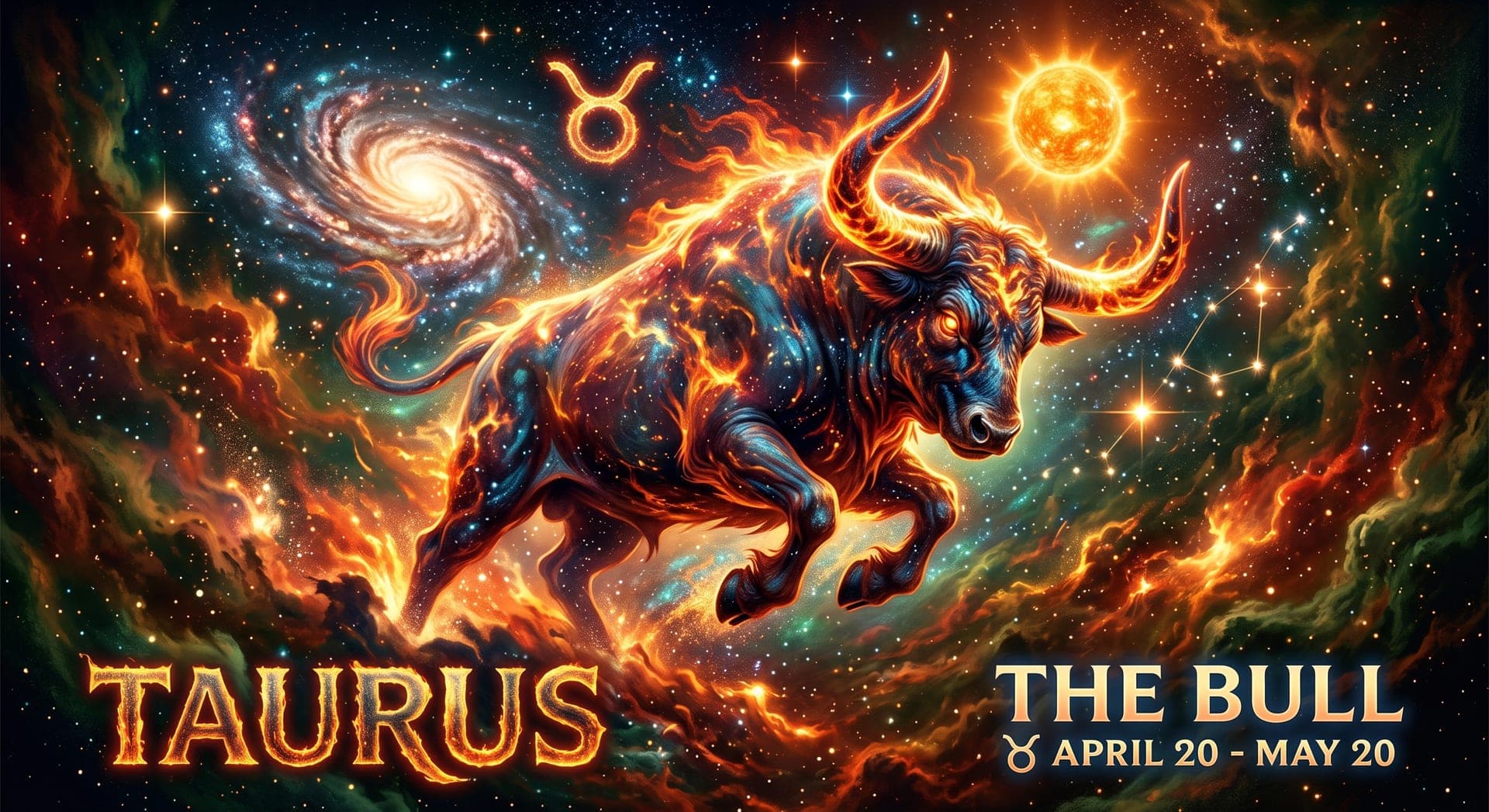
Taurus, the second sign of the zodiac, spans April 20 to May 20 and is symbolized by the bull, an animal prized for its strength, steadiness, and quiet determination. Ruled by Venus, the planet of love, beauty, and material comfort, Taurus is often described as one of the most sensual and pleasure-loving signs, drawn to good food, fine art, and physical comfort. As an Earth sign, Taurus is grounded, practical, and deeply connected to the physical world, valuing stability and tangible security over abstract ideas or sudden change. Its Fixed modality gives Taurus a well-earned reputation for stubbornness, since once a Taurus has settled on a plan or opinion, shifting it can be remarkably difficult. People born under this sign tend to be dependable, loyal, and patient, often the steady presence others rely on during difficult times. While their resistance to change can occasionally frustrate those around them, Taurus's persistence and work ethic make them exceptionally good at seeing long-term goals through to completion.
Personality Traits
Strengths
- Dependable and steady
- Patient and persistent
- Devoted to loved ones
- Appreciates beauty and comfort
- Financially sensible
Weaknesses
- Extremely stubborn
- Resistant to change
- Can be possessive
- Overindulgent
- Slow to forgive
Compatible Signs
Fun Facts
- Taurus's bull symbol connects to the Greek myth of Zeus transforming into a white bull to abduct Europa.
- Venus, Taurus' ruling planet, is the Roman goddess of love and beauty, reflecting the sign's love of comfort, art, and sensory pleasure.
- Taurus is considered by many astrologers to be the most stubborn sign of the zodiac, a trait often attributed to its Fixed modality and bull symbolism.
- Notable Taureans include Queen Elizabeth II, William Shakespeare, Adele, and David Beckham.
- The star cluster known as the Pleiades sits within the constellation Taurus and has been referenced in mythology and literature across many cultures.
Born on May 6
- 1848
Henry Edward Armstrong
English chemist and educator known for pioneering research in organic chemistry and reforming science teaching
- 1856
Sigmund Freud
Austrian neurologist who founded psychoanalysis
- 1856
Robert Peary
American explorer credited with reaching the North Pole
- 1895
Rudolph Valentino
Italian actor and major silent film star
- 1915
Orson Welles
American filmmaker known for "Citizen Kane"
- 1929
Rosemary Cramp
English archaeologist celebrated for her groundbreaking research into Anglo-Saxon England
- 1931
Willie Mays
American baseball Hall of Famer
- 1953
Tony Blair
British Labour politician, born in Edinburgh, Scotland, who served as Prime Minister of the United Kingdom from 1997 to 2007
- 1953
Graeme Souness
Scottish footballer and manager, born in Edinburgh, celebrated for his midfield play with Liverpool and Scotland
- 1961
George Clooney
American actor and director
- 1961
Tom Hunter
Scottish businessman and philanthropist, born in New Cumnock, Ayrshire, who built a retail fortune and became a leading UK philanthropist
- 1993
Naomi Scott
English actress and singer, born in Hounslow, London, known for playing Princess Jasmine in Disney's live-action Aladdin
- 1997
Duncan Scott
Scottish swimmer, born in Glasgow, and multiple Olympic medalist
- 2002
Cole Palmer
English footballer, born in Manchester, known for his attacking play for Chelsea and the England national team

On This Day in History
- 1527
Spanish and German troops sack Rome in a brutal assault, an event many historians cite as marking the symbolic end of the Italian Renaissance.
Mutinous, unpaid soldiers of the Holy Roman Empire's army, many of them Lutheran, brutally sacked Rome, killing thousands of residents and looting the city's churches, palaces, and treasures over several days of chaos. The attack badly damaged papal authority, prestige, and finances, and many historians point to the sack as marking the symbolic end of the flourishing period of the Italian High Renaissance.
- 1541
King Henry VIII orders that an English-language Bible be placed in every parish church in England.
The order applied to the 'Great Bible,' the first authorized English translation, produced under the supervision of Thomas Cromwell and drawing heavily on William Tyndale's earlier work. Making scripture available in English rather than Latin was a major step in the Reformation of the English church, allowing ordinary worshippers direct access to the text for the first time. The move cemented the break from Rome that Henry had begun after his split with the papacy over his divorce from Catherine of Aragon.
- 1659
Senior army officers force the resignation of Richard Cromwell as Lord Protector and reinstate the Rump Parliament.
Richard had succeeded his father Oliver Cromwell as head of state in 1658 but lacked the military standing and political support to hold the fractious Protectorate together. His removal plunged England into a period of political instability that lasted until the restoration of the monarchy under Charles II the following year. The episode marked the effective end of the Cromwellian Commonwealth experiment in republican government.
- 1682
King Louis XIV formally relocates the French royal court to the Palace of Versailles.
King Louis XIV formally relocated the French royal court from Paris to the newly expanded Palace of Versailles, transforming a former hunting lodge into an opulent seat of government. The move centralized political power directly around his person and created an elaborate system of court ritual and etiquette designed to keep France's powerful nobility distracted, dependent on royal favor, and far from potential rebellion.
- 1840
The Penny Black, the world's first adhesive postage stamp, becomes valid for use in the United Kingdom.
The Penny Black, featuring a simple portrait of a young Queen Victoria and costing just one penny regardless of distance traveled within Britain, became the world's first adhesive postage stamp valid for use. Devised by reformer Rowland Hill, the innovation revolutionized mail delivery by replacing a confusing distance-based fee system, and postal administrations worldwide quickly adopted similar prepaid stamp models.
- 1840
The Penny Black, the world's first adhesive postage stamp for a public postal system, becomes valid for use in the United Kingdom.
Introduced as part of Rowland Hill's reform of the British postal system, the stamp allowed senders to prepay postage at a low, flat rate regardless of distance, replacing a confusing system in which recipients often paid based on distance and number of sheets. It featured a profile of the young Queen Victoria and revolutionized mail communication in Britain. The Penny Black's success inspired postal systems around the world to adopt similar prepaid stamps.
- 1861
Arkansas secedes from the Union, joining the Confederacy at the outset of the American Civil War.
Arkansas voted to secede from the Union and join the Confederacy shortly after the Civil War erupted at Fort Sumter, becoming one of the last states to leave after initially resisting secession. President Lincoln's subsequent call for troops to help suppress the Southern rebellion proved the deciding factor, pushing previously reluctant Arkansas delegates toward secession rather than supplying soldiers against fellow Southern states.
- 1863
The Battle of Chancellorsville ends in a major, if costly, Confederate victory under General Robert E. Lee.
The Battle of Chancellorsville concluded with Confederate General Robert E. Lee achieving one of his most celebrated victories over a Union army roughly twice the size of his own, through bold tactical maneuvering that included dividing his already outnumbered forces. The triumph came at severe cost, however, with the accidental mortal wounding of Lee's most trusted lieutenant, Stonewall Jackson, by his own troops.
- 1882
Irish nationalist militants stab to death two senior British officials, including the newly appointed Chief Secretary for Ireland, in Dublin's Phoenix Park.
The victims, Lord Frederick Cavendish and Thomas Henry Burke, were attacked by members of a radical splinter group known as the Irish National Invincibles, just hours after Cavendish had arrived in Ireland to take up his post. The killings shocked British public opinion and derailed a fragile political effort to reach a compromise on Irish self-government. Several of the conspirators were later captured, tried, and executed for the murders.
- 1889
The Eiffel Tower officially opens to the public at the Paris World's Fair.
The Eiffel Tower officially opened to the public as the dramatic entrance arch to the 1889 Paris World's Fair, built to celebrate the centennial of the French Revolution and showcase French engineering prowess. Initially criticized by many prominent artists and intellectuals as an ugly, incongruous eyesore threatening the city's classical skyline, it swiftly became one of the world's most recognizable and beloved landmarks.
- 1910
George V becomes King of the United Kingdom following the death of his father, Edward VII.
George's accession came after Edward VII's relatively short reign of nine years, and George would go on to rule through the upheavals of the First World War and its aftermath. During the war, anti-German sentiment led him to rename the royal house from Saxe-Coburg and Gotha to the House of Windsor. His reign also saw the expansion of the Labour Party and growing pressure for Irish independence and imperial reform.
- 1937
The German airship Hindenburg catches fire and is destroyed while attempting to dock in Lakehurst, New Jersey, killing 36 people.
The German passenger airship Hindenburg, filled with highly flammable hydrogen gas rather than safer helium due to a U.S. export embargo, burst into flames while attempting to dock at a naval air station in Lakehurst, New Jersey. The disaster killed 36 people and was captured on dramatic newsreel footage and a famously emotional live radio broadcast, effectively ending the commercial passenger airship era.
- 1954
Roger Bannister becomes the first person to run a mile in under four minutes.
British middle-distance runner Roger Bannister became the first person officially recorded to run a mile in under four minutes, completing the distance in 3 minutes, 59.4 seconds at a windswept track in Oxford, England, with the help of two pacers. The feat, long considered physically impossible by many experts, was broken again by a rival just 46 days later.
- 1954
British runner Roger Bannister becomes the first person to run a mile in under four minutes, completing the distance in 3 minutes 59.4 seconds at Oxford.
Bannister, a medical student, achieved the feat at the Iffley Road track with the help of pacemakers Chris Chataway and Chris Brasher, breaking a barrier long thought to be beyond human capability. His record stood for less than seven weeks before being broken by Australian John Landy, but Bannister's achievement remains one of the most celebrated moments in British athletics history. He later became a distinguished neurologist and was knighted for his contributions to sport and medicine.
- 1960
Princess Margaret marries photographer Antony Armstrong-Jones at Westminster Abbey in a wedding watched by over 20 million television viewers.
The marriage was the first British royal wedding to be televised, drawing a huge domestic and international audience and reflecting the growing role of television in national life. Armstrong-Jones was later created Earl of Snowdon, and the couple had two children before divorcing in 1978, the first divorce of a member of the royal family since Henry VIII's era. The wedding was seen as a symbol of a more modern, media-conscious monarchy.
- 1966
Myra Hindley and Ian Brady are sentenced to life imprisonment for the Moors murders, one of the most notorious series of child killings in British criminal history.
The pair had abducted, tortured, and murdered five children and young teenagers in and around Manchester between 1963 and 1965, burying several victims on Saddleworth Moor. The case shocked Britain and prompted lasting debate over capital punishment, which had been abolished for murder just months before their trial. Brady died in prison in 2017, while Hindley died there in 2002, and the case remains one of the most infamous in the country's history.
- 1994
Queen Elizabeth II and French President François Mitterrand jointly open the Channel Tunnel linking Britain and France.
Queen Elizabeth II and French President François Mitterrand jointly presided over the official opening ceremony of the Channel Tunnel, an ambitious undersea rail link connecting Folkestone, England, and Coquelles, France, beneath the English Channel. The tunnel, the culmination of engineering plans and proposals stretching back over a century, dramatically reduced travel time between the two countries and their capitals.
- 1994
Queen Elizabeth II and French President François Mitterrand formally open the Channel Tunnel, linking Britain and France by rail beneath the English Channel.
The tunnel, built over six years by engineers and workers from both countries, runs nearly 32 miles beneath the seabed and includes the longest undersea portion of any tunnel in the world. It ended Britain's physical isolation from mainland Europe for the first time since the last ice age, enabling high-speed Eurostar trains to travel between London, Paris, and Brussels. The project stands as one of the largest civil engineering achievements of the 20th century.
- 1997
The newly elected Labour government grants the Bank of England operational independence to set interest rates, free from direct political control.
Announced by Chancellor Gordon Brown just days after Labour's election victory, the move transferred day-to-day control of monetary policy to the Bank's Monetary Policy Committee, aiming to build market confidence and remove interest rate decisions from short-term political pressure. It marked one of the most significant changes to Britain's economic governance in decades and brought UK monetary policy in line with central banks in other major economies. The Bank retained its role in regulating the banking system, later expanded further after the 2008 financial crisis.
- 2023
King Charles III and Queen Camilla are crowned at Westminster Abbey in London.
King Charles III and Queen Camilla were formally crowned in an elaborate, centuries-old religious ceremony at Westminster Abbey, marking the first British coronation in seventy years and drawing an enormous global television audience. The event followed Charles's accession to the throne the previous year upon the death of his mother, Queen Elizabeth II, after her record-breaking seven-decade reign.