What’s Observed on May 2
Born on May 2: Taurus ♉
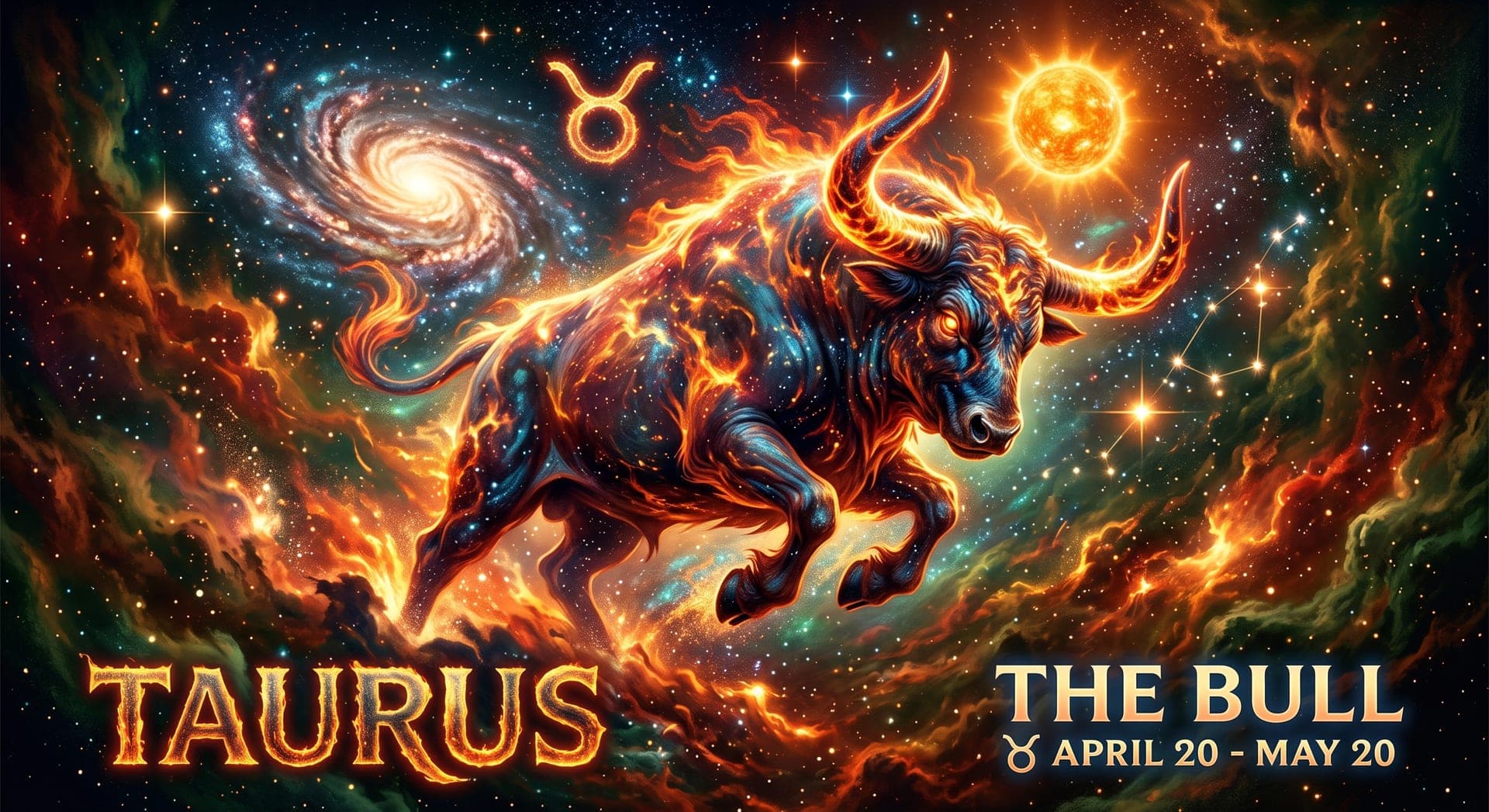
Taurus, the second sign of the zodiac, spans April 20 to May 20 and is symbolized by the bull, an animal prized for its strength, steadiness, and quiet determination. Ruled by Venus, the planet of love, beauty, and material comfort, Taurus is often described as one of the most sensual and pleasure-loving signs, drawn to good food, fine art, and physical comfort. As an Earth sign, Taurus is grounded, practical, and deeply connected to the physical world, valuing stability and tangible security over abstract ideas or sudden change. Its Fixed modality gives Taurus a well-earned reputation for stubbornness, since once a Taurus has settled on a plan or opinion, shifting it can be remarkably difficult. People born under this sign tend to be dependable, loyal, and patient, often the steady presence others rely on during difficult times. While their resistance to change can occasionally frustrate those around them, Taurus's persistence and work ethic make them exceptionally good at seeing long-term goals through to completion.
Personality Traits
Strengths
- Dependable and steady
- Patient and persistent
- Devoted to loved ones
- Appreciates beauty and comfort
- Financially sensible
Weaknesses
- Extremely stubborn
- Resistant to change
- Can be possessive
- Overindulgent
- Slow to forgive
Compatible Signs
Fun Facts
- Taurus's bull symbol connects to the Greek myth of Zeus transforming into a white bull to abduct Europa.
- Venus, Taurus' ruling planet, is the Roman goddess of love and beauty, reflecting the sign's love of comfort, art, and sensory pleasure.
- Taurus is considered by many astrologers to be the most stubborn sign of the zodiac, a trait often attributed to its Fixed modality and bull symbolism.
- Notable Taureans include Queen Elizabeth II, William Shakespeare, Adele, and David Beckham.
- The star cluster known as the Pleiades sits within the constellation Taurus and has been referenced in mythology and literature across many cultures.
Born on May 2
- 1551
William Camden
English historian and antiquarian best known for Britannia, a topographical survey of Britain
- 1729
Catherine the Great
Empress of Russia who expanded the empire and championed cultural reform
- 1859
Jerome K. Jerome
English author and humorist best known for the comic novel Three Men in a Boat
- 1860
Theodor Herzl
Austro-Hungarian journalist who founded modern political Zionism
- 1860
John Scott Haldane
Scottish physiologist known for pioneering research into respiratory gases and mine safety
- 1892
Manfred von Richthofen
German World War I flying ace known as "the Red Baron"
- 1903
Benjamin Spock
American pediatrician whose childcare book influenced generations of parents
- 1921
Satyajit Ray
Indian film director regarded as a master of world cinema
- 1946
David Suchet
English actor best known for playing Agatha Christie's detective Hercule Poirot
- 1947
James Dyson
English inventor and businessman who founded Dyson, known for bagless vacuum cleaners
- 1972
Dwayne Johnson
American actor and former professional wrestler
- 1975
David Beckham
English footballer renowned for his passing and free-kick skill, capped for Manchester United and England
- 1985
Lily Allen
English singer-songwriter known for hits like Smile and albums blending pop with sharp lyricism
On This Day in History
- 1194
King Richard I of England grants Portsmouth its first royal charter, formally recognizing the town's rights and privileges.
The charter confirmed Portsmouth's status as a free borough with its own local governance and trading rights, encouraging its growth as a port town. Richard, who had already used the harbor to muster forces for his continental campaigns, recognized its strategic value on the south coast. Portsmouth went on to become one of Britain's most important naval bases, home to the Royal Navy for centuries.
- 1536
Queen Anne Boleyn is arrested on charges of adultery, incest, and treason against her husband, King Henry VIII.
Queen Anne Boleyn, King Henry VIII's second wife, was arrested and taken to the Tower of London on fabricated charges of adultery, incest, and treason, part of a swiftly engineered downfall as Henry sought to remove her and remarry. Her arrest set in motion a rapid legal process that would end in her execution just over two weeks later.
- 1536
Anne Boleyn, second wife of King Henry VIII, is arrested and taken to the Tower of London on charges of adultery, incest, and treason.
The charges against Anne, who had failed to produce a male heir, are widely regarded by historians as fabricated to clear the way for Henry to marry Jane Seymour. She was tried alongside several men accused of being her lovers, including her own brother, and all were convicted despite thin evidence. Anne was beheaded at the Tower on 19 May 1536, just over two weeks after her arrest.
- 1559
John Knox returns to Scotland from exile to lead the Scottish Reformation.
Knox had spent years abroad, including time in Geneva under the influence of John Calvin, after fleeing persecution as a Protestant reformer. His return energized the movement to break Scotland from Roman Catholic authority and the French-aligned regency of Mary of Guise. Within a year the Scottish Parliament had abolished papal jurisdiction and adopted a Protestant confession of faith, establishing the Presbyterian tradition that Knox helped found.
- 1568
Mary, Queen of Scots escapes from imprisonment at Lochleven Castle with the help of sympathizers.
Mary had been forced to abdicate in favor of her infant son James while held at the island castle following the scandal surrounding the murder of her husband, Lord Darnley, and her marriage to the Earl of Bothwell. Her escape, aided by a young relative of her captors, briefly rallied an army of supporters, but they were defeated at the Battle of Langside less than two weeks later. Mary then fled to England, where she remained a prisoner of Elizabeth I for nearly two decades before her execution.
- 1611
The King James Version of the Bible is published for the first time in London.
The King James Version of the Bible, commissioned by King James I of England and produced by dozens of scholars over seven years, was published for the first time in London. Its majestic, influential prose profoundly shaped the English language and literature for centuries, and it remains one of the most widely printed and read books in history.
- 1611
The King James Version of the Bible is published for the first time in London.
Commissioned by King James I in 1604 to produce a new authorized English translation, the work was carried out by dozens of scholars organized into six committees. Its formal, rhythmic prose drew heavily on earlier translations such as William Tyndale's, and it became the standard English Bible in Protestant churches for centuries. The King James Version profoundly shaped the English language, contributing countless phrases still in common use today.
- 1670
King Charles II grants a royal charter to the Hudson's Bay Company for North American fur trading.
King Charles II granted a royal charter to the Hudson's Bay Company, giving it a trading monopoly over a vast watershed of North American territory known as Rupert's Land. The company became a dominant force in the North American fur trade and one of the oldest continuously operating commercial corporations in the world.
- 1670
King Charles II grants the Hudson's Bay Company a royal charter giving it a permanent monopoly over the fur trade in the Hudson Bay watershed.
The charter handed the company, and its governor Prince Rupert, control over a vast territory known as Rupert's Land, covering much of what is now northern Canada. It made the Hudson's Bay Company the effective government of the region for two centuries, operating trading posts and forging alliances with Indigenous nations. The company still exists today, making it one of the oldest continuously operating corporations in the world.
- 1808
Residents of Madrid rise up against occupying French forces, an uprising commemorated in Goya's paintings and marking a flashpoint of the Peninsular War.
Residents of Madrid rose up in a spontaneous, bloody uprising against occupying French troops after Napoleon's forces attempted to remove remaining members of the Spanish royal family, an event immortalized in Francisco Goya's paintings "The Second of May 1808" and "The Third of May 1808." The revolt sparked the broader Peninsular War against French occupation.
- 1863
Confederate General Stonewall Jackson is accidentally wounded by his own troops during the Battle of Chancellorsville, later dying from complications.
Confederate General Thomas "Stonewall" Jackson was accidentally shot by his own nervous pickets while returning from a nighttime reconnaissance during the Battle of Chancellorsville. Jackson's arm was amputated, and he died of complications, including pneumonia, eight days later, a loss General Robert E. Lee called crippling to the Confederate war effort.
- 1941
The United Kingdom launches military operations against the pro-Axis government of Rashid Ali in Iraq, beginning the Anglo-Iraqi War.
British and Commonwealth forces intervened after Rashid Ali's coup threatened to hand Iraq's oilfields and strategic position to Nazi Germany, which had begun supplying the new regime through Vichy-controlled Syria. Fighting centered on the siege of the RAF base at Habbaniya before British-led forces advanced on Baghdad. The brief campaign restored a pro-British government and secured Britain's vital oil interests and supply routes in the Middle East during the Second World War.
- 1945
The Soviet Union announces the fall of Berlin, effectively ending major combat in the European theater of World War II.
The Soviet Union publicly announced the capture of Berlin, effectively ending major organized combat in the European theater of World War II just days after Adolf Hitler's suicide in his bunker beneath the city. The fall of the Nazi capital came after a brutal, costly final battle and paved the way for Germany's formal surrender less than a week later.
- 1952
A de Havilland Comet completes the first commercial jetliner flight carrying paying passengers.
A British de Havilland Comet completed the world's first scheduled commercial flight by a jet airliner, carrying fare-paying passengers from London to Johannesburg. The jet-powered aircraft offered dramatically faster and smoother travel than earlier propeller planes, though a series of fatal structural failures in subsequent years temporarily set back the jetliner's early promise.
- 1952
The de Havilland Comet makes its first commercial flight carrying fare-paying passengers, becoming the world's first jetliner in scheduled service.
Operated by BOAC on a route from London to Johannesburg, the Comet offered passengers a smoother, faster, and quieter journey than propeller airliners of the time, cutting flight times dramatically. Its introduction marked a major milestone for British aerospace engineering and briefly gave Britain a lead in commercial jet travel. A series of catastrophic fuselage failures caused by metal fatigue grounded the fleet in 1954, but the lessons learned reshaped aircraft design worldwide.
- 1969
The ocean liner Queen Elizabeth 2 departs Southampton on her maiden voyage to New York.
Built by John Brown & Company on the Clyde in Scotland for the Cunard Line, the QE2 was designed to be more versatile than earlier liners, suited to both transatlantic crossings and warm-weather cruising. She became one of the most famous ships in the world, serving Cunard for nearly four decades before retiring in 2008. The ship also briefly served as a troop transport for British forces during the Falklands War in 1982.
- 1982
The British submarine HMS Conqueror sinks the Argentine cruiser ARA General Belgrano during the Falklands War.
The British nuclear submarine HMS Conqueror torpedoed and sank the Argentine cruiser ARA General Belgrano outside the declared exclusion zone during the Falklands War, killing 323 sailors. The controversial sinking, the first by a nuclear-powered submarine in wartime, significantly escalated the conflict and remains a subject of ongoing debate over its legality and necessity.
- 1982
The Royal Navy submarine HMS Conqueror torpedoes and sinks the Argentine cruiser ARA General Belgrano during the Falklands War.
The attack, ordered despite the Belgrano sailing outside the British-declared exclusion zone around the Falklands, killed 323 of the crew and remains one of the most controversial episodes of the conflict. It was the first sinking of a ship by a nuclear-powered submarine in wartime. The loss prompted the Argentine navy to withdraw its surface fleet to port for the remainder of the war, leaving the conflict to be fought mainly in the air and on land.
- 1989
Hungary begins dismantling its border fence with Austria, opening a crack in the Iron Curtain that accelerates East German defections.
Hungary's government began dismantling sections of its electrified border fence with Austria, a symbolic crack in the Iron Curtain that allowed thousands of East German citizens to flee westward through Hungary in the following months. The move is regarded as an early, pivotal step toward the collapse of communist rule across Eastern Europe later that year.
- 2011
U.S. Navy SEALs kill al-Qaeda leader Osama bin Laden during a raid on his compound in Abbottabad, Pakistan.
U.S. Navy SEALs conducted a covert nighttime raid on a compound in Abbottabad, Pakistan, killing al-Qaeda leader Osama bin Laden, the mastermind behind the September 11, 2001, terrorist attacks. The operation, ordered by President Barack Obama and nearly a decade in the making, marked a major milestone in the U.S. war on terrorism.