What’s Observed on May 1
Born on May 1: Taurus ♉
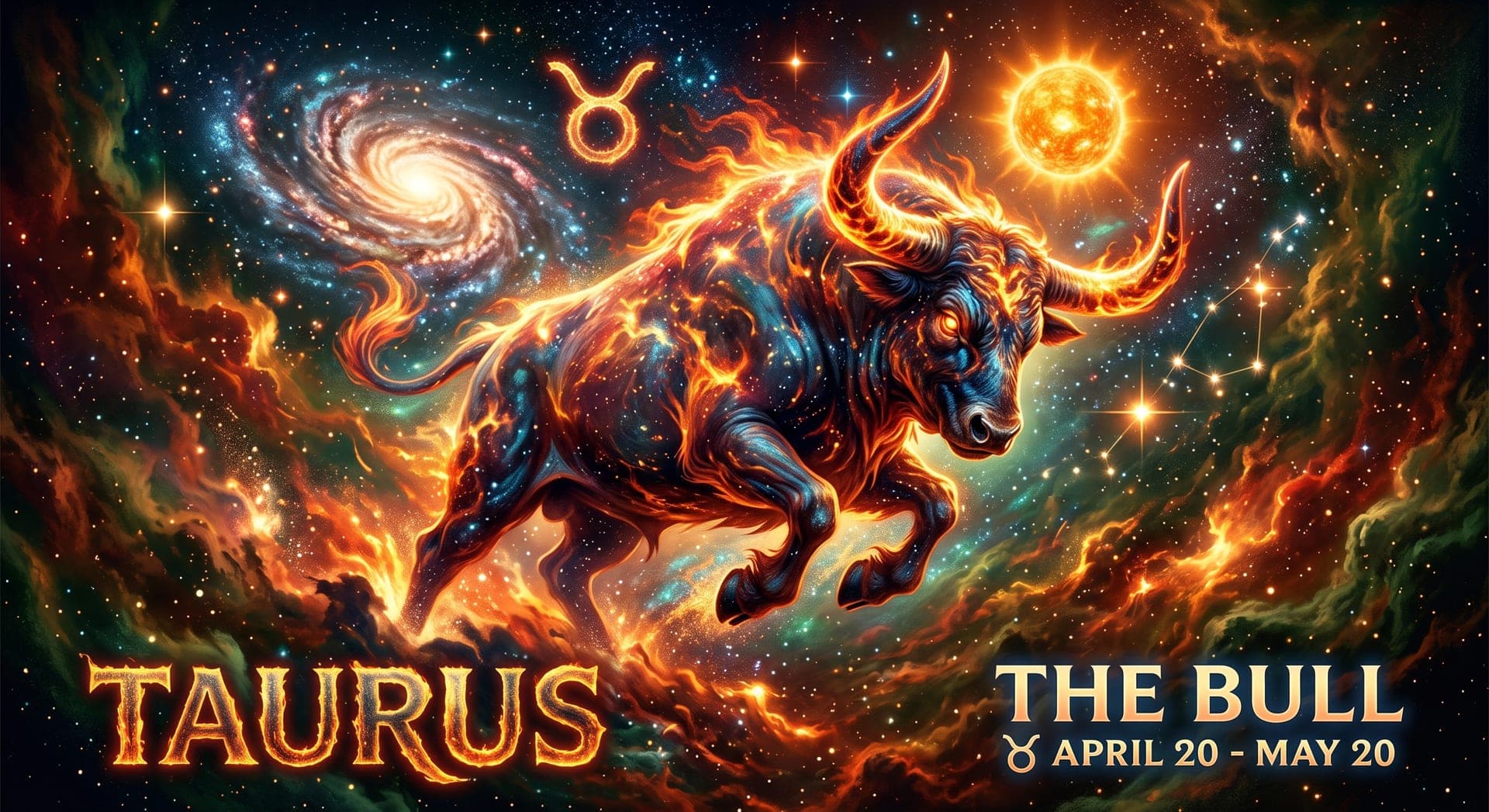
Taurus, the second sign of the zodiac, spans April 20 to May 20 and is symbolized by the bull, an animal prized for its strength, steadiness, and quiet determination. Ruled by Venus, the planet of love, beauty, and material comfort, Taurus is often described as one of the most sensual and pleasure-loving signs, drawn to good food, fine art, and physical comfort. As an Earth sign, Taurus is grounded, practical, and deeply connected to the physical world, valuing stability and tangible security over abstract ideas or sudden change. Its Fixed modality gives Taurus a well-earned reputation for stubbornness, since once a Taurus has settled on a plan or opinion, shifting it can be remarkably difficult. People born under this sign tend to be dependable, loyal, and patient, often the steady presence others rely on during difficult times. While their resistance to change can occasionally frustrate those around them, Taurus's persistence and work ethic make them exceptionally good at seeing long-term goals through to completion.
Personality Traits
Strengths
- Dependable and steady
- Patient and persistent
- Devoted to loved ones
- Appreciates beauty and comfort
- Financially sensible
Weaknesses
- Extremely stubborn
- Resistant to change
- Can be possessive
- Overindulgent
- Slow to forgive
Compatible Signs
Fun Facts
- Taurus's bull symbol connects to the Greek myth of Zeus transforming into a white bull to abduct Europa.
- Venus, Taurus' ruling planet, is the Roman goddess of love and beauty, reflecting the sign's love of comfort, art, and sensory pleasure.
- Taurus is considered by many astrologers to be the most stubborn sign of the zodiac, a trait often attributed to its Fixed modality and bull symbolism.
- Notable Taureans include Queen Elizabeth II, William Shakespeare, Adele, and David Beckham.
- The star cluster known as the Pleiades sits within the constellation Taurus and has been referenced in mythology and literature across many cultures.
Born on May 1
- 1672
Joseph Addison
English essayist, poet, and politician who co-founded The Spectator magazine
- 1769
Arthur Wellesley, Duke of Wellington
British field marshal who defeated Napoleon at Waterloo and served as Prime Minister
- 1829
Frederick Sandys
English Pre-Raphaelite painter and illustrator known for his detailed portraits of women
- 1852
Santiago Ramón y Cajal
Spanish neuroscientist, Nobel Prize laureate and father of modern neuroscience
- 1864
Anna Jarvis
American founder of the modern Mother's Day observance
- 1916
Glenn Ford
Canadian-American actor known for classic Hollywood films
- 1923
Joseph Heller
American novelist known for "Catch-22"
- 1937
Una Stubbs
English actress and dancer known for Till Death Us Do Part and Sherlock
- 1939
Judy Collins
American folk singer-songwriter
- 1946
Joanna Lumley
English actress and activist best known for playing Patsy in Absolutely Fabulous
- 1969
Wes Anderson
American film director known for distinctive visual style
- 1982
Jamie Dornan
Northern Irish actor and model known for playing Christian Grey in the Fifty Shades films
On This Day in History
- 1169
A force of Cambro-Norman mercenaries lands at Bannow Bay in County Wexford, beginning the Norman invasion of Ireland.
The landing was invited by Diarmait Mac Murchada, the deposed King of Leinster, who sought help reclaiming his throne. Led by knights such as Robert FitzStephen, the expedition opened the way for a larger invasion the following year under Richard de Clare, known as Strongbow. Within a few years King Henry II of England had asserted lordship over Ireland, beginning centuries of English and British involvement in Irish affairs.
- 1328
The Treaty of Edinburgh–Northampton is signed, in which England formally recognizes the Kingdom of Scotland as an independent state.
The treaty ended the First War of Scottish Independence, years after Robert the Bruce's victory at Bannockburn in 1314. It was ratified by the English Parliament at Northampton and recognized Bruce as king of an independent Scotland, with England renouncing its claims of overlordship. The peace proved short-lived: fighting resumed within a few years, and many in England denounced the settlement as the 'Shameful Peace.'
- 1455
Scottish royal forces loyal to King James II defeat the powerful Black Douglas family at the Battle of Arkinholm.
The battle was a decisive moment in James II's campaign to crush the overmighty Douglas earls, whose lands and private armies rivaled royal authority in southern Scotland. Three of the Douglas brothers were killed or captured, and the family's power was permanently broken, with much of their territory forfeited to the crown. The victory strengthened the Scottish monarchy for the remainder of James's reign.
- 1707
The Acts of Union take effect, merging England and Scotland into the single Kingdom of Great Britain.
The Acts of Union, passed by both the English and Scottish parliaments, merged the two kingdoms into a single Kingdom of Great Britain with one parliament, flag, and currency, though Scotland retained its distinct legal system and Presbyterian church. The union had been building for decades following the 1603 union of crowns, and it reshaped British political identity, trade, and governance for the centuries that followed.
- 1707
The Acts of Union take effect, merging the Kingdom of England and the Kingdom of Scotland into a single Kingdom of Great Britain.
The union followed more than a century of shared monarchy since James VI of Scotland became James I of England in 1603, but it created for the first time a single Parliament at Westminster. Scotland retained its own legal system, established church, and education system under the treaty's terms. The union laid the political foundation for Britain's later rise as an imperial and industrial power.
- 1753
Carl Linnaeus publishes "Species Plantarum," establishing the formal starting point of modern botanical taxonomy and naming conventions.
Swedish botanist Carl Linnaeus published "Species Plantarum," a comprehensive catalog applying his standardized binomial naming system, genus followed by species, to every known plant species at the time. The work established the formal starting point for modern botanical nomenclature, providing scientists worldwide with a consistent, universal system for classifying and referring to plant life that remains foundational to biology today.
- 1807
Britain's Slave Trade Act takes effect, abolishing the transatlantic slave trade throughout the British Empire.
Britain's Slave Trade Act took effect, making it illegal for British ships and subjects to participate in the transatlantic slave trade, though it did not immediately abolish slavery itself within British colonies, which continued legally for another quarter century. The Royal Navy subsequently established a dedicated anti-slavery patrol squadron to intercept illegal slave ships from other nations.
- 1807
The Slave Trade Act 1807 comes into force, abolishing the transatlantic slave trade across the British Empire.
Passed by Parliament after decades of campaigning by abolitionists including William Wilberforce and Thomas Clarkson, the act made it illegal for British ships to carry enslaved people, though it did not free those already enslaved in British colonies. Enforcement fell partly to the Royal Navy's West Africa Squadron, which patrolled to intercept slave ships. Slavery itself was not abolished throughout the empire until the Slavery Abolition Act of 1833.
- 1820
Five members of the Cato Street Conspiracy are hanged outside Newgate Prison in London for plotting to assassinate the British cabinet.
The conspirators, led by Arthur Thistlewood, had planned to murder the entire cabinet at a dinner and use the chaos to spark a revolutionary uprising. The plot was betrayed by a government informer, and the plotters were arrested at their meeting place on Cato Street. Their public execution, among the last in England to include ceremonial beheading after hanging for treason, marked a dramatic episode of political unrest in the Regency era.
- 1851
Queen Victoria opens the Great Exhibition at London's Crystal Palace, showcasing industrial and cultural achievements from around the world.
Queen Victoria formally opened the Great Exhibition inside London's purpose-built Crystal Palace, a vast glass-and-iron structure showcasing industrial, technological, and cultural achievements from Britain and dozens of other nations. Drawing millions of visitors over its run, the exhibition celebrated Victorian-era industrial progress and helped establish the modern tradition of large-scale international world's fairs.
- 1851
Queen Victoria formally opens the Great Exhibition of the Works of Industry of All Nations in the purpose-built Crystal Palace in London.
Organized largely at the urging of Prince Albert, the exhibition showcased industrial, technological, and artistic achievements from Britain and countries around the world, drawing more than six million visitors over its run. The Crystal Palace itself, an enormous cast-iron and glass structure designed by Joseph Paxton, became an architectural sensation. The exhibition's profits later funded the museums of South Kensington, including the Victoria and Albert Museum.
- 1863
The Battle of Chancellorsville begins in Virginia during the American Civil War.
Union General Joseph Hooker's forces clashed with Confederate troops under Robert E. Lee at the start of the Battle of Chancellorsville in Virginia. Despite being significantly outnumbered, Lee's bold tactical maneuvering, including dividing his army to launch a surprise flank attack, would lead to one of his most celebrated victories, though it came at the cost of Stonewall Jackson's mortal wounding.
- 1886
Nationwide labor demonstrations for an eight-hour workday culminate in Chicago's Haymarket affair, later inspiring International Workers' Day.
Tens of thousands of American workers walked off the job nationwide demanding an eight-hour workday, with demonstrations in Chicago escalating days later into the violent Haymarket affair after a bomb was thrown at police. The events, though tragic, became a rallying point for the international labor movement, and May 1st was subsequently adopted worldwide as International Workers' Day in commemoration.
- 1898
The U.S. Navy destroys Spain's Pacific Squadron at the Battle of Manila Bay during the Spanish-American War.
Commodore George Dewey led the U.S. Navy's Asiatic Squadron to a decisive, one-sided victory over Spain's Pacific fleet at the Battle of Manila Bay in the Philippines, destroying the Spanish force without losing a single American ship. The stunning early victory of the Spanish-American War established the United States as an emerging naval and colonial power in the Pacific.
- 1945
German radio announces Adolf Hitler's death as Soviet forces raise their flag over the Reich Chancellery in Berlin.
German state radio announced that Adolf Hitler had died "fighting to the last breath against Bolshevism," concealing the fact that he had taken his own life in his Berlin bunker the previous day. As Soviet troops raised their flag over the ruins of the Reich Chancellery, the announcement signaled the imminent, total collapse of the Nazi regime just days before Germany's formal surrender.
- 1957
A Vickers airliner crashes on approach to Blackbushe Airport in Hampshire, England, killing 34 people.
The accident occurred during a period of rapid expansion in postwar British civil aviation, when airfields such as Blackbushe handled a growing volume of charter and holiday flights before larger airports absorbed much of that traffic. It ranks among the deadlier civil aviation accidents in Britain during the 1950s. Investigations into crashes such as this one contributed to tightening safety and airworthiness standards for airline operations in the following years.
- 1982
RAF Vulcan bombers carry out Operation Black Buck, striking Argentine positions on the Falkland Islands in some of the longest-range bombing raids in history at the time.
Flying from Ascension Island in the South Atlantic, the Vulcans required extensive in-flight refueling to reach Port Stanley's airfield, a round trip of thousands of miles. The raids aimed to deny Argentine forces full use of the runway and to signal that mainland Argentina itself was within range of British bombers. Though the runway was only lightly damaged, the missions were a remarkable feat of aerial logistics during the Falklands War.
- 1997
Tony Blair's Labour Party wins a landslide victory in the UK general election, making him prime minister.
Tony Blair led the Labour Party to a landslide general election victory, ending eighteen consecutive years of Conservative government and making Blair, at 43, one of the youngest British prime ministers in over a century. His "New Labour" platform, emphasizing modernization and centrist economic policy, reshaped British politics for the following decade.
- 1997
The Labour Party wins a landslide victory in the UK general election, and Tony Blair becomes Prime Minister the following day.
The result ended eighteen years of Conservative government and gave Labour its largest majority in the party's history, sweeping many long-held Conservative seats. Blair, then 43, became the youngest British prime minister in over a century, leading a rebranded 'New Labour' movement. His government went on to introduce constitutional changes including devolution for Scotland and Wales and the Human Rights Act.
- 2004
Ten Central and Eastern European nations join the European Union in its largest single expansion.
Ten countries, most of them former Soviet-bloc nations including Poland, Hungary, and the Czech Republic, formally joined the European Union in its largest single enlargement to date, expanding the bloc's membership from 15 to 25 countries. The historic expansion symbolically reunified a Europe long divided by the Cold War's Iron Curtain.