What’s Observed on May 3
Born on May 3: Taurus ♉
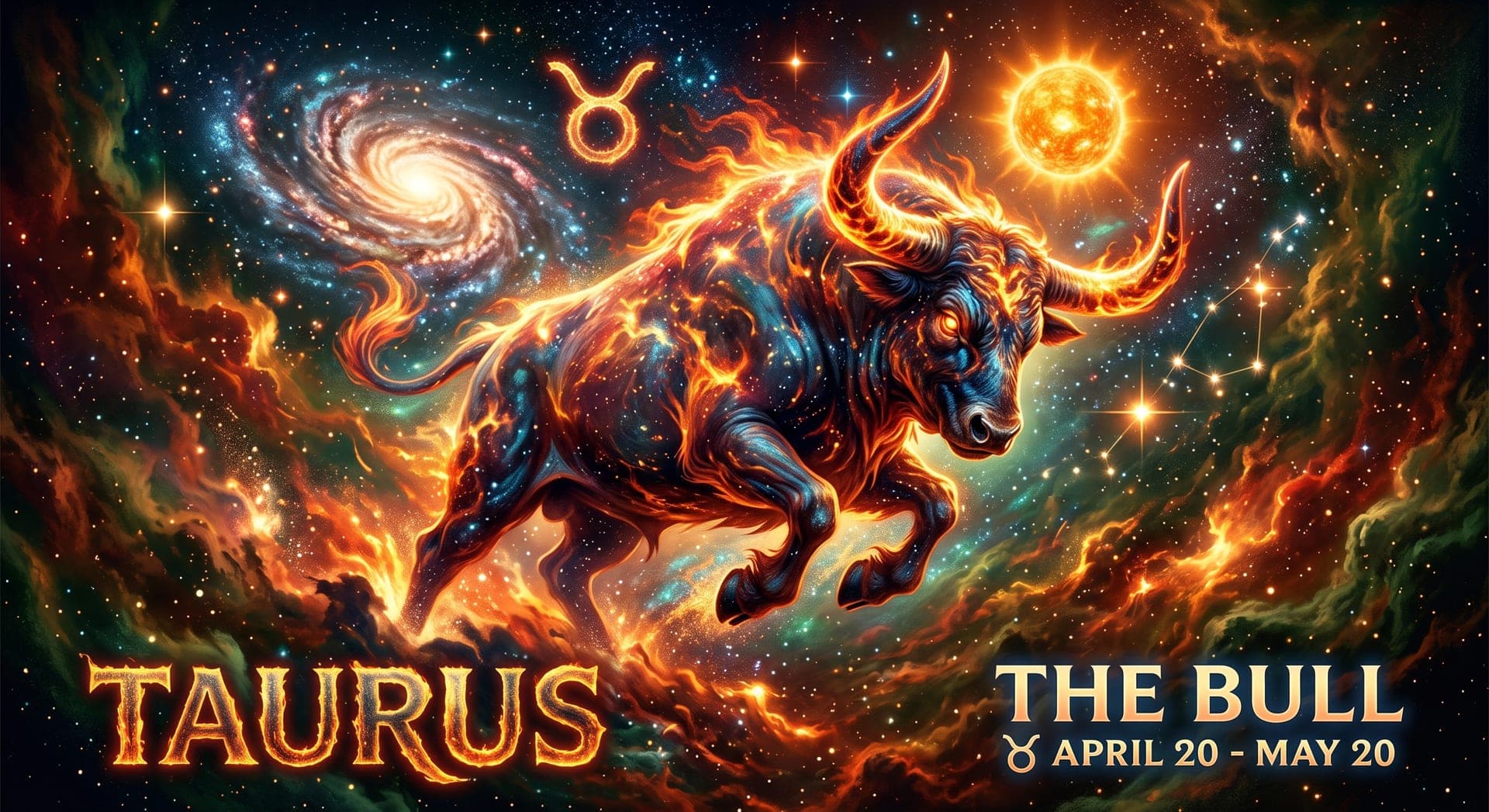
Taurus, the second sign of the zodiac, spans April 20 to May 20 and is symbolized by the bull, an animal prized for its strength, steadiness, and quiet determination. Ruled by Venus, the planet of love, beauty, and material comfort, Taurus is often described as one of the most sensual and pleasure-loving signs, drawn to good food, fine art, and physical comfort. As an Earth sign, Taurus is grounded, practical, and deeply connected to the physical world, valuing stability and tangible security over abstract ideas or sudden change. Its Fixed modality gives Taurus a well-earned reputation for stubbornness, since once a Taurus has settled on a plan or opinion, shifting it can be remarkably difficult. People born under this sign tend to be dependable, loyal, and patient, often the steady presence others rely on during difficult times. While their resistance to change can occasionally frustrate those around them, Taurus's persistence and work ethic make them exceptionally good at seeing long-term goals through to completion.
Personality Traits
Strengths
- Dependable and steady
- Patient and persistent
- Devoted to loved ones
- Appreciates beauty and comfort
- Financially sensible
Weaknesses
- Extremely stubborn
- Resistant to change
- Can be possessive
- Overindulgent
- Slow to forgive
Compatible Signs
Fun Facts
- Taurus's bull symbol connects to the Greek myth of Zeus transforming into a white bull to abduct Europa.
- Venus, Taurus' ruling planet, is the Roman goddess of love and beauty, reflecting the sign's love of comfort, art, and sensory pleasure.
- Taurus is considered by many astrologers to be the most stubborn sign of the zodiac, a trait often attributed to its Fixed modality and bull symbolism.
- Notable Taureans include Queen Elizabeth II, William Shakespeare, Adele, and David Beckham.
- The star cluster known as the Pleiades sits within the constellation Taurus and has been referenced in mythology and literature across many cultures.
Born on May 3
- 1469
Niccolò Machiavelli
Italian Renaissance political philosopher known for "The Prince"
- 1768
Charles Tennant
Scottish chemist and industrialist who developed bleaching powder and founded a major chemical works near Glasgow
- 1844
Richard D'Oyly Carte
English theatrical impresario who produced the Gilbert and Sullivan operas and founded the Savoy Theatre
- 1892
George Paget Thomson
English physicist who won the Nobel Prize for demonstrating the wave nature of electrons
- 1896
Dodie Smith
English novelist and playwright best known for The Hundred and One Dalmatians
- 1898
Golda Meir
Prime Minister of Israel
- 1903
Bing Crosby
American singer and actor known for "White Christmas"
- 1919
Pete Seeger
American folk singer and social activist
- 1921
Sugar Ray Robinson
American boxer widely regarded as one of the greatest of all time
- 1933
James Brown
American singer known as the "Godfather of Soul"
- 1934
Frankie Valli
American singer, lead vocalist of The Four Seasons
- 1934
Henry Cooper
English heavyweight boxer celebrated for twice knocking down Muhammad Ali
- 1950
Mary Hopkin
Welsh singer-songwriter who had a global hit with Those Were the Days in 1968
- 1959
Ben Elton
English comedian, author, and screenwriter known for Blackadder and The Young Ones
On This Day in History
- 996
Pope Gregory V is chosen to lead the Catholic Church with the backing of German King Otto III.
German King Otto III secured the election of his cousin, Bruno of Carinthia, as Pope Gregory V, making him the first German-born pope. His controversial, politically influenced election reflected the deepening entanglement between the papacy and the Holy Roman Empire during the medieval period.
- 1481
A massive earthquake devastates the island of Rhodes, killing an estimated 30,000 people.
A massive earthquake struck the Greek island of Rhodes, causing widespread destruction and killing an estimated 30,000 people, though exact historical casualty figures from the era remain difficult to verify precisely. The disaster stands among the deadliest recorded earthquakes to strike the eastern Mediterranean region.
- 1715
A total solar eclipse crosses southern England, one of the first eclipses whose path was accurately predicted in advance.
The astronomer Edmond Halley calculated the eclipse's path and timing with remarkable precision, publishing a map of England showing where totality would be visible. He also gathered eyewitness reports from as far as Ireland to Norway to check and refine his prediction, and observed a curious pale-red glow at the sun's edge later understood as the corona. The event, sometimes called 'Halley's Eclipse,' is considered a milestone in the scientific prediction of astronomical events.
- 1791
Poland's parliament adopts the Constitution of May 3, widely regarded as the first modern written constitution in Europe.
Poland's parliament, the Sejm, adopted the Constitution of May 3, a sweeping reform document that established a constitutional monarchy and separation of powers, widely regarded by historians as the first modern written national constitution in Europe. Though later suppressed following foreign invasion, it remains a celebrated symbol of Polish sovereignty and reform.
- 1802
Washington, D.C., is formally incorporated as a city under a mayor-council government structure.
Washington, D.C., was formally incorporated as a city with its own mayor-council government structure, establishing local governance for the young federal capital that had been founded a decade earlier. The arrangement gave residents limited self-rule even as the district remained ultimately under direct federal congressional authority.
- 1811
An Anglo-Portuguese army under the Duke of Wellington repels French forces at the Battle of Fuentes de Oñoro during the Peninsular War.
Fought around the Spanish village near the Portuguese border, the battle saw Wellington's outnumbered force hold off repeated French assaults led by Marshal André Masséna over three days of fighting. Although the outcome was close and costly on both sides, the French withdrawal secured the Portuguese frontier and forced Napoleon's marshals into a more defensive posture in the region. Wellington himself later remarked that the allies would have been beaten had Napoleon been present.
- 1830
The Canterbury and Whitstable Railway opens in Kent, England, among the world's earliest passenger railways.
Nicknamed the 'Crab and Winkle Line,' it connected the cathedral city of Canterbury to the port of Whitstable and used a combination of steam locomotives and stationary winding engines to haul trains up steep gradients. It predates the more famous Liverpool and Manchester Railway by several months and is considered one of the first railways in the world to carry regular fare-paying passengers. The line operated for well over a century before closing in 1953.
- 1848
The Benty Grange helmet, an Anglo-Saxon boar-crested helmet, is discovered in a burial mound in Derbyshire, England.
Excavated by the antiquarian Thomas Bateman, the helmet dates to the 7th century and combines a boar figure, a pagan symbol of protection in battle, with a small silver cross, reflecting the religious transition of early medieval England. It is one of only a handful of Anglo-Saxon helmets ever found and offers rare physical evidence for the elite warrior culture described in poems such as Beowulf. The helmet is now held by the Weston Park Museum in Sheffield.
- 1849
The May Uprising begins in Dresden, part of the final wave of the German revolutions of 1848-49.
An uprising against the King of Saxony broke out in Dresden as part of the final wave of revolutionary unrest sweeping the German states, with composer Richard Wagner briefly participating on the barricades. Prussian troops eventually crushed the rebellion, marking one of the last gasps of the broader failed European revolutions of 1848-49.
- 1913
"Raja Harishchandra," widely considered the first full-length Indian feature film, is released, launching the country's film industry.
"Raja Harishchandra," directed by Dadasaheb Phalke and based on a Hindu legend, was released as India's first full-length feature film, produced using entirely Indian talent and financing. Its success launched what would grow into one of the world's largest film industries, later nicknamed Bollywood.
- 1921
The Government of Ireland Act comes into force, partitioning the island into Northern Ireland and Southern Ireland.
The act, passed by the British Parliament, established separate home rule institutions for the six northeastern counties that became Northern Ireland and the remaining twenty-six counties that became Southern Ireland. Southern Ireland's parliament never functioned as intended and was soon superseded by the Irish Free State following the Anglo-Irish Treaty, while Northern Ireland remained part of the United Kingdom with its own devolved parliament at Stormont. The partition set the stage for decades of political and sectarian conflict in Northern Ireland.
- 1945
Royal Air Force bombers sink several prison ships in Lübeck Bay, unaware they were packed with thousands of concentration camp prisoners, killing over 7,000.
The ships, including the Cap Arcona and Thielbek, had been loaded by the SS with prisoners evacuated from Neuengamme concentration camp in the closing days of the war. RAF pilots targeting the vessels believed they were carrying fleeing German troops or SS personnel, unaware of the passengers below deck. The disaster, occurring just days before Germany's surrender, remains one of the deadliest maritime tragedies of the Second World War.
- 1947
Japan's new postwar constitution, renouncing war and establishing a parliamentary democracy, takes effect.
Japan's postwar constitution, drafted under the guidance of Allied occupation authorities and renouncing the country's right to wage war, formally took effect, establishing a parliamentary democracy with the emperor reduced to a symbolic role. The document fundamentally transformed Japanese governance and remains unamended to this day.
- 1951
The Royal Festival Hall opens on London's South Bank as the centerpiece of the Festival of Britain.
Built to mark the centenary of the Great Exhibition of 1851 and to boost national morale in the aftermath of the Second World War, the Festival of Britain showcased British design, science, and culture. The Royal Festival Hall was the only permanent structure built for the festival and remains a major concert venue today, home to the London Philharmonic Orchestra. Its modernist design signaled a new direction for postwar British architecture.
- 1979
Britain's Conservative Party wins the general election, with Margaret Thatcher set to become prime minister the following day.
Britain's Conservative Party won a decisive general election victory, unseating the Labour government amid economic troubles including high inflation and widespread strikes, with Margaret Thatcher set to be sworn in as prime minister the following day. Her subsequent eleven-year tenure brought sweeping free-market economic reforms that reshaped British politics.
- 1979
The Conservative Party wins the UK general election, making Margaret Thatcher Britain's first female Prime Minister.
Thatcher's victory ended five years of Labour government under James Callaghan and followed the disruptive 'Winter of Discontent' of widespread public sector strikes. Her government pursued sweeping economic reforms, including privatization of state industries, deregulation, and curbs on trade union power. Thatcher went on to serve for eleven years, becoming the longest-serving British prime minister of the 20th century.
- 1999
A powerful F5 tornado devastates the Oklahoma City area, recording one of the highest wind speeds ever measured on Earth's surface.
An extraordinarily powerful F5 tornado tore through the Oklahoma City metropolitan area, recording a wind speed of 302 miles per hour, the highest ever measured on Earth's surface at the time, as part of a broader deadly tornado outbreak. The storm killed dozens of people and caused over a billion dollars in damage.
- 1999
A violent tornado tears through the Oklahoma City metropolitan area, recording the highest wind speed ever measured on Earth.
Part of a larger tornado outbreak across the southern Plains, the storm produced winds estimated by Doppler radar at over 300 miles per hour as it tore through suburbs including Bridge Creek and Moore. It killed dozens of people and destroyed thousands of homes, becoming one of the costliest tornadoes in U.S. history at the time. The extraordinary wind measurement remains a benchmark in meteorological research into tornado intensity.
- 2007
British child Madeleine McCann disappears while on a family holiday in Portugal, sparking one of the most heavily reported missing-person cases in modern history.
British toddler Madeleine McCann vanished from her family's holiday apartment in Praia da Luz, Portugal, while her parents dined nearby, triggering an extensive international investigation and unprecedented global media coverage. Despite years of searching and multiple investigations across several countries, her disappearance remains formally unsolved.
- 2007
Three-year-old British girl Madeleine McCann disappears from a holiday apartment in Praia da Luz, Portugal, while her parents dined nearby.
The case triggered one of the largest and most widely publicized missing-person investigations in modern history, involving Portuguese and British police as well as private investigators funded by public donations. Despite thousands of reported sightings and leads across multiple countries, Madeleine was never found, and her disappearance remains unsolved. The case has remained a major ongoing investigation for British and German authorities for well over a decade.