What’s Observed on May 4
Born on May 4: Taurus ♉
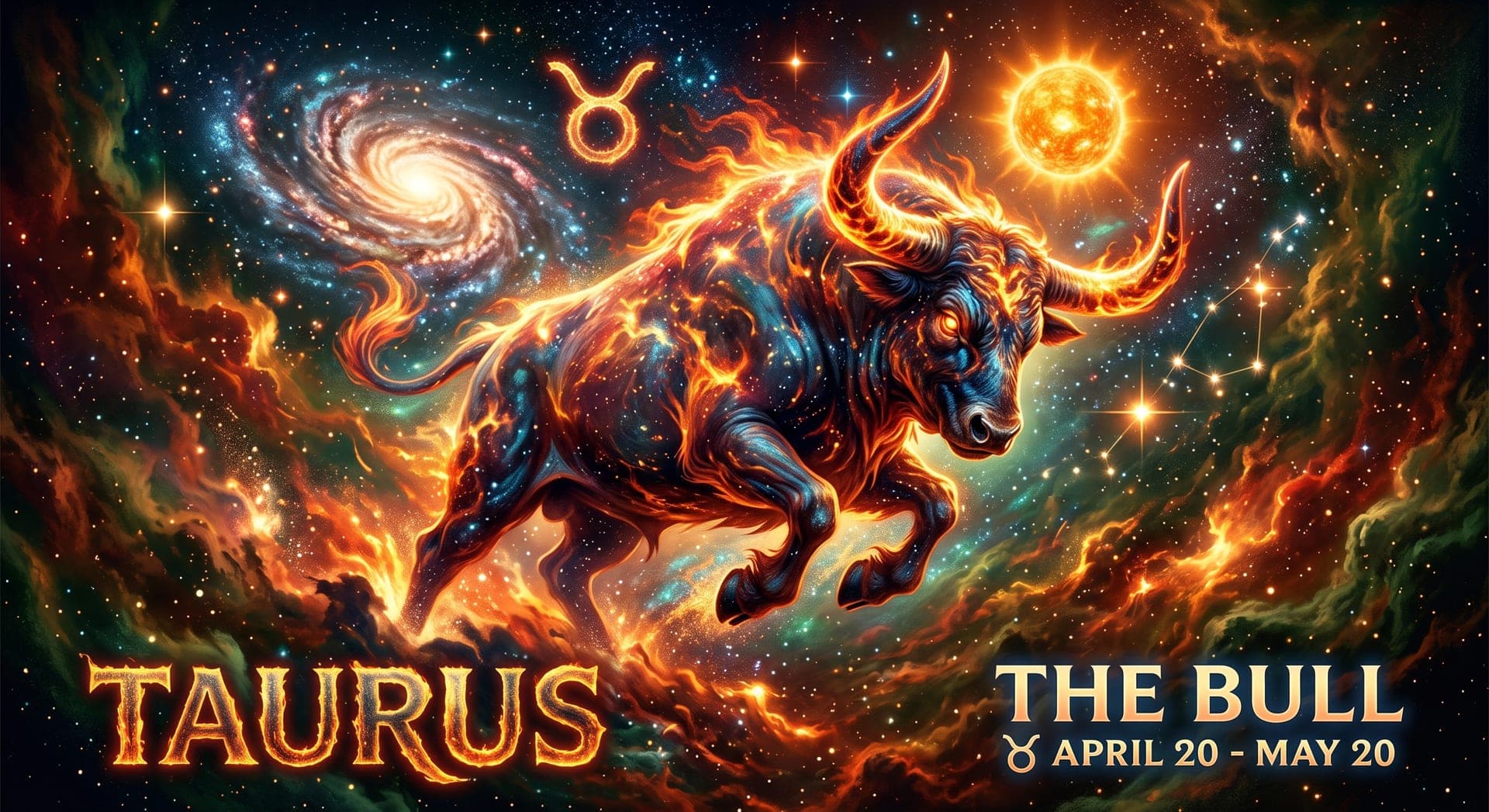
Taurus, the second sign of the zodiac, spans April 20 to May 20 and is symbolized by the bull, an animal prized for its strength, steadiness, and quiet determination. Ruled by Venus, the planet of love, beauty, and material comfort, Taurus is often described as one of the most sensual and pleasure-loving signs, drawn to good food, fine art, and physical comfort. As an Earth sign, Taurus is grounded, practical, and deeply connected to the physical world, valuing stability and tangible security over abstract ideas or sudden change. Its Fixed modality gives Taurus a well-earned reputation for stubbornness, since once a Taurus has settled on a plan or opinion, shifting it can be remarkably difficult. People born under this sign tend to be dependable, loyal, and patient, often the steady presence others rely on during difficult times. While their resistance to change can occasionally frustrate those around them, Taurus's persistence and work ethic make them exceptionally good at seeing long-term goals through to completion.
Personality Traits
Strengths
- Dependable and steady
- Patient and persistent
- Devoted to loved ones
- Appreciates beauty and comfort
- Financially sensible
Weaknesses
- Extremely stubborn
- Resistant to change
- Can be possessive
- Overindulgent
- Slow to forgive
Compatible Signs
Fun Facts
- Taurus's bull symbol connects to the Greek myth of Zeus transforming into a white bull to abduct Europa.
- Venus, Taurus' ruling planet, is the Roman goddess of love and beauty, reflecting the sign's love of comfort, art, and sensory pleasure.
- Taurus is considered by many astrologers to be the most stubborn sign of the zodiac, a trait often attributed to its Fixed modality and bull symbolism.
- Notable Taureans include Queen Elizabeth II, William Shakespeare, Adele, and David Beckham.
- The star cluster known as the Pleiades sits within the constellation Taurus and has been referenced in mythology and literature across many cultures.
Born on May 4
- 1655
Bartolomeo Cristofori
Italian instrument maker credited with inventing the piano
- 1796
Horace Mann
American education reformer known as the father of the American public school movement
- 1825
Thomas Henry Huxley
English biologist and anatomist known as 'Darwin's Bulldog' for his fierce defense of evolutionary theory
- 1827
John Hanning Speke
English explorer who identified Lake Victoria as a source of the Nile River
- 1852
Alice Liddell
English woman whose childhood friendship with Lewis Carroll inspired Alice's Adventures in Wonderland
- 1898
Umm Kulthum
Egyptian singer celebrated as one of the Arab world's greatest vocalists
- 1923
Eric Sykes
English comedian, actor, and writer known for his long-running sitcom Sykes
- 1929
Audrey Hepburn
Belgian-British actress and humanitarian, Hollywood icon
- 1941
George Will
American journalist and political commentator
- 1949
Graham Swift
English novelist who won the Booker Prize for his novel Last Orders
- 1974
Tony McCoy
Northern Irish jockey regarded as one of the greatest National Hunt riders, with a record number of career wins
- 1989
Rory McIlroy
Northern Irish golfer who has won multiple major championships including the Masters and PGA Championship
On This Day in History
- 1415
The Council of Constance formally condemns the English theologian John Wycliffe as a heretic, decades after his death.
Wycliffe, an Oxford theologian who died in 1384, had challenged papal authority and church wealth and inspired the first English translation of the Bible. Though he escaped punishment during his lifetime through political protection, the council's ruling led to a later order that his remains be exhumed and burned. His teachings influenced the Lollard movement in England and later reformers such as Jan Hus, earning Wycliffe the title 'Morning Star of the Reformation.'
- 1471
Yorkist forces under Edward IV defeat the Lancastrians at the Battle of Tewkesbury, a decisive engagement in England's Wars of the Roses.
Yorkist forces led by King Edward IV decisively defeated the Lancastrian army at the Battle of Tewkesbury, killing the Lancastrian heir Prince Edward and effectively crushing organized Lancastrian resistance during England's Wars of the Roses. The victory secured Edward's hold on the throne for the following decade.
- 1471
Yorkist forces under King Edward IV decisively defeat the Lancastrians at the Battle of Tewkesbury during the Wars of the Roses.
The battle effectively destroyed the Lancastrian cause for a generation: Edward, Prince of Wales, the only son of the deposed King Henry VI, was killed, and many other Lancastrian leaders died or were executed shortly afterward. Henry VI himself was murdered in the Tower of London soon after the battle, leaving Edward IV's hold on the throne secure. The victory brought a period of relative stability to England after years of dynastic civil war.
- 1493
Pope Alexander VI issues the papal bull "Inter caetera," dividing New World territorial claims between Spain and Portugal.
Pope Alexander VI issued the papal bull "Inter caetera," drawing a line of demarcation dividing newly discovered and future New World territories between Spain and Portugal, largely favoring Spanish claims. The decree was later refined by the Treaty of Tordesillas and profoundly shaped the colonial map of the Americas.
- 1776
Rhode Island becomes the first American colony to formally renounce its allegiance to King George III.
Rhode Island's colonial general assembly voted to formally renounce its allegiance to King George III and struck the king's name from official legal documents and oaths, becoming the first American colony to declare independence from British rule. The vote came two months before the Continental Congress adopted the broader Declaration of Independence, reflecting the colony's longstanding tradition of self-governance and dissent.
- 1799
British East India Company forces storm the fortress of Seringapatam, killing Tipu Sultan and ending the Fourth Anglo-Mysore War.
Tipu Sultan, known as the 'Tiger of Mysore,' had long resisted British expansion in southern India and allied with the French against Company rule. His death in the final assault removed the most formidable Indian opponent of British power on the subcontinent and led to the dismantling of the Kingdom of Mysore. The victory significantly extended British East India Company control over southern India and its resources.
- 1814
Napoleon Bonaparte arrives at Portoferraio on the island of Elba to begin his first exile.
Napoleon Bonaparte arrived at Portoferraio on the small Mediterranean island of Elba to begin his first exile after abdicating the French throne following military defeat by the allied European powers. He would remain there less than a year before escaping and briefly reclaiming power during the Hundred Days.
- 1859
The Cornwall Railway opens across Isambard Kingdom Brunel's Royal Albert Bridge, linking Cornwall to the rest of England's rail network.
The bridge, spanning the River Tamar at Saltash, was one of Brunel's last major engineering projects and used an innovative combination of wrought-iron trusses and chains to carry trains high above the river. Its completion finally connected Cornwall by through-railway to the rest of Britain, ending the region's relative isolation and boosting trade and tourism. The bridge remains in active use today and is a recognized feat of Victorian engineering.
- 1886
A bomb is thrown at police during a labor rally in Chicago's Haymarket Square, killing several officers and civilians in the Haymarket affair.
As police attempted to disperse a labor rally in Chicago's Haymarket Square supporting an eight-hour workday, an unknown person threw a bomb into police ranks, triggering gunfire that killed several officers and civilians. The ensuing trial and executions of labor activists made the Haymarket affair a defining, controversial episode in American labor history.
- 1919
Student demonstrations in Beijing's Tiananmen Square against the Treaty of Versailles's treatment of China spark the May Fourth Movement.
Thousands of Chinese students gathered in Beijing's Tiananmen Square to protest the Treaty of Versailles's decision to transfer former German territorial concessions in China to Japan rather than returning them to Chinese control. The resulting May Fourth Movement galvanized Chinese nationalism and profoundly influenced the country's political and intellectual development.
- 1919
Thousands of Chinese students demonstrate in Tiananmen Square, launching the May Fourth Movement against foreign imperialism and China's weak government.
The protests erupted over the Paris Peace Conference's decision to transfer German concession territories in Shandong province to Japan rather than returning them to China, despite China's support for the Allies in the First World War. The movement grew into a broader cultural and political awakening that promoted science, democracy, and the modernization of Chinese language and thought. It is widely regarded as a foundational moment in modern Chinese nationalism.
- 1926
The United Kingdom's General Strike begins, as workers walk out in support of coal miners facing wage cuts.
Trade unions across the United Kingdom launched a General Strike in solidarity with coal miners facing wage cuts and longer hours, briefly halting much of the country's transportation and industry. The nine-day strike ultimately collapsed without securing the miners' demands, dealing a significant setback to the British labor movement.
- 1926
The United Kingdom's only general strike begins, as trade unions call out workers nationwide in support of coal miners facing wage cuts.
Called by the Trades Union Congress, the strike brought out around 1.7 million workers across transport, printing, and heavy industry for nine days, though the government kept essential services running with volunteers. It ended without achieving its aims for the miners, who stayed out on strike alone for several more months before being forced back to work on worse terms. The strike's failure weakened British trade unionism for years and left a lasting mark on the country's labor politics.
- 1945
British forces liberate the Neuengamme concentration camp near Hamburg as they advance across northern Germany in the final days of the Second World War.
Neuengamme had held tens of thousands of prisoners from across occupied Europe, subjected to forced labor and brutal conditions, with many thousands dying from starvation, disease, and mistreatment. Most prisoners had already been evacuated by the SS before British troops arrived, some of them dying days earlier in the Cap Arcona disaster after being loaded onto ships in Lübeck Bay. The camp's liberation added to the growing evidence of Nazi atrocities uncovered by Allied forces that spring.
- 1970
Ohio National Guard troops open fire on unarmed Vietnam War protesters at Kent State University, killing four students.
Ohio National Guard troops opened fire on unarmed students protesting the Vietnam War and the U.S. invasion of Cambodia at Kent State University, killing four students and wounding nine others. The shootings sparked nationwide student strikes and a wave of public outrage that intensified opposition to the war.
- 1979
Margaret Thatcher becomes the first female Prime Minister of the United Kingdom.
Margaret Thatcher was sworn in as Britain's first female prime minister following her Conservative Party's decisive election victory, beginning an eleven-year tenure marked by privatization, confrontations with labor unions, and sweeping free-market economic reforms that fundamentally reshaped British society and politics.
- 1979
Margaret Thatcher becomes the first female Prime Minister of the United Kingdom after the Conservative Party's victory in the general election.
Thatcher took office at Downing Street the day after her party's win, ending years of Labour government under James Callaghan. Her eleven years in power brought sweeping economic reforms including privatization of state industries and confrontations with trade unions, reshaping British politics for a generation. She remains the longest-serving British prime minister of the 20th century and one of the most consequential and divisive figures in modern British history.
- 1982
The Royal Navy destroyer HMS Sheffield is struck by an Argentine Exocet missile during the Falklands War, killing 20 of her crew.
The missile was fired from an Argentine Super Étendard jet and, although it reportedly failed to fully detonate, its impact and the resulting fire caused catastrophic damage, forcing the crew to abandon ship. Sheffield later sank while under tow back to Britain, becoming the first Royal Navy vessel lost in combat since the Second World War. The attack demonstrated the vulnerability of modern warships to anti-ship missiles and had a lasting influence on naval tactics and ship design.
- 1989
Space Shuttle Atlantis launches on mission STS-30, deploying the Magellan probe toward Venus.
Space Shuttle Atlantis launched on mission STS-30, carrying the Magellan spacecraft, which it deployed toward Venus to conduct detailed radar mapping of the planet's cloud-shrouded surface. The mission produced the most comprehensive map of Venus's terrain obtained up to that point.
- 2000
Ken Livingstone is elected as the first directly elected Mayor of London.
Livingstone won as an independent candidate after being expelled from the Labour Party for standing against its official nominee, later rejoining Labour during his time in office. As mayor he introduced London's congestion charge to reduce traffic in the city center and oversaw London's successful bid to host the 2012 Olympic Games. His election created a new tier of citywide government for London for the first time since the Greater London Council was abolished in 1986.