
What’s Observed on April 25
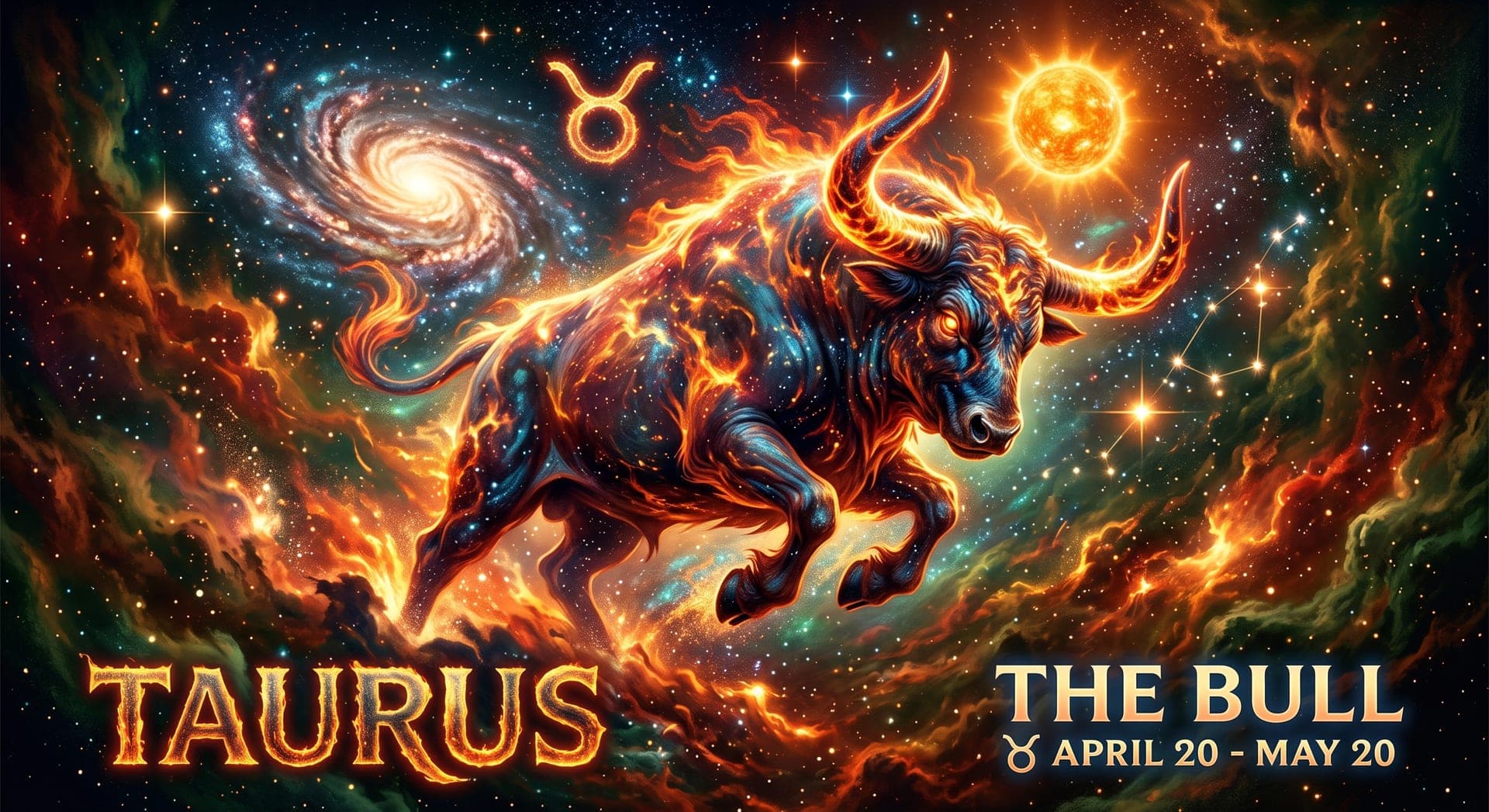
Born on April 25: Taurus ♉
Taurus, the second sign of the zodiac, spans April 20 to May 20 and is symbolized by the bull, an animal prized for its strength, steadiness, and quiet determination. Ruled by Venus, the planet of love, beauty, and material comfort, Taurus is often described as one of the most sensual and pleasure-loving signs, drawn to good food, fine art, and physical comfort. As an Earth sign, Taurus is grounded, practical, and deeply connected to the physical world, valuing stability and tangible security over abstract ideas or sudden change. Its Fixed modality gives Taurus a well-earned reputation for stubbornness, since once a Taurus has settled on a plan or opinion, shifting it can be remarkably difficult. People born under this sign tend to be dependable, loyal, and patient, often the steady presence others rely on during difficult times. While their resistance to change can occasionally frustrate those around them, Taurus's persistence and work ethic make them exceptionally good at seeing long-term goals through to completion.
Personality Traits
Strengths
- Dependable and steady
- Patient and persistent
- Devoted to loved ones
- Appreciates beauty and comfort
- Financially sensible
Weaknesses
- Extremely stubborn
- Resistant to change
- Can be possessive
- Overindulgent
- Slow to forgive
Compatible Signs
Fun Facts
- Taurus's bull symbol connects to the Greek myth of Zeus transforming into a white bull to abduct Europa.
- Venus, Taurus' ruling planet, is the Roman goddess of love and beauty, reflecting the sign's love of comfort, art, and sensory pleasure.
- Taurus is considered by many astrologers to be the most stubborn sign of the zodiac, a trait often attributed to its Fixed modality and bull symbolism.
- Notable Taureans include Queen Elizabeth II, William Shakespeare, Adele, and David Beckham.
- The star cluster known as the Pleiades sits within the constellation Taurus and has been referenced in mythology and literature across many cultures.
Born on April 25
- 1599
Oliver Cromwell
English general and statesman born in Huntingdon, who led parliamentary forces in the English Civil War and ruled as Lord Protector.
- 1862
Edward Grey
English statesman born in London, who as Foreign Secretary presided over Britain's entry into the First World War.
- 1873
Walter de la Mare
English poet and novelist born in Charlton, Kent, celebrated for his evocative verse and supernatural short fiction.
- 1874
Guglielmo Marconi
Italian inventor of wireless telegraphy, Nobel Prize laureate
- 1917
Ella Fitzgerald
American jazz singer known as the "First Lady of Song"
- 1918
Graham Payn
South African-born British singer and actor best known as the life partner of playwright Noel Coward and administrator of his estate
- 1940
Al Pacino
American actor known for "The Godfather" and "Scarface"
- 1944
Len Goodman
English dancer born in Farnborough, Kent, best known as head judge on Strictly Come Dancing and Dancing with the Stars.
- 1945
Björn Ulvaeus
Swedish musician and songwriter, member of ABBA
- 1947
Johan Cruyff
Dutch footballer and manager, one of the sport's greatest players
- 1960
Robert Peston
English journalist born in London, a leading broadcaster known for his coverage of business and economics for the BBC and ITV.
- 1963
David Moyes
Scottish football manager born in Glasgow, who has managed clubs including Everton, Manchester United, and West Ham United.
- 1988
Jonathan Bailey
English actor born in Wallingford, Oxfordshire, known for roles in Bridgerton and the film Wicked.
- 1994
Sam Fender
English singer-songwriter born in North Shields, known for chart-topping albums including Seventeen Going Under.

On This Day in History
- 404 BCE
Spartan forces under Lysander complete the blockade of Athens, bringing the Peloponnesian War to an end.
Spartan admiral Lysander, supported by King Pausanias, completed a naval and land blockade that starved Athens into submission, bringing the 27-year Peloponnesian War to an end with Sparta's decisive victory. The defeat stripped Athens of its empire and navy and marked the end of the city's golden age of democratic and cultural dominance in the ancient Greek world.
- 1464
A Yorkist army under Lord Montagu defeats a Lancastrian force at the Battle of Hedgeley Moor during the Wars of the Roses.
Fought in Northumberland, the battle was part of the ongoing dynastic struggle between the houses of York and Lancaster for the English throne. Montagu's victory helped secure the north of England for the Yorkist King Edward IV and paved the way for a further Yorkist win at Hexham weeks later, consolidating the House of York's grip on power.
- 1707
A Franco-Spanish army defeats an allied force of Britain, the Netherlands, and Portugal at the Battle of Almansa.
Fought during the War of the Spanish Succession, the battle was a decisive defeat for the Grand Alliance in Spain, with the British-led coalition suffering heavy losses under the Huguenot general the Earl of Galway. The victory secured Bourbon control over most of Spain for Philip V, dealing a serious blow to allied hopes of placing a rival claimant on the Spanish throne.
- 1792
Nicolas J. Pelletier becomes the first person executed by guillotine in France.
Nicolas Jacques Pelletier, convicted of robbery and murder, became the first person executed by the newly adopted guillotine in France, a device intended by revolutionary reformers to provide a swifter, more humane, and more egalitarian method of execution than earlier practices. The guillotine subsequently became infamous as the primary instrument of execution during the Reign of Terror.
- 1829
Captain Charles Fremantle arrives aboard HMS Challenger off Western Australia ahead of founding the Swan River Colony.
Fremantle formally claimed the western third of the Australian continent for Britain before the arrival of settlers, forestalling any French interest in the territory. The resulting Swan River Colony, centered on the future cities of Perth and Fremantle, became Western Australia's first permanent British settlement.
- 1849
Lord Elgin, Governor General of Canada, signs the Rebellion Losses Bill, provoking outrage among Montreal's English-speaking population.
The bill compensated Lower Canadians, including former rebels, for property destroyed during the 1837-38 uprisings. Elgin's decision to grant royal assent despite fierce opposition affirmed the principle of responsible government, under which the British-appointed governor deferred to the elected legislature; the backlash triggered riots in Montreal and the burning of the parliament building.
- 1859
British and French engineers break ground on the Suez Canal, a project that would transform global maritime trade.
French and British engineers broke ground on construction of the Suez Canal in Egypt, a massive infrastructure project designed to connect the Mediterranean and Red Seas, eliminating the need for ships to sail around the entirety of Africa. Completed a decade later, the canal transformed global shipping routes and became a strategically vital, and frequently contested, waterway.
- 1859
Engineers break ground on the construction of the Suez Canal in Egypt.
Led by French diplomat Ferdinand de Lesseps, the project aimed to cut a shipping channel through the Isthmus of Suez to connect the Mediterranean and Red Seas, drastically shortening sea voyages between Europe and Asia. Built largely with Egyptian labor over the following decade, the canal opened in 1869 and became one of the world's most strategically vital waterways.
- 1915
Allied forces land at Gallipoli, beginning a grueling and ultimately unsuccessful campaign against the Ottoman Empire during World War I.
Allied troops from Britain, France, Australia, New Zealand, and India landed at multiple beaches on Turkey's Gallipoli Peninsula, beginning a campaign intended to knock the Ottoman Empire out of World War I by seizing control of the strategically vital Dardanelles strait. The costly, ultimately unsuccessful eight-month campaign became a defining, formative national memory for Australia and New Zealand.
- 1915
Allied forces, including British, French, Indian, and Anzac troops, land on the Gallipoli Peninsula, opening the Gallipoli campaign.
Aiming to seize the Dardanelles Strait and open a supply route to Russia, British and French forces launched an amphibious assault against Ottoman defenses. The campaign became a costly and ultimately unsuccessful eight-month stalemate, with heavy losses on both sides, and its failure prompted major reassessments of British wartime strategy and leadership, including Winston Churchill's resignation from the Admiralty.
- 1916
Anzac Day is commemorated for the first time, marking the anniversary of the Gallipoli landings.
Observed across Australia, New Zealand, and the wider British Empire, the day honored the Australian and New Zealand Army Corps troops who had landed at what became known as Anzac Cove the previous year as part of the British-led Gallipoli campaign. It quickly became one of the most significant days of remembrance in Australian and New Zealand national life.
- 1920
Allied powers of World War I adopt a resolution at the San Remo conference allocating League of Nations mandates in the Middle East.
Meeting in Italy, Britain and France, the war's principal victors, divided former Ottoman territories between themselves, with Britain assuming mandates over Palestine, Transjordan, and Mesopotamia (Iraq) and France taking Syria and Lebanon. The decisions reshaped the modern Middle East and placed Britain at the center of the region's politics for decades to come.
- 1945
American and Soviet reconnaissance troops meet at the Elbe River in Germany, symbolically splitting Nazi forces in two.
American and Soviet reconnaissance patrols made contact near Torgau on the Elbe River in Germany, a symbolic meeting later commemorated as "Elbe Day" that visibly demonstrated the encirclement and impending collapse of Nazi Germany from both the east and west just days before Hitler's suicide and the war's end in Europe.
- 1945
Delegates from 50 nations open the United Nations Conference on International Organization in San Francisco, drafting the UN Charter.
Delegates from 50 Allied nations convened in San Francisco for the United Nations Conference on International Organization, beginning weeks of negotiations that produced the United Nations Charter, establishing a new international body intended to prevent future global conflicts following the catastrophic failures that preceded both world wars.
- 1951
Chinese forces are forced to withdraw after heavy fighting with United Nations troops at the Battle of Kapyong.
Australian and Canadian battalions bore the brunt of the fighting alongside Britain's 1st Battalion, Middlesex Regiment, as part of the 27th British Commonwealth Brigade defending a key valley route to Seoul during a major Chinese offensive. Their stand helped halt the Chinese advance and became one of the most celebrated Commonwealth actions of the Korean War.
- 1953
James Watson and Francis Crick publish their landmark paper describing the double helix structure of DNA.
Molecular biologists James Watson and Francis Crick published a landmark paper in the journal Nature describing the double helix structure of DNA, building on crucial X-ray diffraction data produced by researcher Rosalind Franklin. The discovery revolutionized biology and medicine, laying the foundation for the fields of molecular genetics and modern biotechnology.
- 1953
Francis Crick and James Watson publish their landmark paper describing the double helix structure of DNA.
Working at Cambridge University's Cavendish Laboratory, Crick, an Englishman, and Watson, an American, drew on X-ray diffraction data produced by British researchers Rosalind Franklin and Maurice Wilkins to deduce DNA's structure. The discovery, published in the journal Nature, became one of the foundational breakthroughs of modern molecular biology and earned Crick, Watson, and Wilkins the 1962 Nobel Prize.
- 1959
The Saint Lawrence Seaway officially opens, connecting the Great Lakes to the Atlantic Ocean for oceangoing vessels.
The Saint Lawrence Seaway, a system of canals, locks, and channels jointly developed by the United States and Canada, officially opened, allowing oceangoing vessels to travel from the Atlantic Ocean deep into North America's Great Lakes for the first time. The massive engineering project transformed industrial and agricultural shipping across the region.
- 1974
A leftist military coup in Portugal, the Carnation Revolution, overthrows the authoritarian Estado Novo regime.
A group of left-leaning Portuguese military officers staged a largely bloodless coup that overthrew the decades-old authoritarian Estado Novo regime, an uprising that became known as the Carnation Revolution after citizens placed flowers in soldiers' rifle barrels. The revolution restored democracy to Portugal and precipitated the rapid decolonization of its African territories.
- 2015
A magnitude 7.8 earthquake strikes Nepal, killing nearly 9,000 people and devastating the Kathmandu Valley.
A massive magnitude 7.8 earthquake struck near Kathmandu, Nepal, triggering deadly avalanches on Mount Everest and collapsing thousands of buildings across the densely populated region, ultimately killing nearly 9,000 people and displacing hundreds of thousands more. The disaster prompted a large international humanitarian response and years of rebuilding efforts.