What’s Observed on April 16
Born on April 16: Aries ♈
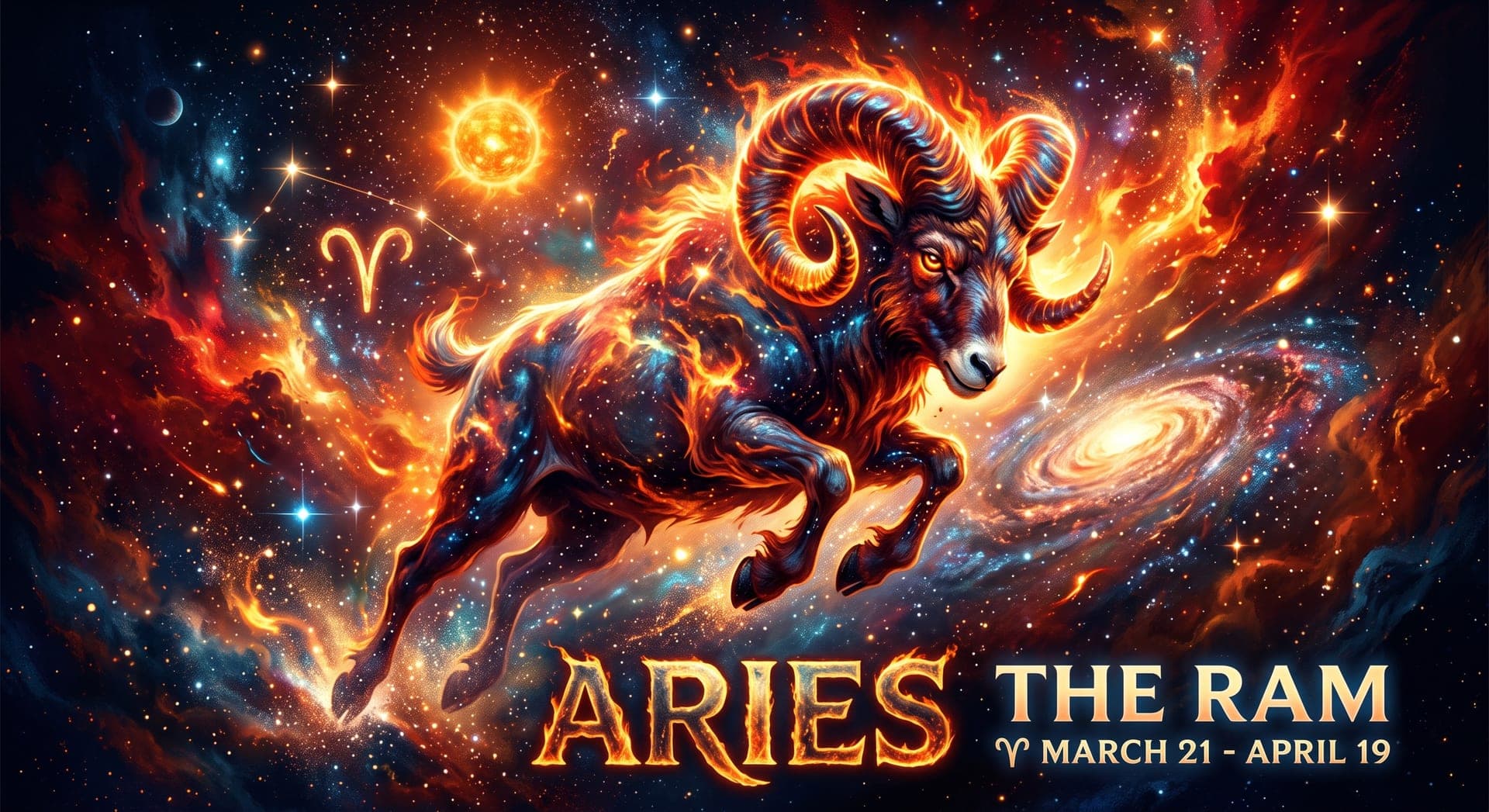
Aries, the first sign of the zodiac, spans March 21 to April 19 and is represented by the ram, an animal known for its boldness, stubborn determination, and willingness to charge forward. Ruled by Mars, the planet of action, drive, and war, Aries is often characterized as one of the most energetic and assertive signs in the zodiac, comfortable taking initiative and leading the way into new territory. As a Fire sign, Aries burns with passion and enthusiasm, approaching life with an instinctive, competitive edge and a low tolerance for hesitation. Its Cardinal modality reflects its role as an initiator, the sign that kicks off the astrological year at the spring equinox and each new season's start. People born under this sign are frequently drawn to leadership roles, sports, entrepreneurship, or any pursuit that rewards courage and quick decision-making. Direct and refreshingly honest, Aries individuals tend to say exactly what they think and rarely shy away from a challenge worth having.
Personality Traits
Strengths
- Courageous and determined
- Natural-born leader
- Honest and direct
- Enthusiastic and optimistic
- Quick to act on opportunities
Weaknesses
- Impatient and quick-tempered
- Impulsive, acts before thinking
- Can be overly competitive
- Struggles with follow-through
- Prone to selfishness
Compatible Signs
Fun Facts
- Aries is the first sign of the zodiac, marking the start of the astrological year at the spring equinox.
- The ram symbol is tied to the Greek myth of the golden-fleeced ram that rescued Phrixus, whose fleece later became the prize sought by Jason and the Argonauts.
- Mars, Aries' ruling planet, was the Roman god of war, reflecting the sign's associations with boldness, drive, and aggression.
- As a Cardinal sign, Aries is one of four signs, along with Cancer, Libra, and Capricorn, that initiate a new season.
- Notable Aries include Lady Gaga, Robert Downey Jr., Mariah Carey, and Leonardo da Vinci.
Born on April 16
- 1660
Hans Sloane
Physician and collector born in County Down, Ireland (now Northern Ireland), whose vast personal collection became the founding basis of the British Museum.
- 1728
Joseph Black
French-born Scottish chemist and physicist known for discovering carbon dioxide and magnesium and for his pioneering work on latent heat
- 1786
John Franklin
English Royal Navy officer and Arctic explorer who led several expeditions to chart the Canadian Arctic, including the doomed 1845 voyage in search of the Northwest Passage.
- 1821
Ford Madox Brown
French-born British painter associated with the Pre-Raphaelite movement, best known for his painting "Work" and the Manchester Murals
- 1867
Wilbur Wright
American aviation pioneer who co-invented the first successful airplane
- 1889
Charlie Chaplin
English actor, director, and composer whose Tramp character made him one of the most influential figures in the history of cinema.
- 1895
Ove Arup
English engineer who founded the Arup engineering firm, renowned for major projects including the structural design of the Sydney Opera House.
- 1918
Spike Milligan
Indian-born British comedian and writer, co-creator and star of the radio series "The Goon Show"
- 1921
Peter Ustinov
English actor, writer, and filmmaker known for his wit and versatility on stage and screen, and a two-time Academy Award winner.
- 1922
Kingsley Amis
English novelist and poet best known for the comic novel Lucky Jim, a landmark of postwar British fiction.
- 1924
Henry Mancini
American film composer known for the "Pink Panther" theme
- 1927
Pope Benedict XVI
Head of the Catholic Church from 2005 to 2013
- 1939
Dusty Springfield
English singer known for her soulful voice and hits including "Son of a Preacher Man," a leading figure of the 1960s British pop scene.
- 1947
Kareem Abdul-Jabbar
American basketball legend and NBA all-time scoring leader
- 1984
Claire Foy
English actress known for portraying Queen Elizabeth II in the television series The Crown.
- 1996
Anya Taylor-Joy
British-American actress, raised partly in London, known for "The Queen's Gambit", "The Witch" and "Furiosa: A Mad Max Saga"
On This Day in History
- 1520
The Revolt of the Comuneros begins in Spain, a rebellion against the rule of the young King Charles V.
A widespread popular uprising known as the Revolt of the Comuneros erupted across cities in central Spain, driven by opposition to the policies of the young, foreign-born King Charles V, who had recently inherited the Spanish throne. Royalist forces eventually crushed the rebellion the following year, reinforcing centralized royal authority over Spain's traditionally independent-minded municipalities.
- 1746
British Hanoverian forces crush the Jacobite rising at the Battle of Culloden in Scotland, ending Stuart hopes of reclaiming the throne.
British Hanoverian government forces decisively crushed the Jacobite army loyal to Charles Edward Stuart, known as "Bonnie Prince Charlie," at the Battle of Culloden in the Scottish Highlands, ending the last major attempt to restore the Stuart dynasty to the British throne. The brutal aftermath included harsh suppression of Highland culture and clan traditions.
- 1746
British Hanoverian forces under the Duke of Cumberland crush the Jacobite army at the Battle of Culloden, near Inverness, Scotland.
The battle, fought in under an hour, ended the Jacobite rising of 1745 that had sought to restore the exiled House of Stuart to the British throne. Charles Edward Stuart, 'Bonnie Prince Charlie', escaped into hiding after his heavily outnumbered and exhausted Highland army was routed. The defeat was followed by brutal government reprisals in the Highlands and the dismantling of the clan system.
- 1797
Sailors of the British Channel Fleet mutiny at Spithead, near Portsmouth, immobilising the fleet.
Crews refused duty over grievances including poor pay, harsh discipline, and inadequate food, demanding reforms rather than seeking to overthrow authority. The mutiny was resolved peacefully within weeks after the Admiralty granted a pay rise and royal pardons, though a harsher and more radical mutiny broke out soon after at the Nore. Together the mutinies exposed serious strains within the Royal Navy at a critical point in the French Revolutionary Wars.
- 1853
The Great Indian Peninsula Railway opens India's first passenger rail line, running from Bori Bunder to Thane.
Built under British colonial administration, the 34-kilometre line carried some 400 passengers on its inaugural journey and marked the beginning of one of the largest rail networks in the world. British engineers and capital drove the railway's rapid expansion across the subcontinent in the following decades, reshaping trade, travel, and administration throughout British India.
- 1912
Harriet Quimby becomes the first woman to pilot an airplane across the English Channel.
American aviator Harriet Quimby became the first woman to pilot an airplane across the English Channel, flying from England to France in a flimsy Blériot monoplane despite thick fog that obscured her view for much of the flight. Her achievement was largely overshadowed in the press by the sinking of the Titanic just days earlier.
- 1917
Vladimir Lenin returns to Russia from exile in Switzerland, setting the stage for the Bolshevik Revolution later that year.
Revolutionary leader Vladimir Lenin returned to Russia from exile in Switzerland aboard a German-arranged sealed train, arriving at Petrograd's Finland Station to a large crowd of supporters. His return, facilitated by Germany in hopes of destabilizing Russia's war effort, set the stage for the Bolshevik seizure of power later that year.
- 1917
Vladimir Lenin returns to Petrograd from exile in Switzerland, having crossed Germany in a sealed train.
Lenin's return, arranged with German assistance in the hope of destabilising Russia's war effort, allowed him to take direct command of the Bolshevik movement amid the upheaval following the February Revolution. Within months he would issue his April Theses calling for soviet power, setting the stage for the Bolshevik seizure of government later that year in the October Revolution.
- 1919
Mohandas Gandhi calls for a nationwide day of prayer and fasting in response to the killing of Indian protesters by British colonial troops at Jallianwala Bagh.
The massacre in Amritsar three days earlier, in which British Indian Army soldiers had fired on an unarmed crowd, galvanised Gandhi's turn toward mass civil resistance against British rule. His call for peaceful mourning and reflection helped channel public outrage into the organised, nonviolent campaigns that would come to define the Indian independence movement over the following decades.
- 1941
British warships intercept and destroy the Italian-German Tarigo convoy in the Mediterranean, sinking all its cargo ships.
Royal Navy destroyers ambushed the convoy off the Tunisian coast as it attempted to ferry supplies and vehicles to Axis forces in North Africa, sinking three transports and an escorting destroyer. The action was part of a broader British campaign to disrupt Axis supply lines across the Mediterranean, contributing to the logistical strain that hampered Rommel's forces in the desert war.
- 1943
Swiss chemist Albert Hofmann accidentally discovers the hallucinogenic effects of LSD.
Swiss chemist Albert Hofmann accidentally absorbed a small amount of a compound he had synthesized years earlier while researching potential medicinal uses, discovering its powerful hallucinogenic effects during an unplanned and disorienting bicycle ride home. His discovery of LSD's psychoactive properties would go on to have a profound and controversial influence on science, medicine, and 1960s counterculture.
- 1943
Swiss chemist Albert Hofmann accidentally discovers the hallucinogenic effects of LSD after absorbing a small amount through his skin.
Working at Sandoz Laboratories in Basel, Hofmann had synthesized the compound five years earlier while researching circulatory stimulants, without noting any unusual effects. After the accidental exposure produced a mild but striking altered state, he deliberately ingested a larger dose three days later in what became known as 'Bicycle Day,' launching decades of scientific and cultural interest in the drug.
- 1945
The Red Army launches its final assault on Berlin with nearly one million troops, beginning the last major battle of the European war.
Soviet forces under Marshal Georgy Zhukov launched the massive Battle of Berlin, deploying nearly one million troops and thousands of tanks and artillery pieces against the crumbling German capital. The brutal, weeks-long battle would result in Adolf Hitler's suicide and Germany's unconditional surrender within weeks, marking the definitive end of the war in Europe.
- 1945
The Red Army launches its final assault on German forces defending the approaches to Berlin at the Battle of Seelow Heights.
Nearly a million Soviet troops attacked heavily fortified German positions east of Berlin in one of the last major battles of the European war. Despite overwhelming numbers, Soviet forces suffered heavy casualties breaking through the defences over several days of fighting. The battle's outcome opened the road to Berlin, which fell to Soviet forces less than three weeks later.
- 1947
A massive explosion aboard a fertilizer-laden freighter in Texas City, Texas, triggers a chain reaction of fires and blasts that kill roughly 600 people.
A fire aboard a French-owned freighter loaded with ammonium nitrate fertilizer docked in Texas City, Texas, triggered a massive explosion that ignited nearby chemical plants and oil facilities, killing roughly 600 people in what remains one of the deadliest industrial accidents in American history. The disaster led to significant reforms in the regulation and handling of hazardous chemicals.
- 1961
Fidel Castro publicly declares the Cuban Revolution socialist for the first time, aligning Cuba with the Soviet bloc.
In a nationally broadcast speech, Cuban leader Fidel Castro publicly declared for the first time that the Cuban Revolution was socialist, formally aligning the island nation with the Soviet Union just as a CIA-backed invasion force prepared to land at the Bay of Pigs. The declaration marked a decisive turning point in Cuba's Cold War allegiance.
- 1972
NASA launches Apollo 16 from Cape Canaveral, sending astronauts on the fifth crewed mission to land on the Moon.
Commander John Young and lunar module pilot Charles Duke spent nearly three days on the lunar surface in the Descartes Highlands, conducting geological surveys and driving a lunar rover across rugged terrain while Ken Mattingly orbited overhead in the command module. The mission returned a substantial haul of lunar samples and helped refine scientific understanding of the Moon's highland regions.
- 2007
A gunman kills 32 people in the deadliest mass shooting on a U.S. college campus at Virginia Tech.
A student gunman killed 32 people and wounded 17 others in two separate attacks on the Virginia Tech campus before taking his own life, in what was then the deadliest mass shooting by a single gunman in modern U.S. history. The tragedy prompted widespread debate over campus security, mental health services, and gun control policy.
- 2007
A gunman kills 32 people and wounds 17 others in a mass shooting at Virginia Tech before taking his own life.
Seung-Hui Cho, a student at the university, carried out two separate attacks hours apart on the Blacksburg, Virginia campus, making it one of the deadliest school shootings in American history at the time. The massacre prompted nationwide debate over campus security, mental health services, and gun control, and led to changes in emergency notification systems at universities across the United States.
- 2014
The South Korean ferry MV Sewol capsizes and sinks, killing 304 passengers and crew, most of them students.
The South Korean ferry MV Sewol capsized and sank off the country's southwestern coast, killing 304 people, most of them high school students on a field trip, after the overloaded and improperly secured vessel made a sharp turn. The disaster, compounded by a botched rescue response, triggered nationwide grief and outrage and led to significant reforms of South Korea's maritime safety regulations.