
What’s Observed on April 15
Born on April 15: Aries ♈
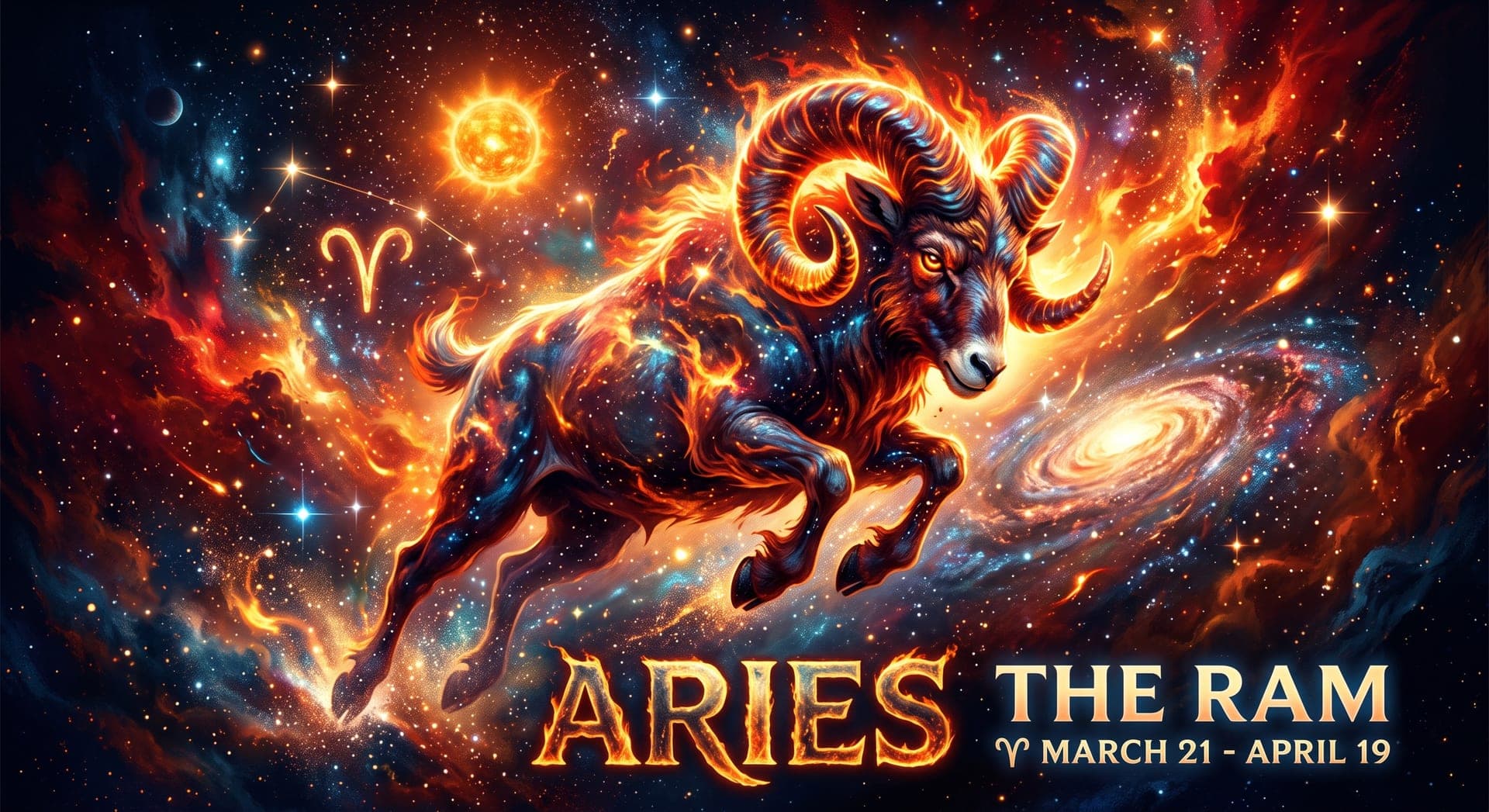
Aries, the first sign of the zodiac, spans March 21 to April 19 and is represented by the ram, an animal known for its boldness, stubborn determination, and willingness to charge forward. Ruled by Mars, the planet of action, drive, and war, Aries is often characterized as one of the most energetic and assertive signs in the zodiac, comfortable taking initiative and leading the way into new territory. As a Fire sign, Aries burns with passion and enthusiasm, approaching life with an instinctive, competitive edge and a low tolerance for hesitation. Its Cardinal modality reflects its role as an initiator, the sign that kicks off the astrological year at the spring equinox and each new season's start. People born under this sign are frequently drawn to leadership roles, sports, entrepreneurship, or any pursuit that rewards courage and quick decision-making. Direct and refreshingly honest, Aries individuals tend to say exactly what they think and rarely shy away from a challenge worth having.
Personality Traits
Strengths
- Courageous and determined
- Natural-born leader
- Honest and direct
- Enthusiastic and optimistic
- Quick to act on opportunities
Weaknesses
- Impatient and quick-tempered
- Impulsive, acts before thinking
- Can be overly competitive
- Struggles with follow-through
- Prone to selfishness
Compatible Signs
Fun Facts
- Aries is the first sign of the zodiac, marking the start of the astrological year at the spring equinox.
- The ram symbol is tied to the Greek myth of the golden-fleeced ram that rescued Phrixus, whose fleece later became the prize sought by Jason and the Argonauts.
- Mars, Aries' ruling planet, was the Roman god of war, reflecting the sign's associations with boldness, drive, and aggression.
- As a Cardinal sign, Aries is one of four signs, along with Cancer, Libra, and Capricorn, that initiate a new season.
- Notable Aries include Lady Gaga, Robert Downey Jr., Mariah Carey, and Leonardo da Vinci.
Born on April 15
- 1452
Leonardo da Vinci
Italian Renaissance painter, inventor, and polymath
- 1469
Guru Nanak
Founder of Sikhism and the first Sikh guru
- 1707
Leonhard Euler
Swiss mathematician and physicist
- 1800
James Clark Ross
English naval officer and polar explorer who located the North Magnetic Pole and led expeditions that charted much of Antarctica's Ross Sea region.
- 1843
Henry James
American novelist known for "The Portrait of a Lady"
- 1890
Percy Shaw
English businessman and inventor who created the reflective road stud known as the cat's eye, a road-safety device used worldwide.
- 1894
Nikita Khrushchev
Soviet leader and Premier of the Soviet Union
- 1929
Adrian Cadbury
English businessman and member of the Cadbury chocolate family, later known for chairing an influential inquiry into UK corporate governance standards.
- 1940
Jeffrey Archer
English novelist and former politician known for bestselling thrillers such as Kane and Abel and for a colourful, controversial public career.
- 1958
Benjamin Zephaniah
English poet, author, and actor known for his politically engaged, performance-driven verse and his advocacy for social justice.
- 1959
Emma Thompson
English actress and screenwriter, an Academy Award winner celebrated for roles in film adaptations including Howards End and Sense and Sensibility, the latter's screenplay she also wrote.
- 1990
Emma Watson
British actress and activist, born in Paris to English parents, best known for playing Hermione Granger in the "Harry Potter" film series
- 1997
Maisie Williams
English actress best known for playing Arya Stark in the television series Game of Thrones.
On This Day in History
- 1071
Norman forces under Robert Guiscard capture Bari, ending the last Byzantine holdings in southern Italy.
Norman adventurer Robert Guiscard captured the city of Bari after a lengthy siege, ending the last remaining Byzantine territorial holdings in southern Italy and completing the Norman conquest of the region. The victory established Norman rule over southern Italy, a kingdom that later blended Norman, Byzantine, and Arab administrative and cultural influences in distinctive ways.
- 1450
French forces defeat and nearly annihilate an English army at the Battle of Formigny, effectively ending English rule in Normandy.
Fought near the end of the Hundred Years' War, the battle saw a French force supported by artillery overwhelm an English relief army marching to break a siege nearby. The defeat shattered English military power in the region, and within months Normandy, held by England for decades, fell entirely to the French crown. The battle marked a turning point that hastened England's final expulsion from continental France.
- 1632
Swedish forces under King Gustavus Adolphus defeat the Holy Roman Empire at the Battle of Rain during the Thirty Years' War.
Swedish King Gustavus Adolphus led his forces to a decisive victory over Bavarian and Imperial troops at the Battle of Rain during the Thirty Years' War, a conflict that devastated much of Central Europe. The victory opened Bavaria to Swedish invasion and further cemented Gustavus Adolphus's reputation as one of the era's most innovative and successful military commanders.
- 1642
A Royalist army defeats Irish Confederate militia at the Battle of Kilrush during the Irish Confederate Wars.
The Earl of Ormond led a Crown force out of Dublin to resupply besieged garrisons, clashing with Confederate Irish troops attempting to block his path near Kilrush, County Kildare. The Royalists routed the Confederates, securing safe passage and dealing an early setback to the Catholic Confederation's efforts to control the countryside around Dublin during the wider Wars of the Three Kingdoms.
- 1738
George Frideric Handel's opera Serse (Xerxes) receives its premiere in London.
Composed for the King's Theatre, the opera was one of Handel's last works in the Italian opera seria tradition before he turned increasingly to English oratorio. It was poorly received at the time and performed only a handful of times, yet it later became one of his most admired stage works, prized for the aria 'Ombra mai fù' and its blend of comedy and pathos.
- 1755
Samuel Johnson's comprehensive "Dictionary of the English Language" is published in London.
English writer Samuel Johnson published his monumental "Dictionary of the English Language" after nine years of painstaking work, largely completed single-handedly, defining over 40,000 words with illustrative literary quotations. Though later superseded by more comprehensive dictionaries, Johnson's work remained the preeminent English dictionary for over a century and set new standards for lexicography.
- 1755
Samuel Johnson's A Dictionary of the English Language is published in London.
Compiled over nine years with the help of a small team of assistants, the dictionary defined more than 40,000 words and illustrated their usage with some 114,000 quotations drawn from English literature. Though not the first English dictionary, it was by far the most comprehensive and influential, remaining the standard reference on the language until the Oxford English Dictionary appeared over a century later.
- 1817
The American School for the Deaf is established in Hartford, Connecticut, the first permanent school for deaf students in the United States.
Thomas Hopkins Gallaudet and Laurent Clerc founded the American School for the Deaf in Hartford, Connecticut, the first permanent institution in the United States dedicated to educating deaf students. The school played a foundational role in developing American Sign Language and establishing deaf education as a recognized field in the country.
- 1861
President Abraham Lincoln calls for 75,000 militiamen to suppress the Southern rebellion, escalating the Civil War.
Following the Confederate attack on Fort Sumter days earlier, President Abraham Lincoln issued a proclamation calling for 75,000 state militia volunteers to suppress what he termed an insurrection, a move that prompted several additional Southern states to secede rather than supply troops against fellow Southerners.
- 1865
President Abraham Lincoln dies from the gunshot wound inflicted the previous night by John Wilkes Booth.
President Abraham Lincoln died in the early morning hours at a boarding house across from Ford's Theatre, having never regained consciousness after being shot by John Wilkes Booth the previous night. His death, coming just days after the Confederacy's collapse, plunged the nation into mourning and complicated the already difficult questions surrounding postwar Reconstruction.
- 1912
The RMS Titanic sinks in the North Atlantic after striking an iceberg, killing over 1,500 of the roughly 2,224 people aboard.
The RMS Titanic sank in the frigid North Atlantic in the early morning hours after striking an iceberg the previous night, with a shortage of lifeboats contributing to the deaths of more than 1,500 of the roughly 2,224 passengers and crew aboard. The disaster prompted sweeping international reforms to maritime safety regulations, including lifeboat capacity requirements still in use today.
- 1912
The British liner RMS Titanic sinks in the North Atlantic, roughly two and a half hours after striking an iceberg, killing more than 1,500 people.
Of the 2,224 passengers and crew aboard, only 710 survived, largely because the ship carried lifeboats for barely half those on board. Many victims died of hypothermia in the freezing water while lifeboats nearby remained partly empty. The scale of the loss, aboard a ship operated by Britain's White Star Line, led directly to new international maritime safety treaties requiring adequate lifeboat capacity for all.
- 1941
German Luftwaffe bombers attack Belfast in the heaviest raid of the Belfast Blitz, killing around 1,000 people.
The raid on the night of 15-16 April targeted docks, shipyards, and residential streets across the city, catching Belfast's civil defences badly under-prepared. It was, outside London, one of the deadliest single air raids to strike the United Kingdom during the Second World War, and fire crews from neutral Ireland crossed the border to help fight the blazes.
- 1942
King George VI awards the George Cross to the people of Malta in recognition of their endurance under sustained Axis bombing.
Malta, a British colony and vital Mediterranean naval base, endured relentless Italian and German air raids intended to starve it into submission and cut Allied supply lines. The unprecedented collective award, Britain's highest civilian honour for gallantry, recognised the resilience of the island's population and garrison. Malta's resistance helped the Allies retain a crucial foothold for operations across North Africa and southern Europe.
- 1945
British troops liberate the Bergen-Belsen concentration camp in northern Germany.
Soldiers of the British 11th Armoured Division discovered roughly 60,000 starving prisoners and thousands of unburied corpses at the camp, where typhus and starvation had killed tens of thousands. Footage and photographs taken by British army film units and journalists brought the horror of Nazi concentration camps to global public awareness. Despite medical intervention, thousands more prisoners died in the weeks after liberation.
- 1947
Jackie Robinson makes his major league debut with the Brooklyn Dodgers, breaking baseball's color barrier.
Jackie Robinson took the field for the Brooklyn Dodgers at Ebbets Field, becoming the first Black player in modern Major League Baseball and breaking a color barrier that had excluded Black athletes from the sport's top level for decades. Robinson endured intense racist hostility with remarkable composure, and his achievement became a landmark moment in the broader civil rights movement.
- 1989
A fatal crowd crush at Hillsborough Stadium in Sheffield, England, kills 97 Liverpool football fans.
A fatal crush developed among Liverpool fans in an overcrowded standing terrace at Hillsborough Stadium in Sheffield, England, before an FA Cup semifinal, ultimately killing 97 people. Years of official mischaracterization blaming fan behavior were eventually overturned following prolonged campaigning by victims' families, leading to a 2016 inquest ruling that police failures caused the disaster.
- 1989
Ninety-seven Liverpool supporters die in a fatal crowd crush at Hillsborough Stadium during an FA Cup semi-final.
Overcrowding in a standing terrace at Sheffield Wednesday's ground led to a crush that killed dozens within minutes and injured hundreds more. It remains the deadliest disaster in British sporting history and led to lengthy campaigns for justice by victims' families, a series of inquests, and sweeping safety reforms including the shift to all-seater stadiums in England's top football divisions.
- 2013
Two bombs explode near the finish line of the Boston Marathon, killing three people and injuring hundreds more.
The blasts, set off by homemade pressure-cooker devices minutes apart, struck crowds of spectators and runners near the race's finish on Boylston Street. A massive manhunt followed, culminating in the death of one bombing suspect and the capture of his brother days later after the city was placed under lockdown. The attack prompted major changes to security at large public events across the United States.
- 2019
A major fire severely damages the Notre-Dame de Paris cathedral, destroying its spire and roof.
A major fire broke out in the attic of Notre-Dame de Paris, the iconic medieval Gothic cathedral, ultimately collapsing its spire and destroying most of its wooden roof structure before firefighters brought the blaze under control. The fire, watched in real time by shocked crowds and a global television audience, prompted an outpouring of donations toward the cathedral's extensive, years-long restoration.