
What’s Observed on February 25
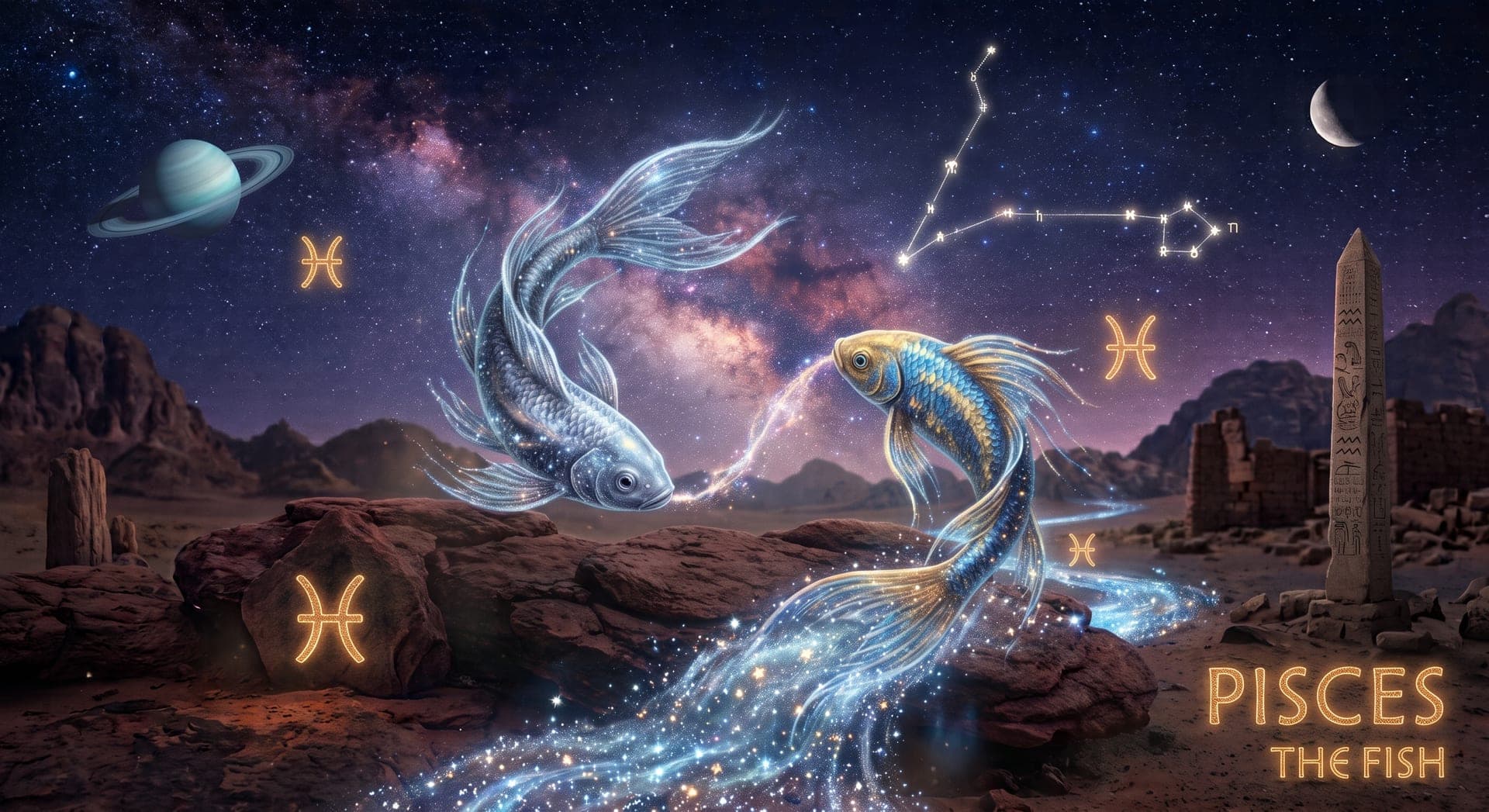
Born on February 25: Pisces ♓
Pisces, the twelfth and final sign of the zodiac, spans February 19 to March 20 and is symbolized by two fish swimming in opposite directions, tied together by a cord, representing the tension between fantasy and reality, or the conscious and subconscious mind. Ruled by Neptune, the planet of dreams, intuition, and illusion, Pisces is widely regarded as the most emotionally sensitive and imaginative sign of the zodiac. As a Water sign, Pisces navigates the world primarily through feeling and empathy, often absorbing the moods of people around it as though they were its own. Its Mutable modality reflects a deep adaptability and fluidity, comfortable going with the flow rather than forcing rigid plans. People born under this sign are often drawn to art, music, and other creative or spiritual pursuits where their vivid imagination can take shape. Compassionate to a fault, Pisces individuals are frequently the ones quietly caring for others, sometimes at the expense of their own boundaries and needs.
Personality Traits
Strengths
- Deeply empathetic and compassionate
- Highly imaginative and artistic
- Intuitive and perceptive
- Selfless and generous
- Adaptable to change
Weaknesses
- Prone to escapism or avoidance
- Overly trusting, can be taken advantage of
- Difficulty setting boundaries
- Tends toward melancholy
- Indecisive
Compatible Signs
Fun Facts
- Pisces' symbol of two fish bound together swimming in opposite directions comes from a Greek myth in which Aphrodite and Eros transformed into fish and tied themselves together to escape the monster Typhon.
- As the twelfth and final sign of the zodiac, Pisces is often described as embodying traits of all the preceding signs, a kind of culmination of the zodiac wheel.
- Neptune, Pisces' modern ruling planet, is the Roman god of the sea, discovered in 1846 and named for its blue, oceanic appearance.
- Notable Pisces include Albert Einstein, Rihanna, Steve Jobs, and Kurt Cobain.
- Classical astrology assigns Jupiter as Pisces' ruler, before Neptune's discovery in the 19th century gave the sign its modern ruling planet.
Born on February 25
- 1728
John Wood the Younger
English architect who designed much of Georgian Bath, including the Royal Crescent
- 1841
Pierre-Auguste Renoir
Leading French Impressionist painter
- 1873
Enrico Caruso
World-renowned Italian operatic tenor
- 1885
Princess Alice of Battenberg
British-born princess and mother of Prince Philip, Duke of Edinburgh, honoured for sheltering a Jewish family in Nazi-occupied Greece
- 1890
Myra Hess
English pianist celebrated for her wartime National Gallery concerts during the London Blitz
- 1898
William Astbury
English molecular biologist whose X-ray studies of proteins and DNA fibres laid groundwork for the discovery of DNA's structure
- 1917
Anthony Burgess
English novelist and composer best known for the dystopian novel A Clockwork Orange
- 1918
Bobby Riggs
Tennis champion known for the "Battle of the Sexes" match
- 1937
Tom Courtenay
English actor known for films such as The Loneliness of the Long Distance Runner and Doctor Zhivago
- 1943
George Harrison
English musician and songwriter, lead guitarist of the Beatles known for his later interest in Indian music and spirituality
- 1949
Ric Flair
Professional wrestling legend known as "The Nature Boy"
- 1974
Dominic Raab
English politician who served as Foreign Secretary and Deputy Prime Minister of the United Kingdom

On This Day in History
- 138
Roman emperor Hadrian formally adopts Antoninus Pius as his son and successor.
Hadrian, ailing and without an heir of his own blood, had first adopted Lucius Aelius, who died before he could succeed him. He then chose the senator Antoninus, requiring him in turn to adopt Marcus Aurelius and Lucius Verus as future heirs, securing a peaceful succession plan. Antoninus became emperor later that year upon Hadrian's death and went on to preside over one of the most stable periods of the Roman Empire.
- 628
Shah Khosrow II of the Sasanian Empire is overthrown and imprisoned by his son, who takes the throne as Kavad II.
Khosrow II's decades-long war against the Byzantine Empire had drained Persia's resources and provoked a revolt among his own nobles and generals. His son Kavad II seized power amid the unrest, had his father imprisoned and, days later, executed. Kavad quickly sued for peace with Byzantium, ending the ruinous war, though his own reign lasted only months before he too died.
- 1836
Samuel Colt is granted a U.S. patent for his revolving-cylinder firearm, a design that would revolutionize personal weaponry.
Colt's revolver used a rotating cylinder to hold multiple bullets, allowing several shots to be fired without reloading, a major advance over single-shot firearms. Mass production techniques Colt pioneered helped establish interchangeable-parts manufacturing as a hallmark of American industry.
- 1836
American inventor Samuel Colt receives a United States patent for his revolving-cylinder firearm design.
Colt's patent covered a mechanism that aligned a rotating cylinder of chambers with a single barrel, allowing several shots to be fired without reloading. He founded the Patent Arms Manufacturing Company in Paterson, New Jersey, to produce the weapon, and although early sales were slow, the revolver later made Colt one of the most famous names in American industry and transformed firearm design worldwide.
- 1843
British naval commander Lord George Paulet begins a five-month occupation of the Kingdom of Hawaii, provisionally ceding the islands to the British Crown.
Paulet, captain of HMS Carysfort, seized control of Honolulu after a dispute involving British subjects and Hawaiian King Kamehameha III, forcing the king to cede his kingdom under protest. The occupation proved short-lived: when news reached London, the British government repudiated Paulet's actions, and Rear Admiral Richard Thomas restored Hawaiian sovereignty that July, prompting the king's enduring motto 'Ua mau ke ea o ka ʻāina i ka pono.'
- 1870
Hiram Rhodes Revels of Mississippi is sworn into the U.S. Senate, becoming the first African American to serve in Congress.
Revels, a minister and educator, was sworn into the Senate seat once held by Jefferson Davis before the Civil War, a symbolically powerful moment of Reconstruction-era political change, though systematic disenfranchisement would push Black political representation back for generations afterward.
- 1916
German forces capture Fort Douaumont, a key stronghold in the French defenses, during the Battle of Verdun.
Fort Douaumont, considered the strongest fortification defending Verdun, fell to a small German raiding party who found it nearly undefended after French commanders had stripped it of most of its garrison, a stunning early setback that shocked French military leadership.
- 1916
German forces capture Fort Douaumont, the largest fort defending Verdun, in the opening days of the Battle of Verdun.
The fort's fall, taken by a small German raiding party that found it lightly defended, shocked French public opinion and hardened France's resolve to hold Verdun at any cost. Although militarily reduced in importance by 1916, Fort Douaumont carried immense symbolic weight, and the French spent months and thousands of lives trying to retake it later that year during a battle that became a byword for the war's slaughter.
- 1932
Adolf Hitler obtains German citizenship through a bureaucratic appointment, a necessary step that allowed him to run for the German presidency.
Hitler's citizenship, granted through a minor state government post arranged by Nazi sympathizers, resolved his previously stateless status as an Austrian who had renounced his citizenship years earlier, a legal technicality required before he could legally run for the German presidency later that year.
- 1932
Adolf Hitler, previously stateless, obtains German citizenship through an administrative appointment in the state of Brunswick, clearing the way for him to run for president.
Hitler had given up his Austrian citizenship years earlier and remained legally stateless through much of his political rise, which barred him from holding office. A sympathetic Nazi-aligned government in Brunswick appointed him to a minor civil service post, automatically conferring German citizenship. He used it to contest the 1932 presidential election against Hindenburg, and though he lost, the episode paved the way for his chancellorship less than a year later.
- 1939
The first Anderson air-raid shelter is erected in a garden in Islington, London, as Britain begins preparing civilians for the aerial bombing of a future war.
Named after Sir John Anderson, the Home Secretary who oversaw the programme, the corrugated-steel shelters were designed by engineers William Paterson and Oscar Kerrison and could be sunk into a garden and covered with soil. Over 1.5 million were distributed to households before the Second World War began, and millions more followed once the Blitz started in 1940, making them one of the most recognisable symbols of the British home front.
- 1947
The Allied Control Council, including Britain among the four occupying powers, formally enacts a law abolishing the state of Prussia.
Prussia had dominated German politics for centuries and was blamed by the Allies for fostering the militarism that led to two world wars. Control Council Law No. 46, issued in Berlin, declared Prussia's institutions dissolved and its territory redistributed among the newly formed German states, the Soviet Union, and Poland. Britain, as one of the four occupying powers governing postwar Germany, was a co-author and signatory of the measure.
- 1948
Czechoslovakia's Communist Party seizes complete control of the government in a coup, aligning the country firmly within the Soviet bloc.
The Czechoslovak coup, orchestrated by Soviet-backed Communist Party leader Klement Gottwald amid a government crisis, eliminated the country's fragile postwar democracy and firmly aligned it within the Soviet bloc for the following four decades until the peaceful Velvet Revolution of 1989.
- 1956
Soviet leader Nikita Khrushchev delivers his "Secret Speech," denouncing Joseph Stalin's crimes and cult of personality to a stunned Communist Party congress.
Khrushchev's speech, delivered in a closed session and not officially published in the Soviet Union for decades, detailed Stalin's purges, mass killings, and cult of personality, sending shockwaves through the international communist movement and sparking uprisings in Eastern Europe later that year.
- 1956
Soviet leader Nikita Khrushchev delivers his 'Secret Speech' to a closed session of the 20th Communist Party Congress, denouncing Stalin's cult of personality and purges.
Khrushchev's speech detailed Stalin's mass arrests, executions, and abuses of power, shocking delegates who had lived under his rule for decades. Though technically secret, its contents spread rapidly through the Communist world and beyond, triggering a wave of de-Stalinization, unrest in Eastern Bloc states, and a lasting reassessment of Stalin's legacy within international communism.
- 1980
A military coup led by Dési Bouterse overthrows the government of Suriname.
Bouterse's coup ended Suriname's brief period of post-independence civilian government, ushering in a period of military rule marked by human rights abuses, including the killing of political opponents, before democracy was eventually restored years later.
- 1986
Philippine dictator Ferdinand Marcos flees the country amid the People Power Revolution, and Corazon Aquino is sworn in as the nation's first female president.
Marcos's decades-long authoritarian rule, marked by martial law, corruption, and human rights abuses, collapsed after a rigged election triggered the largely peaceful "People Power" uprising. Aquino, widow of an assassinated opposition leader, became a symbol of the democratic transition as the Philippines' first female president.
- 1986
President Ferdinand Marcos flees the Philippines after the People Power Revolution, and Corazon Aquino is inaugurated as president.
Marcos had claimed victory in a snap election widely seen as fraudulent, sparking mass protests and a defection of military leaders to Aquino's side. Millions of Filipinos filled the streets of Manila in a largely peaceful uprising that forced Marcos and his family into exile in Hawaii after more than two decades in power. Aquino's succession marked the restoration of democracy in the Philippines after years of martial law.
- 1991
Member states formally dissolve the Warsaw Pact, the Soviet-led military alliance that had counterbalanced NATO throughout the Cold War.
The dissolution of the Warsaw Pact, formalized as communist governments across Eastern Europe had already collapsed and the Soviet Union itself neared its end, removed the Cold War's Eastern military counterweight to NATO, reshaping the European security landscape for decades to come.
- 1994
An American-born Israeli settler opens fire on Muslim worshippers at the Cave of the Patriarchs in Hebron, killing 29 people before being beaten to death by survivors.
The Hebron massacre, carried out by an American-born extremist during the Muslim holy month of Ramadan, killed dozens of worshippers and triggered a wave of retaliatory violence that severely damaged the fragile Israeli-Palestinian peace process underway at the time.