
What’s Observed on February 18
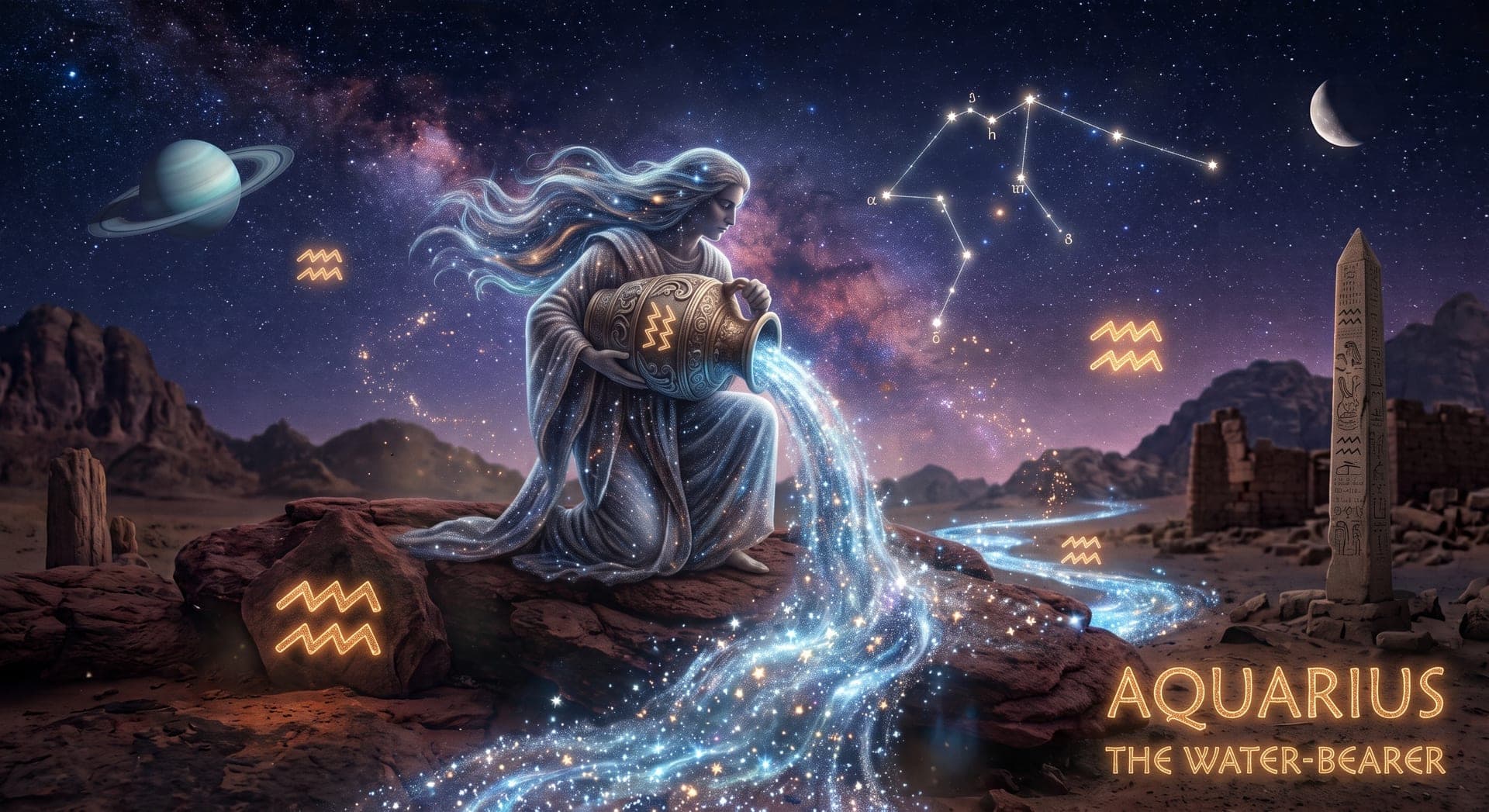
Born on February 18: Aquarius ♒
Aquarius, the eleventh sign of the zodiac, spans January 20 to February 18 and is symbolized by the water bearer, an image of someone pouring out knowledge and life-giving ideas to the world, despite Aquarius actually being an air sign rather than a water sign. Traditionally ruled by disciplined Saturn and, in modern astrology, by unpredictable Uranus, the planet of innovation and rebellion, Aquarius carries a distinctive blend of structure and originality. People born under this sign are often described as independent thinkers, forward-looking, and drawn to humanitarian causes, valuing the collective good over convention. As a Fixed sign, Aquarius can be famously stubborn once its mind is made up, even while championing change for everyone else. Intellectually curious and sometimes emotionally guarded, Aquarians tend to value friendship and community deeply, often serving as the visionary of their social circle, more comfortable debating ideas than discussing feelings.
Personality Traits
Strengths
- Original and forward-thinking
- Strong sense of fairness and justice
- Independent and self-sufficient
- Loyal to friends and causes alike
- Sees the bigger picture others miss
Weaknesses
- Can run from emotional expression
- Uncompromising once a position is fixed
- Prone to aloofness or detachment
- Sometimes contrarian just to stand apart
- Can prioritize ideas over people's feelings
Compatible Signs
Fun Facts
- Despite its watery name and imagery, Aquarius is classified as an air sign, grouped with Gemini and Libra as a sign of thought and communication rather than emotion.
- Aquarius has two ruling planets: Saturn in classical astrology, and Uranus, discovered in 1781, in the modern system most Western astrologers use today.
- The water bearer symbol traces back to Ganymede in Greek mythology, a cupbearer to the gods said to pour out a life-giving stream from the heavens.
- Notable Aquarians include Oprah Winfrey, Abraham Lincoln, Charles Darwin, Thomas Edison, and Bob Marley.
- Aquarius is one of the rarer signs to be represented by a person rather than an animal or object, alongside Gemini, Virgo, and Sagittarius's centaur half.
Born on February 18
- 1516
Mary I
Queen of England and Ireland from 1553 to 1558, known for her attempt to reverse the English Reformation and restore Roman Catholicism
- 1609
Edward Hyde, 1st Earl of Clarendon
English statesman and historian who served as Lord Chancellor and wrote an influential history of the English Civil War
- 1871
Harry Brearley
English metallurgist credited with inventing stainless steel
- 1915
Phyllis Calvert
English actress who became a leading star of British cinema in the 1940s
- 1929
Len Deighton
English author known for spy novels including The Ipcress File
- 1931
Toni Morrison
Nobel Prize-winning American novelist
- 1932
Milos Forman
Director of "One Flew Over the Cuckoo's Nest" and "Amadeus"
- 1933
Yoko Ono
Multimedia artist and musician
- 1933
Bobby Robson
English footballer and manager who led England to the semi-finals of the 1990 World Cup
- 1936
Jean M. Auel
Author of the "Earth's Children" prehistoric fiction series
- 1950
John Hughes
Filmmaker behind classic 1980s teen movies
- 1954
John Travolta
Actor known for "Grease" and "Pulp Fiction"
- 1965
Dr. Dre
Rapper, producer, and hip-hop entrepreneur
- 1967
Colin Jackson
Welsh sprinter and hurdler who held the world record in the 110 meters hurdles
- 1975
Gary Neville
English footballer who spent his entire career at Manchester United and later became a prominent television pundit

On This Day in History
- 1229
During the Sixth Crusade, Holy Roman Emperor Frederick II negotiates a treaty regaining Jerusalem for Christian control without a major battle.
Frederick II's negotiated treaty with Sultan al-Kamil, achieved through diplomacy rather than warfare, was controversial among fellow Christians since Frederick was under papal excommunication at the time. The peaceful transfer nonetheless returned Jerusalem to Christian control for roughly 15 years before it was lost again.
- 1637
A Spanish fleet intercepts and destroys or captures around twenty vessels of an Anglo-Dutch merchant convoy off the coast of Cornwall.
The clash occurred amid ongoing tensions between Spain and the maritime trading powers of England and the Dutch Republic, whose merchant shipping frequently came under attack from Spanish naval and privateering forces during this period. Such losses underscored the vulnerability of Channel shipping lanes and spurred English efforts to strengthen naval protection for merchant convoys.
- 1797
British forces under General Sir Ralph Abercromby land on Trinidad and force the surrender of the Spanish garrison, adding the island to the British Empire.
Facing an overwhelming British fleet, the Spanish governor ordered his own ships burned in Chaguaramas Bay rather than let them be captured, and the small garrison surrendered with little resistance. Trinidad formally became a British colony under the Treaty of Amiens a few years later and remained so until independence in 1962.
- 1861
Jefferson Davis is inaugurated as provisional President of the Confederate States of America in Montgomery, Alabama.
Davis's inauguration in Montgomery, Alabama, formally launched the Confederate government just weeks before the outbreak of fighting at Fort Sumter. He was later inaugurated for a full term in Richmond, the Confederacy's permanent capital, that same year.
- 1861
Victor Emmanuel II becomes King of a newly unified Italy, completing decades of nationalist struggle known as the Risorgimento.
Victor Emmanuel's assumption of the Italian crown, following decades of nationalist campaigns and military unification efforts led by figures like Giuseppe Garibaldi and Camillo Cavour, completed the political unification of the Italian peninsula into a single kingdom for the first time since the fall of Rome.
- 1885
Mark Twain's novel "Adventures of Huckleberry Finn" is published in the United States, later hailed as a landmark of American literature.
Twain's novel, narrated by a young boy fleeing a life of poverty and abuse, controversially confronted American racism through its portrayal of Huck's friendship with the enslaved Jim. Despite decades of controversy and periodic banning over its language, it remains widely taught and celebrated as a masterwork of American fiction.
- 1885
Mark Twain's novel The Adventures of Huckleberry Finn is published in the United States.
The book, a sequel to Twain's earlier Adventures of Tom Sawyer, followed a boy and an escaped slave rafting down the Mississippi River, and it was praised for its vivid vernacular voice while also proving controversial from the outset for its language and racial content. It is now widely regarded as one of the great works of American literature, though debate over how it should be read and taught continues.
- 1900
British forces suffer their worst single day of casualties of the Second Boer War during an assault at the Battle of Paardeberg in South Africa.
The attack, ordered on what became known as 'Bloody Sunday' within the battle, saw British troops sent forward across open ground against entrenched Boer positions along the Modder River, resulting in heavy losses. Commanders subsequently switched to a siege strategy, bombarding the trapped Boer forces until they surrendered a few days later, a victory that helped turn the tide of the war in Britain's favor.
- 1915
Germany begins a campaign of unrestricted submarine warfare against shipping in the waters around Britain and Ireland.
German U-boats were authorized to sink merchant and passenger vessels without warning within a declared war zone around the British Isles, a marked escalation from earlier rules requiring ships to be warned and crews given a chance to escape. The policy, aimed at strangling Britain's seaborne supply lines, provoked international outrage, particularly after the sinking of the passenger liner Lusitania a few months later, and contributed to tensions that eventually drew the United States into the war.
- 1930
Astronomer Clyde Tombaugh discovers Pluto while examining photographic plates at Lowell Observatory in Arizona.
Tombaugh, a young astronomer working from photographic plates at Lowell Observatory, spent months meticulously comparing star fields before spotting a faint object that moved against the background stars. Pluto was celebrated as the ninth planet for over 75 years before being reclassified as a dwarf planet in 2006.
- 1930
American astronomer Clyde Tombaugh discovers Pluto while examining photographic plates at the Lowell Observatory in Arizona.
Tombaugh identified the faint, slowly moving object by comparing photographs taken several nights apart, confirming a search for a hypothesized 'Planet X' that had been underway for years. Pluto was classified as the ninth planet of the solar system for over seven decades before being reclassified as a dwarf planet by the International Astronomical Union in 2006.
- 1943
The Gestapo arrests core members of the White Rose, a student-led resistance group that had distributed anti-Nazi leaflets in Munich.
The White Rose group, led by siblings Hans and Sophie Scholl along with fellow students and a professor, had distributed six anti-Nazi leaflets calling for resistance to Hitler's regime before being caught distributing pamphlets at the University of Munich. Several members, including the Scholls, were executed within days of their arrest.
- 1957
Kenyan rebel leader Dedan Kimathi, a commander in the Mau Mau uprising, is executed by British colonial authorities in Kenya.
Kimathi had led guerrilla fighters in the forests of central Kenya during the Mau Mau uprising against British colonial rule, evading capture for years before being wounded and caught in late 1956. His trial and execution made him a controversial figure at the time but later a celebrated symbol of Kenyan resistance to colonialism, and he was posthumously honored as a national hero after independence.
- 1965
The Gambia gains independence from the United Kingdom.
The Gambia's peaceful transition to independence came after a gradual process of British colonial withdrawal across West Africa. It remained one of Africa's smaller nations, later becoming notable for a brief period as a republic within a short-lived confederation with neighboring Senegal.
- 1965
The Gambia gains independence from the United Kingdom.
The small West African nation, which had been under British control since the nineteenth century, became a self-governing member of the Commonwealth with Dawda Jawara as its first prime minister. The Gambia remained a monarchy under Queen Elizabeth II for a further five years before becoming a republic in 1970.
- 1977
The prototype Space Shuttle Enterprise completes its first free flight test after being released from atop a modified Boeing 747.
Enterprise's approach-and-landing test, in which the shuttle prototype separated from its carrier aircraft and glided to a runway landing, validated the orbiter's aerodynamic design ahead of the Space Shuttle program's first orbital flight. Enterprise itself never flew in space, serving purely as a test and later museum vehicle.
- 1991
The Provisional IRA detonates bombs at Paddington and Victoria railway stations in London, injuring dozens of commuters during the morning rush hour.
The attacks came amid a sustained IRA bombing campaign on the British mainland during the Troubles, targeting major transport hubs to maximize disruption and publicity. Although warnings were given before the explosions, allowing partial evacuations, dozens of people were still injured, and the bombings underscored the continuing reach of paramilitary violence into everyday life in London.
- 2001
FBI agent Robert Hanssen is arrested for spying for the Soviet Union and Russia over more than two decades, one of the most damaging espionage cases in U.S. history.
Hanssen, a veteran FBI counterintelligence agent, had sold classified information to Soviet and later Russian intelligence for over 20 years, compromising numerous operations and contributing to the deaths of at least two American informants. His arrest remains considered one of the most damaging espionage cases in U.S. history.
- 2021
NASA's Perseverance rover successfully lands on Mars to search for signs of ancient microbial life.
Perseverance's landing used a dramatic "sky crane" system to lower the rover gently onto the Martian surface. Its mission includes collecting rock samples for eventual return to Earth and testing technology for producing oxygen from the Martian atmosphere, groundwork for future human exploration.
- 2021
NASA's Perseverance rover successfully lands in Jezero Crater on Mars to search for signs of ancient microbial life.
The rover touched down using a novel 'sky crane' landing system after a seven-month journey from Earth, and was equipped to collect rock and soil samples for eventual return to Earth by a future mission. Jezero Crater was selected as the landing site because it once held an ancient lake and river delta, making it a promising place to search for evidence of past habitability.