
What’s Observed on December 8
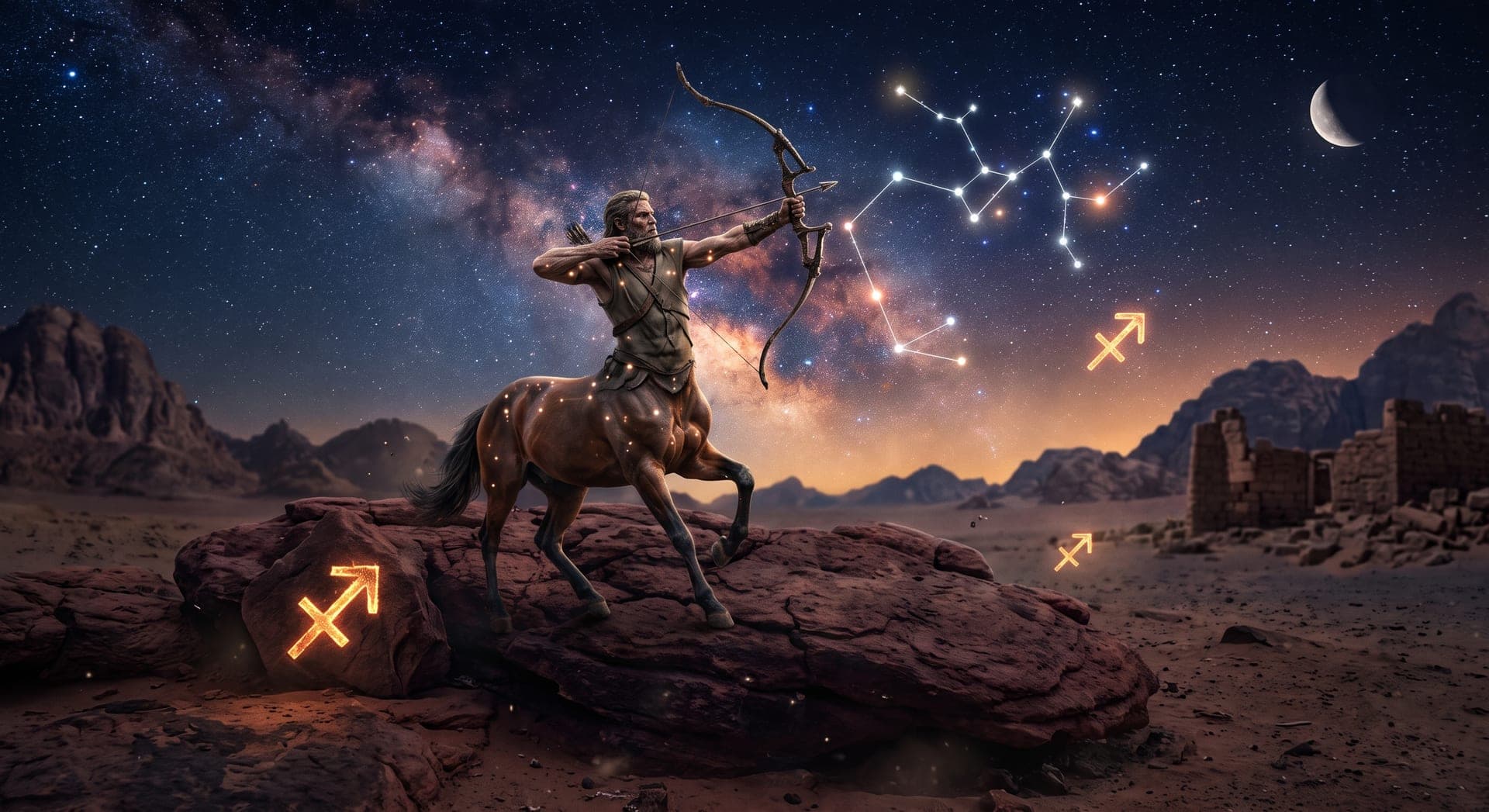
Born on December 8: Sagittarius ♐
Sagittarius, the ninth sign of the zodiac, spans November 22 to December 21 and is symbolized by the archer, typically depicted as a centaur drawing a bow, representing a restless pursuit of knowledge, adventure, and far-off horizons. Ruled by Jupiter, the largest planet in the solar system and a symbol of growth, luck, and abundance, Sagittarius is widely regarded as one of the most optimistic and freedom-loving signs of the zodiac. As a Fire sign, Sagittarius approaches life with enthusiasm and a genuine hunger for new experiences, whether through literal travel or intellectual and philosophical exploration. Its Mutable modality reflects a deep aversion to routine and confinement, always looking toward the next adventure rather than settling into fixed patterns. People born under this sign are often drawn to travel, higher education, philosophy, or any pursuit that broadens their horizons and understanding of the world. Sagittarius's honesty and optimism make it excellent company, though its blunt directness and restless need for freedom can sometimes come across as tactless or noncommittal to those seeking more stability.
Personality Traits
Strengths
- Adventurous and open to new experiences
- Optimistic and enthusiastic
- Honest and direct
- Philosophical and broad-minded
- Generous and good-humored
Weaknesses
- Tactlessly blunt
- Impatient with routine
- Prone to overpromising
- Restless and commitment-averse
- Careless with details
Compatible Signs
Fun Facts
- Sagittarius's symbol, a centaur drawing a bow and arrow, connects to the Greek myth of Chiron, a wise and scholarly centaur unlike the more unruly members of his kind.
- Jupiter, Sagittarius' ruling planet, is the largest planet in the solar system, reflecting the sign's association with expansion, abundance, and big-picture thinking.
- Sagittarius is one of two zodiac signs, along with Capricorn, represented by a hybrid creature combining human and animal features.
- Notable Sagittarians include Taylor Swift, Walt Disney, Winston Churchill, and Jimi Hendrix.
- Sagittarius season spans the lead-up to the winter solstice, a period historically associated with travel, feasting, and philosophical reflection in many cultures.
Born on December 8
- 1542
Mary, Queen of Scots
Queen of Scotland from infancy, whose turbulent reign, forced abdication, and eventual execution by her cousin Elizabeth I make her one of the most dramatic figures in British royal history.
- 1765
Eli Whitney
American inventor of the cotton gin
- 1865
Jean Sibelius
Finnish composer known for "Finlandia"
- 1886
Diego Rivera
Mexican muralist painter
- 1922
Lucian Freud
German-born British painter, grandson of Sigmund Freud, celebrated for intensely observed figurative portraits and regarded as one of the greatest British artists of the 20th century.
- 1925
Sammy Davis Jr.
American entertainer, singer, and dancer
- 1939
James Galway
Northern Irish flautist known as 'The Man with the Golden Flute', one of the world's leading classical flute soloists.
- 1941
Geoff Hurst
English footballer who scored a hat-trick in the 1966 World Cup final, the only player ever to do so in a World Cup final, helping England to its only World Cup title.
- 1943
Jim Morrison
American singer-songwriter and lead vocalist of The Doors
- 1951
Bill Bryson
American travel and science writer
- 1965
David Harewood
English actor known for his roles in Homeland and as Martian Manhunter in the Supergirl television series, and a prominent advocate for diversity in British theatre and television.
- 1982
Nicki Minaj
Trinidadian-American rapper
- 1986
Amir Khan
English boxer who won a silver medal at the 2004 Olympics as a teenager before becoming a world light-welterweight champion.
- 1994
Raheem Sterling
English footballer who has starred for Manchester City, Chelsea, and the England national team, known for his pace and a prominent voice against racism in football.
- 1996
Scott McTominay
Scottish footballer who rose through Manchester United's academy before becoming a key midfielder for Napoli and the Scotland national team.

On This Day in History
- 877
Louis the Stammerer is crowned ruler of the West Frankish Kingdom at Compiègne following his father Charles the Bald's death.
Louis the Stammerer's coronation followed the death of his father Charles the Bald, who had ruled the West Frankish Kingdom during a turbulent period marked by Viking raids and internal power struggles among Carolingian nobility. His own brief reign, lasting less than two years, would prove similarly troubled, part of a broader pattern of instability that characterized the declining Carolingian Empire in the late ninth century.
- 1660
A woman performs publicly on the English stage for the first time, playing Desdemona in a production of Othello.
The performer's identity is debated by theatre historians, with Margaret Hughes often cited. The appearance came soon after King Charles II's restoration lifted the ban on women appearing in public theatre, ending the earlier practice of boy actors playing female roles and transforming English drama.
- 1854
Pope Pius IX proclaims the Immaculate Conception as official Catholic doctrine.
The doctrine of the Immaculate Conception holds that the Virgin Mary was conceived free from original sin, a belief that had been debated within Catholic theology for centuries before Pope Pius IX formally declared it dogma. The proclamation, made through the apostolic constitution Ineffabilis Deus, remains binding Catholic doctrine and is commemorated annually as a holy day.
- 1854
Pope Pius IX proclaims the dogma of the Immaculate Conception, declaring that the Virgin Mary was conceived without original sin.
The declaration, made in the papal bull Ineffabilis Deus, formalised a belief that had circulated in Catholic theology for centuries but had never before been defined as binding church doctrine. It remains one of only a small number of infallible papal pronouncements in the history of the Catholic Church.
- 1907
Gustaf V ascends to Sweden's throne, beginning a reign that would last more than four decades.
Gustaf V's accession to the Swedish throne began a reign spanning both World Wars, during which Sweden maintained its long-standing policy of neutrality. His nearly 43-year reign, one of the longest in Swedish history, oversaw significant modernization of the country even as he navigated the immense political pressures of surrounding European conflicts.
- 1914
Britain's Royal Navy defeats the German East Asia Squadron at the Battle of the Falkland Islands.
The Battle of the Falkland Islands saw a British naval squadron, hastily dispatched after an earlier defeat, decisively destroy the German East Asia Squadron that had been raiding Allied shipping in the Pacific and South Atlantic. The victory eliminated a significant threat to British commerce and effectively ended major German surface naval operations outside European waters during the war's early phase.
- 1914
The Royal Navy destroys the German East Asia Squadron at the Battle of the Falkland Islands.
A British force under Vice-Admiral Doveton Sturdee, including the battlecruisers Invincible and Inflexible, intercepted and sank most of Admiral Maximilian von Spee's squadron. The victory avenged Britain's defeat at the Battle of Coronel five weeks earlier and secured British naval dominance in the South Atlantic and Pacific for the rest of the war.
- 1922
The government of the new Irish Free State executes four anti-treaty IRA leaders in reprisal for the killing of a pro-treaty parliamentarian.
The executions, carried out without trial during the Irish Civil War, targeted prominent republican figures including Rory O'Connor and were intended to deter further attacks on Free State officials. The harsh reprisal policy deepened the bitterness of a civil war fought between former allies who had fought together against British rule just a year earlier.
- 1941
The U.S. Congress declares war on Japan, one day after the attack on Pearl Harbor.
The U.S. declaration of war against Japan, requested by President Roosevelt and passed by Congress with only a single dissenting vote, formally brought America into World War II following the devastating attack on Pearl Harbor. The declaration set in motion a massive mobilization of American industry and manpower that would prove decisive in the eventual Allied victory.
- 1941
Japanese forces launch near-simultaneous invasions across Southeast Asia, including attacks on British Malaya and Hong Kong, bringing Britain into the Pacific War.
Coming within hours of the attack on Pearl Harbor, the assaults caught British and Commonwealth forces largely unprepared. The fall of Hong Kong, and weeks later Singapore, ranked among the most humiliating defeats in British military history and accelerated the decline of British imperial power in Asia.
- 1941
U.S. President Franklin D. Roosevelt addresses Congress, calling December 7 'a date which will live in infamy' as the United States declares war on Japan.
Delivered the day after the attack on Pearl Harbor, the speech rallied American public opinion behind entry into the Second World War with near-unanimous congressional support. Its opening line became one of the most quoted phrases in American political history.
- 1974
Greek voters abolish the monarchy through a national referendum, establishing a republican government.
The Greek referendum on the monarchy came amid the country's transition to democracy following the collapse of a military junta that had ruled since 1967. Voters decisively rejected the restoration of King Constantine II, establishing the Third Hellenic Republic and ending centuries of monarchical rule in Greece.
- 1974
Greek voters choose in a national referendum to abolish the monarchy and establish a republic.
The vote followed the collapse of the military junta that had ruled Greece since 1967 and exiled King Constantine II's earlier support for a failed counter-coup. With roughly 69 percent voting against restoring the monarchy, Greece became a parliamentary republic, a status that has remained unchanged since.
- 1980
Musician John Lennon is murdered outside his residence at The Dakota in New York City.
John Lennon was shot by Mark David Chapman, a man who had earlier obtained the former Beatle's autograph outside the same building, as Lennon returned home from a recording session. His murder shocked the world and remains one of the most notorious celebrity killings in modern history, cutting short the career of one of popular music's most influential figures.
- 1980
Former Beatle John Lennon is shot and killed outside his home at The Dakota in New York City.
The Liverpool-born singer-songwriter had co-founded the Beatles, the most influential British band of the twentieth century, before pursuing a solo career centred on peace activism. His murder by Mark David Chapman shocked the world and remains one of music history's most notorious tragedies.
- 1987
Reagan and Gorbachev sign the Intermediate-Range Nuclear Forces Treaty, reducing Cold War nuclear tensions.
The Intermediate-Range Nuclear Forces Treaty required both the United States and Soviet Union to eliminate an entire category of nuclear and conventional ground-launched missiles, marking the first arms control agreement to actually reduce nuclear arsenals rather than merely limit their growth. The treaty remained in force for over three decades before the United States withdrew in 2019 citing Russian violations.
- 1987
U.S. President Ronald Reagan and Soviet leader Mikhail Gorbachev sign the Intermediate-Range Nuclear Forces Treaty in Washington.
The landmark agreement eliminated an entire class of nuclear and conventional ground-launched ballistic and cruise missiles, backed by an intrusive verification regime. It marked a major thaw in Cold War tensions, though the United States formally withdrew from the treaty in 2019 citing Russian violations.
- 1991
Leaders of Russia, Belarus, and Ukraine sign the Belovezh Accords, formally dissolving the Soviet Union.
The Belovezh Accords, signed by the leaders of Russia, Ukraine, and Belarus at a hunting lodge in Belarus, declared that the Soviet Union had ceased to exist as a subject of international law and established the Commonwealth of Independent States as a loose successor organization. The agreement effectively sealed the fate of the Soviet Union, which would formally dissolve just weeks later.
- 1991
Leaders of Russia, Ukraine and Belarus meet secretly and agree to dissolve the Soviet Union, establishing the Commonwealth of Independent States in its place.
The Belavezha Accords, signed at a hunting lodge in Belarus, declared that the USSR had ceased to exist as a subject of international law, days before Mikhail Gorbachev's formal resignation as Soviet president. The agreement effectively ended nearly seven decades of Soviet rule and reshaped the geopolitical map of Eastern Europe.
- 2010
SpaceX becomes the first private company to launch and successfully recover a spacecraft from orbit.
SpaceX's Dragon capsule became the first commercially built and operated spacecraft to be recovered successfully after reaching orbit, a milestone that demonstrated the viability of private companies conducting orbital spaceflight. The achievement helped pave the way for SpaceX's subsequent contracts to resupply the International Space Station and eventually carry astronauts.