
What’s Observed on December 7
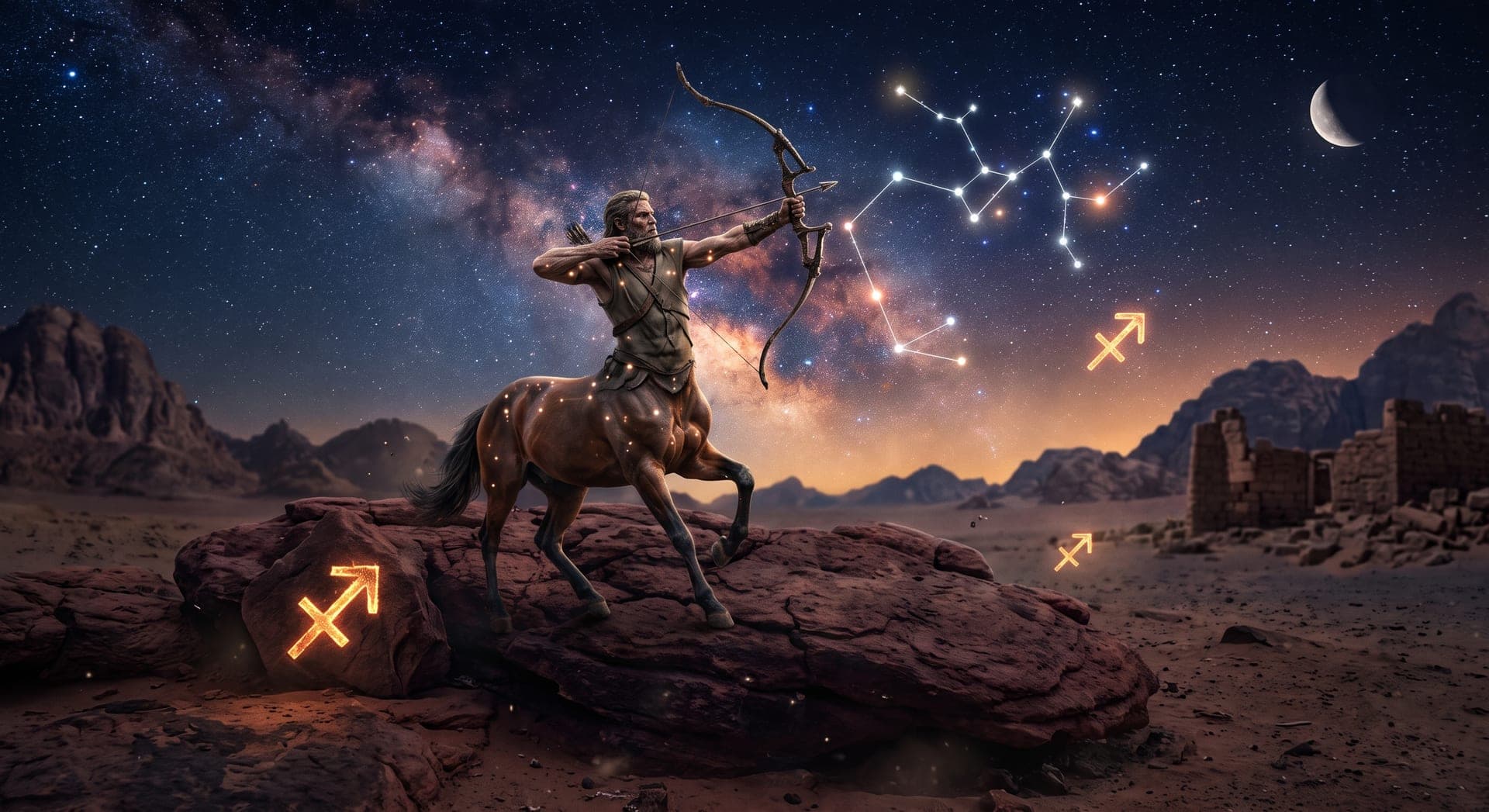
Born on December 7: Sagittarius ♐
Sagittarius, the ninth sign of the zodiac, spans November 22 to December 21 and is symbolized by the archer, typically depicted as a centaur drawing a bow, representing a restless pursuit of knowledge, adventure, and far-off horizons. Ruled by Jupiter, the largest planet in the solar system and a symbol of growth, luck, and abundance, Sagittarius is widely regarded as one of the most optimistic and freedom-loving signs of the zodiac. As a Fire sign, Sagittarius approaches life with enthusiasm and a genuine hunger for new experiences, whether through literal travel or intellectual and philosophical exploration. Its Mutable modality reflects a deep aversion to routine and confinement, always looking toward the next adventure rather than settling into fixed patterns. People born under this sign are often drawn to travel, higher education, philosophy, or any pursuit that broadens their horizons and understanding of the world. Sagittarius's honesty and optimism make it excellent company, though its blunt directness and restless need for freedom can sometimes come across as tactless or noncommittal to those seeking more stability.
Personality Traits
Strengths
- Adventurous and open to new experiences
- Optimistic and enthusiastic
- Honest and direct
- Philosophical and broad-minded
- Generous and good-humored
Weaknesses
- Tactlessly blunt
- Impatient with routine
- Prone to overpromising
- Restless and commitment-averse
- Careless with details
Compatible Signs
Fun Facts
- Sagittarius's symbol, a centaur drawing a bow and arrow, connects to the Greek myth of Chiron, a wise and scholarly centaur unlike the more unruly members of his kind.
- Jupiter, Sagittarius' ruling planet, is the largest planet in the solar system, reflecting the sign's association with expansion, abundance, and big-picture thinking.
- Sagittarius is one of two zodiac signs, along with Capricorn, represented by a hybrid creature combining human and animal features.
- Notable Sagittarians include Taylor Swift, Walt Disney, Winston Churchill, and Jimi Hendrix.
- Sagittarius season spans the lead-up to the winter solstice, a period historically associated with travel, feasting, and philosophical reflection in many cultures.
Born on December 7
- 1545
Henry Stuart, Lord Darnley
Scottish nobleman who became King consort of Scotland through his marriage to Mary, Queen of Scots; his murder in 1567 remains one of the great unsolved scandals of Scottish royal history.
- 1598
Gian Lorenzo Bernini
Italian Baroque sculptor and architect
- 1823
Leopold Kronecker
German mathematician known for work in number theory
- 1863
Pietro Mascagni
Italian opera composer
- 1873
Willa Cather
American novelist known for depictions of frontier life
- 1888
Joyce Cary
British novelist celebrated for The Horse's Mouth and other works exploring artistic freedom and individualism, regarded as a significant figure in twentieth-century English literature.
- 1910
Louis Prima
American singer, trumpeter, and bandleader
- 1915
Eli Wallach
American film and stage actor
- 1947
Anne Fine
English author of children's and young-adult fiction, twice winner of the Carnegie Medal, best known for Madame Doubtfire, later adapted into the film Mrs. Doubtfire.
- 1962
Jeffrey Donaldson
Northern Irish politician and longtime leader of the Democratic Unionist Party, a central figure in Stormont politics and the Northern Ireland peace process.
- 1972
Hermann Maier
Austrian World Cup-winning alpine skier
- 1977
Luke Donald
English professional golfer who reached world number one and later captained Europe's victorious Ryder Cup teams.
- 1977
Dominic Howard
English drummer and founding member of the rock band Muse.
- 1978
Suzannah Lipscomb
English historian and broadcaster specialising in early modern history, known for presenting popular television documentaries.
- 1980
John Terry
English footballer who captained Chelsea and the England national team, winning multiple Premier League titles and the UEFA Champions League.
- 1994
Yuzuru Hanyu
Japanese figure skater and two-time Olympic champion

On This Day in History
- 43 BCE
Roman statesman Marcus Tullius Cicero is assassinated in Formia on the orders of Marcus Antonius.
Cicero's assassination was ordered by Mark Antony in retaliation for the statesman's scathing public speeches denouncing him, delivered after Julius Caesar's assassination as Cicero attempted to defend the Roman Republic against Antony's growing power. His severed head and hands were displayed in the Roman Forum, a brutal warning against future political opposition that nonetheless failed to prevent the republic's collapse.
- 1703
The Great Storm devastates southern Britain with winds exceeding 120 mph, killing an estimated 9,000 people.
The Great Storm of 1703 remains one of the most violent windstorms ever recorded in British history, destroying thousands of homes, sinking hundreds of ships, and even damaging the roof of Westminster Abbey. Daniel Defoe, who later wrote Robinson Crusoe, published a detailed account of the disaster titled "The Storm," considered one of the earliest examples of modern journalism.
- 1703
The Great Storm of 1703 strikes southern Great Britain, killing an estimated 9,000 people in one of the most destructive storms in British history.
Winds reaching hurricane force devastated the English south coast, sinking ships, flattening thousands of homes, and destroying much of the newly built Eddystone Lighthouse with its designer still inside. Daniel Defoe, who witnessed the storm, later published a detailed account, The Storm, drawing on eyewitness testimony from across the country.
- 1732
The theatre that will become the Royal Opera House opens at Covent Garden in London.
Built by theatre manager John Rich using profits from the hit production of The Beggar's Opera, the playhouse staged drama, opera, and ballet for the next two centuries. Rebuilt twice after fires, it evolved into one of the world's leading opera and ballet venues, still home to the Royal Opera and Royal Ballet today.
- 1787
Delaware becomes the first state to ratify the U.S. Constitution.
Delaware's rapid unanimous ratification of the Constitution, achieved without significant debate, earned it the enduring nickname "The First State." The small state's quick action reflected its economic dependence on ratification by larger neighboring states and helped build early momentum toward the nine-state threshold needed for the Constitution to take effect.
- 1904
Fuel trials pit the Royal Navy destroyers HMS Spiteful and HMS Peterel against each other, demonstrating the advantages of oil over coal-fired propulsion.
Spiteful, running on oil, decisively outperformed the coal-burning Peterel in speed and endurance. The trials helped persuade the Admiralty to begin converting the Royal Navy's fleet to oil power in the years before the First World War, a shift with major strategic consequences for Britain.
- 1917
The United States declares war against Austria-Hungary during World War I.
The U.S. declaration of war against Austria-Hungary came several months after America's initial entry into World War I against Germany, reflecting the more limited direct conflict between American and Austro-Hungarian forces. The declaration formally aligned the United States against all the Central Powers, though American troops saw comparatively little direct combat against Austro-Hungarian forces specifically.
- 1922
The Parliament of Northern Ireland votes to exercise its right under the Anglo-Irish Treaty to opt out of the newly formed Irish Free State and remain part of the United Kingdom.
The vote came the day after the Irish Free State formally came into being, confirming the partition of Ireland anticipated in the treaty signed in London the previous December. Northern Ireland retained its own devolved parliament at Stormont while remaining under the British Crown, a settlement that shaped Anglo-Irish relations for the rest of the twentieth century.
- 1941
The Imperial Japanese Navy launches a surprise attack on the U.S. Pacific Fleet at Pearl Harbor, Hawaii.
The surprise attack on Pearl Harbor, launched without a prior declaration of war, destroyed or damaged numerous American battleships and killed over 2,400 people in under two hours. President Roosevelt's request for a declaration of war the following day, describing the date as one that would "live in infamy," brought the United States fully into World War II.
- 1941
The Imperial Japanese Navy launches a surprise attack on the United States naval base at Pearl Harbor, Hawaii.
The assault sank or damaged eight U.S. Navy battleships and killed more than 2,400 Americans, prompting the United States to declare war on Japan the following day and enter the Second World War. Within days, Germany and Italy declared war on the U.S., turning the conflict fully global.
- 1942
British Royal Marine commandos launch Operation Frankton, paddling canoes up the Gironde estuary to attack German shipping in Bordeaux harbour.
Of the ten men, known afterwards as the 'Cockleshell Heroes', who set out in five canoes, only two survived to complete the raid and return to Britain via Spain. Their mission damaged several ships and was later praised by Lord Mountbatten as having possibly shortened the war, inspiring the 1955 film Cockleshell Heroes.
- 1972
Apollo 17 launches as NASA's final crewed lunar mission, its crew capturing the iconic "Blue Marble" photograph of Earth.
Apollo 17's overnight launch, the only nighttime liftoff of the Apollo program, illuminated the Florida sky and was visible for hundreds of miles. During the mission, astronaut Harrison Schmitt, the first professional geologist to visit the Moon, and commander Eugene Cernan collected the largest sample of lunar material returned by any Apollo mission.
- 1972
Apollo 17 launches from Cape Canaveral, the final crewed mission of NASA's Apollo lunar program.
The mission's crew, including geologist Harrison Schmitt, spent three days on the lunar surface conducting the most extensive scientific exploration of any Apollo landing, and captured the famous 'Blue Marble' photograph of Earth en route. No human has returned to the Moon since the mission's conclusion.
- 1982
Charles Brooks Jr. becomes the first person executed by lethal injection in the United States.
Charles Brooks Jr.'s execution by lethal injection introduced a method that Texas had adopted as a purportedly more humane alternative to the electric chair and gas chamber. Lethal injection subsequently became the predominant execution method used across the United States, though it has faced ongoing legal and ethical challenges regarding drug sourcing and potential suffering.
- 1988
A devastating 6.8 magnitude earthquake strikes Armenia, killing between 25,000 and 50,000 people.
The Spitak earthquake struck northern Armenia with such force that it leveled entire towns built with substandard Soviet-era construction, exposing serious deficiencies in building codes across the region. The disaster prompted an unprecedented opening of Soviet borders to international humanitarian aid, a significant departure from the USSR's typically closed approach to foreign assistance.
- 1988
A magnitude 6.8 earthquake devastates northern Armenia, killing tens of thousands of people.
The quake flattened the cities of Spitak, Leninakan, and Kirovakan within seconds, overwhelming poorly constructed Soviet-era apartment blocks and leaving hundreds of thousands homeless. The disaster prompted an unprecedented international relief effort during the late Soviet period and remains one of the deadliest earthquakes of the 20th century.
- 1995
NASA's Galileo spacecraft arrives at Jupiter after a six-year journey.
Galileo's arrival at Jupiter marked the beginning of an eight-year mission that would dramatically expand scientific understanding of the gas giant and its moons, including strong evidence for a subsurface ocean on Europa that could potentially harbor life. The spacecraft also released an atmospheric probe that provided the first direct measurements of Jupiter's dense atmosphere.
- 1995
NASA's Galileo spacecraft arrives at Jupiter, beginning an eight-year mission to study the planet and its moons.
The spacecraft released a probe that plunged into Jupiter's atmosphere to gather direct data before being crushed by immense pressure, while the orbiter went on to make key discoveries about the planet's moons, including strong evidence of a subsurface ocean on Europa. The mission concluded in 2003 when Galileo was deliberately crashed into Jupiter.
- 2015
Japan's Akatsuki probe successfully enters orbit around Venus after an initial failed attempt five years earlier.
Japan's Akatsuki probe had failed its initial orbital insertion attempt at Venus in 2010 due to an engine malfunction, forcing it to spend five additional years orbiting the sun before mission controllers successfully maneuvered it into Venus orbit using its smaller attitude control thrusters. The eventual success made it the first Japanese spacecraft to successfully orbit another planet.
- 2025
British driver Lando Norris clinches the Formula One World Drivers' Championship with McLaren.
Norris, from Bristol, secured the title after a closely fought season against his rivals, delivering the historic Woking-based team's first Drivers' Championship in years and marking a high point in modern British motorsport.