
What’s Observed on December 20
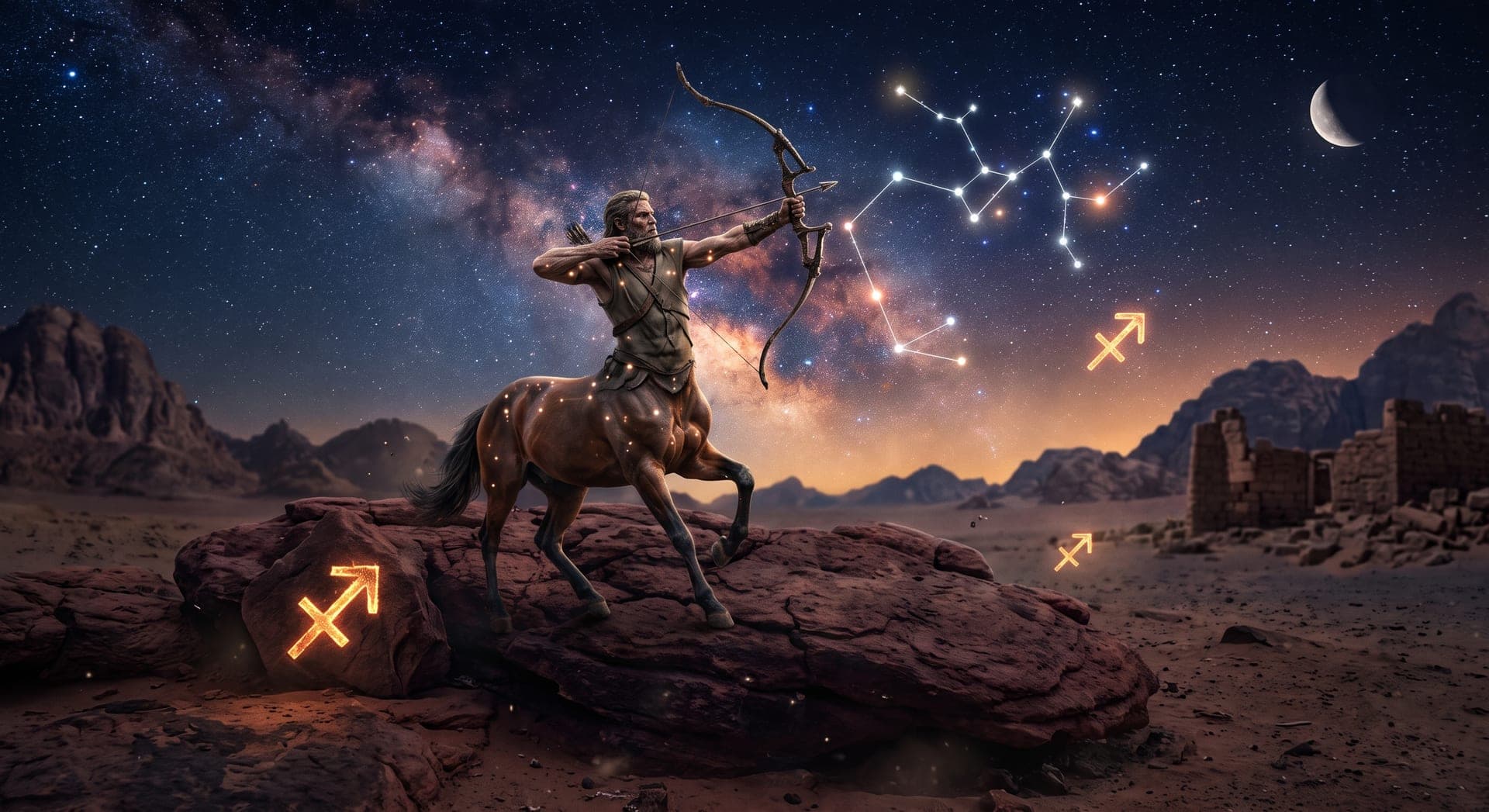
Born on December 20: Sagittarius ♐
Sagittarius, the ninth sign of the zodiac, spans November 22 to December 21 and is symbolized by the archer, typically depicted as a centaur drawing a bow, representing a restless pursuit of knowledge, adventure, and far-off horizons. Ruled by Jupiter, the largest planet in the solar system and a symbol of growth, luck, and abundance, Sagittarius is widely regarded as one of the most optimistic and freedom-loving signs of the zodiac. As a Fire sign, Sagittarius approaches life with enthusiasm and a genuine hunger for new experiences, whether through literal travel or intellectual and philosophical exploration. Its Mutable modality reflects a deep aversion to routine and confinement, always looking toward the next adventure rather than settling into fixed patterns. People born under this sign are often drawn to travel, higher education, philosophy, or any pursuit that broadens their horizons and understanding of the world. Sagittarius's honesty and optimism make it excellent company, though its blunt directness and restless need for freedom can sometimes come across as tactless or noncommittal to those seeking more stability.
Personality Traits
Strengths
- Adventurous and open to new experiences
- Optimistic and enthusiastic
- Honest and direct
- Philosophical and broad-minded
- Generous and good-humored
Weaknesses
- Tactlessly blunt
- Impatient with routine
- Prone to overpromising
- Restless and commitment-averse
- Careless with details
Compatible Signs
Fun Facts
- Sagittarius's symbol, a centaur drawing a bow and arrow, connects to the Greek myth of Chiron, a wise and scholarly centaur unlike the more unruly members of his kind.
- Jupiter, Sagittarius' ruling planet, is the largest planet in the solar system, reflecting the sign's association with expansion, abundance, and big-picture thinking.
- Sagittarius is one of two zodiac signs, along with Capricorn, represented by a hybrid creature combining human and animal features.
- Notable Sagittarians include Taylor Swift, Walt Disney, Winston Churchill, and Jimi Hendrix.
- Sagittarius season spans the lead-up to the winter solstice, a period historically associated with travel, feasting, and philosophical reflection in many cultures.
Born on December 20
- 1838
Edwin Abbott Abbott
English schoolmaster and theologian best remembered for Flatland, his witty satirical novella imagining a two-dimensional world, still read as a classic of mathematical fiction.
- 1868
Harvey Samuel Firestone
American businessman who founded Firestone Tire and Rubber Company
- 1894
Robert Menzies
12th Prime Minister of Australia
- 1898
Irene Dunne
American actress and singer
- 1902
Prince George, Duke of Kent
Son of King George V and younger brother of Kings Edward VIII and George VI, who served in the Royal Air Force and died in a wartime air crash in Scotland in 1942.
- 1917
David Bohm
American theoretical physicist
- 1921
George Roy Hill
American film director
- 1926
Geoffrey Howe
Welsh-born British politician who served as Chancellor of the Exchequer and Foreign Secretary under Margaret Thatcher; his resignation speech in 1990 helped precipitate her downfall.
- 1946
Uri Geller
Israeli entertainer known for illusion performances
- 1952
Jenny Agutter
English actress known for The Railway Children and Logan's Run, and for a screen career spanning more than five decades.
- 1957
Billy Bragg
English singer-songwriter blending punk energy with folk and political protest song, known for albums like Life's a Riot with Spy Vs Spy and his outspoken left-wing activism.
- 1969
Alain de Botton
Swiss-born British philosopher and author known for popularising philosophy for general readers through books like The Consolations of Philosophy and his founding of The School of Life.
- 1980
Ashley Cole
English footballer who won multiple Premier League titles and the Champions League as a left-back for Arsenal and Chelsea, and earned over 100 England caps.
- 1998
Kylian Mbappé
French professional footballer

On This Day in History
- 1192
English King Richard I is captured and imprisoned by Duke Leopold V of Austria while returning from the Third Crusade.
Richard I's capture by Duke Leopold V, who bore a personal grudge against the English king from an earlier dispute during the Third Crusade, led to Richard's lengthy imprisonment and an enormous ransom demand that placed severe financial strain on England. His mother, Eleanor of Aquitaine, played a crucial role in raising the ransom and eventually securing his release over a year later.
- 1192
Richard I of England was captured and imprisoned by Duke Leopold V of Austria while returning home from the Third Crusade.
Travelling in disguise through hostile territory after the crusade ended, Richard was recognised and seized near Vienna, reportedly in revenge for an earlier slight during the siege of Acre. Leopold handed him to Emperor Henry VI, who demanded a ransom of 150,000 marks, worth roughly 100,000 pounds of silver and several times the crown's annual income, before Richard was finally released more than a year later.
- 1606
Three ships depart England carrying settlers who would go on to establish Jamestown, Virginia.
The three ships carrying English settlers toward Virginia endured a difficult months-long Atlantic crossing before establishing Jamestown the following spring, which would become the first permanent English settlement in North America. The colony's early years proved extraordinarily difficult, marked by disease, starvation, and conflict with neighboring Indigenous peoples.
- 1803
The Louisiana Purchase is formally completed at a ceremony in New Orleans, doubling the size of the United States.
The Louisiana Purchase's formal completion, transferring the vast territory from France to the United States for roughly $15 million, effectively doubled the size of the young nation and opened enormous lands for westward American expansion. The acquisition, negotiated under President Jefferson despite his own constitutional reservations about executive authority, is considered one of the most consequential land transactions in American history.
- 1803
The Louisiana Purchase was formally completed at a ceremony in New Orleans, transferring the territory from France to the United States.
The transfer ceremony marked the culmination of a deal in which the United States paid France roughly $15 million for over 800,000 square miles of territory, doubling the young nation's size overnight. Negotiated by American envoys with Napoleon Bonaparte, who needed funds for war in Europe, the purchase opened the American West to settlement and became one of the most consequential land deals in history.
- 1832
HMS Clio arrived at Port Egmont under orders to take possession of the Falkland Islands for Britain.
Commanded by Captain John James Onslow, the ship's arrival followed the collapse of an Argentine-backed settlement after its garrison mutinied. Onslow's mission paved the way for Britain to formally reassert control over the islands weeks later, in January 1833, establishing a continuous British presence that has persisted, with Argentina's rival claim unresolved, to the present day.
- 1860
South Carolina becomes the first state to formally secede from the United States.
South Carolina's secession, adopted unanimously by a state convention in response to Abraham Lincoln's election, cited the perceived threat to slavery as its primary justification and formally began the process that would lead to the formation of the Confederacy. Ten additional Southern states would follow South Carolina's lead within the following months, precipitating the Civil War.
- 1915
The final Australian and New Zealand troops evacuate from Gallipoli during World War I.
The evacuation of remaining Australian and New Zealand troops from Gallipoli concluded a disastrous eight-month campaign that had failed to achieve its strategic objectives against Ottoman forces, resulting in enormous casualties on both sides. Despite the military failure, the campaign holds profound significance in Australian and New Zealand national identity, commemorated annually through ANZAC Day.
- 1915
The last Australian troops were evacuated from the Gallipoli peninsula, ending the disastrous Allied campaign.
After eight months of brutal stalemate against Ottoman defenders, Allied commanders finally abandoned the campaign, conducting a remarkably successful nighttime withdrawal that avoided the casualties of the earlier landings. The Gallipoli campaign, aimed at knocking the Ottoman Empire out of the war, instead became a costly failure that left a deep and lasting mark on Australian and New Zealand national identity.
- 1940
Captain America Comics #1, containing the first appearance of the superhero, is published.
Captain America's debut, published by Timely Comics, notably depicted the patriotic superhero punching Adolf Hitler on its cover nearly a year before the United States formally entered World War II, reflecting strong anti-Nazi sentiment among the comic's Jewish creators. The character became enormously popular during the war and has remained one of the most enduring figures in American comic book history.
- 1951
The EBR-I reactor in Idaho becomes the first nuclear reactor to generate usable electricity.
The EBR-I reactor's generation of usable electricity, powering just four light bulbs in its initial demonstration, marked the first time nuclear energy had been successfully harnessed for practical electrical power generation. The modest achievement launched the era of nuclear power, which would grow within decades into a major source of electricity generation worldwide.
- 1955
The UK government announced it would recognize Cardiff as the capital city of Wales.
Responding to a question in the House of Commons, Home Secretary Gwilym Lloyd George said that, given strong support in Wales, the government would treat Cardiff as the national capital, though the designation required no formal ceremony. Although Cardiff had long been Wales's largest city, built on its Victorian-era coal export trade, it had never before held official capital status.
- 1973
Spanish Prime Minister Luis Carrero Blanco is assassinated by an ETA car bomb in Madrid.
Admiral Luis Carrero Blanco's assassination by the Basque separatist group ETA, achieved through a massive bomb that launched his car over a building, eliminated Spanish dictator Francisco Franco's chosen successor and intended continuation of authoritarian rule. His death significantly altered the course of Spain's eventual transition to democracy following Franco's own death less than two years later.
- 1984
A freight train derailment sparked one of the largest transport tunnel fires in history inside the Summit Tunnel in the Pennines.
The train, carrying more than a million litres of petrol, derailed and caught fire inside the Victorian-era tunnel near Todmorden, England, sending flames and smoke through ventilation shafts for days. Remarkably no one was killed, thanks to swift evacuation, though the tunnel was severely damaged and required extensive rebuilding before reopening years later.
- 1987
The passenger ferry Doña Paz sinks after colliding with an oil tanker in the Philippines, killing an estimated 4,000 people.
The sinking of the Doña Paz, following its collision with an oil tanker that ignited the surrounding water with spilled fuel, ranks among the deadliest peacetime maritime disasters in history, with an estimated death toll exceeding even the Titanic. Severe overcrowding aboard the passenger ferry, far beyond its official capacity, significantly contributed to the catastrophic loss of life.
- 1987
The passenger ferry Doña Paz sank after colliding with an oil tanker in the Philippines, killing an estimated 4,000 people.
The overcrowded ferry, packed with passengers travelling home for Christmas, collided with the tanker MT Vector in the Tablas Strait, and the resulting fire and sinking killed nearly everyone aboard both vessels. With a death toll far exceeding official capacity limits, it is remembered as the deadliest peacetime maritime disaster in history, dwarfing even the Titanic in scale of loss of life.
- 1999
Portugal transfers sovereignty of Macau to China, ending centuries of Portuguese colonial rule.
Macau's handover from Portugal to China concluded the last remaining European colonial territory in Asia, following Hong Kong's similar handover from Britain two years earlier. Like Hong Kong, Macau was granted a "one country, two systems" arrangement guaranteeing its distinct legal and economic framework would continue for fifty years following the transfer.
- 1999
Portugal formally handed Macau back to China, ending more than four centuries of Portuguese colonial rule.
The handover ceremony transferred sovereignty over the small peninsula, one of the last remaining European colonies in Asia, under a 'one country, two systems' arrangement similar to Hong Kong's, guaranteeing Macau a high degree of autonomy for fifty years. The transfer closed the final chapter of Portugal's centuries-old seaborne empire in the East.
- 2004
Thieves stole £26.5 million from the Northern Bank's headquarters in Belfast, one of the largest bank robberies in British history.
The gang took bank employees' families hostage overnight to coerce staff into helping empty the vault at the Donegall Square West headquarters. Police and politicians suspected the Provisional IRA of orchestrating the raid, an allegation the organisation denied, and the fallout badly damaged Sinn Féin's standing in the peace process. Much of the stolen currency was later withdrawn from circulation.
- 2007
Queen Elizabeth II became the oldest monarch in the history of the United Kingdom, surpassing Queen Victoria.
Elizabeth passed the record set by her great-great-grandmother Victoria, who lived to 81 years and 243 days. Elizabeth went on to become Britain's longest-reigning monarch in 2015 and lived until the age of 96, remaining on the throne until her death in September 2022 after more than seventy years as queen.
- 2019
The United States Space Force is established as the first new branch of the U.S. Armed Forces since 1947.
The establishment of the United States Space Force as a separate military branch reflected growing recognition of space as a critical domain for national security, addressing threats ranging from satellite warfare to space-based communications disruption. It represented the first entirely new branch of the U.S. Armed Forces created since the Air Force's establishment in 1947.