
What’s Observed on December 10
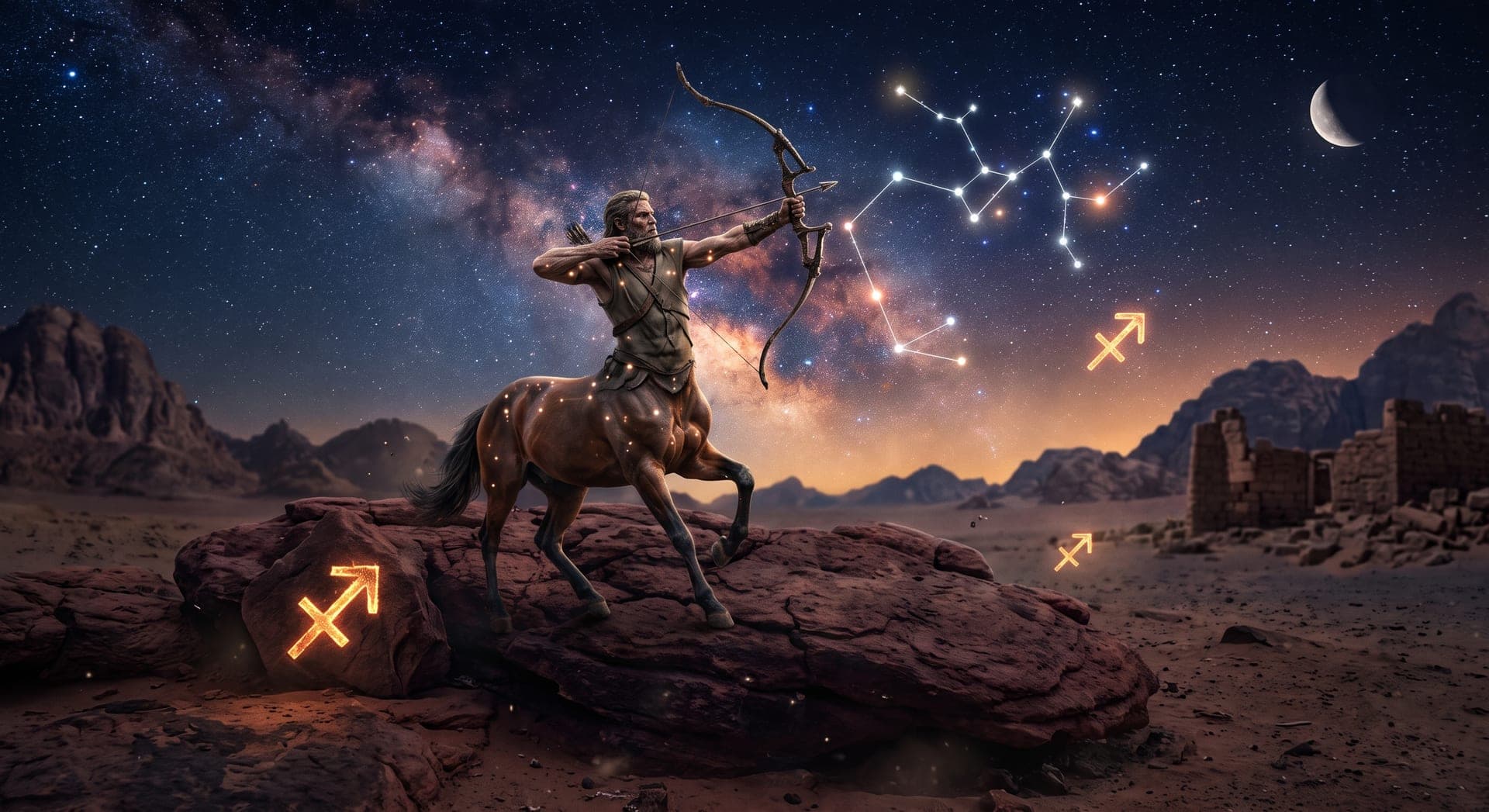
Born on December 10: Sagittarius ♐
Sagittarius, the ninth sign of the zodiac, spans November 22 to December 21 and is symbolized by the archer, typically depicted as a centaur drawing a bow, representing a restless pursuit of knowledge, adventure, and far-off horizons. Ruled by Jupiter, the largest planet in the solar system and a symbol of growth, luck, and abundance, Sagittarius is widely regarded as one of the most optimistic and freedom-loving signs of the zodiac. As a Fire sign, Sagittarius approaches life with enthusiasm and a genuine hunger for new experiences, whether through literal travel or intellectual and philosophical exploration. Its Mutable modality reflects a deep aversion to routine and confinement, always looking toward the next adventure rather than settling into fixed patterns. People born under this sign are often drawn to travel, higher education, philosophy, or any pursuit that broadens their horizons and understanding of the world. Sagittarius's honesty and optimism make it excellent company, though its blunt directness and restless need for freedom can sometimes come across as tactless or noncommittal to those seeking more stability.
Personality Traits
Strengths
- Adventurous and open to new experiences
- Optimistic and enthusiastic
- Honest and direct
- Philosophical and broad-minded
- Generous and good-humored
Weaknesses
- Tactlessly blunt
- Impatient with routine
- Prone to overpromising
- Restless and commitment-averse
- Careless with details
Compatible Signs
Fun Facts
- Sagittarius's symbol, a centaur drawing a bow and arrow, connects to the Greek myth of Chiron, a wise and scholarly centaur unlike the more unruly members of his kind.
- Jupiter, Sagittarius' ruling planet, is the largest planet in the solar system, reflecting the sign's association with expansion, abundance, and big-picture thinking.
- Sagittarius is one of two zodiac signs, along with Capricorn, represented by a hybrid creature combining human and animal features.
- Notable Sagittarians include Taylor Swift, Walt Disney, Winston Churchill, and Jimi Hendrix.
- Sagittarius season spans the lead-up to the winter solstice, a period historically associated with travel, feasting, and philosophical reflection in many cultures.
Born on December 10
- 1815
Ada Lovelace
English mathematician who worked with Charles Babbage on his proposed Analytical Engine and wrote what is considered the first algorithm intended for a machine, earning recognition as a pioneer of computer science.
- 1824
George MacDonald
Scottish minister and author whose fantasy novels, including Phantastes and The Princess and the Goblin, influenced writers such as C. S. Lewis and J. R. R. Tolkien.
- 1830
Emily Dickinson
American poet
- 1851
Melvil Dewey
American librarian who created the Dewey Decimal System
- 1891
Harold Alexander
English field marshal who commanded Allied forces in the Mediterranean during the Second World War and later served as Governor General of Canada.
- 1939
Barry Cunliffe
English archaeologist and academic, a leading authority on Iron Age Britain and Roman Britain and a long-serving professor at Oxford University.
- 1942
Ann Gloag
Scottish businesswoman who co-founded the Stagecoach Group bus and rail company, becoming one of Britain's most prominent self-made entrepreneurs.
- 1944
John Birt
English broadcasting executive who served as Director-General of the BBC through the 1990s, overseeing major reforms to the corporation's news operations.
- 1949
Yasmin Alibhai-Brown
British journalist and author, born in Uganda, known for her columns on immigration, race, and multiculturalism in the British press.
- 1960
Kenneth Branagh
British actor and director celebrated for his stage and screen adaptations of Shakespeare, including Henry V and Hamlet.
- 1964
Bobby Flay
American celebrity chef
- 1985
Raven-Symoné
American actress and singer
- 1996
Joe Burrow
American football quarterback

On This Day in History
- 1508
Pope Julius II and European monarchs establish the League of Cambrai, a military alliance targeting Venice.
The League of Cambrai united an unlikely coalition of the Papacy, France, the Holy Roman Empire, and Spain against the Republic of Venice, whose growing territorial power on the Italian mainland had alarmed its neighbors. Though initially successful, the alliance soon fractured as its members' competing ambitions proved incompatible, and Venice ultimately recovered most of its lost territory within a few years.
- 1520
Martin Luther publicly burns a papal bull outside Wittenberg, escalating his conflict with the Catholic Church.
Martin Luther's public burning of the papal bull threatening his excommunication, along with copies of canon law, represented an unmistakable act of open defiance against papal authority following his posting of the Ninety-five Theses four years earlier. The dramatic gesture accelerated the irreversible break between Luther's reform movement and the Catholic Church that would become the Protestant Reformation.
- 1541
Two courtiers linked to English Queen Catherine Howard are executed for their affairs with the queen.
The two courtiers, Francis Dereham and Thomas Culpeper, were executed for treason after their affairs with Queen Catherine Howard, King Henry VIII's fifth wife, came to light, exposing her infidelity to the aging king. Catherine herself would be executed at the Tower of London less than two months later, having been convicted on similar charges.
- 1541
Courtiers Thomas Culpeper and Francis Dereham are executed for their affairs with Queen Catherine Howard.
The two men were put to death at Tyburn after being convicted of treasonous relations with Henry VIII's fifth wife. The scandal, uncovered weeks earlier, doomed the young queen herself, who was executed at the Tower of London the following February on the same charge, becoming the second of Henry's wives to lose her head.
- 1652
The Dutch fleet defeats the English navy at the Battle of Dungeness, prompting major naval reforms.
Admiral Maarten Tromp's victory over Robert Blake's outnumbered squadron during the First Anglo-Dutch War exposed serious weaknesses in English naval organization and discipline. The defeat led Parliament to overhaul the fleet's command structure and tactics, producing the Articles of War and Fighting Instructions that shaped Royal Navy doctrine for generations.
- 1684
Isaac Newton presents his mathematical derivation of Kepler's laws of planetary motion to the Royal Society.
The work grew out of a conversation with astronomer Edmond Halley, who had asked Newton what orbital path a planet would follow under an inverse-square gravitational force. Newton's manuscript, De Motu Corporum in Gyrum, laid the groundwork for his masterwork, the Principia Mathematica, published three years later, which established classical mechanics.
- 1768
The first edition of the Encyclopaedia Britannica begins publication in Edinburgh, Scotland.
The Encyclopaedia Britannica began as a modest three-volume work compiled by a group of Edinburgh scholars and printers seeking to create a comprehensive reference work rivaling French encyclopedic efforts of the era. It would grow over subsequent editions into one of the most authoritative and widely referenced general encyclopedias in the English language, remaining in continuous publication for over two centuries.
- 1768
The first edition of the Encyclopædia Britannica is published in Edinburgh.
Produced by a 'Society of Gentlemen in Scotland' and issued in weekly installments before being bound into three volumes, the reference work began as a modest rival to French encyclopedias. It grew into the English-speaking world's most prestigious general encyclopedia, remaining in continuous print for over two centuries before shifting entirely online.
- 1799
France officially adopts the metre as its standard unit of length measurement.
France's adoption of the metre, defined at the time as one ten-millionth of the distance from the North Pole to the equator along a meridian through Paris, represented an Enlightenment-era effort to create a rational, universal system of measurement free from the inconsistent regional standards that had previously prevailed. The metric system would eventually spread worldwide, becoming the international standard for scientific and everyday measurement.
- 1817
Mississippi is admitted to the Union as the 20th U.S. state.
Mississippi's admission as the twentieth state came amid rapid settlement of the Deep South driven by cotton cultivation, a crop whose profitability depended heavily on the labor of enslaved people forcibly brought into the region. The state's economy and society would remain deeply shaped by this plantation system through the Civil War and Reconstruction era that followed decades later.
- 1896
Alfred Jarry's avant-garde play "Ubu Roi" premieres in Paris, sparking audience disturbances.
Alfred Jarry's play "Ubu Roi," a grotesque and absurdist satire of greed and power, provoked chaos among its Paris audience with its opening word alone, a crude scatological exclamation that scandalized theatergoers accustomed to conventional drama. Despite, or perhaps because of, the uproar, the play is now considered a foundational work anticipating both absurdist theater and the surrealist movement.
- 1901
The first Nobel Prize ceremony takes place in Stockholm, honoring Alfred Nobel's legacy on the anniversary of his death.
The first Nobel Prize ceremony, held five years after Alfred Nobel's death per instructions in his will, honored recipients in physics, chemistry, physiology or medicine, literature, and peace. The inaugural ceremony established traditions that continue essentially unchanged today, including the December 10th date chosen specifically to mark the anniversary of Nobel's passing.
- 1907
Around a thousand medical students clash with police in London during the Brown Dog riots.
The unrest was part of a long-running controversy over a memorial statue commemorating a dog killed in an unlicensed vivisection experiment at University College London. Medical students, angered by what they saw as an insult to their profession, repeatedly tried to destroy the statue, prompting mounted police protection and running street battles.
- 1936
King Edward VIII of Britain signs the instrument formalizing his abdication from the throne.
Edward VIII's abdication, prompted by the British government's refusal to accept his intention to marry the twice-divorced American Wallis Simpson, made him the first British monarch to voluntarily give up the throne. His younger brother succeeded him as King George VI, whose reign would guide Britain through World War II and whose daughter Elizabeth II would later become Britain's longest-reigning monarch.
- 1936
King Edward VIII signs the Instrument of Abdication, giving up the British throne.
The King chose to abdicate rather than abandon his plan to marry the twice-divorced American Wallis Simpson, a match the government and Church of England opposed. His younger brother acceded as George VI the following day, and Edward was given the title Duke of Windsor, ending one of the twentieth century's greatest royal crises.
- 1941
Japanese aircraft sink the British warships HMS Prince of Wales and HMS Repulse off Malaya.
The attack, carried out three days after Pearl Harbor, killed over 800 sailors including the fleet commander, Admiral Tom Phillips, and demonstrated decisively that capital ships without air cover were vulnerable to land-based bombers. It was one of the Royal Navy's heaviest wartime losses and shattered British naval prestige in the Pacific.
- 1948
The United Nations General Assembly adopts the Universal Declaration of Human Rights.
The Universal Declaration of Human Rights, drafted by a committee chaired by Eleanor Roosevelt in the aftermath of World War II's atrocities, established a comprehensive framework of civil, political, economic, and social rights intended to apply universally regardless of nationality or status. Though not legally binding itself, the declaration has profoundly shaped subsequent international human rights law and countless national constitutions.
- 1953
Winston Churchill is awarded the Nobel Prize in Literature.
The former and future British Prime Minister was honored 'for his mastery of historical and biographical description as well as for brilliant oratory in defending exalted human values.' Then serving his second term as Prime Minister, Churchill was represented at the Stockholm ceremony by his wife Clementine, who received the prize on his behalf.
- 1963
Zanzibar gains independence from Britain as a constitutional monarchy under its Sultan.
The island archipelago off the East African coast became self-governing after decades as a British protectorate. Independence proved short-lived in its original form: a violent revolution the following month overthrew the Sultan, and in 1964 Zanzibar united with mainland Tanganyika to form the United Republic of Tanzania.
- 1993
The last shift leaves Wearmouth Colliery in Sunderland, ending 156 years of coal mining there.
Once one of the deepest and most productive pits in Britain, Wearmouth's closure was part of the sweeping contraction of the UK coal industry in the early 1990s. Its shutdown symbolized the end of an era for northeast England's mining communities, which had shaped the region's economy and identity for generations.