
What’s Observed on December 11
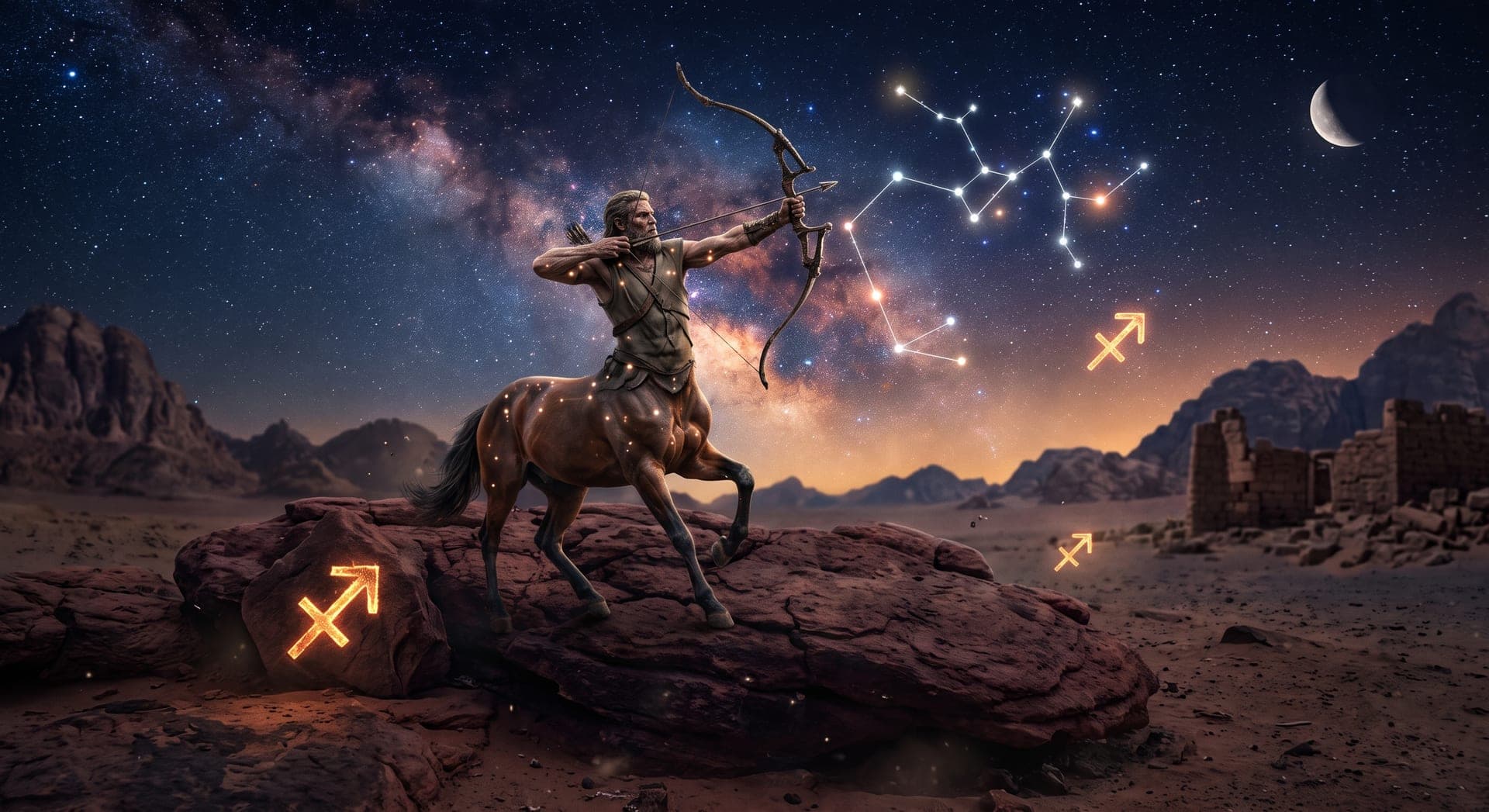
Born on December 11: Sagittarius ♐
Sagittarius, the ninth sign of the zodiac, spans November 22 to December 21 and is symbolized by the archer, typically depicted as a centaur drawing a bow, representing a restless pursuit of knowledge, adventure, and far-off horizons. Ruled by Jupiter, the largest planet in the solar system and a symbol of growth, luck, and abundance, Sagittarius is widely regarded as one of the most optimistic and freedom-loving signs of the zodiac. As a Fire sign, Sagittarius approaches life with enthusiasm and a genuine hunger for new experiences, whether through literal travel or intellectual and philosophical exploration. Its Mutable modality reflects a deep aversion to routine and confinement, always looking toward the next adventure rather than settling into fixed patterns. People born under this sign are often drawn to travel, higher education, philosophy, or any pursuit that broadens their horizons and understanding of the world. Sagittarius's honesty and optimism make it excellent company, though its blunt directness and restless need for freedom can sometimes come across as tactless or noncommittal to those seeking more stability.
Personality Traits
Strengths
- Adventurous and open to new experiences
- Optimistic and enthusiastic
- Honest and direct
- Philosophical and broad-minded
- Generous and good-humored
Weaknesses
- Tactlessly blunt
- Impatient with routine
- Prone to overpromising
- Restless and commitment-averse
- Careless with details
Compatible Signs
Fun Facts
- Sagittarius's symbol, a centaur drawing a bow and arrow, connects to the Greek myth of Chiron, a wise and scholarly centaur unlike the more unruly members of his kind.
- Jupiter, Sagittarius' ruling planet, is the largest planet in the solar system, reflecting the sign's association with expansion, abundance, and big-picture thinking.
- Sagittarius is one of two zodiac signs, along with Capricorn, represented by a hybrid creature combining human and animal features.
- Notable Sagittarians include Taylor Swift, Walt Disney, Winston Churchill, and Jimi Hendrix.
- Sagittarius season spans the lead-up to the winter solstice, a period historically associated with travel, feasting, and philosophical reflection in many cultures.
Born on December 11
- 1475
Pope Leo X
Head of the Catholic Church during the early Reformation period
- 1781
David Brewster
Scottish physicist and inventor best known for his work on the polarization of light and for inventing the kaleidoscope.
- 1803
Hector Berlioz
French Romantic composer
- 1843
Robert Koch
German microbiologist and Nobel Prize laureate
- 1882
Fiorello H. La Guardia
Mayor of New York City
- 1918
Aleksandr Solzhenitsyn
Russian author and Nobel Prize laureate in Literature
- 1921
Liz Smith
English actress beloved for television roles including Nana in The Royle Family and Letitia Cropley in The Vicar of Dibley, a familiar face of British sitcoms for decades.
- 1931
Rita Moreno
Puerto Rican actress and singer
- 1943
John Kerry
American diplomat and U.S. Secretary of State
- 1955
Ray Kelvin
British fashion designer who founded the Ted Baker clothing brand, building it into one of the UK's best-known fashion labels.
- 1961
Steve Nicol
Scottish footballer who spent his club career at Liverpool, winning multiple English league titles, and later became a manager in the United States.
- 1961
Marco Pierre White
English chef who became the youngest person to earn three Michelin stars, later mentoring a generation of British television chefs.
- 1984
Leighton Baines
English footballer who spent over a decade as a left-back for Everton and was capped by the England national team.
- 1996
Hailee Steinfeld
American actress and singer
On This Day in History
- 361
Julian enters Constantinople as sole Roman Emperor, consolidating his power over the entire empire.
Julian, later known as "the Apostate" for his attempt to revive traditional Roman paganism against Christianity's growing dominance, secured his position as sole emperor after his cousin and co-emperor Constantius II died while marching to confront him. His brief reign would end just two years later when he was killed during a campaign against the Persian Empire.
- 1282
Llywelyn ap Gruffudd, the last native Prince of Wales, is killed at the Battle of Orewin Bridge.
Llywelyn's death at Orewin Bridge, reportedly killed by an English soldier unaware of his identity, effectively ended organized Welsh resistance to English conquest under King Edward I. His death is traditionally regarded as marking the end of Welsh independence, as the principality was formally annexed to the English crown through the Statute of Rhuddlan the following year.
- 1282
Llywelyn ap Gruffudd, the last native Prince of Wales, is killed near Cilmeri.
Llywelyn died in a skirmish with English forces during Edward I's second invasion of Wales, having led Welsh resistance to English overlordship for over three decades. His death effectively ended independent Welsh rule, and within a year Edward I completed the conquest of Wales, ringing the principality with the great castles that still stand today.
- 1602
Geneva successfully repels a night assault by forces under Charles Emmanuel I of Savoy.
Geneva's successful defense against the surprise night assault, an event still celebrated annually as the L'Escalade festival, prevented Catholic Savoyard forces from seizing the strategically important Protestant city. The failed attack, which involved soldiers attempting to scale the city walls under cover of darkness, became a foundational moment in Genevan civic identity and independence.
- 1640
Around 15,000 Londoners sign the Root and Branch petition calling for the abolition of episcopacy.
Presented to the Long Parliament, the petition demanded the abolition of bishops and the Church of England hierarchy 'root and branch,' reflecting growing Puritan frustration with royal religious policy. It became a flashpoint in the escalating conflict between Charles I and Parliament that erupted into the English Civil War less than two years later.
- 1688
King James II throws the Great Seal of the Realm into the River Thames as he flees London.
Attempting to paralyze government in his absence, the deposed king hoped that without the seal no legitimate writs or laws could be issued. The gesture failed to halt the Glorious Revolution: William of Orange and Mary took the throne within weeks, and the seal itself was later recovered by fishermen.
- 1792
King Louis XVI of France is put on trial for treason before the National Convention during the French Revolution.
Louis XVI's trial before the National Convention came after evidence emerged of his secret communications with foreign powers hostile to the Revolution, undermining his position as a constitutional monarch. Found guilty of conspiracy against public liberty, he was executed by guillotine less than a month later, a pivotal moment that radicalized the Revolution and led to war with much of Europe.
- 1862
The Battle of Fredericksburg begins as Union General Ambrose Burnside's forces cross the Rappahannock River.
The Battle of Fredericksburg's opening phase saw Union engineers under fire construct pontoon bridges across the Rappahannock River while Confederate sharpshooters positioned in the town harassed their efforts. The subsequent battle would prove one of the war's most lopsided Union defeats, as Confederate forces held strong defensive positions on high ground overlooking the town.
- 1899
Boer forces defeat the British Army at the Battle of Magersfontein during the Second Boer War.
The battle was one of three British defeats inflicted by Boer commandos during 'Black Week,' a disastrous seven days for British arms in South Africa. Concealed trenches and accurate rifle fire from the Boers inflicted heavy casualties on the advancing Highland Brigade, forcing a humiliating British withdrawal and prompting a major reassessment of British tactics.
- 1913
Leonardo da Vinci's Mona Lisa is recovered in Florence, more than two years after being stolen from the Louvre.
The Mona Lisa's theft in 1911 by an Italian handyman who had worked at the Louvre, who claimed patriotic motives for returning the painting to Italy, had made headlines worldwide and dramatically increased the painting's fame. Its recovery in Florence, after the thief attempted to sell it to an art dealer, allowed the painting's triumphant return to the Louvre, cementing its status as the world's most famous artwork.
- 1917
General Edmund Allenby formally enters Jerusalem on foot and declares martial law.
Two days after the city's surrender, Allenby walked through the Jaffa Gate rather than riding, a deliberate gesture of humility contrasting with Kaiser Wilhelm II's mounted entry in 1898. The ceremony, attended by representatives of Britain's wartime allies, marked the formal transfer of the holy city to Allied control during the First World War.
- 1920
British forces set fire to buildings across Cork city centre during the Irish War of Independence.
Auxiliary and Black and Tan units burned large parts of the city, including much of St Patrick's Street and Cork City Hall, in reprisal for an IRA ambush days earlier. The destruction, one of the most notorious episodes of the conflict, caused public outrage and intensified international criticism of British conduct in Ireland.
- 1931
The Statute of Westminster establishes legislative equality between Britain and the self-governing Dominions.
The act formally ended the British Parliament's authority to legislate for Canada, Australia, New Zealand, South Africa, the Irish Free State, and Newfoundland without their consent. It transformed the British Empire's relationship with its Dominions and laid the constitutional foundation for the modern Commonwealth of Nations.
- 1936
King Edward VIII's abdication from the British throne becomes legally effective.
Edward VIII's abdication became legally effective through the passage of His Majesty's Declaration of Abdication Act, formally ending his brief ten-month reign as king. The unprecedented constitutional crisis surrounding his decision to marry Wallis Simpson tested the boundaries of monarchical authority within Britain's constitutional framework.
- 1936
Edward VIII's abdication becomes legally effective, and his brother accedes as King George VI.
Royal Assent to His Majesty's Declaration of Abdication Act completed the process Edward had begun a day earlier by signing the Instrument of Abdication, formally ending his 326-day reign. The crisis, triggered by his determination to marry the divorced American Wallis Simpson, brought the reluctant George VI to the throne.
- 1941
Germany and Italy declare war on the United States, days after the attack on Pearl Harbor.
Germany and Italy's declarations of war against the United States came just days after Japan's attack on Pearl Harbor, fulfilling their obligations under the Tripartite Pact even though the pact technically only required mutual defense if a member was attacked, not if it initiated conflict. The declarations resolved American isolationist debate by ensuring full U.S. engagement against all Axis powers simultaneously.
- 1972
Apollo 17 becomes the sixth and, to date, final Apollo mission to land astronauts on the Moon.
Apollo 17's landing in the Taurus-Littrow valley allowed astronauts to explore a geologically diverse site, collecting the largest and most scientifically valuable set of lunar samples of any Apollo mission. As the program's final mission, it marked the end of an era of human lunar exploration that has not been repeated in the decades since.
- 1972
Apollo 17 becomes the sixth and final Apollo mission to land astronauts on the Moon.
Commander Eugene Cernan and lunar module pilot Harrison Schmitt touched down in the Taurus-Littrow valley, beginning what remains the most recent crewed lunar landing. Their mission collected the largest sample of lunar material yet returned to Earth and closed out NASA's Apollo program after over a decade of crewed lunar exploration.
- 2001
China formally joins the World Trade Organization, significantly integrating into the global economy.
China's accession to the World Trade Organization followed fifteen years of negotiations and required significant reforms to its trade and economic policies. The milestone dramatically accelerated China's integration into the global economy, contributing to its subsequent transformation into a manufacturing powerhouse and the world's second-largest economy.
- 2005
A series of explosions and fires devastate the Buncefield Oil Depot in Hertfordshire, England.
The blast, caused by a vapor cloud igniting after a storage tank overfilled, was one of the largest fires in Europe since the Second World War and was felt as far away as the Netherlands. Remarkably, no one was killed, though dozens were injured and nearby businesses suffered extensive damage.