What’s Observed on September 27
Born on September 27: Libra ♎
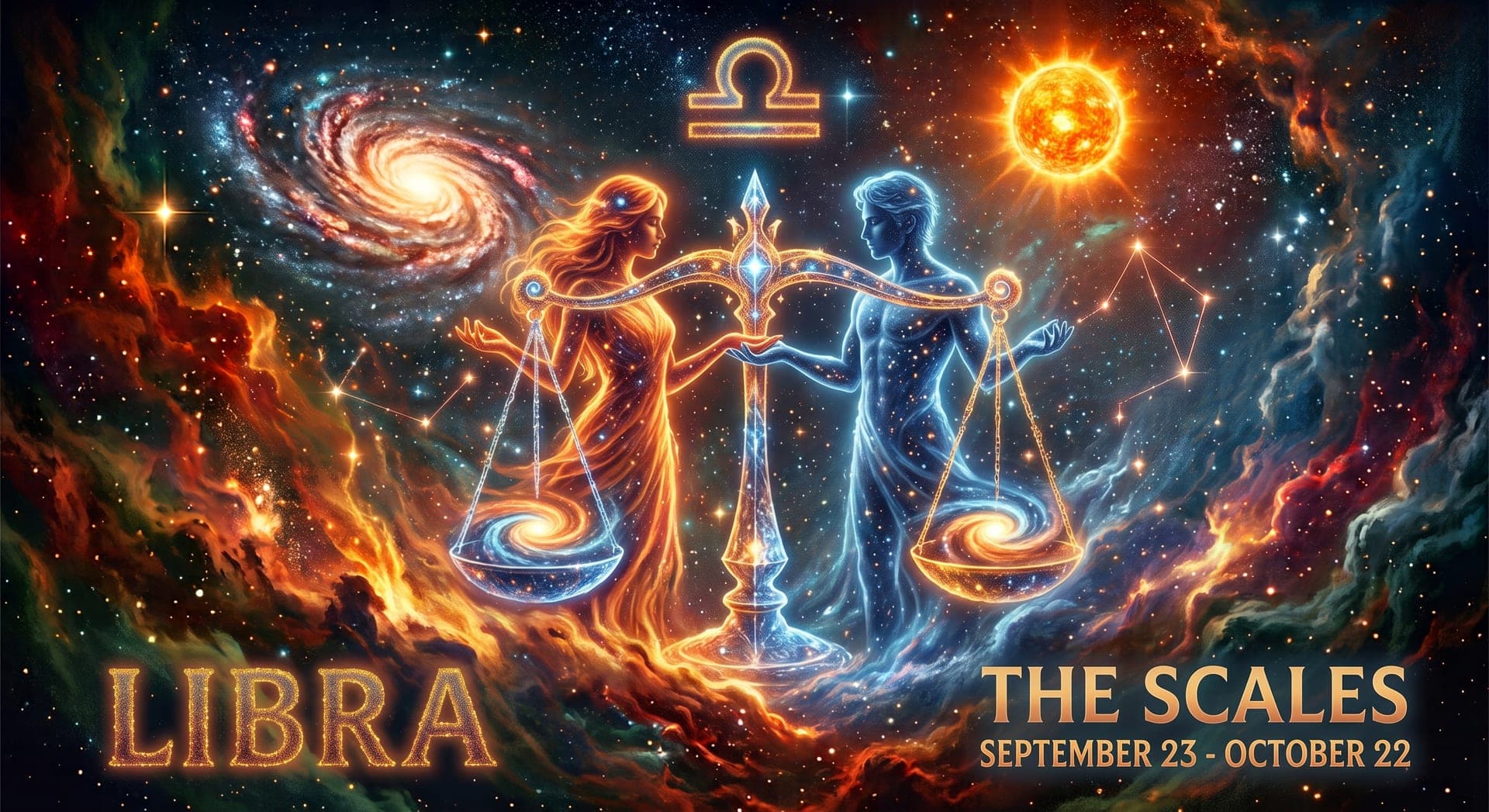
Libra, the seventh sign of the zodiac, spans September 23 to October 22 and is symbolized by the scales, the only zodiac symbol representing an inanimate object rather than a living creature, reflecting the sign's deep concern with balance, fairness, and justice. Ruled by Venus, the planet of love and beauty, Libra shares Taurus's appreciation for aesthetics and pleasure but channels it primarily through relationships, partnership, and social harmony. As an Air sign, Libra approaches the world intellectually and socially, valuing thoughtful conversation and diplomatic problem-solving over confrontation. Its Cardinal modality places it at the very start of autumn, beginning right at the equinox when day and night briefly achieve perfect balance. People born under this sign are often natural mediators, drawn to fairness and equilibrium in their relationships and surroundings, sometimes to the point of struggling to make decisions that might upset that balance. Libra's charm, diplomacy, and genuine desire to see all sides of an issue make it a valued friend and partner, even as its conflict-avoidance can occasionally leave real problems unresolved.
Personality Traits
Strengths
- Strong sense of fairness and justice
- Diplomatic peacemaker
- Charming and sociable
- Appreciates beauty and harmony
- Excellent at seeing multiple perspectives
Weaknesses
- Notoriously indecisive
- Conflict-avoidant to a fault
- Can be superficial
- People-pleasing tendencies
- Struggles with confrontation
Compatible Signs
Fun Facts
- Libra is the only zodiac sign represented by an inanimate object, the scales, rather than an animal or person.
- Libra's scales symbolize balance and justice, echoing the sign's association with fairness, harmony, and diplomacy.
- Venus, Libra's ruling planet, gives the sign its love of beauty, art, and romantic partnership, similar to Taurus but expressed through relationships rather than material comfort.
- As a Cardinal sign, Libra initiates autumn, beginning at the September equinox, when day and night are of equal length, fitting for a sign obsessed with balance.
- Notable Libras include Mahatma Gandhi, Kim Kardashian, John Lennon, and Will Smith.
Born on September 27
- 1598
Robert Blake
English admiral regarded as one of the founders of England's naval supremacy, credited with major victories during the Commonwealth period.
- 1601
Louis XIII of France
King of France
- 1722
Samuel Adams
American statesman and Founding Father
- 1783
Agustin de Iturbide
First Emperor of Mexico
- 1840
Thomas Nast
German-American political cartoonist
- 1871
Grazia Deledda
Italian novelist and Nobel laureate
- 1906
William Empson
English poet and literary critic best known for his influential work of criticism, Seven Types of Ambiguity.
- 1918
Martin Ryle
English radio astronomer awarded the Nobel Prize in Physics for developing aperture synthesis techniques.
- 1920
William Conrad
American actor and director
- 1941
Peter Bonetti
English footballer who spent his career as goalkeeper for Chelsea and played for the England national team.
- 1947
Meat Loaf
American rock singer
- 1947
Barbara Dickson
Scottish singer-songwriter and actress known for hits including "January February" and "I Know Him So Well."
- 1947
Denis Lawson
Scottish actor known for playing Wedge Antilles in the original Star Wars trilogy and for the film Local Hero.
- 1953
Diane Abbott
English politician who became the first Black woman elected to the British Parliament.
- 1958
Irvine Welsh
Scottish novelist best known for his debut novel Trainspotting, depicting Edinburgh's heroin subculture.
- 1984
Avril Lavigne
Canadian pop-punk singer

On This Day in History
- 1066
William the Conqueror sets sail from the mouth of the Somme River, beginning the Norman conquest of England.
William, Duke of Normandy, set sail from the mouth of the Somme River with his invasion fleet after weeks of unfavorable winds had delayed the crossing, beginning the campaign that would culminate in his decisive victory at the Battle of Hastings weeks later.
- 1066
William the Conqueror and his invasion fleet set sail from the Somme, beginning the Norman conquest of England.
After weeks of unfavorable winds had delayed the crossing from Normandy, William's fleet finally departed and landed at Pevensey on the Sussex coast the following day. The invasion culminated at the Battle of Hastings on 14 October, where William defeated King Harold II, transforming English society, language, and governance under Norman rule for centuries to follow.
- 1529
Ottoman forces under Suleiman the Magnificent begin their siege of Vienna.
Ottoman forces under Suleiman the Magnificent began their siege of Vienna, an ambitious campaign that ultimately failed to capture the Habsburg capital before winter weather and logistical difficulties forced an Ottoman withdrawal, marking the furthest extent of Ottoman expansion into Central Europe.
- 1540
Pope Paul III grants official papal authorization to the newly founded Society of Jesus, the Jesuits.
Pope Paul III formally recognized the Society of Jesus, founded by Ignatius of Loyola and a small group of companions, granting the new religious order papal authorization that allowed the Jesuits to grow into one of the Catholic Church's most influential missionary and educational institutions.
- 1822
Jean-Francois Champollion announces his decipherment of the Rosetta Stone's hieroglyphic text to the French Academy.
French scholar Jean-Francois Champollion announced to the French Academy that he had successfully deciphered the ancient Egyptian hieroglyphic script using the trilingual Rosetta Stone, a breakthrough that opened the door to modern Egyptology and the study of ancient Egyptian civilization.
- 1822
Jean-François Champollion announces to France's Academy that he has deciphered the hieroglyphic writing of the Rosetta Stone.
Building on earlier work by British polymath Thomas Young, Champollion cracked the phonetic structure of Egyptian hieroglyphs by comparing the Rosetta Stone's parallel Greek, Demotic, and hieroglyphic texts. His breakthrough, detailed in a famous letter read to the academy, founded the modern discipline of Egyptology and unlocked millennia of previously unreadable ancient Egyptian inscriptions.
- 1825
The Stockton and Darlington Railway opens in England as the first public steam-powered railway.
The Stockton and Darlington Railway in northern England opened as the world's first public railway to use steam locomotives for both passenger and freight transport, built primarily by engineer George Stephenson. The line's success demonstrated steam railways' commercial viability and directly inspired the rapid expansion of railway construction across Britain and eventually the rest of the industrializing world.
- 1825
The Stockton and Darlington Railway, the world's first public railway to use steam locomotives, opens in northeast England.
Engineered by George Stephenson, the line connected collieries near Shildon to the port at Stockton-on-Tees, initially hauling both coal and passengers behind his locomotive Locomotion No. 1. Though horses still worked parts of the route at first, the railway proved the practicality of steam haulage for public transport and directly inspired the rapid expansion of railways across Britain and the world.
- 1908
Production of the Ford Model T automobile begins at the Ford Piquette Avenue Plant in Detroit.
Designed to be affordable, durable, and easy to repair, the Model T revolutionized personal transportation and became the first car within reach of the American middle class. Henry Ford's later introduction of moving assembly line techniques drove costs down further, and by the time production ended in 1927 over 15 million had been sold, reshaping industry, cities, and daily life.
- 1938
The ocean liner Queen Elizabeth is launched in Glasgow, Scotland.
The ocean liner Queen Elizabeth, at the time the largest passenger ship ever built, was launched from a Glasgow shipyard, though its planned maiden voyage was delayed by the outbreak of World War II, and it initially served as a troop transport instead.
- 1938
The ocean liner RMS Queen Elizabeth is launched at the John Brown shipyard in Glasgow.
Built for the Cunard-White Star Line, the vessel was at the time the largest passenger ship ever built and was named after the reigning queen consort. Wartime necessity delayed her entry into civilian service; instead she was quickly converted into a troopship for the Second World War, later becoming a celebrated transatlantic liner alongside her sister ship, the Queen Mary.
- 1940
Germany, Japan, and Italy sign the Tripartite Pact in Berlin, formalizing their wartime alliance.
Germany, Japan, and Italy formalized their wartime alliance by signing the Tripartite Pact in Berlin, committing to mutual military assistance if any signatory was attacked by a power not already involved in the European war or the Sino-Japanese conflict, a provision primarily aimed at deterring American intervention. The pact cemented the Axis powers' coordinated strategy during World War II.
- 1940
Germany, Japan, and Italy sign the Tripartite Pact in Berlin, formalizing their wartime alliance.
The pact committed the three Axis powers to mutual assistance if any one of them was attacked by a country not already involved in the European war or the Sino-Japanese conflict, a provision primarily aimed at deterring the United States from entering either war. It formalized the Axis alliance and later drew additional states such as Hungary, Romania, and Bulgaria into its framework.
- 1962
Rachel Carson's environmental book "Silent Spring" is published, helping launch the modern environmental movement.
Marine biologist Rachel Carson published "Silent Spring," a meticulously researched book detailing the environmental dangers of widespread pesticide use, particularly DDT, and its devastating effects on bird populations and broader ecosystems. Despite fierce opposition from chemical industry interests, the work is widely credited with launching the modern environmental movement and eventually leading to a nationwide ban on DDT.
- 1962
Rachel Carson's book Silent Spring is published, exposing the environmental dangers of pesticides.
Carson's meticulously researched book argued that indiscriminate pesticide use, particularly DDT, was devastating bird populations and poisoning ecosystems, challenging the chemical industry's claims of safety. Despite fierce pushback, the book galvanized public concern and is widely credited with helping launch the modern environmental movement and prompting the eventual creation of the U.S. Environmental Protection Agency.
- 1964
The British TSR-2 supersonic strike aircraft makes its maiden flight.
Developed by the British Aircraft Corporation, the TSR-2 was designed as an advanced low-level strike and reconnaissance jet intended to replace the Canberra bomber. Despite its promising performance, the ambitious and costly project was cancelled by the government the following year amid spiraling costs and political controversy, a decision that remains debated among aviation historians as a major setback for British aerospace.
- 1988
The National League for Democracy is formed by Aung San Suu Kyi and others to oppose Myanmar's military dictatorship.
Founded in the aftermath of the 8888 Uprising against decades of military rule, the party quickly became the country's leading pro-democracy movement. Aung San Suu Kyi, daughter of independence hero Aung San, emerged as its most prominent figure and would go on to win the Nobel Peace Prize while spending years under house arrest for her opposition activities.
- 1996
The Battle of Kabul ends in victory for the Taliban, who establish the Islamic Emirate of Afghanistan.
Taliban forces captured the Afghan capital after years of civil war among rival mujahideen factions that followed the Soviet withdrawal, executing former president Mohammad Najibullah and imposing strict Islamist rule. The takeover marked the beginning of a five-year Taliban government that would end with the US-led invasion following the September 11 attacks in 2001.
- 1998
Google later designates this date as its official founding anniversary.
Though the company was actually incorporated the previous May, Google later designated this date as its official "birthday," a date now widely recognized and celebrated by the technology company and its users each year despite the discrepancy with its true legal founding date.
- 2019
Climate activists worldwide participate in coordinated strikes protesting climate change across thousands of locations.
Millions of people across thousands of cities worldwide participated in coordinated climate strikes demanding urgent government action on climate change, inspired partly by teenage Swedish activist Greta Thunberg's solo protests outside her country's parliament the previous year. The demonstrations formed one of the largest coordinated climate protest actions in history, drawing significant international media attention.