
What’s Observed on September 26
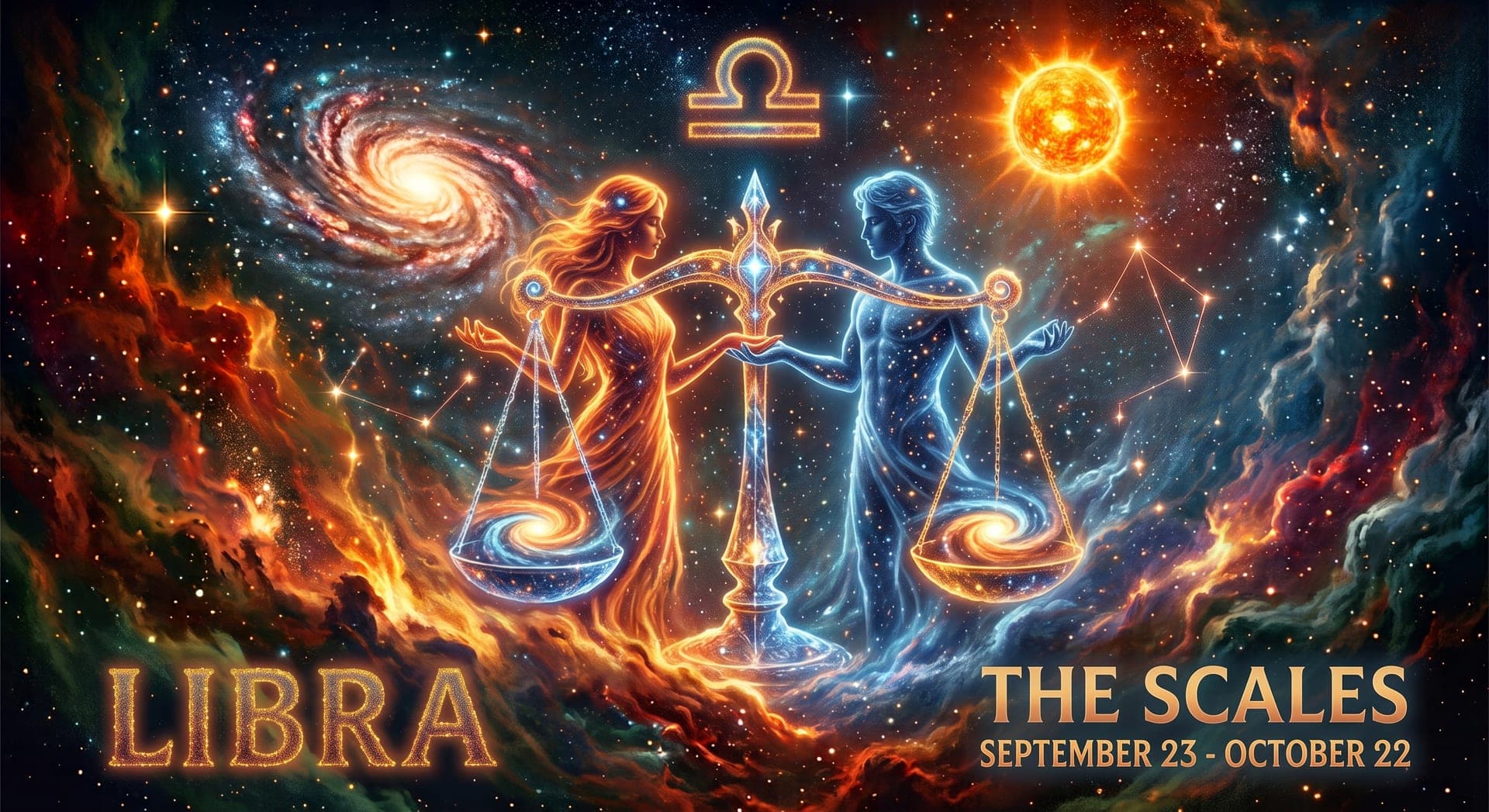
Born on September 26: Libra ♎
Libra, the seventh sign of the zodiac, spans September 23 to October 22 and is symbolized by the scales, the only zodiac symbol representing an inanimate object rather than a living creature, reflecting the sign's deep concern with balance, fairness, and justice. Ruled by Venus, the planet of love and beauty, Libra shares Taurus's appreciation for aesthetics and pleasure but channels it primarily through relationships, partnership, and social harmony. As an Air sign, Libra approaches the world intellectually and socially, valuing thoughtful conversation and diplomatic problem-solving over confrontation. Its Cardinal modality places it at the very start of autumn, beginning right at the equinox when day and night briefly achieve perfect balance. People born under this sign are often natural mediators, drawn to fairness and equilibrium in their relationships and surroundings, sometimes to the point of struggling to make decisions that might upset that balance. Libra's charm, diplomacy, and genuine desire to see all sides of an issue make it a valued friend and partner, even as its conflict-avoidance can occasionally leave real problems unresolved.
Personality Traits
Strengths
- Strong sense of fairness and justice
- Diplomatic peacemaker
- Charming and sociable
- Appreciates beauty and harmony
- Excellent at seeing multiple perspectives
Weaknesses
- Notoriously indecisive
- Conflict-avoidant to a fault
- Can be superficial
- People-pleasing tendencies
- Struggles with confrontation
Compatible Signs
Fun Facts
- Libra is the only zodiac sign represented by an inanimate object, the scales, rather than an animal or person.
- Libra's scales symbolize balance and justice, echoing the sign's association with fairness, harmony, and diplomacy.
- Venus, Libra's ruling planet, gives the sign its love of beauty, art, and romantic partnership, similar to Taurus but expressed through relationships rather than material comfort.
- As a Cardinal sign, Libra initiates autumn, beginning at the September equinox, when day and night are of equal length, fitting for a sign obsessed with balance.
- Notable Libras include Mahatma Gandhi, Kim Kardashian, John Lennon, and Will Smith.
Born on September 26
- 1750
Cuthbert Collingwood
English admiral who commanded the fleet's second column at the Battle of Trafalgar and took overall command after Nelson's death.
- 1774
Johnny Appleseed
American pioneer nurseryman, born John Chapman
- 1849
Ivan Pavlov
Russian physiologist known for classical conditioning research
- 1886
Archibald Hill
English physiologist awarded the Nobel Prize for his research into the production of heat and mechanical work in muscles.
- 1887
Barnes Wallis
English scientist and engineer who invented the bouncing bomb used in the Dambusters raid of World War II.
- 1888
T. S. Eliot
American-born poet who became a British citizen and Nobel laureate, best known for "The Waste Land" and "Four Quartets"
- 1898
George Gershwin
American composer known for "Rhapsody in Blue"
- 1907
Anthony Blunt
English art historian and Soviet spy exposed as a member of the Cambridge Five espionage ring.
- 1944
Anne Robinson
English journalist and broadcaster best known for hosting the game show The Weakest Link.
- 1945
Bryan Ferry
English singer-songwriter and founding frontman of the art rock band Roxy Music.
- 1948
Olivia Newton-John
English-Australian singer and actress
- 1961
Will Self
English novelist and journalist known for satirical fiction such as Great Apes and Umbrella.
- 1976
Michael Ballack
German professional footballer
- 1981
Serena Williams
American tennis champion
- 1988
James Blake
English singer-songwriter and producer known for his minimalist, soulful electronic music.
On This Day in History
- 1087
William II is crowned King of England, beginning a reign that lasts until 1100.
Following the death of his father William the Conqueror, William II, known as William Rufus for his ruddy complexion and fiery temper, was crowned King of England, ruling until his controversial and still-debated death in a hunting accident thirteen years later, an event that some historians have speculated may not have been entirely accidental.
- 1087
William II is crowned King of England, beginning a reign that would last until 1100.
Known as William Rufus for his ruddy complexion, William II was the third son of William the Conqueror and inherited the English throne while his elder brother Robert Curthose took Normandy. His reign was marked by conflict with the Church, rebellious barons, and near-constant warfare, and it ended abruptly in 1100 when he was killed by an arrow while hunting in the New Forest.
- 1142
Stephen of Blois's army arrives at Oxford, beginning the siege that trapped the Empress Matilda in Oxford Castle.
The siege was a pivotal episode of The Anarchy, the civil war fought between King Stephen and his cousin the Empress Matilda over the English throne. After weeks of blockade, Matilda famously escaped across the frozen River Isis at night, reportedly dressed in white to blend with the snow, before walking to safety at Abingdon and continuing her struggle for the crown.
- 1423
A French army defeats an English force at the Battle of La Brossinière during the Hundred Years' War.
The battle took place in Brittany as French and Breton troops ambushed an English raiding party under Sir John de la Pole, inflicting a sharp defeat and capturing several commanders. Though a relatively minor engagement compared to the war's larger battles, it demonstrated growing French confidence and coordination in the years before the campaigns of Joan of Arc turned the tide of the conflict.
- 1580
Francis Drake completes his circumnavigation of the globe, arriving back in Plymouth, England.
English privateer and explorer Francis Drake completed his circumnavigation of the globe aboard the Golden Hind, returning to Plymouth laden with plundered Spanish treasure, becoming the first Englishman to sail around the world and earning a knighthood from Queen Elizabeth I.
- 1580
Francis Drake completes his circumnavigation of the globe, arriving back in Plymouth, England.
Drake set out in 1577 with five ships and returned nearly three years later with just one, the Golden Hind, laden with plundered Spanish treasure and exotic goods. He became the first English commander to circle the globe and only the second expedition to do so after Magellan's. Queen Elizabeth I knighted him aboard his ship the following year, cementing his status as a national hero.
- 1688
Amsterdam's city council votes to support William of Orange's planned invasion of England, setting the Glorious Revolution in motion.
The council's backing helped secure the funding and shipping William needed to launch his expedition against his father-in-law, King James II. William landed in England the following November with a large fleet and army, and James fled the country within weeks. The bloodless revolution replaced James with the joint monarchy of William III and Mary II and reshaped the English constitution.
- 1777
British troops occupy Philadelphia during the American Revolutionary War.
British forces occupied Philadelphia, then serving as the American capital and largest city, forcing the Continental Congress to flee and reconvene elsewhere during the ongoing Philadelphia campaign. Though a significant symbolic setback for the American cause, the occupation ultimately proved strategically costly for the British war effort, tying down troops needed elsewhere.
- 1777
British troops capture and occupy Philadelphia, which had served as the American revolutionary capital.
General William Howe's forces entered the city after defeating George Washington's army at the Battle of Brandywine earlier that month, forcing the Continental Congress to flee. The occupation lasted roughly nine months and gave Britain control of the largest city in the colonies, though the strategic gain proved limited as Washington's army remained intact and continued the fight elsewhere.
- 1789
President George Washington appoints Thomas Jefferson as the first U.S. Secretary of State.
President Washington appointed Thomas Jefferson as the nation's first Secretary of State, a position from which Jefferson helped shape early American foreign policy, including navigating delicate relations with revolutionary France and Britain. Jefferson later became a leading political rival to fellow cabinet member Alexander Hamilton, a rivalry that helped give rise to America's first political party system.
- 1905
Albert Einstein publishes his paper introducing the special theory of relativity.
Albert Einstein, then working as a patent clerk in Switzerland rather than holding a traditional academic position, published his groundbreaking paper introducing special relativity, fundamentally reshaping physicists' understanding of space, time, and the relationship between energy and mass. The paper's famous equation, E equals mc squared, later became one of the most recognizable formulas in all of science.
- 1907
New Zealand and Newfoundland are formally promoted from colonies to dominions within the British Empire.
The change followed the 1907 Imperial Conference in London, which recognized the growing self-governance of Britain's settler colonies by granting them dominion status alongside Canada and Australia. The new title reflected greater autonomy in domestic affairs while both remained tied to Britain through the Crown, foreshadowing the looser Commonwealth relationship that would develop over the following decades.
- 1917
The Battle of Polygon Wood begins as British and Australian forces attack German lines near Ypres.
Part of the larger Third Battle of Ypres (Passchendaele), the assault used the 'bite and hold' tactics that characterized General Herbert Plumer's methodical approach, combining limited advances with heavy artillery support. British Second Army troops, alongside Australian divisions, captured their objectives at heavy cost, marking one of the more successful, if still grueling, phases of the wider Ypres offensive.
- 1953
Rationing of sugar in the United Kingdom comes to an end.
Sugar had been rationed since 1940 as part of Britain's wartime and postwar austerity measures to manage scarce imports, forcing households to rely on ration books and substitutes like saccharin. Its removal, alongside the gradual lifting of other food controls through the 1950s, marked a significant step in Britain's recovery from wartime shortages and the return of a fuller consumer economy.
- 1960
The first televised U.S. presidential debate takes place in Chicago between John F. Kennedy and Richard Nixon.
John F. Kennedy and Richard Nixon faced off in the first televised presidential debate in American history, with Kennedy's composed on-camera presence widely credited with helping shift public perception in his favor compared to radio listeners' more even assessment of the debate.
- 1983
Soviet officer Stanislav Petrov correctly identifies a false nuclear missile alert as a computer error, averting potential nuclear war.
Soviet air defense officer Stanislav Petrov correctly judged that a satellite warning system's report of incoming American nuclear missiles was a false alarm caused by a rare sunlight reflection, a critical judgment call credited with averting a potentially catastrophic nuclear retaliation.
- 1984
Britain and China agree to transfer sovereignty of Hong Kong to China in 1997.
Britain and China signed a joint declaration agreeing that Hong Kong, then a British colony, would be transferred to Chinese sovereignty in 1997 under a "one country, two systems" framework intended to preserve the territory's distinct legal and economic system.
- 1984
The United Kingdom and China agree to transfer sovereignty over Hong Kong to China in 1997.
The agreement, formalized in the Sino-British Joint Declaration, resolved the future of the colony after the 99-year lease on the New Territories was due to expire, with China pledging to preserve Hong Kong's capitalist system and way of life for fifty years under a 'one country, two systems' framework. The handover on 1 July 1997 ended over 150 years of British colonial rule there.
- 2002
The overcrowded ferry MV Le Joola capsizes off the coast of Gambia, killing over a thousand people.
The overloaded passenger ferry MV Le Joola capsized off the coast of Gambia during a storm, killing well over a thousand people in one of the deadliest maritime disasters in African history, drawing comparisons to the Titanic in terms of death toll.
- 2024
Hurricane Helene makes landfall in Florida as a Category 4 storm, becoming one of the deadliest U.S. hurricanes in decades.
Hurricane Helene made landfall along Florida's Gulf Coast as a powerful Category 4 storm before pushing devastating flooding deep into the southeastern United States, particularly affecting mountainous inland communities in North Carolina unaccustomed to hurricane-related flooding. The storm became one of the deadliest hurricanes to strike the American mainland in decades, causing widespread destruction far from the immediate coastline.