
What’s Observed on September 28
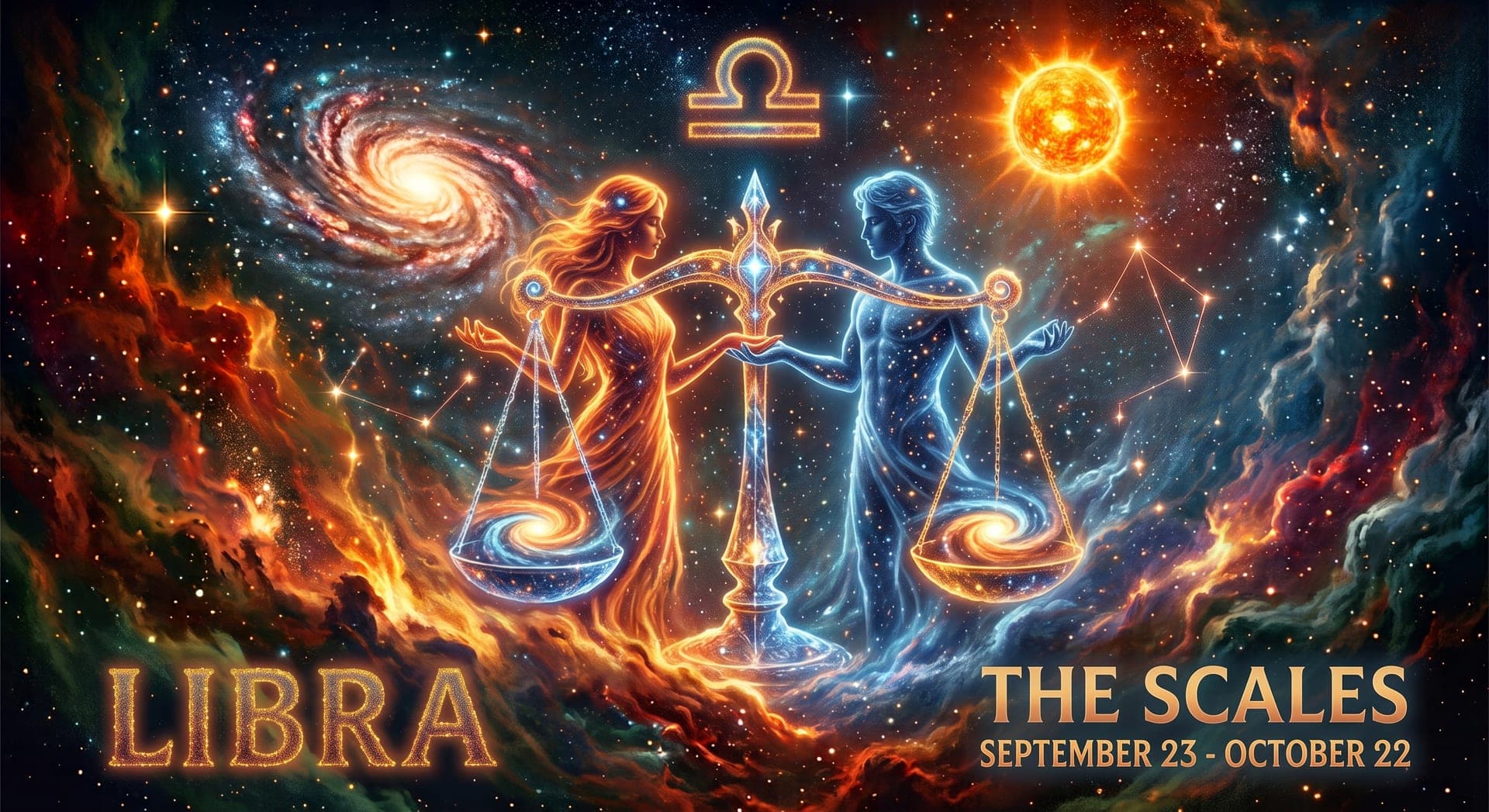
Born on September 28: Libra ♎
Libra, the seventh sign of the zodiac, spans September 23 to October 22 and is symbolized by the scales, the only zodiac symbol representing an inanimate object rather than a living creature, reflecting the sign's deep concern with balance, fairness, and justice. Ruled by Venus, the planet of love and beauty, Libra shares Taurus's appreciation for aesthetics and pleasure but channels it primarily through relationships, partnership, and social harmony. As an Air sign, Libra approaches the world intellectually and socially, valuing thoughtful conversation and diplomatic problem-solving over confrontation. Its Cardinal modality places it at the very start of autumn, beginning right at the equinox when day and night briefly achieve perfect balance. People born under this sign are often natural mediators, drawn to fairness and equilibrium in their relationships and surroundings, sometimes to the point of struggling to make decisions that might upset that balance. Libra's charm, diplomacy, and genuine desire to see all sides of an issue make it a valued friend and partner, even as its conflict-avoidance can occasionally leave real problems unresolved.
Personality Traits
Strengths
- Strong sense of fairness and justice
- Diplomatic peacemaker
- Charming and sociable
- Appreciates beauty and harmony
- Excellent at seeing multiple perspectives
Weaknesses
- Notoriously indecisive
- Conflict-avoidant to a fault
- Can be superficial
- People-pleasing tendencies
- Struggles with confrontation
Compatible Signs
Fun Facts
- Libra is the only zodiac sign represented by an inanimate object, the scales, rather than an animal or person.
- Libra's scales symbolize balance and justice, echoing the sign's association with fairness, harmony, and diplomacy.
- Venus, Libra's ruling planet, gives the sign its love of beauty, art, and romantic partnership, similar to Taurus but expressed through relationships rather than material comfort.
- As a Cardinal sign, Libra initiates autumn, beginning at the September equinox, when day and night are of equal length, fitting for a sign obsessed with balance.
- Notable Libras include Mahatma Gandhi, Kim Kardashian, John Lennon, and Will Smith.
Born on September 28
- 551
Confucius
Chinese philosopher and teacher
- 1735
Augustus FitzRoy, 3rd Duke of Grafton
English statesman who served as Prime Minister of Great Britain from 1768 to 1770.
- 1746
William Jones
English philologist and judge whose work in India led him to propose the existence of the Indo-European language family.
- 1836
Thomas Crapper
English plumber and businessman credited with popularizing and improving flush toilet mechanisms, including the ballcock valve.
- 1841
Georges Clemenceau
Prime Minister of France
- 1852
Henri Moissan
French chemist and Nobel laureate
- 1852
John French, 1st Earl of Ypres
English field marshal who commanded the British Expeditionary Force at the outbreak of World War I.
- 1901
Ed Sullivan
American television host
- 1905
Max Schmeling
German heavyweight boxing champion
- 1916
Peter Finch
English-born actor celebrated for his performance in the film Network, for which he won a posthumous Academy Award.
- 1924
Marcello Mastroianni
Italian actor
- 1932
Jeremy Isaacs
Scottish television executive and founding chief executive of Channel 4.
- 1934
Brigitte Bardot
French actress and animal rights activist
- 1947
Jon Snow
English journalist and longtime presenter of Channel 4 News.
- 1968
Naomi Watts
English-born actress known for films including Mulholland Drive and King Kong.
- 1987
Hilary Duff
American singer and actress

On This Day in History
- 48 BCE
Roman general Pompey is assassinated in Egypt on the orders of King Ptolemy XIII shortly after fleeing there.
Fleeing to Egypt after his defeat by Julius Caesar in Rome's civil war, the once-powerful general Pompey was murdered on the orders of the young Egyptian king shortly after coming ashore, a betrayal intended to curry favor with the victorious Caesar.
- 935
Duke Wenceslaus I of Bohemia is murdered by nobles including his own brother, who succeeds him.
Duke Wenceslaus I of Bohemia, later venerated as a Christian martyr and the "Good King Wenceslas" celebrated in a famous Christmas carol, was murdered by conspirators including his own brother Boleslaus, who subsequently seized the Bohemian throne for himself. Wenceslaus was posthumously canonized and became one of the patron saints of the Czech nation.
- 1066
William the Conqueror lands in England, beginning the Norman conquest.
William, Duke of Normandy, landed his invasion force unopposed on the English coast at Pevensey, beginning the military campaign that culminated in his decisive victory over King Harold II at the Battle of Hastings just over two weeks later. The successful invasion fundamentally transformed English language, culture, and governance for centuries to come.
- 1066
William the Conqueror lands his invasion fleet at Pevensey on the English coast, beginning the Norman conquest.
Having crossed the Channel from the mouth of the Somme, William's army of Norman knights and soldiers came ashore unopposed, as King Harold II's forces were still recovering after their victory over the Norwegians at Stamford Bridge days earlier. William quickly fortified his position before marching to meet Harold, setting the stage for the decisive Battle of Hastings just over two weeks later.
- 1106
King Henry I of England defeats his elder brother Robert Curthose at the Battle of Tinchebray.
The battle was fought in Normandy and effectively reunited England and the Duchy of Normandy under a single ruler for the first time since their split after William the Conqueror's death. Robert, who had inherited Normandy while Henry took the English crown, was captured and spent the remaining decades of his life imprisoned, ending his claim to power entirely.
- 1238
King James I of Aragon conquers Valencia from Moorish rule and proclaims himself king of Valencia.
King James I of Aragon completed the conquest of the Moorish-held city of Valencia after a lengthy siege supported by Christian forces from across the Iberian Peninsula, proclaiming himself king of the newly captured territory. The conquest significantly advanced the broader Christian Reconquista of Iberia and established a new Kingdom of Valencia that persisted for centuries.
- 1542
Portuguese explorer Juan Rodriguez Cabrillo becomes the first European to reach present-day California.
Portuguese-born explorer Juan Rodriguez Cabrillo, sailing under the Spanish flag on an expedition seeking a mythical passage to Asia, became the first European to reach the coast of present-day California, landing near what is now San Diego Bay during his exploratory voyage along the Pacific coastline in search of trade opportunities and territorial claims.
- 1787
The Congress of the Confederation votes to send the newly drafted U.S. Constitution to the state legislatures for ratification.
The Congress of the Confederation, governing under the Articles of Confederation, voted to formally transmit the newly drafted Constitution to the individual state legislatures for the ratification process that would ultimately establish the new federal government. Nine of the thirteen states needed to ratify the document before it could take effect, a threshold reached less than a year later.
- 1912
Around 500,000 Ulster Unionists sign the Ulster Covenant, pledging to resist Irish Home Rule.
Organized in response to the Third Home Rule Bill then before Parliament, the covenant was signed by men and women across Ulster who feared subordination to a Catholic-majority Dublin parliament. The mass mobilization it represented hardened political divisions in Ireland, fueled the formation of armed unionist and nationalist militias, and set the stage for the eventual partition of Ireland.
- 1918
The Fifth Battle of Ypres begins as Allied forces launch a major offensive in Belgium during the closing weeks of World War I.
British, Belgian, and French troops attacked German positions around Ypres as part of the broader Allied Hundred Days Offensive that was driving German forces into retreat across the Western Front. The advance recovered ground that had been fought over for years and contributed to the mounting pressure that pushed Germany toward seeking an armistice within weeks.
- 1928
Alexander Fleming discovers penicillin after noticing bacteria-killing mold in his laboratory.
Returning from vacation, bacteriologist Alexander Fleming noticed that a stray mold spore had contaminated one of his laboratory culture plates and was killing the surrounding staphylococcus bacteria. This accidental observation led to the discovery of penicillin, the first true antibiotic, a breakthrough that revolutionized the treatment of bacterial infections and saved countless lives in the decades that followed.
- 1928
Scottish bacteriologist Alexander Fleming discovers the penicillin-producing mould that would revolutionize medicine.
Returning to his London laboratory after a holiday, Fleming noticed that a stray mould, Penicillium notatum, had contaminated a petri dish of Staphylococcus bacteria and killed the surrounding colonies. His observation of this natural antibacterial effect laid the groundwork for the development of penicillin, the first true antibiotic, which was later purified and mass-produced during World War II, saving countless lives.
- 1939
Nazi Germany and the Soviet Union agree to divide occupied Poland between them.
Following their coordinated invasion of Poland weeks earlier, Nazi Germany and the Soviet Union signed a treaty formally dividing the occupied country between them, cementing the territorial arrangement first outlined in the secret protocols of the earlier Molotov-Ribbentrop non-aggression pact. The agreement effectively erased Poland as an independent state for the remainder of the war.
- 1970
Egyptian President Gamal Abdel Nasser dies suddenly of a heart attack.
Nasser had led Egypt since the 1952 revolution that overthrew the monarchy, championing Arab nationalism, nationalizing the Suez Canal, and becoming one of the most influential leaders in the modern Middle East. His unexpected death triggered an outpouring of public grief across the Arab world and brought his vice president, Anwar Sadat, to power.
- 1975
Armed robbers take nine hostages in the Spaghetti House siege at a restaurant in central London.
A group of gunmen attempting to rob the restaurant's staff of their takings were interrupted and fled into the basement with hostages, triggering a six-day standoff with London police. The siege ended peacefully when the gunmen surrendered, and the episode became notable for the calm negotiation tactics used, which influenced later British approaches to hostage situations.
- 1994
The cruise ferry MS Estonia sinks in the Baltic Sea, killing 852 people.
The passenger and vehicle ferry MS Estonia sank in rough seas in the Baltic Sea after its bow door failed, killing 852 people in one of the deadliest peacetime maritime disasters in European history and prompting significant reforms to ferry safety design and regulations.
- 1994
The passenger ferry MS Estonia sinks in the Baltic Sea, killing 852 people.
The ferry was crossing from Tallinn to Stockholm in stormy weather when its bow visor failed, allowing water to flood the car deck and capsize the vessel within minutes. It remains one of the deadliest peacetime maritime disasters in European history and prompted major reforms to ferry safety design and regulations across the region.
- 1995
Israeli Prime Minister Yitzhak Rabin and PLO leader Yasser Arafat sign the Oslo II Accord.
The agreement expanded on the original 1993 Oslo Accords by extending Palestinian self-rule to additional West Bank towns and establishing a framework dividing the territory into areas of differing Israeli and Palestinian administrative control. It represented a further step in the peace process, though implementation would soon be tested by rising violence and political upheaval on both sides.
- 2008
SpaceX's Falcon 1 becomes the first privately developed liquid-fuel rocket to successfully place a payload into orbit.
After three earlier failed attempts nearly bankrupted the young company, the fourth Falcon 1 launch carried a dummy payload into low Earth orbit, proving the viability of privately funded orbital rocketry. The success was a turning point for SpaceX, paving the way for NASA contracts and the eventual development of the much larger Falcon 9 rocket.
- 2022
Hurricane Ian makes landfall in Florida as a Category 4 storm, causing widespread destruction and billions of dollars in damage.
Hurricane Ian made landfall on Florida's southwestern coast as a powerful Category 4 storm, causing catastrophic storm surge flooding and wind damage that resulted in well over a hundred deaths and tens of billions of dollars in damage across the state.