What’s Observed on September 18
Born on September 18: Virgo ♍
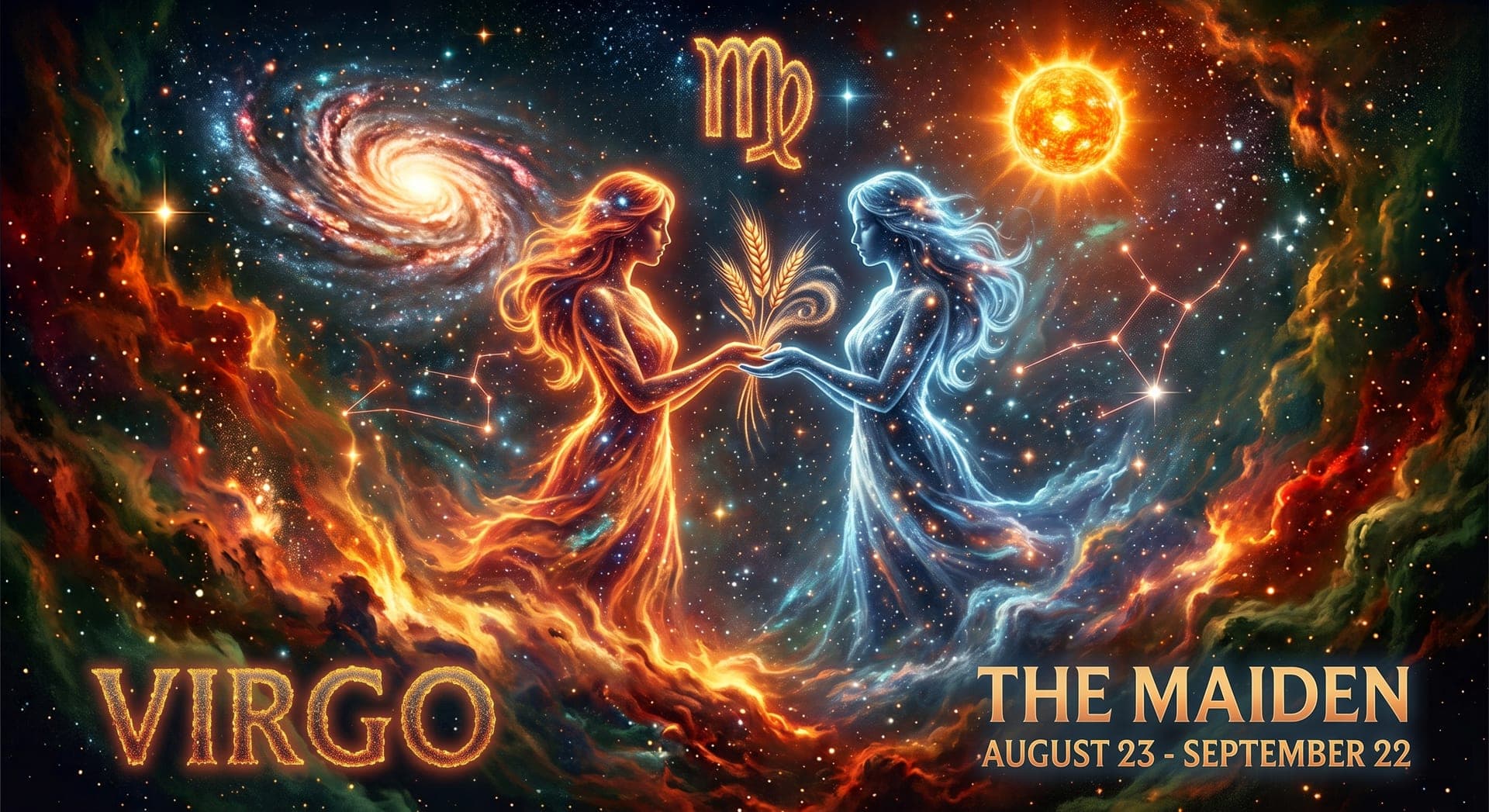
Virgo, the sixth sign of the zodiac, spans August 23 to September 22 and is symbolized by the maiden, often depicted holding a sheaf of wheat, representing purity, meticulous care, and the harvest. Ruled by Mercury, the planet of communication and intellect, Virgo channels its mental energy toward precision, analysis, and practical problem-solving rather than idle chatter. As an Earth sign, Virgo is grounded and detail-oriented, finding genuine satisfaction in organizing, refining, and perfecting the world around it. Its Mutable modality gives Virgo an adaptable, service-oriented nature, often finding purpose in quietly helping others and improving systems rather than seeking the spotlight. People born under this sign are frequently drawn to work requiring precision, research, or care for others, from science and medicine to editing and organization. Virgo's high standards make it an excellent problem-solver and a reliable presence others can count on, though that same perfectionism can turn inward as self-criticism or outward as an exacting, sometimes overly critical, eye toward the people and world around it.
Personality Traits
Strengths
- Highly organized and detail-oriented
- Reliable and hardworking
- Analytical problem-solver
- Genuinely helpful to others
- Modest and unpretentious
Weaknesses
- Prone to overcritical perfectionism
- Tends to worry excessively
- Can be overly critical of others
- Reserved to the point of aloofness
- Struggles to relax
Compatible Signs
Fun Facts
- Virgo's maiden symbol is often associated with Astraea, the Greek goddess of justice and purity, said to have been the last immortal to live among humans.
- Virgo is the only zodiac sign represented by a female human figure.
- Virgo and Gemini share Mercury as their ruling planet, though Virgo channels the planet's communicative energy toward analysis and precision rather than pure talkativeness.
- Notable Virgos include Beyoncé, Michael Jackson, Mother Teresa, and Stephen King.
- Virgo season falls at the tail end of summer, a period traditionally associated with harvest, meticulous preparation, and gathering resources for the colder months ahead.
Born on September 18
- 1709
Samuel Johnson
English writer, critic, and lexicographer whose Dictionary of the English Language was the preeminent English dictionary for over a century
- 1905
Greta Garbo
Swedish-American actress
- 1907
Edwin McMillan
American physicist and Nobel laureate
- 1914
Jack Cardiff
English cinematographer
- 1916
Rossano Brazzi
Italian actor
- 1935
John Spencer
English snooker player who won the World Snooker Championship three times
- 1940
Frankie Avalon
American singer and actor
- 1946
Nicholas Clay
English actor best known for playing Lancelot in the film Excalibur
- 1949
Mo Mowlam
English Labour politician who served as Northern Ireland Secretary and played a key role in negotiating the 1998 Good Friday Agreement
- 1949
Peter Shilton
English footballer who remains the most capped goalkeeper in the history of the England national team
- 1961
James Gandolfini
American actor known for "The Sopranos"
- 1967
Tara Fitzgerald
English actress known for film and television roles including Brassed Off and Game of Thrones
- 1970
Darren Gough
English cricketer who was a mainstay of the England team's fast-bowling attack through the 1990s and 2000s
- 1971
Lance Armstrong
American cyclist
- 1971
Jada Pinkett Smith
American actress
- 1974
Sol Campbell
English footballer who won major honors with Arsenal and Tottenham Hotspur and was a longtime England defender
On This Day in History
- 96
Roman Emperor Domitian is assassinated in a palace conspiracy involving his wife and Praetorian officials.
Roman Emperor Domitian was stabbed to death in a palace conspiracy involving his own wife, Domitia Longina, and several Praetorian Guard officers who feared for their lives under his increasingly paranoid and repressive rule, ending the Flavian dynasty's direct line of succession.
- 324
Constantine the Great defeats rival emperor Licinius at the Battle of Chrysopolis, consolidating sole control of the Roman Empire.
Constantine the Great decisively defeated his co-emperor and rival Licinius at Chrysopolis near Byzantium, eliminating the last significant challenger to his authority and reunifying the Roman Empire under a single ruler for the first time in decades. Constantine's subsequent decision to relocate the empire's capital eastward to the renamed city of Constantinople reshaped the empire's political and cultural center of gravity for centuries.
- 1066
Norwegian King Harald Hardrada lands forces at the mouth of the Humber River, beginning his invasion of England.
Norwegian King Harald Hardrada landed a substantial invasion force in northern England, beginning a campaign in alliance with the rebellious English earl Tostig that would culminate in Harald's defeat and death at the Battle of Stamford Bridge just days before William the Conqueror's own separate invasion at Hastings, together forming one of the most eventful years in medieval English history.
- 1066
Norwegian king Harald Hardrada lands in northern England with a large invasion fleet, beginning the campaign that would end in his defeat at the Battle of Stamford Bridge.
Hardrada's invasion, supported by the rebel English earl Tostig Godwinson, forced King Harold Godwinson to force-march his army north from London to confront them. Though Harold won a crushing victory at Stamford Bridge on 25 September, the grueling campaign left his exhausted forces stretched thin just as William of Normandy landed in the south, setting up the decisive Battle of Hastings weeks later.
- 1714
George, Elector of Hanover, arrives in Great Britain to take up the throne as King George I, the first monarch of the House of Hanover.
George succeeded Queen Anne under the Act of Settlement 1701, which barred closer Catholic claimants from the throne in favor of Protestant descendants of James I. Speaking little English and often absent in Hanover, George relied heavily on his ministers, a dynamic that helped strengthen cabinet government and the emerging role of a de facto prime minister in Britain.
- 1759
British and French commanders sign the Articles of Capitulation of Quebec, formally surrendering the city to British forces days after the Battle of the Plains of Abraham.
With Quebec's garrison and defenses shattered and no prospect of relief, the French commander agreed to terms guaranteeing the city's inhabitants their property, religion, and civil rights under British rule. The surrender secured Britain's hold on the St. Lawrence River and set the stage for the wider conquest of New France completed the following year.
- 1793
George Washington lays the cornerstone of the United States Capitol building.
President Washington personally participated in the Masonic ceremony laying the cornerstone of the United States Capitol building, using a silver trowel and ceremonial apron as part of the ritual. The structure would grow considerably over subsequent decades, including a major expansion and the addition of its iconic cast-iron dome, to become the enduring symbolic seat of the American legislative branch.
- 1809
The Royal Opera House opens in London.
London's Royal Opera House opened its doors in Covent Garden, becoming one of the world's preeminent venues for opera and ballet performance, though the current building represents a later Victorian-era reconstruction following fires that destroyed two earlier versions of the theater. The venue remains home to both the Royal Opera and the Royal Ballet companies today.
- 1809
The Royal Opera House in Covent Garden, London, opens its doors to the public.
Rebuilt after a devastating fire destroyed the previous theatre earlier that year, the new building's opening was marred by weeks of rioting after management raised ticket prices to help cover reconstruction costs. Rebuilt again following a second fire in 1856, the Royal Opera House has since become one of the world's foremost venues for opera and ballet.
- 1838
Manchester businessmen and reformers found the Anti-Corn Law League to campaign for the repeal of Britain's protectionist Corn Laws.
Led by radicals Richard Cobden and John Bright, the League argued that tariffs on imported grain artificially inflated food prices and benefited wealthy landowners at the expense of ordinary workers and manufacturers. Its sustained campaign of pamphlets, public meetings, and parliamentary pressure helped secure the Corn Laws' repeal in 1846, a landmark victory for the free-trade movement.
- 1851
The New-York Daily Times, later renamed The New York Times, publishes its first edition.
Henry Jarvis Raymond and George Jones published the inaugural edition of what was then called The New-York Daily Times, a newspaper that would evolve into The New York Times, eventually becoming one of the most influential and widely respected news organizations in the world.
- 1898
British and French colonial expeditions confront each other at Fashoda in Sudan, triggering a serious diplomatic crisis between the two imperial powers.
British forces under Lord Kitchener, fresh from reconquering Sudan, encountered a small French force under Jean-Baptiste Marchand that had trekked across Africa to claim the same territory. The standoff brought Britain and France to the brink of war before France backed down, and the resolution paved the way for the 1904 Entente Cordiale between the two countries.
- 1914
The Government of Ireland Act 1914, granting Ireland limited self-government within the United Kingdom, receives royal assent.
The act was the culmination of decades of campaigning by Irish nationalists, but its implementation was suspended for the duration of the First World War, which had broken out the previous month. The delay, combined with the 1916 Easter Rising and its aftermath, hardened opinion in Ireland and contributed to the more radical push for full independence that followed.
- 1915
P. G. Wodehouse's short story 'Extricating Young Gussie' is published, introducing the characters Bertie Wooster and his valet Jeeves for the first time.
Though Jeeves appears only briefly in this initial story, the pairing of the well-meaning but hapless aristocrat and his imperturbable, endlessly resourceful manservant grew into one of the most beloved comic double-acts in English literature. Wodehouse went on to feature the pair in dozens of stories and novels over the following six decades.
- 1927
The Columbia Broadcasting System, later known as CBS, goes on the air.
The Columbia Broadcasting System began radio operations under the leadership of a small group of investors, eventually expanding into television under the guidance of executive William S. Paley and growing into one of the major American broadcast networks. CBS played a significant role in shaping broadcast news standards and popular entertainment programming throughout much of the twentieth century.
- 1931
Japan stages the Mukden Incident as a pretext for occupying Manchuria.
Japanese military officers staged a bombing of a South Manchurian Railway line and falsely blamed Chinese dissidents, using the fabricated incident as justification to launch a full military occupation of Manchuria, a significant early step toward Japan's broader imperial expansion in Asia.
- 1955
A Royal Navy team lands on the remote, uninhabited islet of Rockall in the North Atlantic and formally raises the Union Flag, annexing it to the United Kingdom.
Britain sought to prevent the Soviet Union from monitoring guided-missile tests conducted at a nearby range in the Outer Hebrides from the tiny granite outcrop. The annexation, later formalized by the Island of Rockall Act 1972, remains disputed by Ireland, Denmark, and Iceland, none of whom recognize British sovereignty over the rock.
- 1977
Voyager 1 captures the first photograph showing both Earth and the Moon together in a single frame.
As NASA's Voyager 1 spacecraft looked back toward its home solar system from a distance of about 4 billion miles, its cameras captured a striking image showing both Earth and the Moon together, one of the earliest photographs to depict the two celestial bodies in a single frame from deep space.
- 2014
Scotland votes against independence from the United Kingdom in a referendum, by a margin of 55 to 45 percent.
Scottish voters rejected a proposal for full independence from the United Kingdom in a closely watched referendum, with 55 percent voting to remain part of the UK, though the debate over Scottish independence has continued to resurface in British politics in the years since.
- 2014
Scotland votes in a referendum on independence from the United Kingdom, with 55 percent voting to remain part of the union.
Turnout reached a record 84.6 percent as voters weighed questions of currency, EU membership, and national identity following an energetic campaign on both sides. Though the 'No' side prevailed, the vote reshaped British politics, fueling a surge in support for the Scottish National Party and reopening debates over Scotland's constitutional future in the years that followed.