What’s Observed on September 13
Born on September 13: Virgo ♍
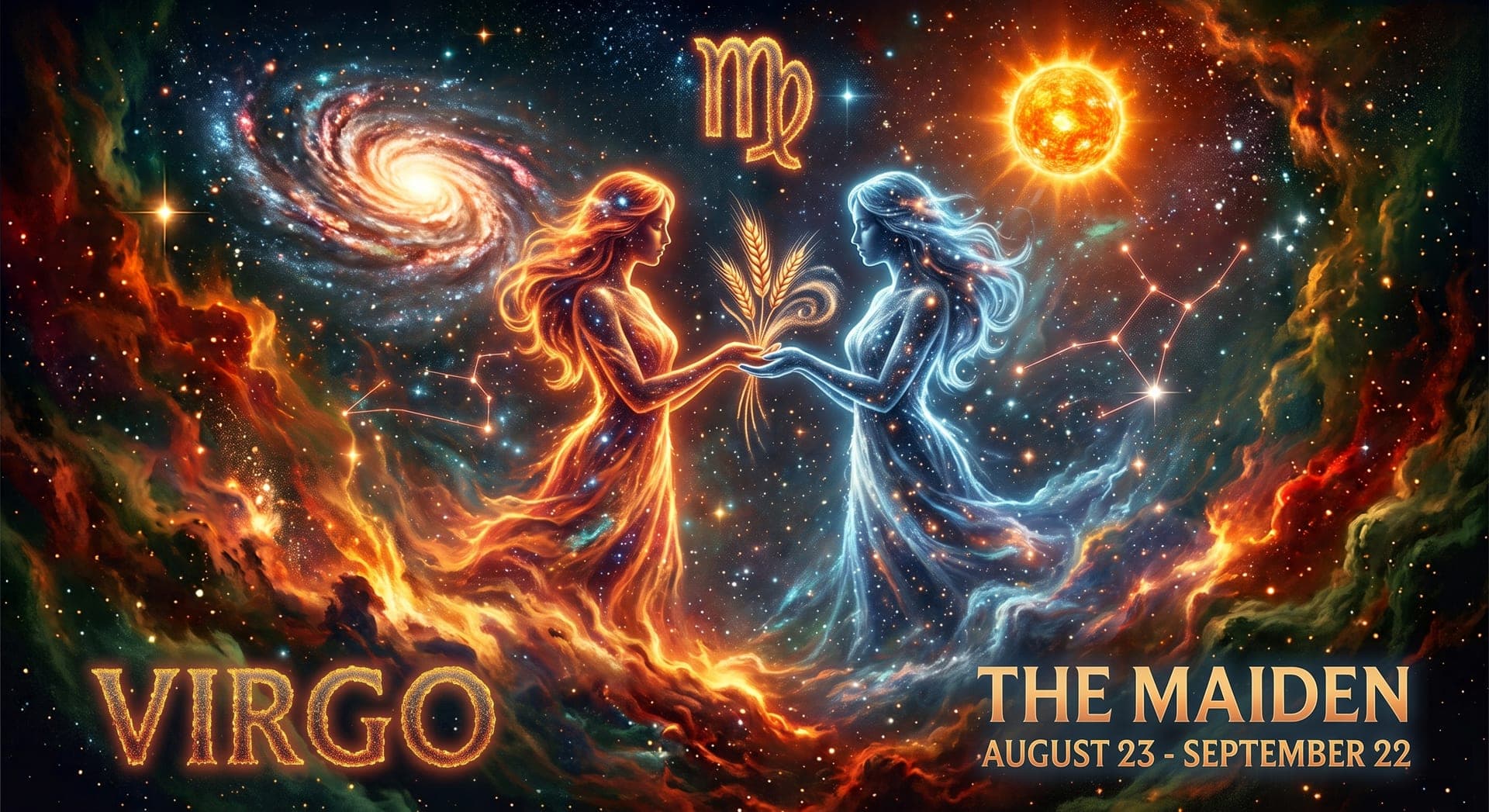
Virgo, the sixth sign of the zodiac, spans August 23 to September 22 and is symbolized by the maiden, often depicted holding a sheaf of wheat, representing purity, meticulous care, and the harvest. Ruled by Mercury, the planet of communication and intellect, Virgo channels its mental energy toward precision, analysis, and practical problem-solving rather than idle chatter. As an Earth sign, Virgo is grounded and detail-oriented, finding genuine satisfaction in organizing, refining, and perfecting the world around it. Its Mutable modality gives Virgo an adaptable, service-oriented nature, often finding purpose in quietly helping others and improving systems rather than seeking the spotlight. People born under this sign are frequently drawn to work requiring precision, research, or care for others, from science and medicine to editing and organization. Virgo's high standards make it an excellent problem-solver and a reliable presence others can count on, though that same perfectionism can turn inward as self-criticism or outward as an exacting, sometimes overly critical, eye toward the people and world around it.
Personality Traits
Strengths
- Highly organized and detail-oriented
- Reliable and hardworking
- Analytical problem-solver
- Genuinely helpful to others
- Modest and unpretentious
Weaknesses
- Prone to overcritical perfectionism
- Tends to worry excessively
- Can be overly critical of others
- Reserved to the point of aloofness
- Struggles to relax
Compatible Signs
Fun Facts
- Virgo's maiden symbol is often associated with Astraea, the Greek goddess of justice and purity, said to have been the last immortal to live among humans.
- Virgo is the only zodiac sign represented by a female human figure.
- Virgo and Gemini share Mercury as their ruling planet, though Virgo channels the planet's communicative energy toward analysis and precision rather than pure talkativeness.
- Notable Virgos include Beyoncé, Michael Jackson, Mother Teresa, and Stephen King.
- Virgo season falls at the tail end of summer, a period traditionally associated with harvest, meticulous preparation, and gathering resources for the colder months ahead.
Born on September 13
- 1502
John Leland
English antiquary and poet who conducted the first systematic survey of England's libraries and antiquities under Henry VIII
- 1521
William Cecil, 1st Baron Burghley
English statesman who served as Queen Elizabeth I's chief advisor for four decades
- 1819
Clara Schumann
German pianist and composer
- 1860
John J. Pershing
American general who led U.S. forces in World War I
- 1874
Arnold Schoenberg
Austrian composer who pioneered atonal music
- 1879
Annie Kenney
English suffragette and working-class organizer who was a leading figure in the militant Women's Social and Political Union
- 1886
Robert Robinson
English chemist who won the Nobel Prize for his research into plant dyes, alkaloids, and other natural products
- 1894
J. B. Priestley
English novelist and playwright known for works including The Good Companions and An Inspector Calls
- 1903
Claudette Colbert
American actress
- 1911
Bill Monroe
American mandolinist known as the father of bluegrass music
- 1916
Roald Dahl
Welsh-born British novelist celebrated for children's books including Charlie and the Chocolate Factory and Matilda
- 1919
Mary Midgley
English moral philosopher known for her writing on human nature, science, and animal ethics
- 1925
Mel Torme
American singer and actor
- 1938
John Smith
Scottish Labour politician who led the Labour Party from 1992 until his sudden death in 1994

On This Day in History
- 585 BCE
Roman king Lucius Tarquinius Priscus celebrates a triumph for his victories over the Sabines.
According to Roman tradition, the early king celebrated a formal triumphal procession through Rome to commemorate his military successes against the neighboring Sabine people, part of the early legendary period of Roman expansion under its semi-mythical kings before the establishment of the Republic.
- 509 BCE
The Temple of Jupiter Optimus Maximus is dedicated on Rome's Capitoline Hill.
The magnificent temple dedicated to Jupiter, Juno, and Minerva atop Rome's Capitoline Hill became the city's most important religious site, serving as the destination for triumphal processions and the location where victorious generals offered sacrifices, remaining central to Roman civic religion for nearly a thousand years.
- 533
Byzantine general Belisarius defeats the Vandals at the Battle of Ad Decimum near Carthage.
Byzantine general Belisarius, campaigning to reclaim North Africa for the empire, decisively defeated the Vandal Kingdom's forces near Carthage, a crucial early victory in Emperor Justinian's broader ambition to restore Roman control over former imperial territories in the west. The rapid collapse of Vandal resistance that followed allowed Belisarius to capture Carthage itself within weeks, effectively ending nearly a century of Vandal rule in the region.
- 1229
Ogedei Khan is proclaimed ruler of the Mongol Empire, succeeding his father Genghis Khan.
Following the death of Genghis Khan, his son Ogedei was formally elected as Great Khan by an assembly of Mongol nobles, continuing the rapid expansion of the Mongol Empire and overseeing campaigns that extended Mongol control deep into Eastern Europe and China.
- 1437
Portuguese forces launch a failed attempt to seize the Moroccan citadel of Tangier.
Portuguese forces launched an ambitious but ultimately unsuccessful assault on the fortified Moroccan city of Tangier, a costly military setback that nonetheless reflected Portugal's growing ambitions for territorial expansion along the North African coast during this early period of overseas exploration.
- 1645
A Covenanter army led by David Leslie routs the Royalist forces of James Graham, Marquess of Montrose, at the Battle of Philiphaugh in the Scottish Borders.
Montrose's brilliant string of victories across Scotland during 1644-45 had briefly given King Charles I control of the country, but his depleted, poorly guarded force was surprised and crushed near Selkirk. Montrose himself escaped, but the defeat effectively ended his Royalist campaign in Scotland and cleared the way for continued Covenanter dominance during the Wars of the Three Kingdoms.
- 1743
Great Britain, Austria, and the Kingdom of Sardinia sign the Treaty of Worms, forming an alliance during the War of the Austrian Succession.
Negotiated largely through British diplomacy and subsidies, the treaty bound the three powers to resist the ambitions of Bourbon France and Spain in Italy and the Holy Roman Empire. Britain's financial backing secured Sardinian military support for Austria's Maria Theresa, reflecting London's broader strategy of funding continental allies to check French power rather than committing large armies of its own.
- 1759
British forces defeat the French at the Battle of the Plains of Abraham during the Seven Years' War.
British forces under General James Wolfe achieved a decisive and unexpected victory over French defenders led by the Marquis de Montcalm outside Quebec City, with both commanding generals mortally wounded during the brief but pivotal engagement. The battle proved decisive in securing British control over French Canada.
- 1759
British forces under General James Wolfe defeat the French army of the Marquis de Montcalm outside Quebec City in the decisive Battle of the Plains of Abraham.
Both commanding generals were mortally wounded during the roughly twenty-minute battle, which broke French resistance in Quebec and led directly to the city's surrender days later. The victory marked a turning point in the Seven Years' War, known in North America as the French and Indian War, and paved the way for British control of Canada.
- 1782
Franco-Spanish forces launch a massive floating-battery assault on British-held Gibraltar during the Great Siege, which the garrison successfully repels.
Ten specially built floating batteries, believed to be unsinkable, bombarded the fortress alongside thousands of troops and dozens of warships in one of the largest combined operations of the century. British defenders under General George Eliott used red-hot cannonballs to set the batteries ablaze, destroying most of them and inflicting heavy casualties, breaking the momentum of the three-year siege.
- 1814
Francis Scott Key composes "Defence of Fort McHenry" while witnessing the bombardment of Baltimore, later becoming the U.S. national anthem.
Watching the overnight British naval bombardment of Fort McHenry from a ship in Baltimore's harbor, American lawyer Francis Scott Key was moved by the sight of the American flag still flying at dawn to compose a poem that was soon set to music and, over a century later, officially adopted as the United States national anthem.
- 1814
British naval and land forces fail to capture Baltimore after a night-long bombardment of Fort McHenry during the War of 1812.
The unsuccessful attack, part of a broader British campaign that had already burned Washington, D.C., ended the momentum of Britain's Chesapeake offensive. Watching the bombardment from a ship in the harbor, American lawyer Francis Scott Key was inspired by the fort's flag still flying at dawn to write the poem that became 'The Star-Spangled Banner.'
- 1847
Six teenage military cadets die defending Chapultepec Castle during the U.S. assault on Mexico City.
As American forces stormed Chapultepec Castle, then Mexico's military academy, six young cadets, later celebrated in Mexican history as the Ninos Heroes or "Boy Heroes," reportedly chose to fight to the death rather than surrender, becoming enduring symbols of national sacrifice and resistance.
- 1848
American railroad foreman Phineas Gage survives a large iron rod being driven completely through his skull in a blasting accident in Vermont.
Gage lived for another eleven years despite losing much of his left frontal lobe, but witnesses reported dramatic changes to his personality and behavior afterward. His case became one of the most cited in the history of neuroscience, providing early evidence that specific regions of the brain govern personality, reasoning, and social behavior.
- 1882
British forces under General Garnet Wolseley decisively defeat the Egyptian army of Ahmed Urabi at the Battle of Tel el-Kebir.
A rapid night march and dawn assault overwhelmed the Egyptian entrenchments in under an hour, crushing the Urabi revolt against European influence in Egypt. The victory secured British control over the Suez Canal, a vital artery to India, and led to a decades-long British occupation of Egypt in all but name.
- 1899
British geographer Halford Mackinder, with Swiss guides Cesar Ollier and Joseph Brocherel, completes the first ascent of Batian, the highest peak of Mount Kenya.
Mackinder's expedition endured supply shortages and difficult, unmapped terrain during weeks of approach before the final technical climb to the summit. The achievement, alongside Mackinder's broader work founding academic geography in Britain, cemented his reputation as one of the leading British explorer-scientists of his era.
- 1922
The Great Fire of Smyrna begins, marking the final act of the Greco-Turkish War.
Following the Greek military defeat in the Greco-Turkish War, Turkish forces entered the ethnically diverse port city of Smyrna, and a massive fire subsequently destroyed much of the city's Greek and Armenian quarters amid widespread violence, resulting in a catastrophic loss of life and a mass refugee crisis.
- 1985
Super Mario Bros. is released in Japan for the Nintendo Entertainment System, launching one of gaming's most successful franchises.
Nintendo released its side-scrolling platformer starring the plumber Mario on the Famicom console in Japan, introducing gameplay mechanics and level design principles that would influence countless subsequent video games and help establish Nintendo as a dominant force in the emerging home video game industry.
- 1988
Hurricane Gilbert is confirmed as the most intense tropical cyclone ever recorded in the Western Hemisphere at that time, based on its record-low central pressure.
The storm went on to devastate Jamaica, the Yucatan Peninsula, and northeastern Mexico, killing hundreds of people and causing billions of dollars in damage. Gilbert's record for lowest measured pressure in the Atlantic basin stood for years afterward, and it remains one of the most powerful hurricanes ever observed in the region.
- 1993
Israeli Prime Minister Yitzhak Rabin and PLO Chairman Yasser Arafat sign the Oslo Accords at a ceremony at the White House.
The agreement, negotiated secretly in Norway, established a framework for limited Palestinian self-government in the West Bank and Gaza Strip and marked the first direct, mutual recognition between Israel and the Palestine Liberation Organization. Though celebrated as a historic breakthrough, its promise of lasting peace ultimately went unfulfilled amid continued violence and stalled negotiations.