What’s Observed on August 6
Born on August 6: Leo ♌
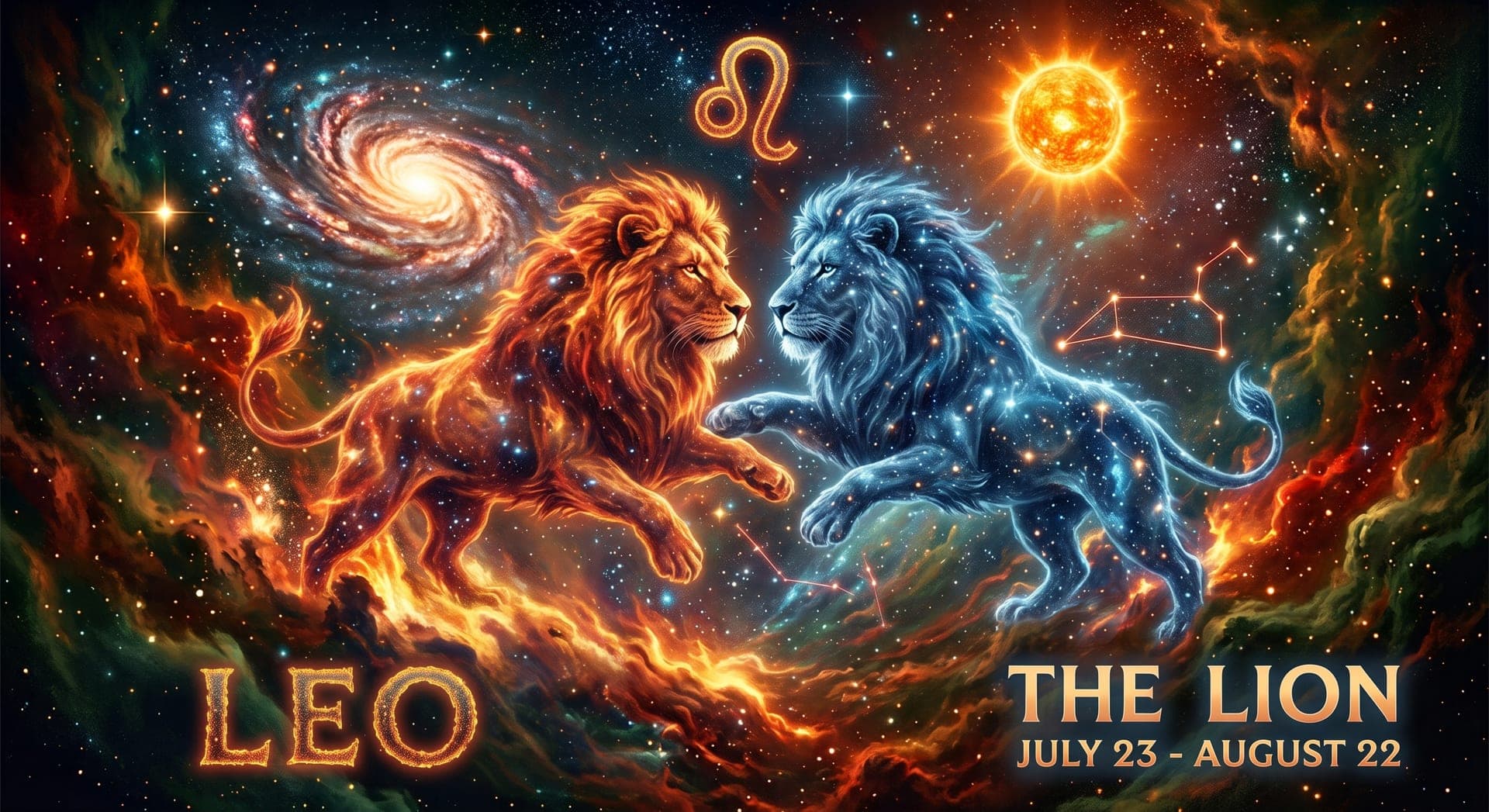
Leo, the fifth sign of the zodiac, spans July 23 to August 22 and is symbolized by the lion, an animal long associated with courage, pride, and natural leadership. Ruled by the Sun, the center of the solar system and the source of light and life, Leo is widely regarded as one of the most confident, warm, and charismatic signs of the zodiac, naturally drawn to the spotlight. As a Fire sign, Leo approaches life with passion, enthusiasm, and a flair for the dramatic, rarely content to blend quietly into the background. Its Fixed modality gives Leo a strong sense of loyalty and consistency, along with a stubborn streak once its mind is made up. People born under this sign are often natural performers, leaders, or creatives who thrive when appreciated and celebrated by those around them. Leo's generosity and warmth make it a beloved friend and steadfast ally, though its genuine need for recognition and admiration can tip into vanity or a demand for center stage if left unchecked.
Personality Traits
Strengths
- Naturally charismatic leader
- Generous and warm-hearted
- Confident and self-assured
- Creative and expressive
- Loyal to friends and family
Weaknesses
- Prone to arrogance
- Craves attention and validation
- Stubborn once decided
- Can be domineering
- Sensitive to criticism of their ego
Compatible Signs
Fun Facts
- Leo's lion symbol connects to the Greek myth of the Nemean Lion, slain by Hercules as the first of his twelve labors.
- Leo is ruled by the Sun, the only zodiac sign ruled directly by a star rather than a planet or moon.
- As a Fixed Fire sign, Leo season falls at the height of summer, when the sun's warmth and intensity are strongest in the Northern Hemisphere.
- Notable Leos include Barack Obama, Madonna, Jennifer Lawrence, and Napoleon Bonaparte.
- Leo rules the heart in traditional medical astrology, reflecting the sign's association with vitality, courage, and life force.
Born on August 6
- 1504
Matthew Parker
English clergyman who served as Archbishop of Canterbury under Elizabeth I and helped shape the early Anglican Church
- 1766
William Hyde Wollaston
English chemist and physicist who discovered the elements palladium and rhodium
- 1809
Alfred, Lord Tennyson
English poet who served as Poet Laureate and wrote works including 'The Charge of the Light Brigade'
- 1881
Alexander Fleming
Scottish biologist who discovered penicillin, the world's first widely used antibiotic
- 1911
Lucille Ball
American actress and comedian known for "I Love Lucy"
- 1917
Robert Mitchum
American actor known for film noir roles
- 1926
Frank Finlay
English actor known for his stage and film roles including Othello and The Three Musketeers
- 1928
Andy Warhol
American visual artist and pioneer of pop art
- 1937
Barbara Windsor
English actress known for the Carry On film series and her long-running role in EastEnders
- 1962
Michelle Yeoh
Malaysian actress known for "Everything Everywhere All at Once"
- 1970
M. Night Shyamalan
American filmmaker known for suspense films
- 1972
Geri Halliwell
English singer known as Ginger Spice of the Spice Girls
On This Day in History
- 258
Pope Sixtus II is arrested while celebrating Mass and beheaded along with several of his deacons.
Pope Sixtus II was seized by Roman authorities while conducting religious services in the catacombs during Emperor Valerian's persecution of Christians, and he was executed almost immediately along with several deacons who attended him. He is venerated as a martyr in the Catholic Church, and his feast day is still observed on this date.
- 1284
The Republic of Pisa loses its Mediterranean naval dominance after defeat by Genoa at the Battle of Meloria.
Long dominant in Mediterranean trade, the maritime Republic of Pisa suffered a crushing naval defeat at the hands of its rival Genoa near the Meloria shoals, losing much of its fleet and thousands of sailors. The battle marked the beginning of Pisa's decline as a major Mediterranean sea power, with Genoa emerging as the dominant regional force.
- 1538
Bogota, Colombia, is founded by Spanish conquistador Gonzalo Jimenez de Quesada.
Spanish conquistador Gonzalo Jimenez de Quesada established a settlement in the high Andean plateau previously inhabited by the Muisca people, naming it in honor of his hometown in Spain combined with the region's Indigenous name. The settlement grew to become Bogota, the eventual capital of Colombia.
- 1777
The Battle of Oriskany during the American Revolutionary War prevents colonial relief efforts from reaching besieged Fort Stanwix.
During the American Revolutionary War, a Loyalist and Native American force ambushed colonial militia attempting to relieve the besieged Fort Stanwix in New York, resulting in a brutal but strategically inconclusive engagement. Though technically a British tactical victory, the heavy losses suffered ultimately failed to prevent the fort's continued resistance.
- 1806
The Holy Roman Empire is formally dissolved after Francis II renounces the imperial crown.
Emperor Francis II formally dissolved the roughly thousand-year-old Holy Roman Empire under pressure from Napoleon Bonaparte, who had reorganized much of Germany into a French-aligned confederation. Francis retained his title as Emperor of Austria, a position he had created the previous year in anticipation of the empire's collapse.
- 1861
Britain formally annexes Lagos through the Lagos Treaty of Cession, deposing the local king and establishing direct British control over the port city in present-day Nigeria.
British officials justified the annexation partly as a measure to suppress the transatlantic slave trade still operating through Lagos, though commercial and strategic interests were significant factors as well. Lagos became the nucleus of Britain's later colony of Nigeria, and the port grew into one of West Africa's most important cities under decades of British colonial administration.
- 1870
Prussian-led German forces defeat French armies at the Battle of Spicheren and the Battle of Wörth on the same day, early victories in the Franco-Prussian War.
The twin defeats forced French forces to retreat from the border region and exposed weaknesses in French military organisation compared to the well-coordinated Prussian-led coalition. The war's rapid German successes, culminating in the capture of Napoleon III at Sedan a month later, led directly to the unification of Germany under Prussian leadership and the fall of the French Second Empire.
- 1890
William Kemmler becomes the first person executed by electric chair, at Auburn Prison in New York.
Convicted of murdering his mistress, William Kemmler became the first person executed using the newly developed electric chair at Auburn Prison in New York. The execution, intended as a more humane alternative to hanging, was widely reported as gruesomely botched, requiring a second jolt of electricity, and it fueled ongoing debate over capital punishment methods.
- 1915
Allied forces launch the Battle of Sari Bair, a major offensive during the Gallipoli campaign aimed at breaking the stalemate on the peninsula, including a diversionary landing at Suvla Bay.
British, Australian, New Zealand, and Gurkha troops attacked Ottoman positions on the high ground overlooking the Dardanelles Strait in a bid to seize the campaign's initiative. Despite fierce and costly fighting, including brief footholds on key ridges, the offensive ultimately failed to achieve a breakthrough, and the Gallipoli campaign ended in Allied withdrawal later that year.
- 1926
Gertrude Ederle becomes the first woman to swim across the English Channel.
American swimmer Gertrude Ederle completed a grueling crossing of the English Channel from France to England in under 15 hours, a time that shattered the existing men's record by nearly two hours. Her achievement made her an international celebrity and a significant symbol for women's athletic capability during the 1920s.
- 1926
American swimmer Gertrude Ederle becomes the first woman to swim the English Channel, finishing on the English coast near Kingsdown, Kent.
Ederle completed the crossing from Cap Gris-Nez in France in just under 14 hours and 34 minutes, beating the existing men's record by nearly two hours. Her achievement made headlines worldwide and helped change public attitudes toward women's athletic capability. She was welcomed home to the United States with a ticker-tape parade in New York City.
- 1945
The United States drops the atomic bomb "Little Boy" on Hiroshima, Japan, killing an estimated 70,000 people immediately.
The United States dropped the atomic bomb codenamed "Little Boy" on the Japanese city of Hiroshima, instantly killing tens of thousands of people and causing catastrophic destruction across the city. The bombing, the first use of a nuclear weapon in warfare, was followed three days later by a second bomb on Nagasaki, precipitating Japan's surrender.
- 1945
The United States drops an atomic bomb on the Japanese city of Hiroshima, killing tens of thousands of people instantly and ushering in the nuclear age.
The bomb, nicknamed 'Little Boy,' was dropped from the B-29 bomber Enola Gay and devastated most of the city, with the death toll eventually rising well beyond 100,000 from injuries and radiation sickness. Japan did not surrender immediately, and a second bomb was dropped on Nagasaki three days later, prompting Japan's surrender and the end of the Second World War.
- 1962
Jamaica gains independence from the United Kingdom.
Jamaica achieved full independence from British colonial rule after more than 300 years as a British possession, becoming a self-governing nation within the Commonwealth. The transition followed years of growing self-governance and political organizing, and Jamaica's independence became a landmark moment in the broader decolonization of the Caribbean.
- 1962
Jamaica becomes an independent nation, ending over 300 years as a British colony.
The island, a British possession since it was seized from Spain in 1655, gained full self-governance after Jamaican voters rejected continued membership in the short-lived West Indies Federation. Jamaica remained within the Commonwealth, retaining the British monarch as head of state, while establishing its own parliament and constitution under its first prime minister, Alexander Bustamante.
- 1965
US President Lyndon B. Johnson signs the Voting Rights Act of 1965 into law, banning discriminatory voting practices that had disenfranchised Black Americans across the South.
The law followed years of civil rights activism, including the violently suppressed march from Selma to Montgomery, Alabama, earlier that year. It authorised federal oversight of elections in areas with a history of discrimination and outlawed literacy tests and other barriers used to prevent Black citizens from voting, becoming one of the most consequential pieces of American civil rights legislation.
- 1990
The United Nations Security Council orders a global trade embargo against Iraq following its invasion and occupation of Kuwait days earlier.
Resolution 661 imposed sweeping economic sanctions cutting off Iraqi oil exports and most trade, with Britain among the permanent Security Council members pushing for a unified international response. The embargo remained in place for over a decade, contributing to a humanitarian crisis in Iraq while failing to force Saddam Hussein's withdrawal from Kuwait, which ultimately required the Gulf War to reverse.
- 1991
British computer scientist Tim Berners-Lee publishes the first publicly available description of the World Wide Web project on the internet.
Berners-Lee had developed the underlying technologies, including HTML and HTTP, while working at CERN, the European particle physics laboratory in Switzerland, aiming to make it easier for researchers to share information. His decision to make the web's protocols freely available without licensing fees was crucial to its rapid global adoption, transforming it within a few years into the backbone of modern communication and commerce.
- 2012
NASA's Curiosity rover successfully lands on the surface of Mars.
NASA's Curiosity rover successfully touched down on the Martian surface following a complex and unprecedented landing sequence involving a rocket-powered "sky crane" system. The car-sized rover subsequently conducted extensive geological research, providing crucial evidence of Mars's ancient habitable environments and past presence of liquid water.
- 2012
NASA's Curiosity rover successfully lands on Mars after a dramatic descent through the planet's thin atmosphere.
The car-sized rover touched down in Gale Crater using an unprecedented 'sky crane' landing system that lowered it gently to the surface on cables. Curiosity's mission to study Martian geology and search for evidence of past habitable conditions extended the streak of successful NASA Mars landings and provided some of the most detailed data yet gathered about the Red Planet's history.