
What’s Observed on August 7
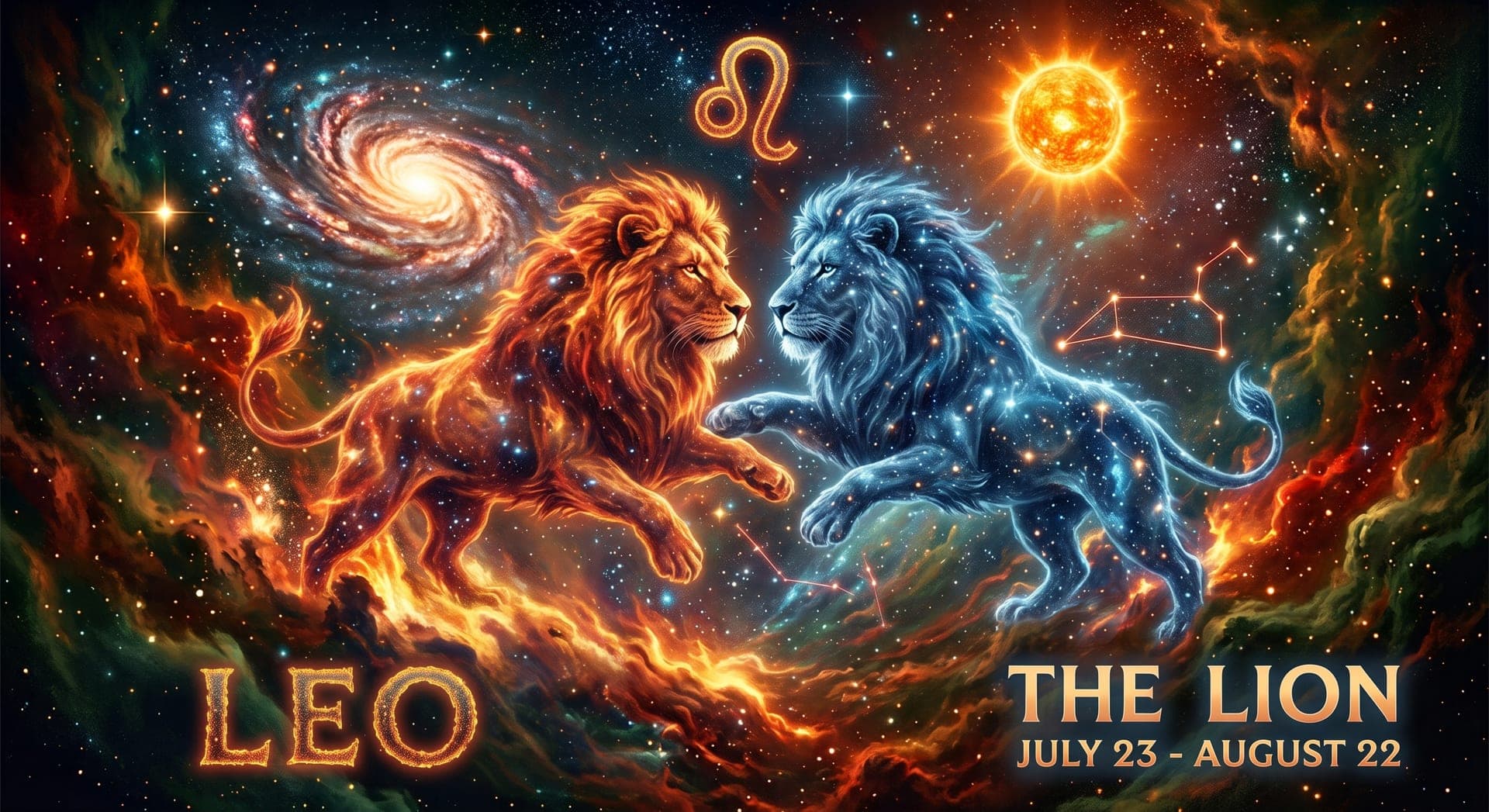
Born on August 7: Leo ♌
Leo, the fifth sign of the zodiac, spans July 23 to August 22 and is symbolized by the lion, an animal long associated with courage, pride, and natural leadership. Ruled by the Sun, the center of the solar system and the source of light and life, Leo is widely regarded as one of the most confident, warm, and charismatic signs of the zodiac, naturally drawn to the spotlight. As a Fire sign, Leo approaches life with passion, enthusiasm, and a flair for the dramatic, rarely content to blend quietly into the background. Its Fixed modality gives Leo a strong sense of loyalty and consistency, along with a stubborn streak once its mind is made up. People born under this sign are often natural performers, leaders, or creatives who thrive when appreciated and celebrated by those around them. Leo's generosity and warmth make it a beloved friend and steadfast ally, though its genuine need for recognition and admiration can tip into vanity or a demand for center stage if left unchecked.
Personality Traits
Strengths
- Naturally charismatic leader
- Generous and warm-hearted
- Confident and self-assured
- Creative and expressive
- Loyal to friends and family
Weaknesses
- Prone to arrogance
- Craves attention and validation
- Stubborn once decided
- Can be domineering
- Sensitive to criticism of their ego
Compatible Signs
Fun Facts
- Leo's lion symbol connects to the Greek myth of the Nemean Lion, slain by Hercules as the first of his twelve labors.
- Leo is ruled by the Sun, the only zodiac sign ruled directly by a star rather than a planet or moon.
- As a Fixed Fire sign, Leo season falls at the height of summer, when the sun's warmth and intensity are strongest in the Northern Hemisphere.
- Notable Leos include Barack Obama, Madonna, Jennifer Lawrence, and Napoleon Bonaparte.
- Leo rules the heart in traditional medical astrology, reflecting the sign's association with vitality, courage, and life force.
Born on August 7
- 1571
Thomas Lupo
English composer and viol player who served in the court music establishments of Elizabeth I and James I
- 1574
Robert Dudley
English explorer, naval commander, and cartographer who produced an influential atlas of sea charts
- 1876
Mata Hari
Dutch dancer executed as a spy during World War I
- 1884
Billie Burke
American actress known for playing Glinda in "The Wizard of Oz"
- 1903
Louis Leakey
British-Kenyan paleoanthropologist
- 1904
Ralph Bunche
American diplomat and Nobel Peace Prize laureate
- 1926
Stan Freberg
American satirist, voice actor, and advertising pioneer
- 1942
Garrison Keillor
American radio personality and author
- 1942
Caetano Veloso
Brazilian singer-songwriter
- 1958
Bruce Dickinson
English singer-songwriter best known as the lead vocalist of the heavy metal band Iron Maiden
- 1966
Shobna Gulati
English actress known for roles in Coronation Street and Dinnerladies
- 1966
David Cairns
Scottish Labour politician who served as a government minister and Member of Parliament for Inverclyde
- 1969
Paul Lambert
Scottish footballer and manager who won the UEFA Champions League with Borussia Dortmund in 1997
On This Day in History
- 461
Roman Emperor Majorian is beheaded near the Iria River in northwest Italy after being deposed.
Majorian, one of the last effective Western Roman emperors, had worked to reform administration and reclaim lost territory, but a failed campaign against the Vandals in Hispania fatally undermined his authority. He was deposed and executed on the orders of Ricimer, the powerful military commander who had originally placed him on the throne, illustrating the era's chronic imperial instability.
- 626
The joint Avar and Slav siege of Constantinople ends in failure.
A combined force of Avars and their Slavic allies besieged the Byzantine capital of Constantinople for weeks, employing siege towers and naval assaults, but were ultimately repelled by the city's formidable defenses and a Byzantine naval victory. The failed siege significantly weakened the Avar Khaganate's regional power and prestige in the following decades.
- 936
Otto I is crowned King of Germany at Aachen.
Otto, son of the East Frankish king Henry the Fowler, was crowned King of Germany at Aachen's cathedral in a deliberately symbolic ceremony evoking the memory of Charlemagne. Otto's subsequent reign proved transformative, ultimately leading to his coronation as Holy Roman Emperor and the establishment of a powerful centralized German kingdom.
- 1479
French forces under King Louis XI are defeated by Burgundian troops at the Battle of Guinegate.
During ongoing conflict between France and the Duchy of Burgundy, Burgundian forces under Maximilian of Austria decisively defeated French troops near the town of Guinegate in present-day France. The battle showcased the growing effectiveness of pike infantry formations and helped secure Habsburg control over the Low Countries through Maximilian's subsequent marriage alliance.
- 1714
The Russian Navy achieves its first major victory over Sweden at the Battle of Gangut.
Peter the Great's newly modernized Russian fleet achieved its first significant naval victory over Sweden near the Hanko Peninsula during the Great Northern War, capturing several Swedish vessels. The battle marked an important milestone in Russia's emergence as a formidable naval power in the Baltic region.
- 1782
George Washington establishes the Badge of Military Merit to recognize wounded soldiers, the precursor to the modern Purple Heart.
General George Washington created a cloth badge in the shape of a purple heart to be awarded to soldiers who demonstrated unusual gallantry or fidelity during the Revolutionary War. Though the award fell out of regular use after the war, it was revived in 1932 as the modern Purple Heart medal awarded to wounded or killed service members.
- 1858
The inaugural Australian rules football match is played between Melbourne Grammar and Scotch College.
Students from two prominent Melbourne schools competed in what is now recognized as the first officially recorded match of Australian rules football, a sport later codified with distinct rules separating it from rugby and association football. The sport went on to become one of Australia's most popular and culturally significant spectator sports.
- 1926
The first British Grand Prix motor race is held at the Brooklands circuit in Surrey, England.
Brooklands, opened in 1907, was the world's first purpose-built motor racing circuit, and hosting the inaugural British Grand Prix cemented its status as the home of British motorsport. The race was won by Robert Sénéchal and Louis Wagner driving for Delage. The event laid early groundwork for what would become one of the most prestigious races on the Formula One calendar after the championship's creation in 1950.
- 1930
A white mob in Marion, Indiana, lynches two Black teenagers, Thomas Shipp and Abram Smith, in one of the last documented lynchings in the northern United States.
A photograph of the lynching, taken by a local studio photographer, became one of the most widely circulated images of racial violence in American history and later inspired the haunting protest song 'Strange Fruit,' popularised by Billie Holiday. The killings, carried out with local law enforcement doing little to intervene, remain a stark symbol of the racial terror that persisted across the United States long after slavery's abolition.
- 1933
Iraqi government forces massacre thousands of Assyrian Christians in and around the village of Simele in northern Iraq.
The killings targeted Assyrians who had sought greater autonomy after the end of the British mandate over Iraq the previous year, and the violence spread to dozens of surrounding villages over several days. The massacre is considered one of the first genocidal campaigns of the post-Ottoman Middle East and prompted the coining of the term 'genocide' by legal scholar Raphael Lemkin, who cited it as a formative case.
- 1942
U.S. Marines launch their first major offensive of the Pacific War, beginning the Battle of Guadalcanal.
American Marines conducted an amphibious landing on the Solomon Islands, marking the first major U.S. ground offensive of the Pacific War and the beginning of a grueling six-month campaign for control of Guadalcanal. The eventual American victory marked a critical turning point, halting Japanese expansion in the South Pacific.
- 1942
United States Marines land on Guadalcanal in the Solomon Islands, opening a brutal six-month campaign that becomes a major turning point in the Pacific War.
The landings marked the first major American offensive against Japan and aimed to seize an airfield the Japanese were building on the island. The subsequent fighting on land, sea, and in the air proved enormously costly to both sides, and the eventual American victory in early 1943 marked the point at which Japan shifted from expansion to defensive retreat across the Pacific.
- 1947
Norwegian explorer Thor Heyerdahl's balsa wood raft, the Kon-Tiki, reaches the Raroia atoll in the Pacific after a 101-day voyage from South America.
Heyerdahl built the primitive raft to test his theory that pre-Columbian South Americans could have settled Polynesia by drifting across the Pacific on similar vessels, a theory most anthropologists have since rejected. The dramatic journey and Heyerdahl's subsequent book and documentary about it captured global public imagination and became one of the most famous adventure voyages of the twentieth century.
- 1960
Ivory Coast (Côte d'Ivoire) gains independence from France, becoming a sovereign republic under President Félix Houphouët-Boigny.
The country's independence came during a wave of African decolonisation in 1960 that saw more than a dozen former French and British colonies become sovereign states. Houphouët-Boigny went on to lead Ivory Coast for over three decades, pursuing close economic ties with France that helped the country become one of the more prosperous economies in West Africa during his rule.
- 1964
The US Congress passes the Gulf of Tonkin Resolution, granting President Lyndon Johnson broad authority to escalate American military involvement in Vietnam.
The resolution followed reported naval clashes between US and North Vietnamese vessels in the Gulf of Tonkin, incidents whose details were later shown to be exaggerated or fabricated by US officials. It effectively functioned as a substitute for a formal declaration of war, enabling a massive escalation of American troop deployments to Vietnam over the following years.
- 1974
French high-wire artist Philippe Petit performs an unauthorized walk between the twin towers of the World Trade Center.
French performer Philippe Petit illegally rigged a high wire between the still-unfinished twin towers of the World Trade Center and walked across it multiple times at a height of over 1,300 feet, without a safety net. The audacious stunt, later chronicled in the documentary "Man on Wire," captivated New Yorkers and made Petit an international celebrity.
- 1998
Truck bombs explode almost simultaneously outside the US embassies in Nairobi, Kenya, and Dar es Salaam, Tanzania, killing over 220 people.
The coordinated attacks, carried out by operatives linked to al-Qaeda, killed mostly local civilians and injured thousands more. The bombings marked one of the first major international attacks attributed to Osama bin Laden's network and prompted US cruise missile strikes on suspected militant sites in Sudan and Afghanistan, foreshadowing the broader conflict with al-Qaeda that culminated after the September 11 attacks.
- 2007
Barry Bonds hits his 756th career home run, surpassing Hank Aaron's all-time record.
Amid ongoing controversy over performance-enhancing drug allegations that shadowed much of his career, San Francisco Giants slugger Barry Bonds hit his 756th career home run, surpassing Hank Aaron's longstanding record. The achievement remains one of the most statistically dominant, and most contested, milestones in baseball history.
- 2007
San Francisco Giants slugger Barry Bonds hits his 756th career home run, surpassing Hank Aaron's long-standing Major League Baseball record.
The record-breaking home run, hit against the Washington Nationals, capped a career that had already made Bonds one of baseball's most dominant hitters. His achievement was overshadowed by persistent allegations that he had used performance-enhancing drugs during the peak of his career, a controversy that has kept him out of the Baseball Hall of Fame despite his statistical dominance.
- 2008
War breaks out between Russia and Georgia after Georgian forces launch an assault on the breakaway region of South Ossetia.
Russia responded with a rapid military intervention, driving Georgian forces out of South Ossetia and Abkhazia within days and recognising both regions as independent states, a move most of the international community refused to accept. The brief but intense conflict was widely seen as a signal of Russia's willingness to use military force to assert influence over former Soviet territories.