What’s Observed on August 21
Born on August 21: Leo ♌
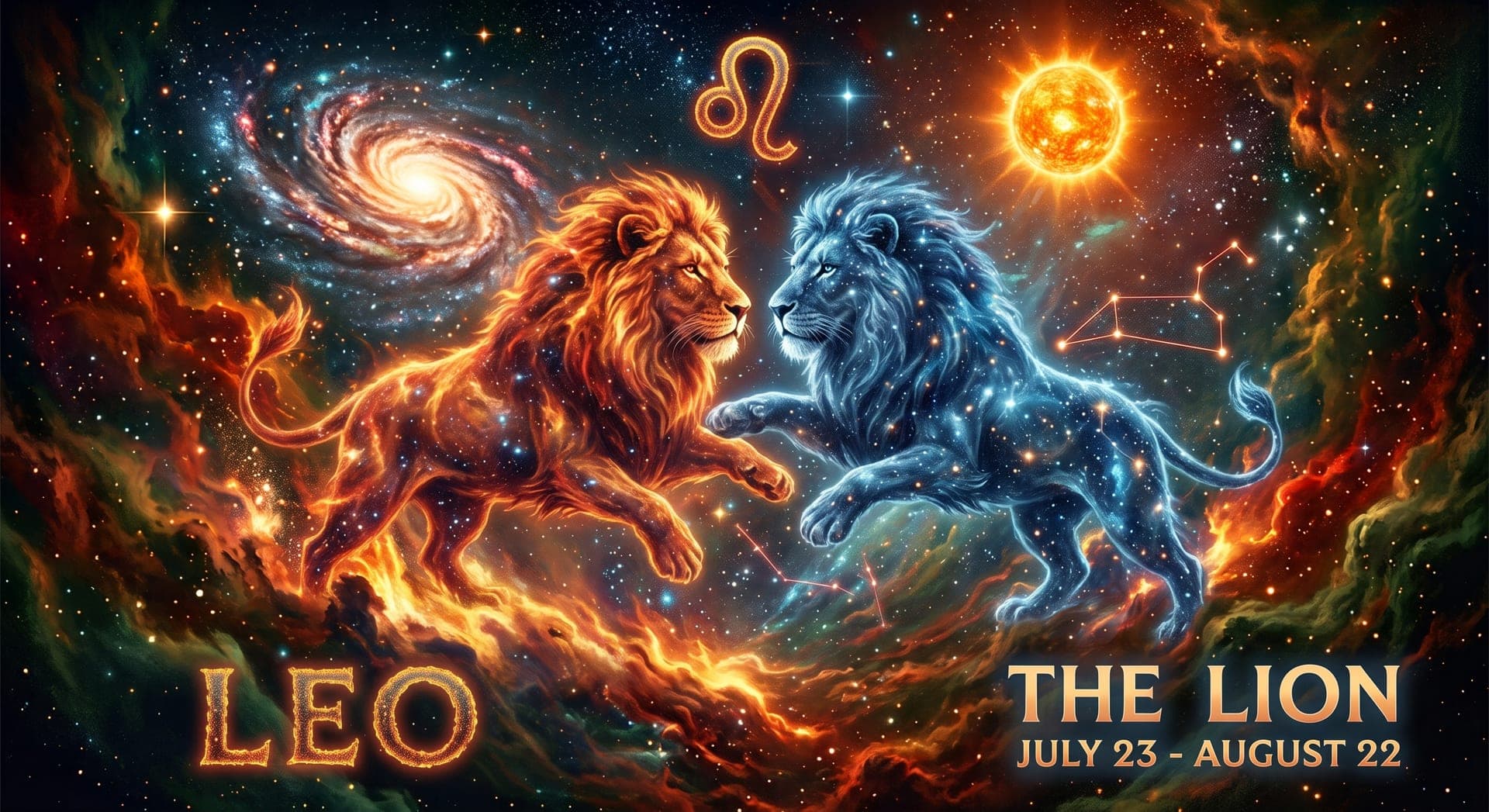
Leo, the fifth sign of the zodiac, spans July 23 to August 22 and is symbolized by the lion, an animal long associated with courage, pride, and natural leadership. Ruled by the Sun, the center of the solar system and the source of light and life, Leo is widely regarded as one of the most confident, warm, and charismatic signs of the zodiac, naturally drawn to the spotlight. As a Fire sign, Leo approaches life with passion, enthusiasm, and a flair for the dramatic, rarely content to blend quietly into the background. Its Fixed modality gives Leo a strong sense of loyalty and consistency, along with a stubborn streak once its mind is made up. People born under this sign are often natural performers, leaders, or creatives who thrive when appreciated and celebrated by those around them. Leo's generosity and warmth make it a beloved friend and steadfast ally, though its genuine need for recognition and admiration can tip into vanity or a demand for center stage if left unchecked.
Personality Traits
Strengths
- Naturally charismatic leader
- Generous and warm-hearted
- Confident and self-assured
- Creative and expressive
- Loyal to friends and family
Weaknesses
- Prone to arrogance
- Craves attention and validation
- Stubborn once decided
- Can be domineering
- Sensitive to criticism of their ego
Compatible Signs
Fun Facts
- Leo's lion symbol connects to the Greek myth of the Nemean Lion, slain by Hercules as the first of his twelve labors.
- Leo is ruled by the Sun, the only zodiac sign ruled directly by a star rather than a planet or moon.
- As a Fixed Fire sign, Leo season falls at the height of summer, when the sun's warmth and intensity are strongest in the Northern Hemisphere.
- Notable Leos include Barack Obama, Madonna, Jennifer Lawrence, and Napoleon Bonaparte.
- Leo rules the heart in traditional medical astrology, reflecting the sign's association with vitality, courage, and life force.
Born on August 21
- 1754
William Murdoch
Scottish engineer and inventor who pioneered gas lighting, illuminating his own home and workshop with coal gas.
- 1765
William IV
King of the United Kingdom from 1830 to 1837, known as the "Sailor King" for his earlier naval career.
- 1872
Aubrey Beardsley
English illustrator and author known for his distinctive black-and-white Art Nouveau drawings.
- 1904
Count Basie
American jazz pianist and bandleader
- 1930
Princess Margaret
Member of the British royal family, sister of Queen Elizabeth II
- 1933
Janet Baker
English mezzo-soprano celebrated as one of the finest opera and concert singers of her generation.
- 1933
Barry Norman
English film critic and broadcaster widely known for presenting the BBC's "Film..." review programme.
- 1936
Wilt Chamberlain
American professional basketball player
- 1937
Donald Dewar
Scottish politician who became the first First Minister of Scotland following devolution.
- 1938
Kenny Rogers
American country singer
- 1952
Joe Strummer
British musician best known as co-founder, lyricist, and lead vocalist of the punk rock band The Clash
- 1956
Kim Cattrall
English-born actress best known for playing Samantha Jones in "Sex and the City."
- 1963
Mohammed VI of Morocco
King of Morocco
- 1973
Sergey Brin
Russian-American co-founder of Google
- 1986
Usain Bolt
Jamaican sprinter and world record holder
On This Day in History
- 1415
Portuguese forces led by Prince Henry the Navigator capture Ceuta from the Marinids, marking an early milestone of Portuguese overseas expansion.
Portuguese forces under the command of Prince Henry the Navigator captured the North African port city of Ceuta from the Marinid dynasty, an early conquest that is often cited by historians as marking the symbolic beginning of the Age of Portuguese Exploration.
- 1673
A Dutch fleet defeats a combined Anglo-French fleet under Prince Rupert of the Rhine at the Battle of Texel.
The battle was the last major naval engagement of the Third Anglo-Dutch War, fought as Dutch admiral Michiel de Ruyter sought to prevent an Anglo-French invasion force from landing. Although the outnumbered Dutch fleet inflicted a costly defeat on Rupert's ships, the strategic result helped persuade England to withdraw from the war the following year, ending its alliance with France against the Dutch Republic.
- 1680
Pueblo peoples seize Santa Fe from Spanish colonizers during the Pueblo Revolt.
Frustrated by broken promises and continued Spanish colonial oppression, Pueblo peoples across present-day New Mexico coordinated a widespread uprising that successfully drove Spanish settlers from the region for over a decade, one of the most successful indigenous rebellions against European colonization in North American history.
- 1689
Jacobite Highlanders are repelled by government defenders at the Battle of Dunkeld in Scotland.
Following the Jacobite victory at Killiecrankie weeks earlier, Highland clansmen attacked the Cameronian regiment garrisoning the town of Dunkeld. Despite being outnumbered, the defenders held their position in fierce street fighting until the Jacobites, having lost their commander, withdrew. The battle effectively broke the momentum of the first Jacobite rising in support of the deposed King James II.
- 1770
James Cook formally claims eastern Australia for Great Britain, naming the territory New South Wales.
British explorer Captain James Cook formally claimed the eastern coastline of the Australian continent for Great Britain, naming the newly claimed territory New South Wales, setting the stage for British colonization beginning with the establishment of a penal colony less than two decades later.
- 1791
An uprising by enslaved Africans in Saint-Domingue marks the beginning of the Haitian Revolution.
Enslaved people in the French colony of Saint-Domingue held a clandestine religious ceremony that is traditionally credited with sparking a coordinated uprising against colonial slavery, launching what became the successful Haitian Revolution and the eventual establishment of the world's first Black-led republic.
- 1791
An uprising by enslaved people in the French colony of Saint-Domingue begins, marking the start of the Haitian Revolution.
Enslaved Africans across the colony's Northern Plain rose up in a coordinated revolt, burning plantations and killing enslavers in a rebellion that grew into a thirteen-year struggle. The uprising eventually led to the abolition of slavery in the colony and, in 1804, the founding of Haiti as the first nation born from a successful slave revolt, reshaping ideas about freedom across the Atlantic world.
- 1808
British and Portuguese forces under General Arthur Wellesley defeat the French at the Battle of Vimeiro in Portugal.
The battle was the first British victory of the Peninsular War, halting a French advance intended to reinforce Lisbon during the Napoleonic occupation of Portugal. Wellesley, who would later become the Duke of Wellington, demonstrated tactics that foreshadowed his later successes against Napoleon. Political interference after the battle led to a controversial truce that let French forces evacuate rather than be destroyed.
- 1831
Nat Turner leads an armed slave rebellion in Southampton County, Virginia.
Turner and a group of enslaved and free Black men killed dozens of white residents over two days before the uprising was suppressed by local militia and federal troops. In the aftermath, Turner was captured, tried, and executed, and Southern states responded with harsher slave codes restricting the movement, education, and assembly of enslaved people. The rebellion remains one of the most significant slave uprisings in American history.
- 1911
The Mona Lisa is stolen from the Louvre by museum employee Vincenzo Peruggia.
The theft of Leonardo da Vinci's famous portrait from the Louvre Museum by an Italian handyman, who believed the painting rightfully belonged in Italy, generated massive international publicity and, paradoxically, significantly boosted the painting's fame once it was recovered over two years later.
- 1911
The Mona Lisa is stolen from the Louvre in Paris by museum employee Vincenzo Peruggia.
Peruggia hid overnight in a storage closet and simply walked out of the museum with Leonardo da Vinci's painting concealed under his coat, a theft that went unnoticed for over a day. The painting's disappearance made global headlines and turned it into one of the most famous artworks in the world. Peruggia was caught two years later when he tried to sell it in Florence.
- 1918
The Second Battle of the Somme begins as British and Allied forces launch a major offensive on the Western Front.
Part of the Hundred Days Offensive that would end the First World War, the renewed fighting around the Somme saw British and Commonwealth troops push German forces back using coordinated infantry, artillery, and tank tactics refined over four years of war. The offensive contributed to the collapse of German resistance in the war's final months, leading to the armistice that November.
- 1942
American forces defeat Japanese troops at the Battle of the Tenaru during the Guadalcanal campaign.
American Marines successfully repelled a poorly coordinated Japanese assault along the banks of the Tenaru River during the early stages of the Guadalcanal campaign, inflicting devastating casualties on the attacking force through concentrated machine gun and artillery fire. The lopsided victory provided an important morale boost and secured an early strategic foothold in the broader Pacific island-hopping campaign against Japan.
- 1959
President Dwight Eisenhower proclaims Hawaii the 50th U.S. state.
Following decades as a U.S. territory and a local referendum showing overwhelming public support, President Eisenhower signed a proclamation formally admitting the Hawaiian Islands as the 50th and final state to join the United States. Hawaii's statehood, achieved just months after Alaska's, completed the current fifty-state configuration of the American union.
- 1959
President Dwight D. Eisenhower signs the executive order proclaiming Hawaii the fiftieth state of the United States.
Hawaii's admission followed a territorial referendum in which voters overwhelmingly favored statehood, completing a process that had been debated for decades. It became the last state added to the union to date, following Alaska's admission earlier the same year, and gave the United States its first Pacific island state with a majority non-European population.
- 1983
Philippine opposition leader Benigno Aquino Jr. is assassinated at Manila International Airport upon returning from exile.
Aquino was shot in the head moments after stepping off his plane, having defied warnings from the government of President Ferdinand Marcos to remain abroad. His assassination galvanized opposition to Marcos's rule and is widely seen as a catalyst for the 1986 People Power Revolution that ended his twenty-year presidency and forced him into exile.
- 1991
Latvia declares the restoration of full independence following decades of Soviet occupation.
Taking advantage of the accelerating collapse of Soviet central authority following the failed August coup against Mikhail Gorbachev, Latvia's parliament formally declared the restoration of full independence, reasserting the sovereignty it had lost following forcible Soviet annexation during World War II. The declaration was quickly followed by international recognition and eventual Latvian membership in the European Union.
- 1991
The hardline coup attempt against Soviet leader Mikhail Gorbachev collapses after three days.
Communist Party hardliners had placed Gorbachev under house arrest and sent tanks into Moscow in a bid to halt his reforms and preserve the Soviet Union, but mass public resistance led by Russian President Boris Yeltsin, along with the plotters' own disorganization, caused the coup to unravel. Its failure accelerated the Soviet Union's disintegration, which formally ended just months later.
- 2013
Chemical weapons attacks in the Ghouta region of Syria kill hundreds of people.
Rockets containing the nerve agent sarin struck rebel-held suburbs of Damascus during Syria's civil war, killing hundreds of civilians in one of the deadliest chemical weapons attacks of the twenty-first century and prompting international outrage over the use of banned munitions.
- 2017
A total solar eclipse crosses the continental United States, visible along a path from Oregon to South Carolina.
A total solar eclipse swept across the continental United States from Oregon to South Carolina, the first path of totality to cross the entire country coast to coast in nearly a century, drawing millions of spectators and widespread media coverage.