
What’s Observed on July 9
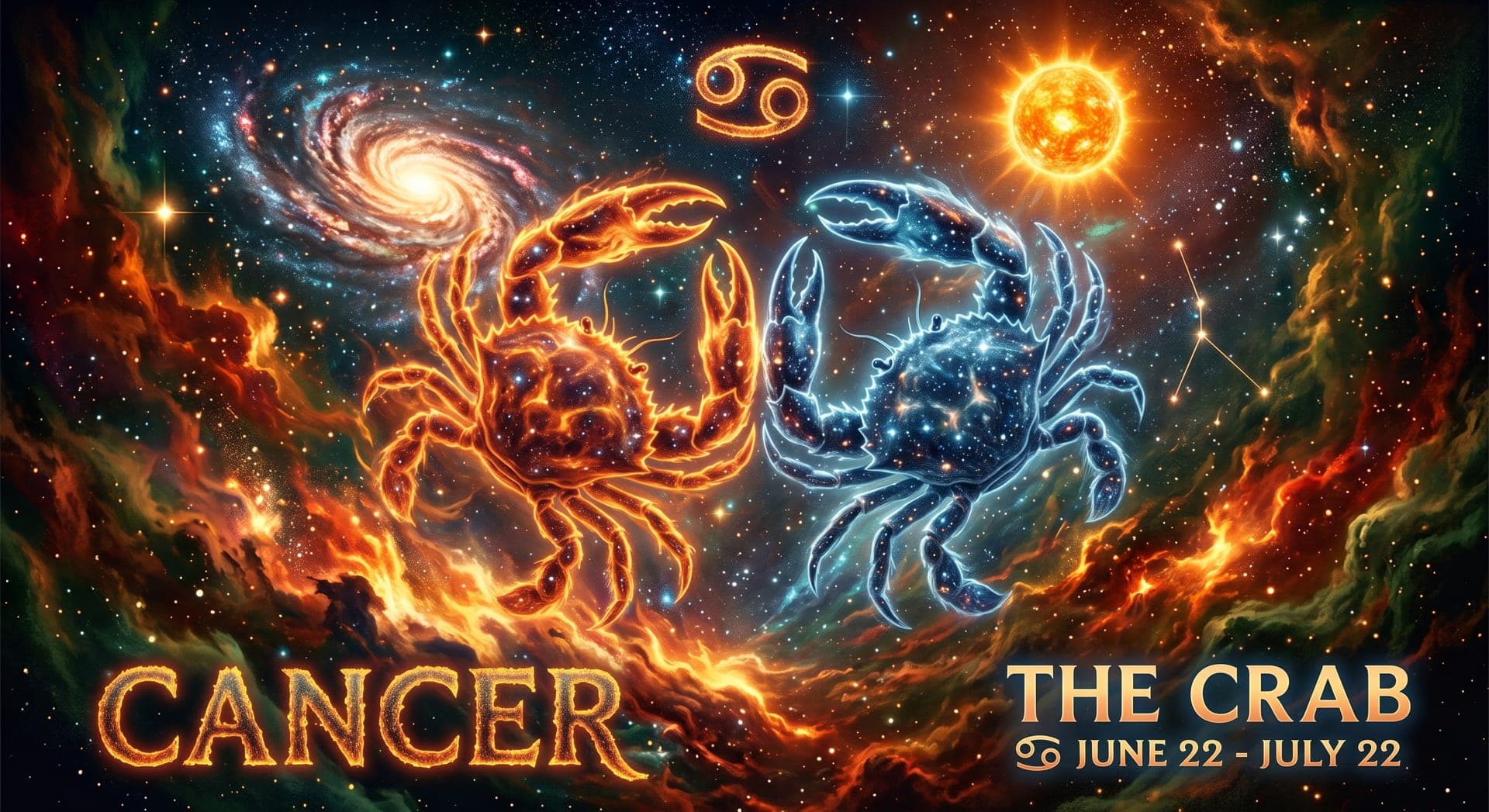
Born on July 9: Cancer ♋
Cancer, the fourth sign of the zodiac, spans June 21 to July 22 and is symbolized by the crab, an animal known for carrying a protective shell while remaining soft and vulnerable underneath. Ruled by the Moon, the celestial body long associated with emotion, intuition, and the subconscious, Cancer is widely regarded as one of the most nurturing and emotionally attuned signs of the zodiac. As a Water sign, Cancer navigates the world through deep feeling, often forming strong emotional bonds and an acute sensitivity to the moods of others. Its Cardinal modality places it at the start of summer, beginning right at the June solstice, reflecting an instinct to initiate and create, especially around home and family. People born under this sign tend to be deeply loyal, protective of loved ones, and drawn to creating a comfortable, secure home environment. Cancer's emotional depth is a genuine strength, but it can also make the sign prone to moodiness or withdrawal when hurt, retreating like a crab into its shell until it feels safe enough to re-emerge.
Personality Traits
Strengths
- Deeply caring and nurturing
- Highly intuitive
- Fiercely loyal and protective
- Strong sense of family and tradition
- Emotionally perceptive
Weaknesses
- Prone to moodiness
- Overly sensitive to criticism
- Can be clingy
- Tends to hold grudges
- Retreats when hurt
Compatible Signs
Fun Facts
- Cancer's crab symbol comes from Greek mythology, where the goddess Hera placed a crab that had fought Hercules among the stars.
- Cancer is ruled by the Moon, the only zodiac sign ruled by a celestial body other than a planet.
- As a Cardinal sign, Cancer initiates summer, beginning at the June solstice, the longest day of the year in the Northern Hemisphere.
- Notable Cancers include Princess Diana, Tom Hanks, Ariana Grande, and Nelson Mandela.
- The crab's hard shell and soft interior are often used as a metaphor for Cancer's protective exterior guarding a deeply sensitive emotional core.
Born on July 9
- 1764
Ann Radcliffe
English author whose Gothic novels, including The Mysteries of Udolpho, shaped the genre
- 1819
Elias Howe
American inventor credited with developing the sewing machine
- 1894
Pyotr Kapitsa
Russian physicist and Nobel laureate
- 1901
Barbara Cartland
English romance novelist
- 1911
Mervyn Peake
English author and illustrator best known for the Gormenghast fantasy novels
- 1916
Edward Heath
English politician who served as Prime Minister of the United Kingdom from 1970 to 1974
- 1922
Kathleen Booth
British computer scientist and mathematician who co-designed some of the earliest computers and wrote the first assembly language
- 1937
David Hockney
English painter and photographer regarded as one of the most influential British artists of the 20th century
- 1946
Bon Scott
Scottish-born singer-songwriter who fronted the rock band AC/DC
- 1956
Tom Hanks
American actor and filmmaker
- 1959
Jim Kerr
Scottish singer-songwriter and keyboard player, frontman of the band Simple Minds
- 1964
Courtney Love
American singer-songwriter and actress
- 1971
Marc Andreessen
American software developer who co-founded Netscape
- 1975
Jack White
American musician known for The White Stripes

On This Day in History
- 1386
The Old Swiss Confederacy decisively defeats the Duchy of Austria at the Battle of Sempach.
Confederate soldiers of the Old Swiss Confederacy inflicted a stunning defeat on the heavily armored knights of Habsburg Austria near Sempach, with Duke Leopold III of Austria killed in the fighting. The battle became a foundational moment in Swiss national identity, celebrated as an early triumph of citizen infantry over feudal cavalry.
- 1540
King Henry VIII has his marriage to Anne of Cleves, his fourth wife, formally annulled.
Henry VIII secured an annulment of his brief marriage to Anne of Cleves, arranged for political alliance purposes, on grounds that it had never been consummated. Anne accepted the settlement gracefully, receiving generous property and the title "the King's Beloved Sister," allowing her to live comfortably in England for the rest of her life, unlike several of Henry's other wives.
- 1540
King Henry VIII of England has his marriage to Anne of Cleves annulled after only six months.
The marriage, arranged for political reasons, had never been consummated and Henry reportedly found Anne unappealing in person. The annulment was granted on grounds of non-consummation and Anne's prior betrothal, and she was given a generous settlement, living out her life in England as the king's honoured 'sister.'
- 1762
Catherine the Great becomes Empress of Russia following a coup that deposed her husband, Peter III.
Catherine, a German-born princess married into the Russian royal family, orchestrated a coup with the support of the imperial guard that deposed her unpopular husband, Peter III, who was killed in custody shortly afterward. Catherine's subsequent 34-year reign became one of the most transformative in Russian history, expanding the empire's territory and embracing Enlightenment ideals.
- 1776
George Washington orders the Declaration of Independence read aloud to Continental Army troops assembled in Manhattan.
Washington ordered the newly adopted Declaration of Independence read to assembled troops in New York as British forces gathered nearby in preparation for the New York campaign. The reading was followed by celebratory unrest in which soldiers and citizens toppled a statue of King George III, later melted down to make musket balls.
- 1793
The Act Against Slavery is passed in Upper Canada, restricting the importation of enslaved people and providing for the gradual abolition of slavery in the colony.
Introduced by Lieutenant Governor John Graves Simcoe, it was among the first legislative acts in the British Empire to move toward abolishing slavery, though existing enslaved people were not immediately freed. It laid groundwork that later contributed to Canada's reputation as a haven for escaped slaves.
- 1811
Explorer David Thompson claims the Columbia District for the United Kingdom, having reached the mouth of the Columbia River.
Thompson, a British-Canadian fur trader and surveyor, had spent years mapping vast stretches of western North America for the North West Company. His claim intensified competition with American traders over the Pacific Northwest, a dispute that persisted for decades before the border was finally settled in 1846.
- 1816
Argentina formally declares independence from Spanish colonial rule.
Argentina's congress formally declared independence from Spain at a gathering in Tucuman, following years of revolutionary struggle that began in 1810. The declaration solidified the political break from colonial rule, though military conflict with Spanish royalist forces continued in the region for several more years before independence was fully secured.
- 1863
The Siege of Port Hudson ends in Union victory, securing full Union control of the Mississippi River.
After a lengthy Union siege along the Mississippi River in Louisiana, Confederate forces at Port Hudson surrendered upon learning of the fall of Vicksburg days earlier, since further resistance had become strategically pointless. The surrender gave the Union complete control of the Mississippi River, severing the Confederacy's eastern and western territories.
- 1868
The Fourteenth Amendment to the United States Constitution is ratified, guaranteeing citizenship and due process rights.
Adopted in the aftermath of the Civil War, it granted citizenship to all persons born or naturalised in the United States, including formerly enslaved people, and barred states from denying anyone equal protection under the law. It became one of the most litigated amendments in American constitutional history.
- 1877
The first Wimbledon Championships tennis tournament begins in England.
Held on the grounds of the All England Club, the inaugural Wimbledon tournament featured a men's singles competition won by Spencer Gore. What began as a modest gentlemen's club event grew into the oldest and among the most prestigious tennis championships in the world, still played annually on the club's grass courts.
- 1877
The inaugural Wimbledon Championships begin at the All England Croquet and Lawn Tennis Club.
The tournament, the oldest tennis championship in the world, featured only a men's singles event in its first year, won by Spencer Gore. Wimbledon has since grown into one of tennis's four Grand Slam tournaments and the sport's most prestigious event.
- 1900
The Commonwealth of Australia Constitution Act receives royal assent, paving the way for the Federation of Australia.
Passed by the British Parliament, the Act united six previously separate British colonies into a single federated nation. Australia formally came into existence on 1 January 1901, though it remained closely tied to Britain constitutionally and culturally for decades afterward.
- 1943
Allied forces launch the invasion of Sicily, an operation that ultimately leads to the downfall of Benito Mussolini's regime.
Allied forces launched a massive amphibious assault on Sicily, codenamed Operation Husky, marking the first major Allied invasion of Axis-held European territory. The campaign's success contributed directly to the collapse of confidence in Mussolini's fascist government, leading to his removal from power by King Victor Emmanuel III later that month.
- 1943
The Allied invasion of Sicily begins, opening a new front in the Mediterranean and eventually leading to the downfall of Benito Mussolini.
Operation Husky involved a massive combined force of British, American, and Canadian troops landing on the island's southern coast. The campaign's success knocked Italy toward surrender within weeks and forced Germany to divert troops from other fronts, including the Eastern Front.
- 1955
The Russell–Einstein Manifesto, calling for the reduction of nuclear weapons risk, is issued in London.
Drafted primarily by British philosopher Bertrand Russell with the support of Albert Einstein, the manifesto was signed by eleven prominent scientists and intellectuals just before Einstein's death. It helped inspire the founding of the Pugwash Conferences on Science and World Affairs, which later won the Nobel Peace Prize.
- 1962
The United States conducts the Starfish Prime high-altitude nuclear test over the Pacific Ocean.
Detonated roughly 250 miles above the Earth, the test produced an unexpectedly powerful electromagnetic pulse that damaged electrical systems and streetlights in Hawaii, hundreds of miles away. The results contributed to later international agreements restricting nuclear testing in space.
- 2002
The African Union is established in Addis Ababa, replacing the Organisation of African Unity.
Fifty-three African heads of state gathered in Ethiopia's capital to formally launch the African Union, succeeding the Organisation of African Unity with an expanded mandate covering economic integration, peacekeeping, and human rights. The new body was modeled partly on the European Union's institutional structure, aiming for deeper continental cooperation.
- 2011
South Sudan gains independence from Sudan, becoming the world's newest nation at the time.
After a referendum overwhelmingly favoring separation, South Sudan formally became the world's newest sovereign nation, ending decades of civil war with Sudan that had claimed millions of lives. The new country soon faced significant challenges, including internal ethnic conflict and economic hardship, complicating its transition to stable statehood.
- 2011
South Sudan gains independence, becoming the world's newest sovereign state.
The country's independence followed decades of civil war with Sudan and a 2011 referendum in which nearly 99 percent of voters supported secession. Despite the hopeful start, South Sudan descended into its own internal civil conflict just two years later.