
What’s Observed on July 8
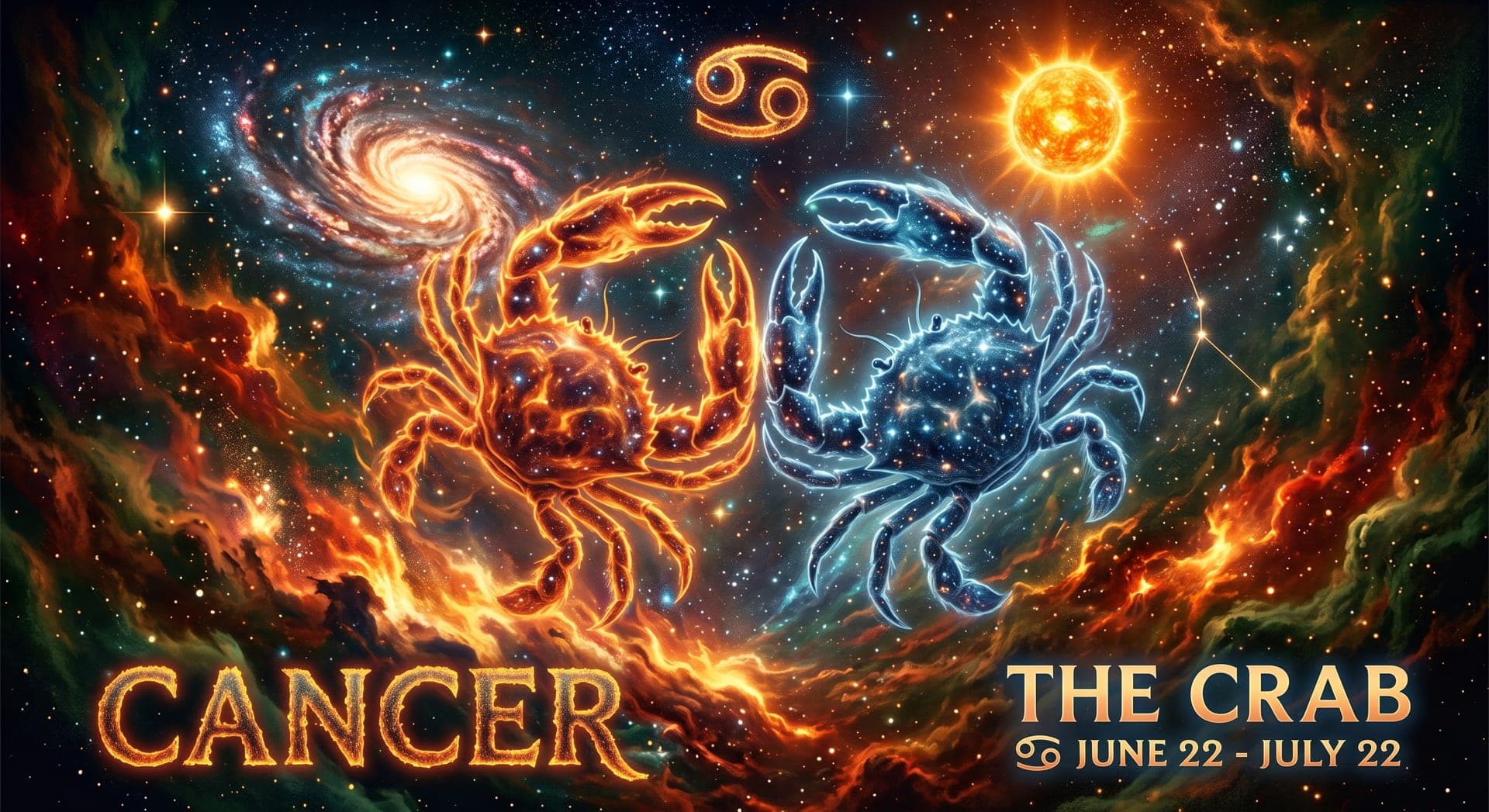
Born on July 8: Cancer ♋
Cancer, the fourth sign of the zodiac, spans June 21 to July 22 and is symbolized by the crab, an animal known for carrying a protective shell while remaining soft and vulnerable underneath. Ruled by the Moon, the celestial body long associated with emotion, intuition, and the subconscious, Cancer is widely regarded as one of the most nurturing and emotionally attuned signs of the zodiac. As a Water sign, Cancer navigates the world through deep feeling, often forming strong emotional bonds and an acute sensitivity to the moods of others. Its Cardinal modality places it at the start of summer, beginning right at the June solstice, reflecting an instinct to initiate and create, especially around home and family. People born under this sign tend to be deeply loyal, protective of loved ones, and drawn to creating a comfortable, secure home environment. Cancer's emotional depth is a genuine strength, but it can also make the sign prone to moodiness or withdrawal when hurt, retreating like a crab into its shell until it feels safe enough to re-emerge.
Personality Traits
Strengths
- Deeply caring and nurturing
- Highly intuitive
- Fiercely loyal and protective
- Strong sense of family and tradition
- Emotionally perceptive
Weaknesses
- Prone to moodiness
- Overly sensitive to criticism
- Can be clingy
- Tends to hold grudges
- Retreats when hurt
Compatible Signs
Fun Facts
- Cancer's crab symbol comes from Greek mythology, where the goddess Hera placed a crab that had fought Hercules among the stars.
- Cancer is ruled by the Moon, the only zodiac sign ruled by a celestial body other than a planet.
- As a Cardinal sign, Cancer initiates summer, beginning at the June solstice, the longest day of the year in the Northern Hemisphere.
- Notable Cancers include Princess Diana, Tom Hanks, Ariana Grande, and Nelson Mandela.
- The crab's hard shell and soft interior are often used as a metaphor for Cancer's protective exterior guarding a deeply sensitive emotional core.
Born on July 8
- 1836
Joseph Chamberlain
English businessman and statesman who served as a leading Liberal Unionist politician and Colonial Secretary
- 1839
John D. Rockefeller
American businessman who founded Standard Oil
- 1851
Arthur Evans
English archaeologist best known for excavating the Minoan palace of Knossos on Crete
- 1882
Percy Grainger
Australian-American pianist and composer
- 1892
Richard Aldington
English author and poet associated with the Imagist literary movement
- 1908
Nelson Rockefeller
41st Vice President of the United States
- 1917
Pamela Brown
English actress known for her stage work and film roles including Becket
- 1926
Elisabeth Kübler-Ross
Swiss-American psychiatrist known for work on grief and dying
- 1934
Marty Feldman
English actor, comedian, and screenwriter known for his role as Igor in Young Frankenstein
- 1951
Anjelica Huston
American actress and director
- 1958
Kevin Bacon
American actor and musician
- 1961
Andrew Fletcher
English keyboardist and founding member of the band Depeche Mode
- 1970
Beck
American singer-songwriter and producer
- 1976
Ellen MacArthur
English sailor who set a world record for the fastest solo circumnavigation of the globe by sail
- 1991
Virgil van Dijk
Dutch professional footballer

On This Day in History
- 1167
Byzantine forces defeat a Hungarian army at the Battle of Sirmium, compelling Hungary to seek peace.
Byzantine forces under Manuel Komnenos decisively defeated an invading Hungarian army near the fortress of Sirmium on the empire's northern frontier. The victory forced Hungary to accept unfavorable peace terms and temporarily secured the Byzantine Empire's Balkan borders during a period of renewed imperial strength under the Komnenian dynasty.
- 1497
Portuguese explorer Vasco da Gama departs on the voyage that would make him the first European to reach India by sea.
Commanding a fleet of four ships, the Portuguese navigator departed Lisbon on a voyage that would round the Cape of Good Hope and reach the Indian port of Calicut in 1498, establishing the first direct sea route between Europe and Asia. The achievement broke the overland trade monopoly held by Middle Eastern and Italian merchants and launched the era of European maritime empire.
- 1497
Portuguese explorer Vasco da Gama departs Lisbon on the first direct European sea voyage to India.
His fleet rounded the Cape of Good Hope and reached the Indian port of Calicut in 1498, opening a sea route that bypassed Middle Eastern intermediaries. The voyage launched more than a century of Portuguese dominance over the lucrative Indian Ocean spice trade.
- 1663
King Charles II grants a Royal charter establishing the colony of Rhode Island and Providence Plantations.
The charter guaranteed unusually broad religious liberty for its time, reflecting the colony's founding by Roger Williams as a refuge for those persecuted elsewhere in New England. It remained in force as Rhode Island's governing document until a new state constitution was adopted in 1843.
- 1709
Russian forces under Peter the Great decisively defeat Sweden's Charles XII at the Battle of Poltava, ending Sweden's status as a major European power.
Peter the Great's modernized Russian army decisively defeated the previously formidable forces of Sweden's King Charles XII near the Ukrainian town of Poltava during the Great Northern War. The battle effectively ended Sweden's status as a dominant European military power and established Russia as a major continental force for the first time.
- 1709
Russian forces under Peter the Great decisively defeat Sweden's Charles XII at the Battle of Poltava.
The battle effectively ended Sweden's status as a major European power after decades of military dominance under the Vasa and Palatinate-Zweibrücken kings. It marked the emergence of Russia as a dominant force in northern and eastern Europe for the following two centuries.
- 1741
Preacher Jonathan Edwards delivers his famous sermon "Sinners in the Hands of an Angry God" during the First Great Awakening.
Delivered during a period of religious revival in colonial New England, Edwards's vivid sermon warned congregants of the peril of eternal damnation and the necessity of repentance, using intense imagery of sinners suspended over hellfire by a thread. It became one of the most famous sermons in American religious history and a defining text of the First Great Awakening.
- 1758
French forces successfully defend Fort Carillon against a much larger British army at Ticonderoga.
The British suffered heavy casualties in a poorly coordinated frontal assault during the French and Indian War. Despite the defeat, the fort fell to the British the following year and was renamed Fort Ticonderoga, becoming a key strategic post for the remainder of the conflict.
- 1760
British forces defeat the French in the last naval battle fought in New France, hastening the fall of French Canada.
The action, part of the wider Seven Years' War, cut off French reinforcement and supply routes along the St. Lawrence River. Within months Montreal surrendered to British forces, bringing an end to more than a century and a half of French colonial rule in Canada.
- 1775
The Second Continental Congress signs the Olive Branch Petition, a final appeal to King George III to avoid war with the American colonies.
Drafted largely by John Dickinson, the petition professed continued loyalty to the Crown while asking for redress of colonial grievances. The king refused even to formally receive it, and within months the conflict escalated into full-scale revolutionary war.
- 1776
The Declaration of Independence receives its first public reading in Philadelphia.
The Declaration of Independence, adopted by Congress four days earlier, received its first public reading outside the Pennsylvania State House to an assembled crowd, accompanied by the ringing of bells throughout Philadelphia. Public readings soon followed in other colonial cities, spreading news of the formal break with Britain.
- 1822
Chippewa leaders cede a large tract of land in what is now Ontario to the United Kingdom.
The agreement was one of many land cession treaties negotiated between First Nations and British colonial authorities in the decades following the War of 1812, as European settlement steadily expanded across Upper Canada.
- 1889
The first issue of The Wall Street Journal is published.
Founded by Charles Dow, Edward Jones, and Charles Bergstresser, the newspaper grew from a small financial news bulletin into one of the most influential business publications in the world. Dow's associated stock market indices, including the Dow Jones Industrial Average, became foundational tools for tracking American economic performance.
- 1892
A great fire devastates St. John's, the capital of the British colony of Newfoundland, destroying much of the city.
The blaze left around 11,000 people homeless and caused enormous economic damage to the colony's largest city and commercial hub. Rebuilding efforts in the years that followed shaped much of the modern layout and architecture of downtown St. John's.
- 1947
Reports emerge of debris recovered near Roswell, New Mexico, later becoming the center of enduring UFO conspiracy theories.
A rancher near Roswell reported unusual debris on his property, which the local Army air base initially described in a press release as a "flying disc." Officials quickly retracted the description, attributing the wreckage to a weather balloon, but the incident became the foundation of enduring conspiracy theories about a government cover-up of extraterrestrial contact.
- 1990
West Germany wins the FIFA World Cup final against Argentina, with the game's only goal scored by Andreas Brehme.
West Germany defeated Argentina 1-0 in the World Cup final at Italy's Stadio Olimpico, with Andreas Brehme converting a controversial late penalty for the decisive goal. The victory, West Germany's third World Cup title, came shortly before German reunification later that year, adding symbolic weight to the triumph.
- 1990
West Germany defeats Argentina 1-0 in the FIFA World Cup final, with the winning goal scored by Andreas Brehme.
The tense, foul-marred final, in which two Argentine players were sent off, delivered West Germany its third World Cup title. It proved to be the country's last tournament as a separate nation before German reunification later that same year.
- 2011
Space Shuttle Atlantis launches on the final mission of NASA's Space Shuttle program.
Space Shuttle Atlantis lifted off from Kennedy Space Center on STS-135, the 135th and final mission of NASA's three-decade Space Shuttle program. The mission delivered supplies to the International Space Station, and its conclusion marked the end of an era in American human spaceflight, with NASA subsequently relying on international and commercial partners for crew launches.
- 2022
Former Japanese Prime Minister Shinzo Abe is fatally shot with an improvised firearm while campaigning.
Abe, Japan's longest-serving prime minister, was shot with a homemade firearm while delivering a campaign speech in Nara and died shortly afterward. The assassination, shocking in a country with extremely low rates of gun violence, was linked by the attacker to grievances over a religious organization, prompting scrutiny of political ties to the group.
- 2022
Former Japanese Prime Minister Shinzo Abe is shot and killed with an improvised firearm while campaigning in Nara.
The attack, carried out by a lone gunman reportedly motivated by resentment toward a religious organisation Abe was linked to, shocked a country with historically very low rates of gun violence. It prompted a national reckoning over political security arrangements in Japan.