
What’s Observed on July 7
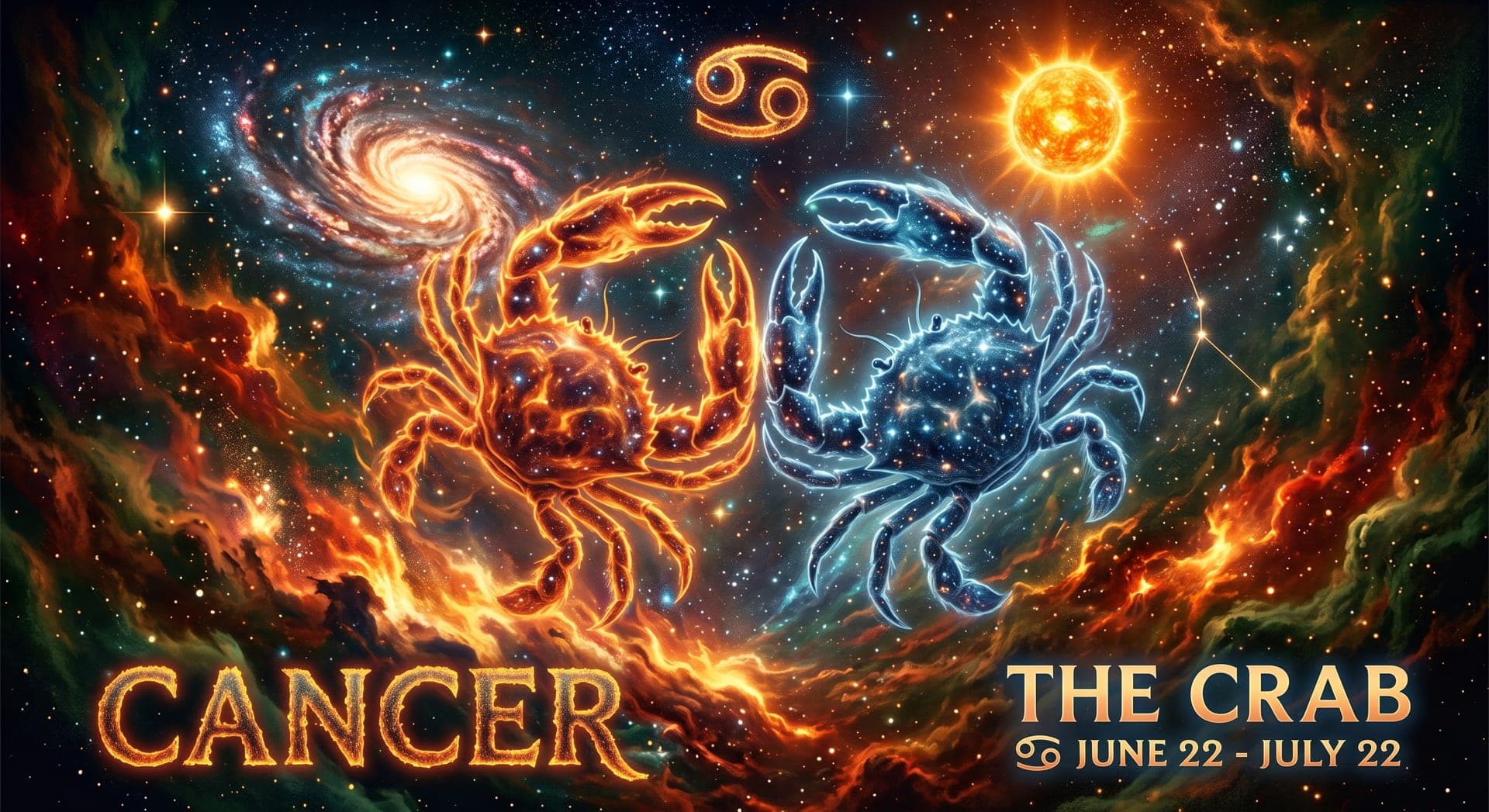
Born on July 7: Cancer ♋
Cancer, the fourth sign of the zodiac, spans June 21 to July 22 and is symbolized by the crab, an animal known for carrying a protective shell while remaining soft and vulnerable underneath. Ruled by the Moon, the celestial body long associated with emotion, intuition, and the subconscious, Cancer is widely regarded as one of the most nurturing and emotionally attuned signs of the zodiac. As a Water sign, Cancer navigates the world through deep feeling, often forming strong emotional bonds and an acute sensitivity to the moods of others. Its Cardinal modality places it at the start of summer, beginning right at the June solstice, reflecting an instinct to initiate and create, especially around home and family. People born under this sign tend to be deeply loyal, protective of loved ones, and drawn to creating a comfortable, secure home environment. Cancer's emotional depth is a genuine strength, but it can also make the sign prone to moodiness or withdrawal when hurt, retreating like a crab into its shell until it feels safe enough to re-emerge.
Personality Traits
Strengths
- Deeply caring and nurturing
- Highly intuitive
- Fiercely loyal and protective
- Strong sense of family and tradition
- Emotionally perceptive
Weaknesses
- Prone to moodiness
- Overly sensitive to criticism
- Can be clingy
- Tends to hold grudges
- Retreats when hurt
Compatible Signs
Fun Facts
- Cancer's crab symbol comes from Greek mythology, where the goddess Hera placed a crab that had fought Hercules among the stars.
- Cancer is ruled by the Moon, the only zodiac sign ruled by a celestial body other than a planet.
- As a Cardinal sign, Cancer initiates summer, beginning at the June solstice, the longest day of the year in the Northern Hemisphere.
- Notable Cancers include Princess Diana, Tom Hanks, Ariana Grande, and Nelson Mandela.
- The crab's hard shell and soft interior are often used as a metaphor for Cancer's protective exterior guarding a deeply sensitive emotional core.
Born on July 7
- 1860
Gustav Mahler
Austrian composer and conductor
- 1899
George Cukor
American film director
- 1907
Robert A. Heinlein
American science fiction author
- 1919
Jon Pertwee
English actor best remembered for playing the third incarnation of the Doctor in Doctor Who
- 1940
Ringo Starr
English drummer and singer best known as a member of the Beatles
- 1941
Michael Howard
Welsh-born British politician who served as Home Secretary and later leader of the Conservative Party
- 1941
Bill Oddie
English comedian, actor, and naturalist known for The Goodies and his birdwatching broadcasts
- 1944
Tony Jacklin
English golfer who won the Open Championship and US Open, and later captained the European Ryder Cup team
- 1944
Glenys Kinnock
English politician and diplomat who served as a Member of the European Parliament and government minister
- 1944
Ian Wilmut
English embryologist who led the team that cloned Dolly the sheep
- 1972
Lisa Leslie
American basketball player
- 1980
Michelle Kwan
American figure skater
- 1981
MS Dhoni
Indian cricketer and former national team captain

On This Day in History
- 1124
The city of Tyre falls to Crusader and Venetian forces after a nineteen-week siege.
After a prolonged siege during the Crusades, the coastal city of Tyre in present-day Lebanon fell to a combined Crusader and Venetian force, cutting off a key Muslim stronghold and securing Crusader control over much of the Levantine coastline. The city's fall bolstered the Kingdom of Jerusalem's position for several subsequent decades.
- 1456
Joan of Arc is posthumously acquitted of heresy in a retrial held 25 years after her execution, formally clearing her name.
Twenty-five years after being burned at the stake as a heretic and witch by an English-backed tribunal, Joan of Arc was formally exonerated by a papal-authorized retrial. Witnesses, including former companions and clergy, testified to her piety and the flawed proceedings of her original trial, restoring her reputation and paving the way for her eventual canonization as a saint in 1920.
- 1520
Spanish conquistadors, though badly weakened, defeat a much larger Aztec army at the Battle of Otumba during their retreat from Tenochtitlan.
During the chaotic Spanish retreat from Tenochtitlan known as La Noche Triste, a small, exhausted Spanish force encountered a vastly larger Aztec army near Otumba. Cortes personally led a cavalry charge that killed the Aztec commander, breaking the coordination of the opposing force and allowing the Spanish to escape annihilation and regroup.
- 1520
Spanish conquistadors under Hernán Cortés defeat a much larger Aztec army at the Battle of Otumba.
The victory came during Cortés's desperate retreat from Tenochtitlan following the disastrous 'Noche Triste.' Its unlikely success allowed the badly weakened Spanish force to regroup with allied indigenous forces and eventually return to conquer the Aztec capital the following year.
- 1534
French explorer Jacques Cartier makes first contact with Indigenous peoples in present-day Canada.
During his first voyage to North America, Cartier's expedition encountered Mi'kmaq people along the coast of present-day Canada, engaging in trade and ceremonial exchange near Chaleur Bay. These early encounters marked the beginning of sustained contact between French explorers and Indigenous nations that shaped the subsequent course of French colonization in the region.
- 1548
Scotland and France sign the Treaty of Haddington, promising the young Mary, Queen of Scots in marriage to the French dauphin in exchange for military support against England.
The agreement came amid the conflict known as the 'Rough Wooing,' in which England had tried to force a marriage between Mary and the future Edward VI. Instead, Mary was sent to France as a child, where she was raised at the French court and later briefly became queen consort.
- 1575
The Raid of the Redeswire, the last major skirmish fought between England and Scotland, breaks out during a routine border meeting.
The clash erupted after a dispute at a 'Truce Day' meeting intended to settle cross-border grievances peacefully between English and Scottish wardens. Though limited in scale, it is remembered as effectively the final armed conflict between the two kingdoms before their union under one crown in 1603.
- 1667
An English fleet destroys a French merchant convoy off the coast of Martinique.
The action took place during the Second Anglo-Dutch War, in which France was allied with the Dutch Republic against England. Naval clashes such as this reflected the growing rivalry between European powers over lucrative Caribbean trade routes and colonial possessions.
- 1807
France and Russia sign the first Treaty of Tilsit, ending hostilities in the War of the Fourth Coalition.
Signed at the Prussian city of Tilsit, the treaty ended fighting between Napoleon's France and Tsar Alexander I's Russia, with Russia agreeing to join the Continental System blockading British trade. The settlement temporarily reshaped the map of Europe and marked the high point of Napoleon's diplomatic dominance over the continent.
- 1863
The United States institutes its first military draft during the Civil War.
As Union losses mounted, Congress passed the Enrollment Act authorizing conscription of men for military service, with provisions allowing wealthier draftees to pay a commutation fee or hire a substitute. The law's perceived unfairness toward the poor later fueled violent draft riots in New York City just weeks afterward.
- 1915
Ceylonese businessman Henry Pedris is executed by British colonial authorities in Ceylon following a controversial court-martial during anti-Muslim riots.
Pedris, a popular volunteer officer, was accused of inciting violence during the disturbances, though many at the time and since have argued the charges and trial were unjust. His execution provoked lasting anger and became a rallying point for the growing Ceylonese independence movement.
- 1937
The Marco Polo Bridge Incident provides Japan's pretext for launching a full-scale invasion of China, beginning the Second Sino-Japanese War.
A clash between Japanese and Chinese troops near a bridge outside Beijing escalated into a full military confrontation, which Japan used as justification for launching a broader invasion of China. The incident is widely regarded as the starting point of the Second Sino-Japanese War, a conflict that later merged into the broader Pacific theater of World War II.
- 1941
United States forces take over the occupation of Iceland from British troops.
Britain had occupied neutral Iceland in 1940 to prevent a possible German takeover of the strategically vital island. With the United States not yet formally at war, the handover allowed Britain to redeploy its own troops elsewhere while keeping Iceland under Allied control.
- 1978
The Solomon Islands becomes independent from the United Kingdom.
The Pacific archipelago had been a British protectorate since the late nineteenth century. Independence came with a parliamentary system modelled on Westminster, and the Solomon Islands remains a Commonwealth realm today, with the British monarch as head of state.
- 1981
President Ronald Reagan nominates Sandra Day O'Connor to the Supreme Court, who becomes the first woman to serve as a justice.
President Reagan's nomination of the Arizona appeals court judge fulfilled a campaign promise to appoint the first woman to the U.S. Supreme Court. Confirmed unanimously by the Senate, O'Connor served for 24 years as a pivotal swing vote on the Court before retiring in 2006, and remains a landmark figure in the history of women in American law.
- 1985
Boris Becker, aged 17, becomes the youngest ever men's singles champion at Wimbledon.
The unseeded West German defeated Kevin Curren in the final, launching a career that would ultimately include six Grand Slam singles titles. His record as the youngest men's Wimbledon champion has never been broken.
- 2005
Four coordinated bomb explosions strike London's public transport system, killing 56 people and injuring more than 700.
Four suicide bombers detonated devices on three London Underground trains and a double-decker bus during the morning rush hour, in coordinated attacks carried out by militants linked to al-Qaeda. The bombings, Britain's deadliest terrorist attack since Lockerbie, prompted major reforms to UK counterterrorism and emergency response policy.
- 2005
Four coordinated suicide bombings on London's transport network kill 56 people, including the attackers.
Three bombs struck London Underground trains and a fourth hit a double-decker bus near Tavistock Square during the morning rush hour. Carried out by British-born Islamist extremists, the attacks were the deadliest single terrorist act in the UK since the Lockerbie bombing.
- 2017
The United Nations adopts the Treaty on the Prohibition of Nuclear Weapons, with 122 countries voting in favor.
Negotiated over a decade of diplomatic effort, the treaty represented the first legally binding international agreement to comprehensively prohibit nuclear weapons, though none of the world's nuclear-armed states participated in the vote or signed on. Supporters view it as an important normative step toward disarmament, while critics note its limited practical effect absent buy-in from nuclear powers.
- 2022
Boris Johnson announces his resignation as leader of the Conservative Party after a wave of ministerial resignations.
Dozens of government ministers quit within days following a series of scandals over his leadership, forcing Johnson to step down as party leader while remaining caretaker prime minister until a successor, Liz Truss, was chosen that September.