What’s Observed on July 6
Born on July 6: Cancer ♋
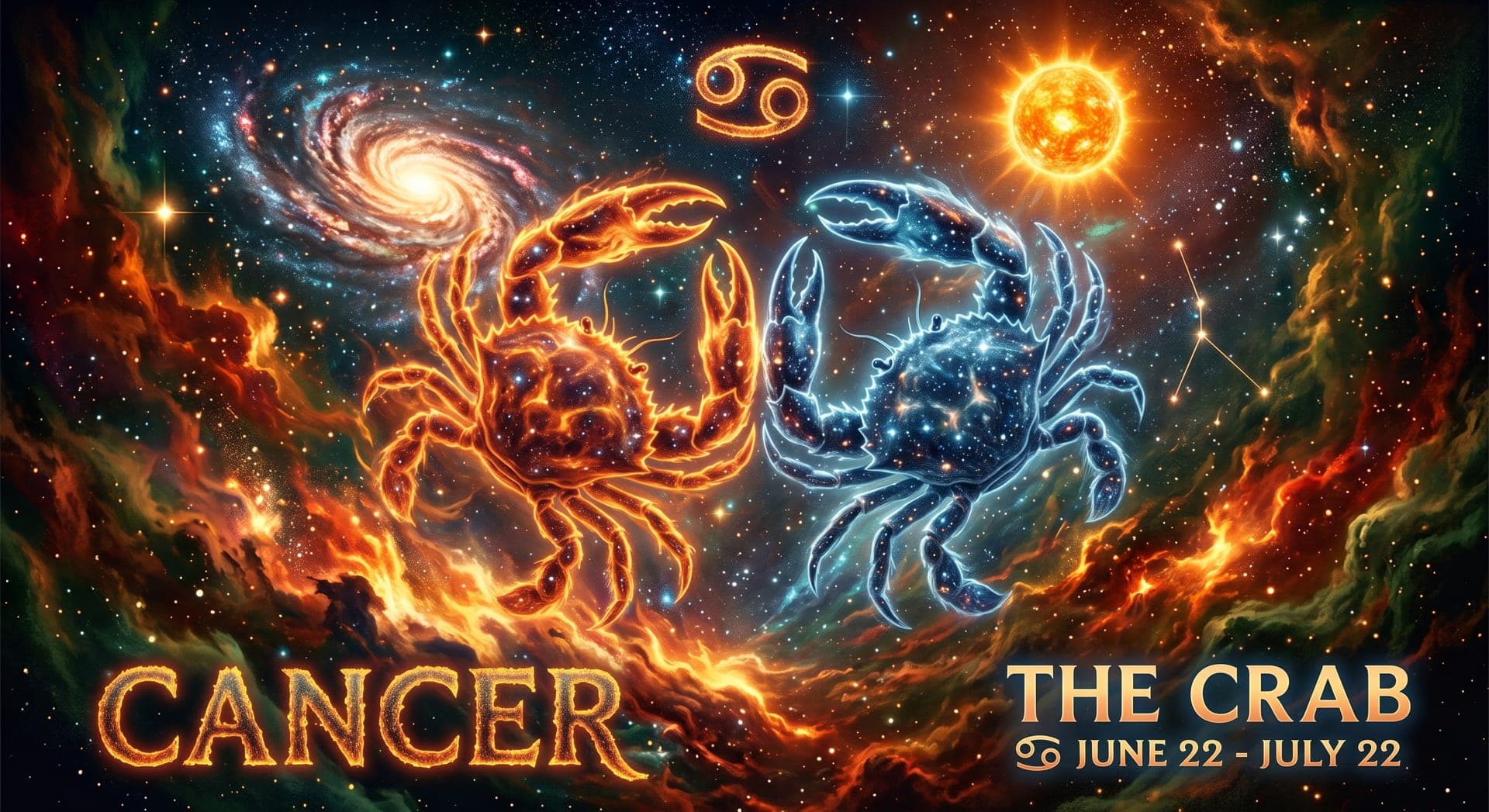
Cancer, the fourth sign of the zodiac, spans June 21 to July 22 and is symbolized by the crab, an animal known for carrying a protective shell while remaining soft and vulnerable underneath. Ruled by the Moon, the celestial body long associated with emotion, intuition, and the subconscious, Cancer is widely regarded as one of the most nurturing and emotionally attuned signs of the zodiac. As a Water sign, Cancer navigates the world through deep feeling, often forming strong emotional bonds and an acute sensitivity to the moods of others. Its Cardinal modality places it at the start of summer, beginning right at the June solstice, reflecting an instinct to initiate and create, especially around home and family. People born under this sign tend to be deeply loyal, protective of loved ones, and drawn to creating a comfortable, secure home environment. Cancer's emotional depth is a genuine strength, but it can also make the sign prone to moodiness or withdrawal when hurt, retreating like a crab into its shell until it feels safe enough to re-emerge.
Personality Traits
Strengths
- Deeply caring and nurturing
- Highly intuitive
- Fiercely loyal and protective
- Strong sense of family and tradition
- Emotionally perceptive
Weaknesses
- Prone to moodiness
- Overly sensitive to criticism
- Can be clingy
- Tends to hold grudges
- Retreats when hurt
Compatible Signs
Fun Facts
- Cancer's crab symbol comes from Greek mythology, where the goddess Hera placed a crab that had fought Hercules among the stars.
- Cancer is ruled by the Moon, the only zodiac sign ruled by a celestial body other than a planet.
- As a Cardinal sign, Cancer initiates summer, beginning at the June solstice, the longest day of the year in the Northern Hemisphere.
- Notable Cancers include Princess Diana, Tom Hanks, Ariana Grande, and Nelson Mandela.
- The crab's hard shell and soft interior are often used as a metaphor for Cancer's protective exterior guarding a deeply sensitive emotional core.
Born on July 6
- 1785
William Hooker
English botanist who became the first director of the Royal Botanic Gardens, Kew
- 1868
Princess Victoria of the United Kingdom
Daughter of King Edward VII and Queen Alexandra, and sister of King George V
- 1907
Frida Kahlo
Mexican painter known for surreal self-portraits
- 1925
Bill Haley
American musician who helped popularize rock and roll
- 1926
Dorothy E. Smith
English-born sociologist who developed influential feminist standpoint theory after emigrating to Canada
- 1927
Janet Leigh
American actress
- 1939
Mary Peters
English-born athlete representing Northern Ireland who won Olympic gold in the pentathlon in 1972
- 1941
David Crystal
British linguist and academic known for popularising the study of the English language
- 1946
George W. Bush
43rd President of the United States
- 1946
Sylvester Stallone
American actor known for "Rocky" and "Rambo"
- 1951
Geoffrey Rush
Australian actor
- 1952
Hilary Mantel
English author who won the Booker Prize twice for her Wolf Hall trilogy
- 1958
Jennifer Saunders
English actress, comedian, and screenwriter best known for co-creating Absolutely Fabulous
- 1980
Pau Gasol
Spanish professional basketball player
- 2000
Zion Williamson
American professional basketball player
On This Day in History
- 1415
Religious reformer Jan Hus is condemned as a heretic by the Council of Constance and sentenced to be burned at the stake.
A Czech theologian and forerunner of the Protestant Reformation, Hus was condemned by the Council of Constance for teachings that challenged papal authority and church practices, despite having traveled to the council under a promise of safe conduct. His execution outraged his followers in Bohemia and sparked the Hussite Wars, a prolonged religious and political conflict.
- 1483
Richard III and his wife Anne Neville are crowned King and Queen of England.
Following the death of Edward IV and the disappearance of his young sons, the so-called Princes in the Tower, Richard III seized the throne and was crowned alongside his wife Anne Neville at Westminster Abbey. His controversial rise to power and brief, contested reign ended two years later at the Battle of Bosworth Field.
- 1483
Richard III and his wife Anne Neville are crowned King and Queen of England at Westminster Abbey.
Richard had taken the throne earlier that summer after his young nephews, the 'Princes in the Tower,' were declared illegitimate and subsequently disappeared. His brief and controversial reign ended two years later at the Battle of Bosworth Field, where he was killed and succeeded by Henry VII.
- 1535
Sir Thomas More, former Lord Chancellor of England, is executed for refusing to accept King Henry VIII's break from the Catholic Church.
More, a devout Catholic and former close advisor to Henry VIII, refused to acknowledge the king as supreme head of the Church of England after Henry broke from Rome to annul his first marriage. Convicted of treason on the strength of dubious testimony, More was beheaded at Tower Hill, later canonized as a saint and martyr by the Catholic Church.
- 1535
Sir Thomas More is executed in London for treason after refusing to accept King Henry VIII as Supreme Head of the Church of England.
More, a former Lord Chancellor and renowned humanist scholar, had opposed the king's break with Rome and his marriage to Anne Boleyn. He was canonised as a saint by the Catholic Church in 1935, exactly four hundred years after his execution.
- 1560
England and Scotland sign the Treaty of Edinburgh, ending French military involvement in Scotland.
The treaty followed the Siege of Leith and marked the effective end of French troop presence tied to the centuries-old 'Auld Alliance.' It cleared the way for Scotland's Protestant Reformation later that year and opened a period of closer relations between England and Scotland.
- 1685
Royal forces decisively defeat the Duke of Monmouth's rebel army at the Battle of Sedgemoor, ending the Monmouth Rebellion.
The Duke of Monmouth, an illegitimate son of Charles II, led a failed rebellion attempting to seize the English throne from his Catholic uncle, James II. Royal troops crushed Monmouth's poorly equipped rebel army at Sedgemoor, the last pitched battle fought on English soil, and Monmouth was captured and executed shortly afterward.
- 1685
Royal forces under King James II crush the Duke of Monmouth's rebel army at the Battle of Sedgemoor, the last pitched battle fought on English soil.
Monmouth, an illegitimate son of Charles II, had claimed the throne in the name of Protestantism against the Catholic James II. His defeat led to his execution and the brutal 'Bloody Assizes,' in which judge George Jeffreys handed down harsh sentences against surviving rebels.
- 1885
Louis Pasteur successfully administers his experimental rabies vaccine to a boy who had been bitten by a rabid dog, the treatment's first human test.
After years of laboratory research on rabies in animals, Pasteur administered his experimental vaccine to nine-year-old Joseph Meister, who had been severely bitten by a rabid dog. The boy survived, validating Pasteur's approach and marking a landmark moment in the development of vaccination and modern immunology, though the treatment carried real risk given its untested status in humans.
- 1917
Arab forces led by T.E. Lawrence capture the port of Aqaba from Ottoman troops during the Arab Revolt.
As part of the British-backed Arab Revolt against Ottoman rule during World War I, forces led by Lawrence and Arab tribal leaders launched a surprise overland assault on the Red Sea port, capturing it from Ottoman defenders. The victory secured a crucial supply route and became one of the most celebrated episodes of Lawrence's wartime career.
- 1917
T. E. Lawrence and Arab irregular forces capture the Ottoman-held port of Aqaba.
The surprise overland assault, approaching from the desert rather than the heavily fortified sea approach, secured a vital Red Sea port for the Arab Revolt. The victory cemented Lawrence's reputation as a masterful guerrilla tactician and boosted Arab and British morale in the campaign against the Ottomans.
- 1919
The British airship R34 lands in New York, completing the first airship crossing of the Atlantic Ocean.
The flight from East Fortune, Scotland took just over four days and also achieved the first double crossing of the Atlantic by air, since the airship flew back to Britain shortly afterward. It followed closely on the heels of Alcock and Brown's pioneering non-stop aeroplane crossing weeks earlier.
- 1942
Anne Frank and her family go into hiding in a concealed annex in Amsterdam to escape Nazi persecution.
As Nazi persecution of Jews intensified in occupied Amsterdam, the Frank family moved into a concealed set of rooms behind Otto Frank's business premises, joined shortly after by another family. They remained hidden for over two years before being discovered and deported, with Anne's diary, chronicling the ordeal, later becoming one of the most widely read accounts of the Holocaust.
- 1957
Althea Gibson wins the Wimbledon singles title, becoming the first Black athlete to do so.
Gibson's win over Darlene Hard made her the first Black athlete, male or female, to win a Wimbledon singles championship, breaking a significant color barrier in international tennis. She went on to also win the U.S. Championships the same year, paving the way for future generations of Black tennis players.
- 1957
John Lennon and Paul McCartney meet for the first time at a church fete in Woolton, Liverpool.
McCartney was invited to join Lennon's skiffle group, the Quarrymen, shortly after the meeting. The pair went on to form the primary songwriting partnership behind the Beatles, one of the most commercially successful and culturally influential bands in the history of popular music.
- 1964
Malawi declares independence from the United Kingdom.
Formerly the British protectorate of Nyasaland, the new nation was led by Hastings Banda, who became its first prime minister. Two years later, Malawi became a republic with Banda as its first president, having established himself as an increasingly authoritarian ruler.
- 1975
The Comoros Islands declare independence from France.
The Comoros archipelago in the Indian Ocean declared independence from France, though the neighboring island of Mayotte voted to remain a French territory, a division that has fueled ongoing political tension between Comoros and France. The newly independent nation subsequently experienced significant political instability, including numerous coups in the following decades.
- 1988
The Piper Alpha oil platform in the North Sea is destroyed by explosions and fire, killing 167 workers.
It remains the deadliest disaster in the history of the offshore oil and gas industry. The tragedy led to a sweeping overhaul of North Sea safety regulation following the subsequent Cullen Inquiry, fundamentally changing how offshore installations were designed and operated.
- 1997
Five days of mass protests and violent unrest begin in Northern Ireland following a contested Orange Order march at Drumcree.
The annual march dispute had repeatedly triggered sectarian tensions during the 1990s, and the 1997 unrest was among the most serious of the decade. It occurred even as the peace process that would culminate in the 1998 Good Friday Agreement was gathering momentum.
- 2013
Asiana Airlines Flight 214 crashes while landing at San Francisco International Airport.
The Boeing 777 crashed short of the runway while landing at San Francisco International Airport, killing three passengers and injuring dozens more. Investigators attributed the crash primarily to pilot error during a visual approach, and the incident prompted renewed scrutiny of pilot training standards for manual flying in an era of increasing cockpit automation.