
What’s Observed on July 10
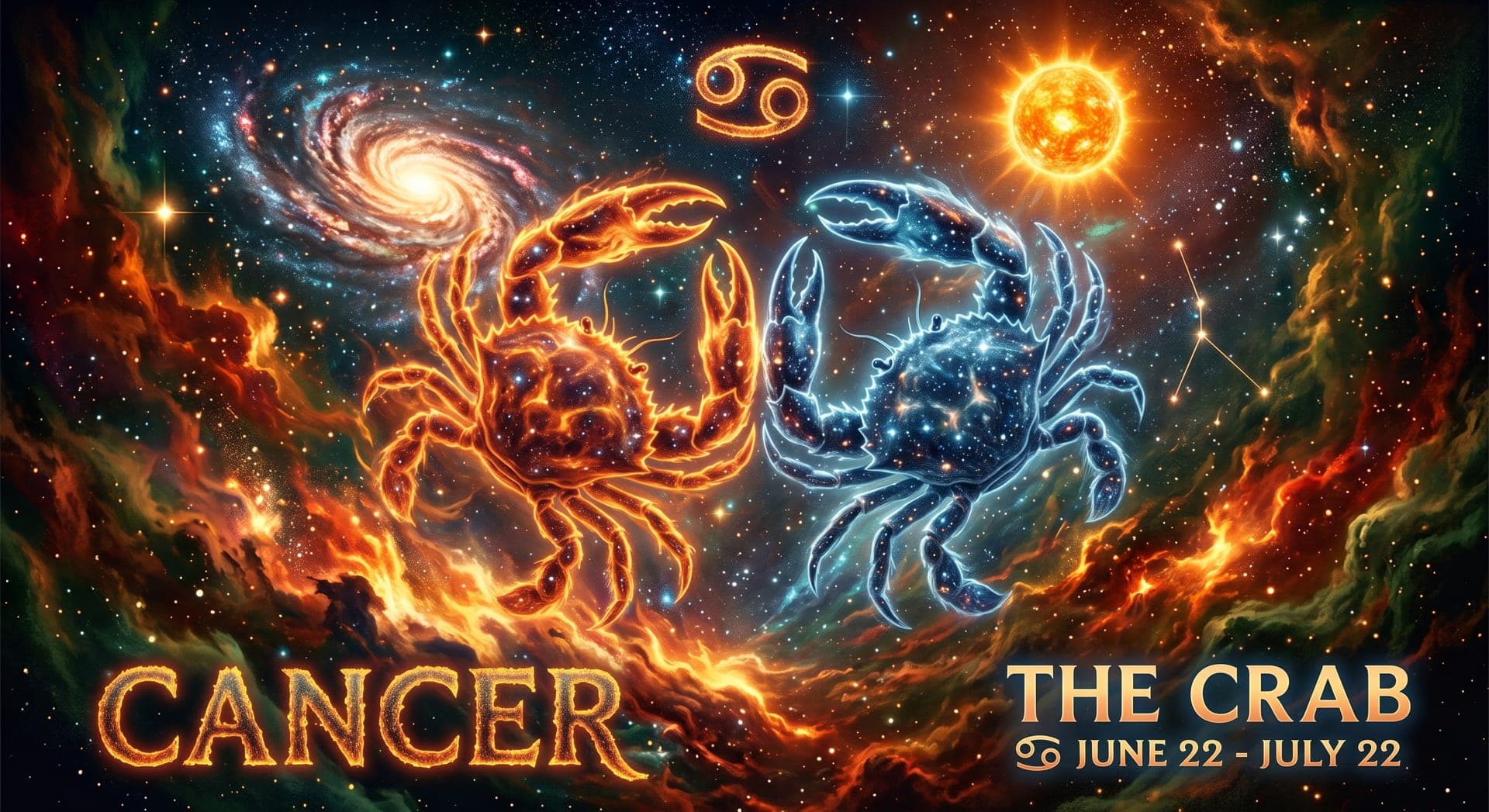
Born on July 10: Cancer ♋
Cancer, the fourth sign of the zodiac, spans June 21 to July 22 and is symbolized by the crab, an animal known for carrying a protective shell while remaining soft and vulnerable underneath. Ruled by the Moon, the celestial body long associated with emotion, intuition, and the subconscious, Cancer is widely regarded as one of the most nurturing and emotionally attuned signs of the zodiac. As a Water sign, Cancer navigates the world through deep feeling, often forming strong emotional bonds and an acute sensitivity to the moods of others. Its Cardinal modality places it at the start of summer, beginning right at the June solstice, reflecting an instinct to initiate and create, especially around home and family. People born under this sign tend to be deeply loyal, protective of loved ones, and drawn to creating a comfortable, secure home environment. Cancer's emotional depth is a genuine strength, but it can also make the sign prone to moodiness or withdrawal when hurt, retreating like a crab into its shell until it feels safe enough to re-emerge.
Personality Traits
Strengths
- Deeply caring and nurturing
- Highly intuitive
- Fiercely loyal and protective
- Strong sense of family and tradition
- Emotionally perceptive
Weaknesses
- Prone to moodiness
- Overly sensitive to criticism
- Can be clingy
- Tends to hold grudges
- Retreats when hurt
Compatible Signs
Fun Facts
- Cancer's crab symbol comes from Greek mythology, where the goddess Hera placed a crab that had fought Hercules among the stars.
- Cancer is ruled by the Moon, the only zodiac sign ruled by a celestial body other than a planet.
- As a Cardinal sign, Cancer initiates summer, beginning at the June solstice, the longest day of the year in the Northern Hemisphere.
- Notable Cancers include Princess Diana, Tom Hanks, Ariana Grande, and Nelson Mandela.
- The crab's hard shell and soft interior are often used as a metaphor for Cancer's protective exterior guarding a deeply sensitive emotional core.
Born on July 10
- 1509
John Calvin
French theologian and Protestant Reformation leader
- 1723
William Blackstone
English jurist whose Commentaries on the Laws of England became a foundational text of common law
- 1802
Robert Chambers
Scottish geologist and publisher known for co-founding the Chambers publishing house and for early evolutionary theorising
- 1830
Camille Pissarro
Danish-French Impressionist painter
- 1856
Nikola Tesla
Serbian-American electrical engineer and inventor
- 1871
Marcel Proust
French novelist known for "In Search of Lost Time"
- 1903
John Wyndham
English science fiction author best known for The Day of the Triffids
- 1911
Terry-Thomas
English comedian and character actor known for playing eccentric upper-class Englishmen on screen
- 1925
Mahathir Mohamad
4th and 7th Prime Minister of Malaysia
- 1943
Arthur Ashe
American tennis player and civil rights advocate
- 1945
Virginia Wade
English tennis player who won the Wimbledon singles title in 1977
- 1947
Arlo Guthrie
American folk singer-songwriter
- 1954
Neil Tennant
English singer-songwriter, one half of the pop duo Pet Shop Boys
- 1977
Chiwetel Ejiofor
English actor known for his Academy Award-nominated role in 12 Years a Slave
- 1980
Jessica Simpson
American singer and fashion designer

On This Day in History
- 518
Justin I is crowned Byzantine emperor by the Patriarch of Constantinople.
Justin, a career soldier who rose through the ranks of the Byzantine imperial guard, was crowned emperor following the death of Anastasius I after securing support among the palace guard and clergy. His reign laid groundwork for the later, more celebrated rule of his nephew and successor, Justinian I.
- 645
The Isshi incident, a violent palace coup, takes place in Japan, leading to major imperial political reforms.
In a violent palace coup in Japan's Asuka period, Nakatomi no Kamatari and Prince Naka no Oe assassinated the powerful court official Soga no Iruka, breaking the Soga clan's dominance over the imperial court. The incident triggered the sweeping Taika Reforms that centralized political power and reorganized Japan's system of governance.
- 988
According to tradition, the founding of Dublin is marked as Norse and Irish leaders reach a governing arrangement.
According to Irish annalistic tradition, this date marks a foundational agreement establishing governance arrangements between the Norse settlers who had founded a trading outpost and the surrounding Irish population, contributing to the city's development as a significant Viking-Age trading hub along the Irish coast.
- 1212
A severe fire destroys much of London, one of the city's earliest recorded major fires.
A major fire swept through London in the medieval period, destroying significant portions of the city's densely packed wooden buildings. Though overshadowed in later memory by the more famous Great Fire of 1666, this earlier blaze was among several devastating fires that repeatedly ravaged the crowded, timber-built city before stone construction and firefighting regulations became more common.
- 1212
A severe fire destroys most of London, burning across London Bridge and killing an estimated three thousand people.
Known as the 'Great Fire of 1212,' it was one of the deadliest fires in the city's medieval history, far predating the more famous Great Fire of London in 1666. Many victims were trapped on the bridge itself, caught between fires burning at both ends.
- 1460
Richard Neville, Earl of Warwick, defeats Lancastrian forces and captures King Henry VI at the Battle of Northampton.
The battle, fought during the Wars of the Roses, was a major Yorkist victory made possible when a Lancastrian commander switched sides mid-battle. Henry VI's capture strengthened the Yorkist position and paved the way for Edward IV's eventual claim to the throne the following year.
- 1553
Lady Jane Grey is proclaimed Queen of England following the death of Edward VI.
Jane's reign, engineered by her father-in-law the Duke of Northumberland to keep the Protestant succession and exclude Mary Tudor, lasted only nine days before Mary rallied support and seized the throne. Jane was later executed for treason in 1554, earning her the enduring nickname 'the Nine Days' Queen.'
- 1584
William the Silent, leader of the Dutch revolt against Spain, is assassinated in Delft.
The leader of the Dutch Revolt against Spanish rule was shot and killed in his own home in Delft by an assassin acting on behalf of Spain's King Philip II, who had placed a bounty on William's life. His death was a severe blow to the Dutch independence movement, though the struggle ultimately succeeded decades later.
- 1645
Parliamentarian forces defeat the Royalist army at the Battle of Langport during the English Civil War.
The victory, led by Sir Thomas Fairfax and Oliver Cromwell's New Model Army, effectively destroyed the last significant Royalist field army in the west of England. It hastened the end of the first English Civil War, which concluded the following year with Charles I's surrender.
- 1778
King Louis XVI of France formally declares war on Great Britain in support of the American Revolution.
Persuaded partly by the American envoy Benjamin Franklin and eager to weaken rival Britain, King Louis XVI formally allied France with the fledgling United States, providing crucial naval and financial support to the American Revolution. French intervention proved decisive in the war's outcome, particularly at the pivotal siege of Yorktown three years later.
- 1778
King Louis XVI of France formally declares war on Great Britain, entering the American Revolutionary War on the side of the colonies.
French support, motivated partly by rivalry with Britain following its defeat in the Seven Years' War, brought crucial naval power, funding, and troops to the American cause. French involvement proved decisive, contributing directly to the British defeat at Yorktown in 1781.
- 1806
The Vellore Mutiny breaks out, the first major uprising by Indian sepoys against the British East India Company.
Triggered largely by new dress regulations perceived as offensive to Hindu and Muslim religious customs, the mutiny at Vellore fort was suppressed within a day but foreshadowed the far larger Indian Rebellion of 1857. British authorities rescinded the offending regulations soon after.
- 1890
Wyoming is admitted to the Union as the 44th U.S. state.
Wyoming entered the Union as the 44th state, having already granted women the right to vote as a territory in 1869, decades before national suffrage. The state's early adoption of women's voting rights earned it the nickname "the Equality State," and it remains one of the least populous U.S. states.
- 1921
Sectarian violence known as Belfast's Bloody Sunday leaves around twenty people dead, more than a hundred wounded, and roughly two hundred homes destroyed.
The violence erupted amid the wider Irish War of Independence, as gun battles and arson spread through Belfast in the days surrounding a truce being negotiated between British forces and the IRA. It was among the worst single episodes of sectarian violence in the city's turbulent modern history.
- 1940
The Kanalkampf phase of the Battle of Britain begins, with German aircraft attacking British shipping convoys in the English Channel.
This early phase of the air campaign tested Royal Air Force defences and shipping routes before the Luftwaffe shifted to targeting airfields and, later, cities. Britain's ability to withstand the campaign proved crucial in denying Germany the air superiority needed for a planned invasion.
- 1943
Operation Husky, the Allied invasion of Sicily, formally begins, opening a new front in the Mediterranean theater of World War II.
Allied forces continued their push into Sicily as part of Operation Husky, establishing beachheads that would allow the invasion to expand across the island over the following weeks. The campaign marked the beginning of the Italian campaign, ultimately contributing to Italy's surrender and opening a new front against Axis forces in southern Europe.
- 1962
Telstar, the world's first active communications satellite, is launched into orbit, enabling early transatlantic television transmission.
Developed by AT&T Bell Labs and launched aboard a NASA rocket, Telstar was the first satellite capable of actively relaying television, telephone, and data signals rather than simply reflecting them. Its launch enabled the first live transatlantic television broadcasts between the United States and Europe, a landmark moment in global telecommunications.
- 1973
The Bahamas gains full independence from the United Kingdom within the Commonwealth of Nations.
The island nation had been a British colony since the 17th century. It adopted a parliamentary system modelled on Westminster and remains a Commonwealth realm, with the British monarch continuing as head of state.
- 1999
The United States defeats China on penalty kicks to win the FIFA Women's World Cup Final at the Rose Bowl.
In a dramatic penalty shootout following a scoreless draw, the United States defeated China to win the Women's World Cup on home soil, with Brandi Chastain's decisive penalty kick and subsequent celebration becoming an iconic image in American sports. The tournament drew record crowds and significantly boosted the profile of women's soccer in the United States.
- 2011
The News of the World publishes its final issue after 168 years, closed down amid the phone-hacking scandal.
The tabloid, once Britain's best-selling Sunday newspaper, was shut by owner Rupert Murdoch after revelations that journalists had hacked the phones of crime victims, celebrities, and public figures. The scandal triggered the Leveson Inquiry into British press standards and practices.