What’s Observed on July 11
Born on July 11: Cancer ♋
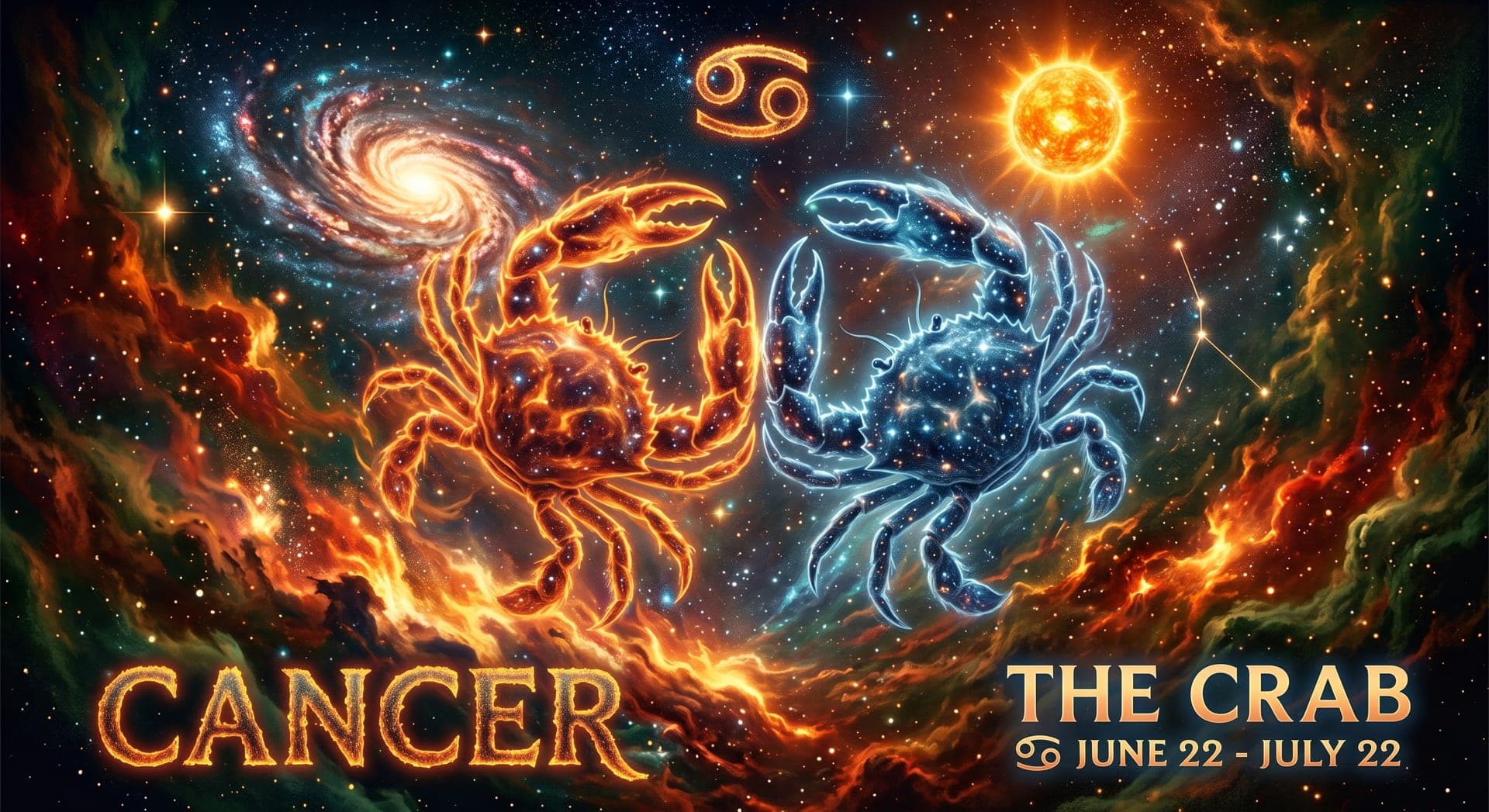
Cancer, the fourth sign of the zodiac, spans June 21 to July 22 and is symbolized by the crab, an animal known for carrying a protective shell while remaining soft and vulnerable underneath. Ruled by the Moon, the celestial body long associated with emotion, intuition, and the subconscious, Cancer is widely regarded as one of the most nurturing and emotionally attuned signs of the zodiac. As a Water sign, Cancer navigates the world through deep feeling, often forming strong emotional bonds and an acute sensitivity to the moods of others. Its Cardinal modality places it at the start of summer, beginning right at the June solstice, reflecting an instinct to initiate and create, especially around home and family. People born under this sign tend to be deeply loyal, protective of loved ones, and drawn to creating a comfortable, secure home environment. Cancer's emotional depth is a genuine strength, but it can also make the sign prone to moodiness or withdrawal when hurt, retreating like a crab into its shell until it feels safe enough to re-emerge.
Personality Traits
Strengths
- Deeply caring and nurturing
- Highly intuitive
- Fiercely loyal and protective
- Strong sense of family and tradition
- Emotionally perceptive
Weaknesses
- Prone to moodiness
- Overly sensitive to criticism
- Can be clingy
- Tends to hold grudges
- Retreats when hurt
Compatible Signs
Fun Facts
- Cancer's crab symbol comes from Greek mythology, where the goddess Hera placed a crab that had fought Hercules among the stars.
- Cancer is ruled by the Moon, the only zodiac sign ruled by a celestial body other than a planet.
- As a Cardinal sign, Cancer initiates summer, beginning at the June solstice, the longest day of the year in the Northern Hemisphere.
- Notable Cancers include Princess Diana, Tom Hanks, Ariana Grande, and Nelson Mandela.
- The crab's hard shell and soft interior are often used as a metaphor for Cancer's protective exterior guarding a deeply sensitive emotional core.
Born on July 11
- 1274
Robert the Bruce
Scottish king who led Scotland during the Wars of Scottish Independence and won the Battle of Bannockburn
- 1558
Robert Greene
English author and playwright of the Elizabethan era, known for his pamphlets and early attacks on Shakespeare
- 1767
John Quincy Adams
6th President of the United States
- 1811
William Robert Grove
Welsh physicist and judge who invented an early fuel cell
- 1834
James McNeill Whistler
American-English painter
- 1899
E. B. White
American essayist known for "Charlotte's Web"
- 1918
Venetia Burney
English schoolgirl who, at age eleven, proposed the name Pluto for the newly discovered dwarf planet
- 1920
Yul Brynner
Russian-American actor
- 1934
Giorgio Armani
Italian fashion designer
- 1935
Oliver Napier
Northern Irish lawyer and politician who co-founded the Alliance Party of Northern Ireland
- 1957
Peter Murphy
English singer-songwriter, frontman of the gothic rock band Bauhaus
- 1959
Suzanne Vega
American singer-songwriter
- 1964
Craig Charles
English actor and radio presenter known for his role in the science fiction sitcom Red Dwarf
- 1990
Caroline Wozniacki
Danish professional tennis player
On This Day in History
- 911
Charles the Simple of France and Viking leader Rollo sign the Treaty of Saint-Clair-sur-Epte, granting Rollo territory that became Normandy.
Rollo, a Viking leader who had been raiding Frankish territory, agreed to accept Christianity and swear fealty to the French king in exchange for lands along the lower Seine River. The resulting territory became the Duchy of Normandy, whose descendants, including William the Conqueror, would later play a pivotal role in English history.
- 1174
The young Baldwin IV becomes King of Jerusalem, with Raymond III of Tripoli serving as regent.
Following the death of his father, Amalric I, the thirteen-year-old Baldwin IV ascended to the throne of the Crusader Kingdom of Jerusalem despite suffering from leprosy, with the experienced noble Raymond III of Tripoli serving as regent during his minority. Baldwin later proved a capable military leader despite his illness before his early death.
- 1302
Flemish militia forces defeat the French royal army at the Battle of the Golden Spurs.
A coalition of Flemish militia, largely composed of common townspeople rather than professional soldiers, inflicted a stunning defeat on the heavily armored French royal cavalry near Kortrijk. The battle's name derives from the hundreds of gilded spurs collected from fallen French knights, and the victory became a lasting symbol of Flemish civic pride and resistance.
- 1405
Chinese admiral Zheng He embarks on the first of his famous long-distance maritime expeditions.
The Ming dynasty admiral set sail with an enormous fleet of treasure ships on the first of seven major maritime expeditions that reached as far as East Africa and the Arabian Peninsula. These voyages demonstrated remarkable Chinese naval and organizational capability decades before European age-of-exploration voyages, though China later curtailed such expeditions.
- 1576
English explorer Martin Frobisher sights Greenland, initially mistaking it for the hypothesised island of Frisland.
Frobisher was searching for a Northwest Passage to Asia on behalf of English backers when he encountered the Greenland coast. His voyages, though they failed to find a passage, opened English exploration of the Arctic and led to a short-lived, unsuccessful mining venture on Baffin Island.
- 1708
Coalition forces under the Duke of Marlborough defeat French troops at the Battle of Oudenarde during the War of the Spanish Succession.
Allied forces under the Duke of Marlborough and Prince Eugene of Savoy defeated a French army at Oudenarde in present-day Belgium, forcing the French into a costly retreat. The victory was among the most significant Allied successes of the War of the Spanish Succession, further diminishing French military prestige under Louis XIV.
- 1708
A coalition army under the Duke of Marlborough defeats a French army at the Battle of Oudenarde.
Fought during the War of the Spanish Succession, the victory was one of several major triumphs for Marlborough, alongside Blenheim and Ramillies, that badly weakened French military power. It opened the way for the Allied invasion of France and helped force Louis XIV toward eventual peace negotiations.
- 1796
The United States formally takes possession of Detroit from Great Britain.
Although the 1783 Treaty of Paris had assigned the territory to the United States after the Revolutionary War, Britain retained forts in the region for over a decade. The handover, agreed under the Jay Treaty, finally ended lingering British military presence in the American Northwest Territory.
- 1804
Aaron Burr mortally wounds Alexander Hamilton in their famous duel in Weehawken, New Jersey.
Political rivals and former allies, Vice President Burr and former Treasury Secretary Hamilton met at dawn in a duel stemming from years of personal and political animosity. Hamilton was mortally wounded and died the next day, and the killing effectively ended Burr's political career while cementing Hamilton's legacy as a founding statesman.
- 1848
Waterloo railway station opens in London.
Built by the London and South Western Railway, the station grew over subsequent decades into one of the busiest and most complex railway terminals in Britain. It remains one of London's principal stations, named for the Battle of Waterloo like the nearby bridge.
- 1882
The British Mediterranean Fleet begins the bombardment of Alexandria, Egypt.
The naval bombardment, ordered after nationalist unrest threatened British and European interests, destroyed Egyptian coastal defences and paved the way for a British land invasion. The campaign resulted in Britain establishing effective control over Egypt, which lasted in various forms for the next seven decades.
- 1921
A truce takes effect in the Irish War of Independence between British forces and the Irish Republican Army.
The truce ended more than two years of guerrilla conflict and paved the way for negotiations that produced the Anglo-Irish Treaty later that year, establishing the Irish Free State. The settlement left Northern Ireland within the United Kingdom, a division with lasting political consequences.
- 1922
The Hollywood Bowl amphitheater opens to the public in Los Angeles.
Built specifically for outdoor symphonic performances in the Hollywood Hills, the amphitheater opened with a sunrise concert and rapidly became a beloved Los Angeles cultural landmark. Its distinctive concentric-arc band shell has hosted countless orchestral, rock, and popular music performances over the following century, becoming an enduring symbol of the city's entertainment identity.
- 1924
Scottish runner Eric Liddell wins the gold medal in the 400 metres at the Paris Olympics.
Liddell famously refused to run his favoured 100 metres because the heats fell on a Sunday, switching instead to the 400 metres, an event he had not specialised in, and setting a world record in winning gold. His story later inspired the Academy Award-winning film Chariots of Fire.
- 1960
Harper Lee's novel "To Kill a Mockingbird" is first published in the United States.
Harper Lee's debut novel, exploring racial injustice in the Depression-era American South through the eyes of a young narrator, became an immediate critical and commercial success. It won the Pulitzer Prize the following year and has since become a staple of American literature curricula, celebrated for its moral clarity despite ongoing debates over its complex racial themes.
- 1962
The first transatlantic satellite television transmission is achieved via the Telstar satellite.
The signal was relayed between the United States and ground stations in France and at Goonhilly Downs in Cornwall, England, marking a milestone in global communications. Telstar's success demonstrated the feasibility of live intercontinental broadcasting, transforming international television and telephony in the following years.
- 1972
The first game of the World Chess Championship 1972 between Bobby Fischer and Boris Spassky begins in Reykjavík.
Billed as a Cold War showdown between American and Soviet intellect, the match drew unprecedented global attention to chess. Fischer's eventual victory ended 24 years of Soviet dominance of the world championship and made him an international celebrity.
- 1979
America's first space station, Skylab, disintegrates upon re-entering Earth's atmosphere, with debris scattered over the Indian Ocean and Australia.
America's first space station, launched in 1973, fell out of orbit and broke apart during re-entry after its decay was accelerated by unexpectedly high solar activity. Debris scattered harmlessly across the Indian Ocean and sparsely populated parts of Western Australia, and the uncontrolled reentry drew global media attention and some public anxiety in the weeks beforehand.
- 2021
Richard Branson flies aboard Virgin Galactic's spaceplane, marking a milestone in commercial space tourism.
The billionaire founder of Virgin Galactic flew aboard his company's own suborbital spaceplane, reaching the edge of space in a mission designed to test the vehicle ahead of planned commercial passenger flights. The flight intensified the emerging competition among wealthy entrepreneurs to pioneer private space tourism.
- 2021
British businessman Richard Branson is launched into space aboard a Virgin Galactic spaceplane.
The flight made Branson one of the first people to travel to space aboard a vehicle built by the company he founded, narrowly beating rival Jeff Bezos's own suborbital flight by days. It marked a significant milestone in the emerging commercial space tourism industry.