
What’s Observed on July 21
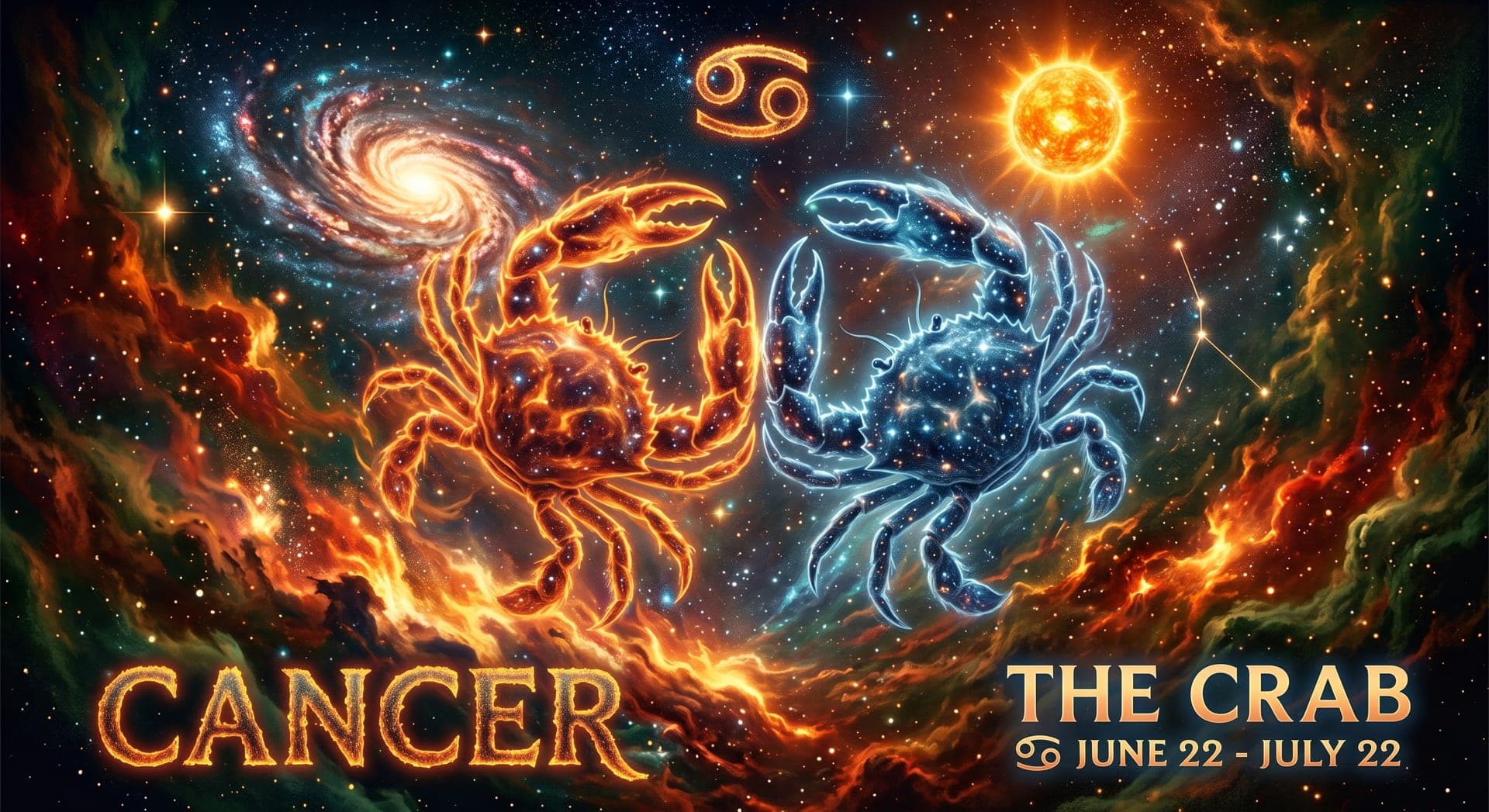
Born on July 21: Cancer ♋
Cancer, the fourth sign of the zodiac, spans June 21 to July 22 and is symbolized by the crab, an animal known for carrying a protective shell while remaining soft and vulnerable underneath. Ruled by the Moon, the celestial body long associated with emotion, intuition, and the subconscious, Cancer is widely regarded as one of the most nurturing and emotionally attuned signs of the zodiac. As a Water sign, Cancer navigates the world through deep feeling, often forming strong emotional bonds and an acute sensitivity to the moods of others. Its Cardinal modality places it at the start of summer, beginning right at the June solstice, reflecting an instinct to initiate and create, especially around home and family. People born under this sign tend to be deeply loyal, protective of loved ones, and drawn to creating a comfortable, secure home environment. Cancer's emotional depth is a genuine strength, but it can also make the sign prone to moodiness or withdrawal when hurt, retreating like a crab into its shell until it feels safe enough to re-emerge.
Personality Traits
Strengths
- Deeply caring and nurturing
- Highly intuitive
- Fiercely loyal and protective
- Strong sense of family and tradition
- Emotionally perceptive
Weaknesses
- Prone to moodiness
- Overly sensitive to criticism
- Can be clingy
- Tends to hold grudges
- Retreats when hurt
Compatible Signs
Fun Facts
- Cancer's crab symbol comes from Greek mythology, where the goddess Hera placed a crab that had fought Hercules among the stars.
- Cancer is ruled by the Moon, the only zodiac sign ruled by a celestial body other than a planet.
- As a Cardinal sign, Cancer initiates summer, beginning at the June solstice, the longest day of the year in the Northern Hemisphere.
- Notable Cancers include Princess Diana, Tom Hanks, Ariana Grande, and Nelson Mandela.
- The crab's hard shell and soft interior are often used as a metaphor for Cancer's protective exterior guarding a deeply sensitive emotional core.
Born on July 21
- 1648
John Graham, 1st Viscount Dundee
Scottish soldier and nobleman, remembered as 'Bonnie Dundee,' who led a Jacobite rising in support of the exiled King James VII.
- 1664
Matthew Prior
English poet and diplomat who served as an ambassador and helped negotiate the Treaty of Utrecht.
- 1693
Thomas Pelham-Holles, 1st Duke of Newcastle
English statesman who served as Prime Minister of Great Britain and dominated Whig politics for decades in the 18th century.
- 1816
Paul Reuter
German-born British entrepreneur who founded the Reuters news agency
- 1863
C. Aubrey Smith
English actor and cricketer, later a leading figure of the British expatriate community in Hollywood's golden age.
- 1899
Ernest Hemingway
American novelist and Nobel laureate
- 1911
Marshall McLuhan
Canadian media theorist
- 1920
Isaac Stern
Russian-American violinist
- 1924
Don Knotts
American actor and comedian
- 1926
Karel Reisz
Czech-born British film director and a pioneer of the British New Wave, best known for "Saturday Night and Sunday Morning"
- 1934
Jonathan Miller
English director, author, and physician known for his work with the Beyond the Fringe comedy troupe and for directing acclaimed theatre and opera productions.
- 1945
Wendy Cope
English poet known for witty, accessible verse collected in bestselling volumes such as Making Cocoa for Kingsley Amis.
- 1948
Cat Stevens
English singer-songwriter
- 1951
Robin Williams
American actor and comedian
- 1964
Ross Kemp
English actor and broadcaster, known for playing Grant Mitchell in EastEnders and for presenting documentary series on gangs and conflict zones.
- 1966
Sarah Waters
Welsh novelist known for acclaimed historical fiction including Fingersmith and Tipping the Velvet.
- 1978
Josh Hartnett
American actor
- 2000
Erling Haaland
Norwegian professional footballer
On This Day in History
- 356 BCE
The Temple of Artemis at Ephesus, one of the Seven Wonders of the Ancient World, is destroyed by arson.
According to ancient accounts, a man seeking lasting fame deliberately set fire to the elaborately constructed temple, one of the Seven Wonders of the Ancient World, on the same night as the birth of Alexander the Great. Rebuilt afterward, the temple was later destroyed for good by Gothic raiders in the third century.
- 1403
King Henry IV of England defeated a rebel army led by the Percy family at the Battle of Shrewsbury.
The battle pitted royal forces against Henry 'Hotspur' Percy, whose family had helped Henry IV seize the throne but later turned against him. Hotspur was killed during the fighting, delivering a decisive blow to the rebellion and securing Henry IV's hold on power. It was one of the first battles in English history where large numbers of longbowmen fought on both sides.
- 1545
A French invasion fleet landed troops on the Isle of Wight off England's southern coast during the Italian War between England and France.
The landing came just two days after the French fleet had engaged Henry VIII's navy in the Solent, during which the English warship Mary Rose sank. French troops briefly raided the island before English coastal defenses and levies forced their withdrawal. The episode heightened English fears of invasion and spurred continued investment in coastal fortifications along the south coast.
- 1656
An English naval squadron under Admiral Robert Blake raided the Spanish port of Málaga during the Anglo-Spanish War.
Blake's fleet bombarded the harbor and landed sailors who destroyed forts and shipping in the port, part of a wider campaign to disrupt Spanish trade and treasure fleets. The raid demonstrated England's growing naval power under Oliver Cromwell's Commonwealth government. Blake's Mediterranean and Atlantic campaigns during this period helped establish the Royal Navy's reputation as a dominant maritime force.
- 1798
Napoleon's forces defeat an Ottoman-Mamluk army at the Battle of the Pyramids near Cairo.
Napoleon Bonaparte's French expeditionary force decisively defeated Egypt's ruling Mamluk cavalry near the Great Pyramids of Giza, employing disciplined infantry squares against the Mamluks' traditional cavalry charges. The victory, part of Napoleon's campaign to disrupt British trade routes to India, gave France temporary control of Egypt.
- 1832
Britain, France, Russia, and the Ottoman Empire signed the Treaty of Constantinople, formally establishing the borders of the newly independent Kingdom of Greece.
The treaty followed years of the Greek War of Independence and confirmed Greece's sovereignty under the protection of the three great powers, with Bavarian prince Otto installed as its first king. Britain played a leading diplomatic role among the guarantor powers in shaping the settlement. The agreement marked the final international recognition of Greece as an independent state after centuries of Ottoman rule.
- 1861
Confederate forces win the First Battle of Bull Run, the first major land battle of the American Civil War.
Union and Confederate forces clashed near a creek in northern Virginia in the first major land battle of the American Civil War, initially expected by many spectators, including Washington civilians who traveled out to watch, to be a quick affair. Confederate forces routed the inexperienced Union army, dispelling illusions of a short war.
- 1873
The Jesse James gang carries out the first successful train robbery in the American Old West near Adair, Iowa.
In one of the American West's earliest train robberies, Jesse James and his gang derailed and looted a Rock Island train near Adair, Iowa, escaping with a substantial sum of cash and valuables. The heist added to the outlaw mythology surrounding James, who continued a lengthy career of robbery before his eventual assassination.
- 1920
Sectarian violence erupted in Belfast as thousands of Catholic and left-wing workers were forcibly expelled from shipyards and factories.
Loyalist mobs drove out workers accused of being disloyal or Sinn Féin sympathizers from major employers including the Harland and Wolff shipyard, amid escalating tension during the Irish War of Independence. The expulsions and accompanying riots left several people dead and marked one of the most severe outbreaks of sectarian intimidation in the city's history. The unrest foreshadowed the violence that would grip Belfast throughout the partition of Ireland.
- 1925
John T. Scopes is found guilty of teaching evolution in his Tennessee classroom in the widely publicized "Scopes Monkey Trial."
A Tennessee jury found high school teacher John Scopes guilty of violating state law by teaching evolution in a widely publicized trial that pitted famed attorneys Clarence Darrow and William Jennings Bryan against each other. Though Scopes was fined a nominal sum, the trial became a cultural touchstone in the ongoing debate over science and religion in education.
- 1925
British racer Malcolm Campbell became the first person to exceed 150 mph on land, setting a new speed record at Pendine Sands in Wales.
Driving his car Blue Bird along the flat sands of the Welsh coastline, Campbell pushed his average speed past the milestone, continuing a series of record attempts he made throughout the 1920s and 1930s. Pendine Sands became a renowned venue for land speed record attempts due to its long, flat expanse of beach. Campbell went on to break the land speed record numerous times and later set records on water as well.
- 1944
American troops land on Guam, beginning a major World War II battle that lasted until mid-August.
American Marines and Army troops landed on the Japanese-held island of Guam as part of a broader Pacific campaign to reclaim territory lost earlier in the war. The subsequent battle, which lasted roughly three weeks, resulted in the island's recapture and its transformation into a crucial forward base for later operations against Japan.
- 1961
Astronaut Gus Grissom becomes the second American in space, piloting the suborbital Liberty Bell 7 mission.
Astronaut Gus Grissom piloted the Liberty Bell 7 capsule on a roughly fifteen-minute suborbital flight, becoming the second American in space. The mission ended in a scare when the capsule's hatch blew prematurely after splashdown, nearly causing Grissom to drown before he was rescued, though the capsule itself sank and was not recovered for decades.
- 1969
Neil Armstrong becomes the first person to walk on the Moon, followed shortly by Buzz Aldrin.
Hours after the lunar module touched down, astronaut Neil Armstrong descended the ladder and became the first human to set foot on the Moon, followed shortly by Buzz Aldrin. Armstrong's words, "That's one small step for man, one giant leap for mankind," were broadcast live to an estimated worldwide television audience of over 600 million people.
- 1969
Neil Armstrong became the first human to walk on the Moon, stepping onto the lunar surface hours after Apollo 11's landing.
Armstrong descended the lunar module's ladder and set foot on the Sea of Tranquility, famously declaring the moment 'one small step for man, one giant leap for mankind.' Buzz Aldrin joined him on the surface about twenty minutes later, and the two astronauts spent roughly two and a half hours collecting samples and conducting experiments. The moonwalk was watched live by an estimated 600 million people worldwide.
- 1972
The Provisional IRA detonates 22 bombs across central Belfast within 80 minutes, killing nine people on what became known as Bloody Friday.
The Provisional IRA detonated a coordinated series of car and parcel bombs across central Belfast within a roughly 80-minute span, killing nine people and injuring well over a hundred in one of the deadliest single days of violence during the Troubles, an event that became known as Bloody Friday.
- 1972
The Provisional IRA detonated around twenty bombs across Belfast within roughly an hour, killing nine people in an attack that became known as Bloody Friday.
The coordinated bombings targeted commercial and transport sites across the city center, overwhelming emergency services as police tried to warn and evacuate the public between blasts. Several of the dead were badly mutilated, and the scale of the attack shocked public opinion both in Northern Ireland and internationally. Bloody Friday became one of the most notorious episodes of the Troubles and hardened British government resolve against the IRA.
- 1976
The British ambassador to Ireland, Christopher Ewart-Biggs, was assassinated by an IRA landmine near Dublin.
Ewart-Biggs was killed along with a young civil servant when a bomb detonated under his car shortly after he left his official residence, in an attack claimed by the Provisional IRA. His death marked a rare instance of the IRA killing a serving British ambassador and drew international condemnation. The assassination underscored how the violence of the Troubles extended beyond Northern Ireland and into diplomatic circles in the Republic of Ireland.
- 2005
Islamist extremists attempted a second wave of coordinated bombings on London's transport network, two weeks after the deadly July 7 attacks.
Four bombs were planted on three Underground trains and a bus, mirroring the July 7 attacks, but this time the detonators failed and only the bombs' initiator charges went off, causing no serious injuries. A massive manhunt followed, leading to the arrest of the would-be bombers within days. The failed attack kept London on high alert and prompted a major review of transport security in the capital.
- 2011
NASA's Space Shuttle program concludes as Space Shuttle Atlantis lands at Kennedy Space Center.
Space Shuttle Atlantis touched down at Kennedy Space Center, completing the final mission of NASA's 30-year Space Shuttle program. The landing closed out an era that had included the construction of the International Space Station and the deployment of the Hubble Space Telescope, while NASA shifted focus toward future deep-space exploration goals.