
What’s Observed on July 2
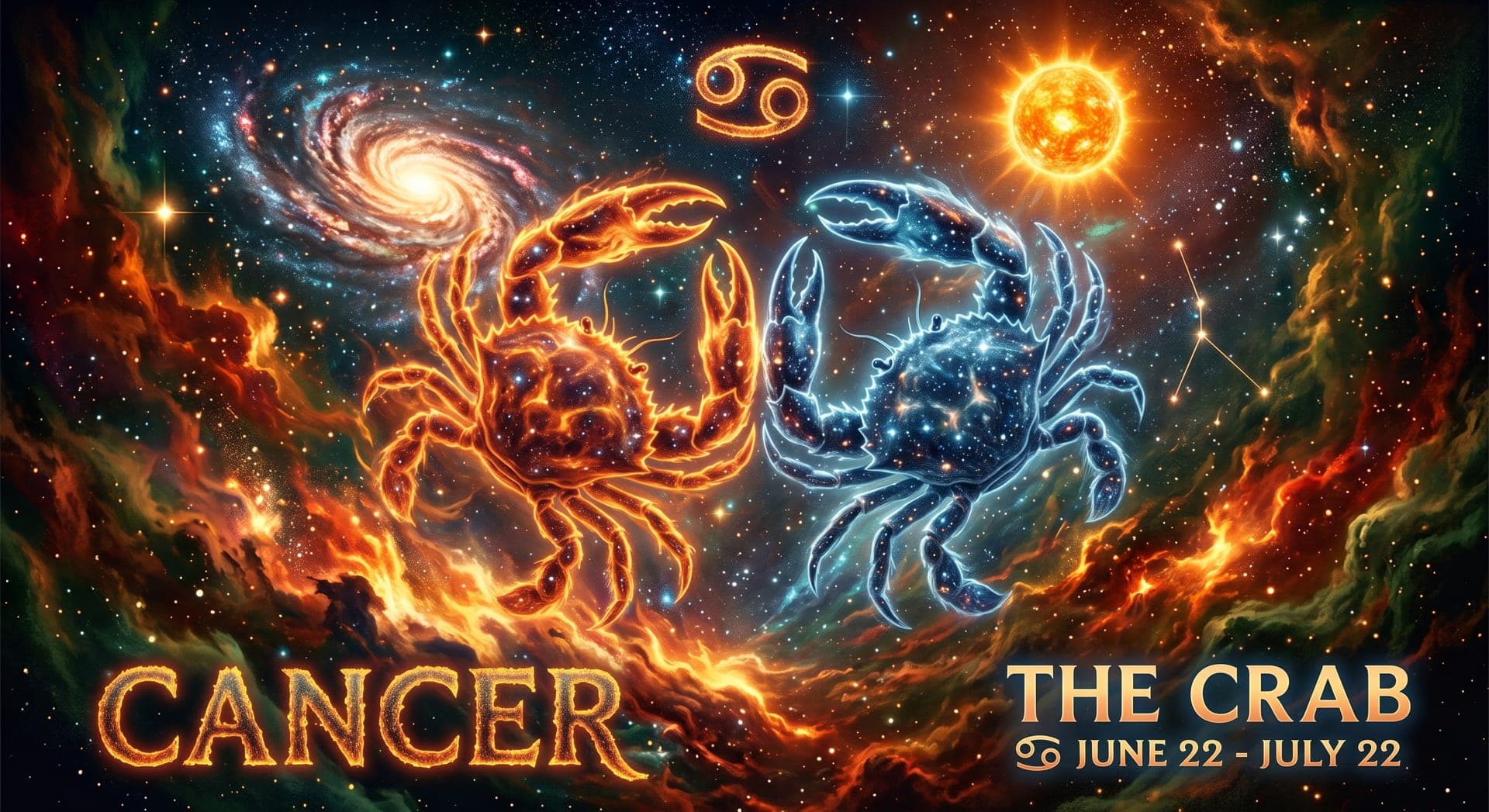
Born on July 2: Cancer ♋
Cancer, the fourth sign of the zodiac, spans June 21 to July 22 and is symbolized by the crab, an animal known for carrying a protective shell while remaining soft and vulnerable underneath. Ruled by the Moon, the celestial body long associated with emotion, intuition, and the subconscious, Cancer is widely regarded as one of the most nurturing and emotionally attuned signs of the zodiac. As a Water sign, Cancer navigates the world through deep feeling, often forming strong emotional bonds and an acute sensitivity to the moods of others. Its Cardinal modality places it at the start of summer, beginning right at the June solstice, reflecting an instinct to initiate and create, especially around home and family. People born under this sign tend to be deeply loyal, protective of loved ones, and drawn to creating a comfortable, secure home environment. Cancer's emotional depth is a genuine strength, but it can also make the sign prone to moodiness or withdrawal when hurt, retreating like a crab into its shell until it feels safe enough to re-emerge.
Personality Traits
Strengths
- Deeply caring and nurturing
- Highly intuitive
- Fiercely loyal and protective
- Strong sense of family and tradition
- Emotionally perceptive
Weaknesses
- Prone to moodiness
- Overly sensitive to criticism
- Can be clingy
- Tends to hold grudges
- Retreats when hurt
Compatible Signs
Fun Facts
- Cancer's crab symbol comes from Greek mythology, where the goddess Hera placed a crab that had fought Hercules among the stars.
- Cancer is ruled by the Moon, the only zodiac sign ruled by a celestial body other than a planet.
- As a Cardinal sign, Cancer initiates summer, beginning at the June solstice, the longest day of the year in the Northern Hemisphere.
- Notable Cancers include Princess Diana, Tom Hanks, Ariana Grande, and Nelson Mandela.
- The crab's hard shell and soft interior are often used as a metaphor for Cancer's protective exterior guarding a deeply sensitive emotional core.
Born on July 2
- 1714
Christoph Willibald Gluck
German composer influential in operatic reform
- 1862
William Henry Bragg
English physicist who shared the Nobel Prize in Physics with his son for pioneering work on X-ray crystallography
- 1877
Hermann Hesse
German-Swiss writer and Nobel laureate
- 1900
Tyrone Guthrie
English theatre director who founded the Stratford Festival in Canada and the Guthrie Theater in Minneapolis
- 1903
Alec Douglas-Home
British statesman who served as Prime Minister in 1963-64, the last to hold the office while a member of the House of Lords
- 1908
Thurgood Marshall
First Black U.S. Supreme Court Justice
- 1915
Valerian Wellesley, 8th Duke of Wellington
British soldier and peer, great-great-grandson of the 1st Duke of Wellington
- 1922
Pierre Cardin
Italian-French fashion designer
- 1925
Medgar Evers
American civil rights activist
- 1927
James Mackay, Baron Mackay of Clashfern
Scottish lawyer and politician who served as Lord Chancellor
- 1937
Richard Petty
American NASCAR racing legend
- 1938
David Owen
English politician and physician who served as Foreign Secretary and co-founded the Social Democratic Party
- 1940
Kenneth Clarke
English politician who served as Chancellor of the Exchequer and Home Secretary across several Conservative governments
- 1942
Vicente Fox
Mexican businessman and 55th President of Mexico
- 1983
Michelle Branch
American singer-songwriter

On This Day in History
- 626
Li Shimin orchestrates the Xuanwu Gate Incident, eliminating his rival brothers to secure his succession as Emperor Taizong of Tang.
The future Emperor Taizong, then a prince, ambushed and killed his two brothers at the Xuanwu Gate of the Tang capital after learning of a plot against his own life. He forced his father, Emperor Gaozu, to abdicate in his favor shortly afterward. Despite its violent origins, Taizong's subsequent reign is regarded as one of the most successful in Chinese imperial history.
- 1298
Albert I of Habsburg defeats and kills rival King Adolf of Germany at the Battle of Gollheim.
The rival German kings met in battle near Worms as part of a long power struggle for the crown of the Holy Roman Empire. Albert's forces prevailed decisively, and Adolf was killed in the fighting, reportedly in personal combat with Albert himself. The victory secured Albert's position as king, though he was later assassinated by his own nephew in 1308.
- 1494
Spain formally ratifies the Treaty of Tordesillas, establishing the line dividing New World territorial claims with Portugal.
Negotiated with papal mediation after Columbus's voyages, the treaty drew a north-south line roughly 370 leagues west of the Cape Verde islands, granting Spain territorial rights west of the line and Portugal rights to the east. The agreement shaped centuries of colonial claims in the Americas, notably giving Portugal its foothold in Brazil, and remains one of history's most consequential geopolitical divisions.
- 1582
Toyotomi Hideyoshi defeats rival Akechi Mitsuhide at the Battle of Yamazaki in Japan.
Following the assassination of the powerful warlord Oda Nobunaga by his own general Akechi Mitsuhide, Toyotomi Hideyoshi rushed his army back from a military campaign to avenge his former lord. His swift victory at Yamazaki, near Kyoto, eliminated Mitsuhide as a rival and positioned Hideyoshi to become the dominant unifier of Japan over the following years.
- 1644
Parliamentary forces decisively defeat Royalist troops at the Battle of Marston Moor, the largest battle of the English Civil War.
Parliamentarian forces, including Oliver Cromwell's cavalry, decisively defeated Royalist troops near York in the largest single battle of the English Civil War, involving some 45,000 combatants. The victory secured northern England for Parliament and led directly to the fall of York itself, marking a major turning point against King Charles I's cause.
- 1644
Parliamentarian and Scottish Covenanter forces rout the Royalist army at the Battle of Marston Moor, the largest battle of the English Civil War.
Prince Rupert's Royalist cavalry was decisively broken by Parliamentarian horsemen under Oliver Cromwell, whose disciplined 'Ironsides' emerged from the battle with a formidable reputation. The victory gave Parliament control of northern England and marked a major turning point in the war, with York surrendering to Parliamentarian forces shortly afterward.
- 1645
Royalist forces under the Marquess of Montrose defeat a Covenanter army at the Battle of Alford in Scotland.
The battle was one of a remarkable string of victories Montrose won for King Charles I during the Wars of the Three Kingdoms, using bold tactics against larger Covenanter forces. His campaign's momentum was ultimately broken later that year at the Battle of Philiphaugh.
- 1776
The Continental Congress adopts the Lee Resolution, formally voting for American independence from Great Britain, two days before adopting the Declaration's final text.
Introduced by Richard Henry Lee of Virginia, the resolution declared that the American colonies "are, and of right ought to be, free and independent States." Its adoption by the Continental Congress was the actual legal act of separation from Britain, even though the more famous Declaration of Independence explaining and justifying that decision was not formally adopted until two days later.
- 1776
The Second Continental Congress adopts the Lee Resolution, formally resolving that the American colonies are free and independent of Great Britain.
Proposed by Richard Henry Lee of Virginia, the resolution was the actual vote for independence, coming two days before the Declaration of Independence was formally adopted on July 4. John Adams believed at the time that July 2 would be remembered as America's day of independence.
- 1863
Union forces successfully defend Little Round Top on the second day of the Battle of Gettysburg.
On the second day of the Battle of Gettysburg, Union Colonel Joshua Chamberlain and his 20th Maine regiment held the far left flank of the Union line on a rocky hill against repeated Confederate assaults. Running low on ammunition, Chamberlain ordered a desperate bayonet charge that broke the attack, an action credited with preventing a Confederate flanking maneuver that could have unraveled the Union position.
- 1881
President James Garfield is shot by Charles Guiteau, later dying in September from complications of the wound.
Just months into his presidency, Garfield was shot in a Washington, D.C. railway station by a disappointed office-seeker who believed he was owed a political appointment. Garfield survived the initial wound but succumbed after weeks of care marked by unsanitary medical practices that likely worsened his condition. His assassination spurred reforms to the federal civil service system.
- 1881
US President James A. Garfield is shot by Charles Guiteau at a Washington, D.C. railway station.
Garfield lingered for eleven weeks before dying in September 1881. Poor medical care, including doctors repeatedly probing the wound with unsterilized instruments and fingers, is widely blamed for worsening his condition and hastening his death from infection.
- 1917
T. E. Lawrence leads Arab irregular forces to defeat an Ottoman battalion at Abu al-Lissan, paving the way for the capture of Aqaba.
Lawrence, a British Army officer serving as liaison with the Arab Revolt, used the victory to press on toward the Red Sea port of Aqaba, which fell to his forces days later. The daring overland campaign transformed Lawrence into a celebrated wartime figure, later immortalised as 'Lawrence of Arabia.'
- 1937
Aviator Amelia Earhart and navigator Fred Noonan disappear over the Pacific Ocean during an attempt to circumnavigate the globe.
Their Lockheed Electra vanished while approaching tiny Howland Island. Despite one of the largest search efforts in American history at the time, no confirmed wreckage was ever found, and Earhart's disappearance remains one of aviation's most enduring mysteries.
- 1964
President Lyndon B. Johnson signs the Civil Rights Act of 1964, outlawing segregation and discrimination based on race, color, religion, sex, or national origin.
Signed into law after a lengthy and contentious congressional battle, including a record-setting filibuster in the Senate, the act prohibited discrimination based on race, color, religion, sex, or national origin in public accommodations, employment, and federally funded programs. It stands as one of the most significant pieces of civil rights legislation in American history, reshaping the legal landscape of segregation.
- 1964
US President Lyndon B. Johnson signs the Civil Rights Act of 1964 into law.
The landmark legislation outlawed discrimination based on race, color, religion, sex, or national origin, ending legal segregation in public places and banning discriminatory employment practices. It stands as one of the defining achievements of the American civil rights movement.
- 1990
A stampede in a pedestrian tunnel near Mecca kills around 1,400 Hajj pilgrims.
Overcrowding combined with a ventilation failure inside the tunnel triggered a fatal crush, making it one of the deadliest disasters in the history of the Hajj pilgrimage. The tragedy prompted Saudi authorities to substantially overhaul crowd-safety infrastructure around the pilgrimage route in subsequent years.
- 1997
Thailand's central bank floats the baht, a decision that triggers the wider Asian financial crisis.
Facing speculative pressure and depleted foreign currency reserves, Thailand abandoned its currency's peg to the U.S. dollar, causing the baht to lose significant value almost immediately. The move exposed deep financial vulnerabilities across Southeast Asia, triggering a cascading currency and banking crisis that spread to Indonesia, South Korea, and other economies over the following months.
- 1997
The Bank of Thailand floats the baht, abandoning its dollar peg and triggering the Asian financial crisis.
The currency's sharp devaluation spread rapidly to other Southeast Asian economies, including Indonesia and South Korea, forcing large-scale International Monetary Fund interventions. The crisis reshaped financial regulation and economic policy across the region for years afterward.
- 2005
A series of Live 8 benefit concerts, organised by Bob Geldof and Midge Ure, are held around the world, including a flagship concert in London's Hyde Park.
Timed ahead of the G8 summit at Gleneagles, Scotland, the concerts pressed world leaders to tackle poverty and debt relief in Africa, echoing the pair's earlier Live Aid concerts twenty years before. The London event drew tens of thousands and featured major international recording artists.